Quick Answer: Are Mercedes Benz EV Cars Worth Buying in 2026?
Mercedes Benz EV cars in 2026 span from the compact EQB (EPA 251 miles, ~$54,000) to the flagship EQS sedan (EPA 390 miles, ~$105,000). Most models use NMC battery chemistry and support DC fast charging up to 200–250 kW. However, federal §30D tax credit eligibility is limited: most Mercedes EVs exceed the IRS MSRP caps ($55,000 for sedans, $80,000 for SUVs/vans), and battery sourcing rules further restrict qualification. Expect real-world highway range to fall 10–15% below EPA estimates, and cold-weather driving to reduce range by 20–30%. These vehicles excel in luxury, ride quality, and Level 2 driver-assist technology but carry premium insurance and repair costs compared to mainstream EVs.
The 2026 Mercedes-Benz EV Lineup at a Glance
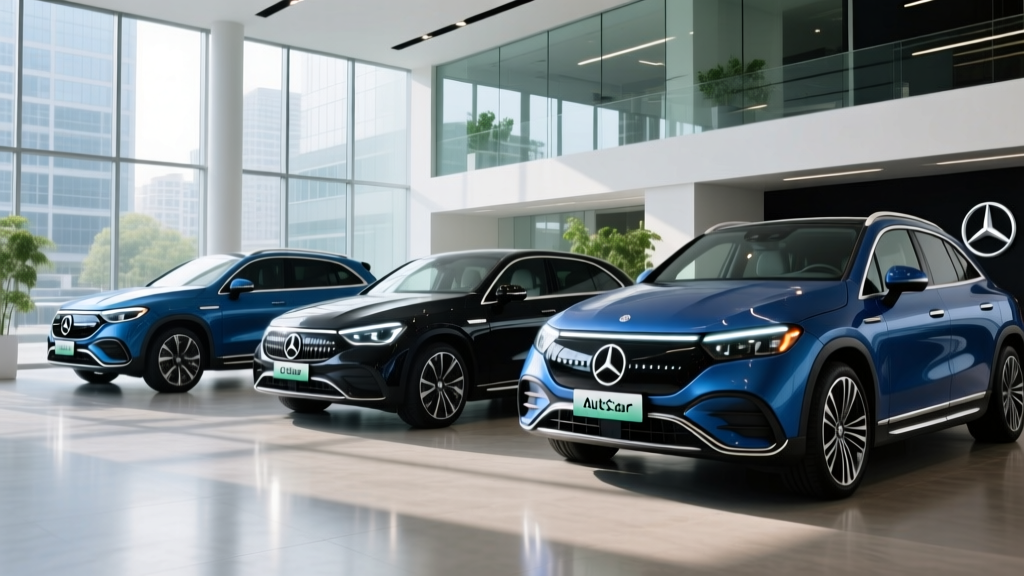
Mercedes structures its battery-electric lineup under the "EQ" sub-brand, covering compact crossovers, midsize sedans, and full-size luxury flagships. Below is the core specification data for the three models most US buyers cross-shop.
| Model | Body Style | EPA Range | Battery (usable kWh) | Chemistry | Peak DC kW | 10–80% Time | 0–60 mph | HP | Base MSRP |
|---|---|---|---|---|---|---|---|---|---|
| EQB 300 4MATIC | Compact SUV | 251 mi | 66.5 kWh | NMC | 100 kW | ~32 min | 7.7 s | 225 | $54,100 |
| EQE 350+ Sedan | Midsize Sedan | 308 mi | 90.6 kWh | NMC | 170 kW | ~31 min | 6.2 s | 288 | $76,050 |
| EQS 450+ Sedan | Full-Size Sedan | 390 mi | 118.0 kWh | NMC | 200 kW | ~31 min | 5.9 s | 355 | $105,550 |
Real-world range caveat: The EQS 450+ posts an impressive EPA 390 miles, but sustained highway driving at 70–75 mph typically yields 330–350 miles. In sub-freezing temperatures, plan for 270–300 miles between charges. The EQE 350+ sedan's rear-wheel-drive layout gives it a real-world efficiency edge over AWD variants, delivering roughly 2.8–3.0 mi/kWh on mixed driving (source: fueleconomy.gov).
Charging Infrastructure: What Mercedes EV Owners Actually Experience
Mercedes-Benz EVs use the CCS1 connector for DC fast charging and J1772 for Level 2 AC. Starting in the 2025 model year, Mercedes began transitioning to the NACS (Tesla-style) connector on new vehicles, with CCS adapters provided for legacy network access. By 2026, most new deliveries ship with NACS ports and native Tesla Supercharger access.
| Charging Level | Power (kW) | Typical Miles Added/Hour | Best For |
|---|---|---|---|
| Level 1 (120V household) | 1.0–1.4 kW | 3–5 mi/hr | Overnight trickle, PHEVs |
| Level 2 (240V home/public) | 7.2–11.5 kW | 22–38 mi/hr | Daily home charging |
| DC Fast (CCS/NACS) | 100–250 kW | 150–400 mi in 30 min | Road trips, quick top-ups |
Charging curve reality: The EQS advertises a 200 kW peak charge rate, but that peak holds only between roughly 10–35% state of charge. Above 50%, the rate tapers to ~120 kW, and above 80% it drops below 50 kW. A 10–80% session takes approximately 31 minutes, but a 10–100% session can exceed 55 minutes. Mercedes includes a battery preconditioning feature that warms the pack when navigation routes to a charger — use it to achieve peak charge speeds.
Mercedes EV vs. Gas and Hybrid: Total Cost of Ownership
Luxury EV buyers often compare the EQE or EQS against the gasoline E-Class or S-Class. Below is a 5-year cost projection assuming 12,000 miles/year, $0.16/kWh home electricity, $3.80/gallon premium fuel, and home Level 2 charging access.
| Cost Category | EQE 350+ (EV) | E-Class 300 (Gas) | 5-Year Difference |
|---|---|---|---|
| Purchase Price (MSRP) | $76,050 | $62,000 | +$14,050 (EV) |
| Federal Tax Credit (§30D) | $0* | $0 | — |
| Fuel/Energy (5 yr) | $3,600 | $11,400 | –$7,800 (EV saves) |
| Maintenance (5 yr) | $2,800 | $5,200 | –$2,400 (EV saves) |
| Insurance (5 yr avg) | $14,500 | $10,800 | +$3,700 (EV) |
| Estimated Depreciation | $38,000 | $28,000 | +$10,000 (EV) |
| 5-Year Total Cost | $135,350 | $117,400 | +$17,950 (EV) |
*Most Mercedes-Benz EVs exceed the §30D MSRP cap ($55,000 sedans, $80,000 SUVs) or fail critical-mineral/battery-sourcing requirements. Always verify current eligibility on irs.gov.
The EV saves roughly $10,200 in fuel and maintenance over five years but gives it back — and then some — in higher depreciation, insurance premiums, and the initial price premium. The math shifts favorably if you qualify for state-level rebates, have access to cheap workplace or solar charging, or keep the vehicle beyond five years.
Tax Credit Eligibility: What Mercedes Buyers Need to Know
The federal §30D clean vehicle credit offers up to $7,500, but the rules create a difficult gauntlet for luxury EVs:
- MSRP cap: Sedans must be ≤$55,000; SUVs/vans/pickups ≤$80,000. The EQE sedan ($76,050) and EQS ($105,550) exceed the sedan cap. The EQB SUV ($54,100) technically qualifies on price, but only in base trim.
- Buyer income cap: Modified AGI ≤$150,000 (single), ≤$300,000 (joint). Many Mercedes buyers exceed this threshold.
- Battery sourcing: Critical minerals and battery components must meet escalating domestic-sourcing percentages that tighten annually. Mercedes has historically sourced from supply chains that may not fully qualify.
- Point-of-sale transfer: If eligible, the credit can be applied at purchase as a down-payment reduction rather than waiting for tax filing.
Bottom line: Do not assume a $7,500 credit when budgeting for a Mercedes EV. Check the official fueleconomy.gov tax credit tool for the specific VIN and model year before signing.
Real-World Ownership Considerations
Home Charging Access Is Non-Negotiable
Mercedes EVs shine when charged at home on a Level 2 (240V) circuit. A full EQS charge on an 11.5 kW home charger takes roughly 10–11 hours — ideal for overnight replenishment. Without home charging, relying on public DC fast charging adds $0.35–$0.55/kWh in costs (vs. $0.12–$0.18/kWh at home) and 2–3 hours/week of inconvenience. Home Level 2 installation typically costs $1,200–$3,500 depending on panel capacity and wiring distance; a 200-amp panel upgrade can add $2,000–$4,000.
Cold Weather and Range Loss
NMC batteries in the Mercedes EQ lineup lose 20–30% of rated range in sustained sub-30°F driving. The EQS, with its 118 kWh pack, still delivers ~270 real-world winter miles — adequate for most commutes but a significant reduction from the 390-mile EPA sticker. Mercedes includes a heat pump on most 2026 models, which recovers waste heat from the drivetrain to warm the cabin and reduce range loss. Always precondition the battery and cabin while plugged in to mitigate cold-weather impact.
Insurance and Maintenance
Luxury EV insurance premiums run 20–35% higher than equivalent gas vehicles due to higher repair costs, aluminum body panels, and specialized high-voltage training requirements. Average annual premiums for the EQE range from $2,600–$3,400 depending on state and driving record. Maintenance savings are real: no oil changes, fewer brake replacements (thanks to regenerative braking), and simpler drivetrains. Budget $500–$700/year for cabin air filters, tire rotations, wiper fluid, and software-related service visits.
Decision Framework: Which Mercedes EV Is Right for You?
Choose the EQB 300 4MATIC if: You need a compact luxury crossover with three-row seating, your daily commute is under 80 miles round-trip, and you want the lowest entry price in the Mercedes EV lineup. Accept the 100 kW DC charge rate — road trips will require longer stops (~32 min for 10–80%).
Choose the EQE 350+ Sedan if: You prioritize driving dynamics and real-world efficiency over maximum range. The rear-wheel-drive layout delivers ~3.0 mi/kWh, and the 308-mile EPA range covers most road-trip segments with a single charge stop. Best suited for buyers who don't need the tax credit and value the MBUX Hyperscreen and air suspension.
Choose the EQS 450+ Sedan if: You want the longest range in the lineup (390 EPA), a flagship luxury experience, and plan to keep the vehicle 5+ years to offset steep depreciation. The 118 kWh battery provides a massive buffer for highway and cold-weather driving. Best for high-mileage luxury buyers with reliable home charging.
Look elsewhere (BMW i5, Tesla Model S, Lucid Air) if: Federal tax credit eligibility is a priority, you want a sportier driving experience, or you need sustained DC charge speeds above 250 kW for frequent long-distance travel.
Common Misconceptions About Mercedes EVs
| Myth | Fact |
|---|---|
| "Mercedes EVs qualify for the full $7,500 federal tax credit." | Most models exceed the §30D MSRP cap or fail battery-sourcing requirements. The EQB in base trim is the most likely qualifier, but verify by VIN on fueleconomy.gov. |
| "The EQS gets 390 miles of real-world range." | 390 miles is the EPA estimate under mixed driving. Expect 330–350 miles at highway speeds and 270–300 miles in freezing weather. |
| "Mercedes EVs charge as fast as a Tesla or Hyundai." | Peak charge rates of 170–200 kW are competitive but not class-leading. The Hyundai Ioniq 5 peaks at 240 kW and sustains higher rates longer. |
| "Drive Pilot makes the car self-driving." | Mercedes Drive Pilot is SAE Level 3, approved only on specific highways in Nevada and California at speeds up to 40 mph. It is NOT available everywhere and requires specific conditions to activate. The driver must remain available to take over. |
| "EV maintenance is essentially free." | While routine maintenance costs 40–50% less than gas vehicles, tire replacement is more frequent (EVs are heavier and produce instant torque), and out-of-warranty battery or inverter repairs can exceed $15,000. |
SAE Level 3 clarification: Mercedes Drive Pilot is the first SAE Level 3 system approved for US roads, meaning the vehicle assumes full driving responsibility under defined conditions (mapped highways, ≤40 mph, good weather). However, it is not "self-driving" in the Level 4/5 sense. You must remain in the driver's seat, sober, and ready to resume control within ~10 seconds when prompted. Outside its operational design domain, the car functions as a standard Level 2 system requiring constant driver supervision.
Battery Longevity and Warranty Coverage
Mercedes provides an 8-year/100,000-mile high-voltage battery warranty covering defects and capacity loss below 70% of original capacity. The NMC chemistry used across the EQ lineup typically degrades 10–15% over the first 100,000 miles under normal use, with degradation slowing significantly thereafter. Real-world data from European EQ fleets suggests 85–88% state of health at 100,000 miles. To maximize battery longevity, Mercedes recommends keeping daily state of charge between 20–80% and using the vehicle's built-in charge-limit setting. DC fast charging exclusively will accelerate degradation by roughly 2–4% over 100,000 miles compared to predominantly Level 2 charging.
Out-of-warranty battery replacement for the EQS is estimated at $20,000–$28,000 based on current parts pricing. The EQE and EQB modules are less expensive but still represent a five-figure liability. This is a real long-term ownership cost to factor into a 10-year plan.
Frequently Asked Questions
Do Mercedes Benz EV cars hold their resale value?
Luxury EVs, including Mercedes EQ models, depreciate faster than their gas counterparts in the current market. The EQS loses an estimated 45–55% of its value within three years, compared to ~35% for the S-Class. This is driven by rapid EV technology advancement, battery longevity uncertainty, and luxury EV market saturation. Leasing often makes more financial sense than purchasing for this reason.
Can I use Tesla Superchargers with a Mercedes EV?
Starting with 2025 model-year vehicles equipped with the NACS charge port, yes — Mercedes EVs have native access to the Tesla Supercharger network (V3 and V4 stalls). For older CCS-equipped models, Mercedes provides a NACS adapter. Supercharger speeds will be limited by the vehicle's onboard charge acceptance (170–200 kW peak), not the stall's maximum output.
How does Mercedes' MBUX system compare to Tesla's interface?
MBUX in the EQE and EQS centers on the Hyperscreen — a 56-inch curved glass panel spanning the dashboard with separate displays for the driver, center stack, and front passenger. It supports wireless Apple CarPlay and Android Auto, over-the-air updates, and natural-language voice commands. Unlike Tesla's minimalist approach (everything through one screen, no CarPlay), Mercedes offers a more traditional luxury interface with physical climate controls and redundant displays. Both systems receive regular OTA updates, but Tesla's software iteration speed remains faster.
What happens if the battery fails after the warranty expires?
Mercedes offers individual module replacement rather than full-pack swaps on most EQ models, reducing out-of-pocket costs. A single failed module might cost $2,000–$5,000 to replace versus $20,000+ for a complete pack. However, availability of replacement modules and certified high-voltage technicians varies by region. Extended battery warranties are available at purchase for an additional $2,500–$4,000.
Is the EQB a practical family EV?
The EQB offers optional third-row seating (best for children), 251 miles of EPA range, and a starting price near $54,000. It's practical for families with short-to-moderate commutes and reliable home charging. The 100 kW DC charge rate is its weakest point — road trips with kids will involve longer charging stops. If you regularly drive more than 200 miles between stops, the EQE or a larger-battery SUV from another brand may be a better fit.
Sources: fueleconomy.gov, IRS §30D Clean Vehicle Credit, Mercedes-Benz USA. Pricing and specifications reflect 2026 model year data available at time of publication. Tax credit eligibility is subject to change — verify on irs.gov before purchase.