The Ford Mustang Mach-E has evolved steadily since its 2021 debut, but one question continues to dominate buyer forums and dealer lots: what is the Mach-E max charge rate, and does it keep up with rivals like the Hyundai Ioniq 5 or Tesla Model Y? For 2026, Ford has refined the Mach-E's battery pack, thermal management, and DC fast-charging curve, but the peak charge rate remains a nuanced story — one that depends heavily on your trim, battery pack, and the charger you're plugged into.
This review covers the 2026 Mustang Mach-E lineup with a focus on charging performance, real-world range, ownership economics, and whether Ford's flagship electric crossover still earns its place in a crowded segment.
2026 Mach-E Specs at a Glance
| Spec | Select RWD (Std Range) | Premium AWD (Ext Range) | GT AWD |
|---|---|---|---|
| EPA Range | 250 mi | 320 mi | 290 mi |
| Battery (usable) | 70 kWh (LFP) | 91 kWh (NMC) | 91 kWh (NMC) |
| Max DC Fast Charge | 115 kW | 150 kW | 150 kW |
| 10–80% DCFC Time | ~38 min | ~36 min | ~36 min |
| Level 2 Home Rate | 10.5 kW (~30 mi/hr) | 10.5 kW (~30 mi/hr) | 10.5 kW (~30 mi/hr) |
| Horsepower | 266 hp | 346 hp | 480 hp |
| 0–60 mph | 6.1 sec | 5.1 sec | 3.5 sec |
| Drivetrain | RWD (single motor) | AWD (dual motor) | AWD (dual motor) |
| MPGe (combined) | 105 MPGe | 101 MPGe | 86 MPGe |
| Base MSRP | $39,995 | $48,995 | $57,995 |
Sources: fueleconomy.gov, Ford Motor Company 2026 spec sheets.
Charging Deep Dive: What Is the Mach-E Max Charge Rate?
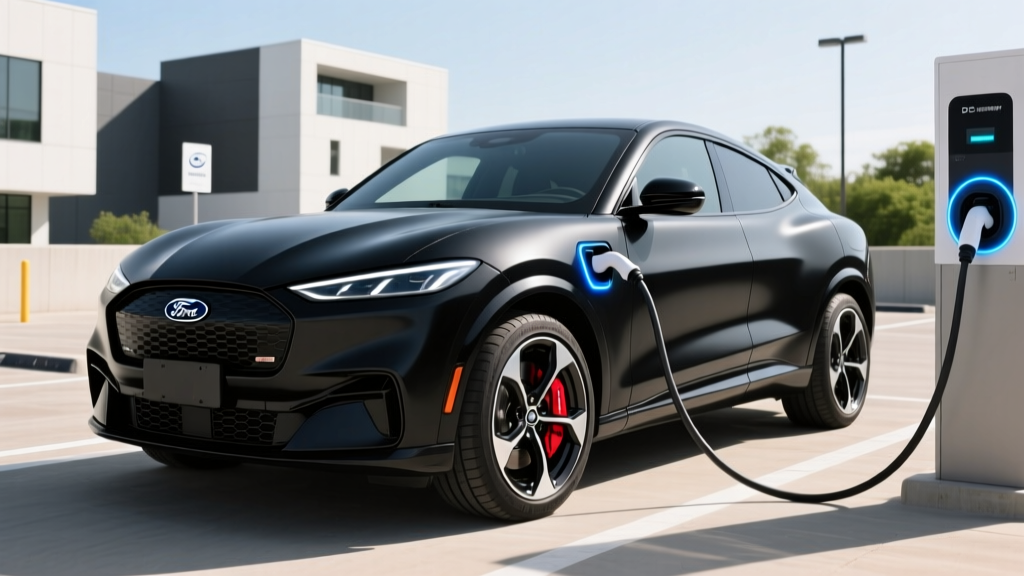
The headline number for the 2026 Mach-E is 150 kW peak DC fast-charging — available on Extended Range and GT trims equipped with the 91 kWh NMC battery. Standard Range models with the 70 kWh LFP pack peak at 115 kW. These figures represent the maximum instantaneous power the vehicle will accept at the beginning of a charging session under ideal thermal conditions.
But peak kW is not the whole story. What matters more for road-trip planning is the charging curve — how long the Mach-E sustains its peak rate before tapering to protect the battery.
Understanding the Charge Curve
The Extended Range Mach-E hits its 150 kW peak at roughly 10–15% State of Charge (SoC) on a 350 kW-capable charger, then holds above 120 kW until approximately 55% SoC. From 55–80%, the rate tapers to between 60–80 kW. This is why the 10–80% time lands at roughly 36 minutes — competitive, but not class-leading. The Hyundai Ioniq 5, with its 800V architecture, achieves 10–80% in about 18 minutes at up to 350 kW.
Home Level 2 Charging
All 2026 Mach-E trims accept up to 10.5 kW on Level 2 (48 amps on a 60-amp circuit). Ford's Mobile Power Cord and the available Ford Charge Station Pro both support this rate. At 10.5 kW, you'll recover approximately 30 miles of range per hour — enough to fully replenish the Extended Range pack in roughly 9 hours overnight.
| Charging Level | Power (kW) | Miles of Range Added | Best Use Case |
|---|---|---|---|
| Level 1 (120V) | 1.4 kW | ~3 mi/hr | Emergency / trickle top-up |
| Level 2 (240V, 48A) | 10.5 kW | ~30 mi/hr | Daily home charging |
| DC Fast (Std Range) | 115 kW peak | ~180 mi in 38 min (10–80%) | Road trips |
| DC Fast (Ext Range/GT) | 150 kW peak | ~240 mi in 36 min (10–80%) | Road trips |
Real-World Range: Beyond the EPA Sticker
The EPA rates the 2026 Mach-E Extended Range AWD at 320 miles. That figure assumes a mix of city and highway driving at moderate temperatures. In practice, your mileage will vary significantly based on conditions.
- City/suburban mix (60–75°F): 300–320 mi — close to EPA
- Highway at 75 mph (75°F): 260–280 mi — sustained high speed reduces efficiency ~15%
- Cold weather (20°F), mixed driving: 220–250 mi — LFP packs lose more; NMC packs with heat pump fare better
- Cold weather highway (20°F, 75 mph): 190–220 mi — worst-case scenario
The Mach-E's available heat pump (standard on Premium and GT trims) helps mitigate cold-weather losses compared to resistive heating, but expect a 20–30% range reduction in freezing conditions regardless. The Standard Range LFP pack is more susceptible to cold-weather degradation and charges slower when cold — plan accordingly if you live in northern climates.
Efficiency Breakdown
The Extended Range AWD achieves 101 MPGe combined, translating to approximately 33 kWh per 100 miles. The RWD Standard Range is slightly more efficient at 105 MPGe (~32 kWh/100 mi), while the GT's performance tuning drops it to 86 MPGe (~39 kWh/100 mi). These figures are mid-pack for the segment — the Tesla Model Y Long Range AWD achieves 117 MPGe for comparison.
Pricing, Trims, and Federal Tax Credit Eligibility
The 2026 Mach-E lineup spans four trims, from the value-oriented Select to the track-focused Rally. Here's how pricing and tax-credit eligibility break down under current IRS §30D rules:
| Trim | Base MSRP | §30D Eligible? | Est. Price After Credit |
|---|---|---|---|
| Select RWD (Std Range) | $39,995 | Yes — up to $7,500 | ~$32,495 |
| Premium RWD (Ext Range) | $45,995 | Yes — up to $7,500 | ~$38,495 |
| Premium AWD (Ext Range) | $48,995 | Yes — up to $7,500 | ~$41,495 |
| GT AWD | $57,995 | Yes — up to $7,500 | ~$50,495 |
| Rally AWD | $61,995 | Yes — up to $7,500 | ~$54,495 |
Important §30D caveats for 2026:
- MSRP cap: SUVs/crossovers must be under $80,000 — all Mach-E trims qualify.
- Income cap: Modified AGI must not exceed $150,000 (single), $225,000 (head of household), or $300,000 (joint).
- Battery sourcing: The full $7,500 requires meeting both critical-mineral and battery-component sourcing thresholds. Ford has confirmed the Mach-E's battery supply chain meets these requirements for 2026, but always verify at the point of sale.
- Point-of-sale transfer: You can transfer the credit to the dealer at purchase, reducing your out-of-pocket cost immediately rather than waiting for tax filing.
Always consult a tax professional and check the latest IRS guidance before relying on credit eligibility — rules can shift.
Performance, Cargo, and Livability
Powertrain and Acceleration
The Mach-E GT remains a performance bargain: 480 horsepower, 3.5-second 0–60, and standard MagneRide adaptive dampers for $57,995 before incentives. The Premium AWD's 346 hp and 5.1-second sprint are more than adequate for daily driving and highway merging. Even the base RWD model's 266 hp and 6.1-second time feel responsive thanks to instant electric torque.
All trims use a single-speed reduction gear — no multi-speed transmission — and offer one-pedal driving with adjustable regenerative braking levels.
Interior Space and Cargo
The Mach-E's dimensions make it a practical family crossover:
- Cargo (behind rear seats): 29.7 cu ft
- Cargo (rear seats folded): 59.7 cu ft
- Front trunk (frunk): 4.7 cu ft — drainable, useful for wet gear or groceries
- Rear legroom: 38.1 inches
- Front headroom: 40.4 inches
Compared to the Tesla Model Y (30.2 cu ft rear cargo, 72.1 cu ft folded), the Mach-E gives up a small amount of cargo volume, but its frunk and more traditional interior layout appeal to buyers transitioning from ICE vehicles.
Tech and Driver Assistance
The 2026 Mach-E features Ford's 15.5-inch portrait touchscreen running SYNC 4A, wireless Apple CarPlay/Android Auto, and an available BlueCruise 1.5 hands-free highway driving system on mapped divided highways. BlueCruise is a Level 2 SAE driver-assist system — the driver must remain attentive, and eye-monitoring ensures engagement.
Additional tech highlights:
- Phone-as-a-key (Bluetooth LE) with backup NFC card
- Over-the-air (OTA) software updates for powertrain, infotainment, and ADAS
- Available Pro Power Onboard (1.5 kW V2L) for tailgating or job-site use
- 360-degree camera and Active Park Assist 2.0
Warranty Coverage
Ford backs the 2026 Mach-E with:
- Bumper-to-bumper: 3 years / 36,000 miles
- Powertrain: 5 years / 60,000 miles
- Battery (high-voltage): 8 years / 100,000 miles — warranty covers capacity retention below 70% of original
The 70% retention threshold is industry-standard, though some competitors (Hyundai/Kia at 70% over 10yr/100k mi) offer longer duration coverage. Ford's battery degradation data from 2021–2025 model years suggests NMC packs lose roughly 5–8% capacity over the first 60,000 miles under normal use, with the curve flattening thereafter. LFP packs in the Standard Range models tend to show slower initial degradation but are more sensitive to repeated DC fast-charging at extreme SoC levels.
Pros, Cons, and the Competition
Pros
- Engaging driving dynamics; GT is genuinely quick
- BlueCruise hands-free on 200,000+ mi of mapped highways
- Familiar crossover styling — less polarizing than some EVs
- All trims qualify for full $7,500 §30D credit
- Drainable frunk; practical interior layout
- OTA updates keep improving the vehicle post-purchase
Cons
- 150 kW peak charge rate trails Ioniq 5 (350 kW) and Model Y (~250 kW)
- 36-min 10–80% time means longer road-trip stops
- No NACS port standard — CCS1 with adapter for Tesla Superchargers
- Highway efficiency lags Model Y by ~15%
- BlueCruise requires subscription after trial period
- LFP Standard Range pack charges slower and loses more range in cold
How It Stacks Up
The Mach-E's closest competitors are the Hyundai Ioniq 5, Tesla Model Y, and Kia EV6. The Ioniq 5 and EV6 share an 800V architecture enabling 350 kW peak charging — nearly double the Mach-E's rate. The Model Y offers superior efficiency and access to the native Supercharger network (though Ford's NACS adapter now provides access as well). Where the Mach-E wins is in ride comfort, interior material quality, and a more traditional dealership purchase experience.
Who Should Buy the 2026 Mach-E?
- You want a sporty, engaging electric crossover that doesn't look or feel like a tech pod
- You primarily charge at home and take road trips 2–3 times per year (the 36-min charge stop is manageable)
- You value hands-free highway driving via BlueCruise on long commutes
- You prefer a traditional dealership purchase and service experience
- Fastest possible DC charging is your top priority (Ioniq 5, EV6)
- Maximum cargo space and efficiency matter most (Model Y)
- You frequently drive in extreme cold without garage parking (consider an EV with a larger battery buffer or a PHEV)
Frequently Asked Questions
What is the real-world range of the 2026 Mustang Mach-E?
The Extended Range AWD is EPA-rated at 320 miles. In real-world mixed driving at moderate temperatures, expect 290–310 miles. Highway-only driving at 75 mph drops that to 260–280 miles. In cold weather (below 32°F), plan for 220–250 miles mixed, and as low as 190 miles on a cold highway run.
How fast does the Mach-E charge at home and on DC fast chargers?
At home on a Level 2 (240V/48A) charger, the Mach-E accepts up to 10.5 kW, adding roughly 30 miles of range per hour — a full charge takes about 9 hours for the Extended Range pack. On DC fast chargers, Extended Range and GT models peak at 150 kW, achieving 10–80% in approximately 36 minutes. Standard Range models peak at 115 kW with a 10–80% time of about 38 minutes.
Does the 2026 Mach-E qualify for the $7,500 federal EV tax credit?
Yes — all 2026 Mach-E trims fall under the $80,000 SUV MSRP cap, and Ford has confirmed battery-sourcing compliance for the full $7,500 under §30D. However, buyer income limits apply ($150K single / $300K joint MAGI), and the credit can be transferred at point of sale. Always verify eligibility with your tax professional and the IRS before purchasing.
Is the Mach-E worth buying vs the Ioniq 5 or Model Y?
It depends on your priorities. If DC fast-charging speed is paramount (frequent road trips), the Ioniq 5's 350 kW capability cuts charge stops nearly in half. If efficiency and cargo space lead your list, the Model Y wins. The Mach-E earns its keep with superior ride comfort, BlueCruise hands-free capability, a more intuitive purchase process, and strong tax-credit eligibility across all trims.
Does the Mach-E use NACS or CCS for charging?
The 2026 Mach-E ships with a CCS1 charge port. Ford provides a NACS adapter that enables access to Tesla Supercharger stalls (V3 and V4). Native NACS ports are expected in future model years. For home Level 2 charging, the standard J1772 connector is used (or the Tesla adapter if you have a Tesla Wall Connector with the Magic Dock).
How long will the Mach-E battery last?
Ford warranties the high-voltage battery for 8 years or 100,000 miles against capacity loss below 70%. Real-world data from earlier model years suggests 5–8% degradation over the first 60,000 miles, with slower loss thereafter. Many EV batteries retain 85–90% capacity at 100,000 miles with normal charging habits (avoiding repeated 100% charges and frequent DC fast-charging in extreme heat or cold).