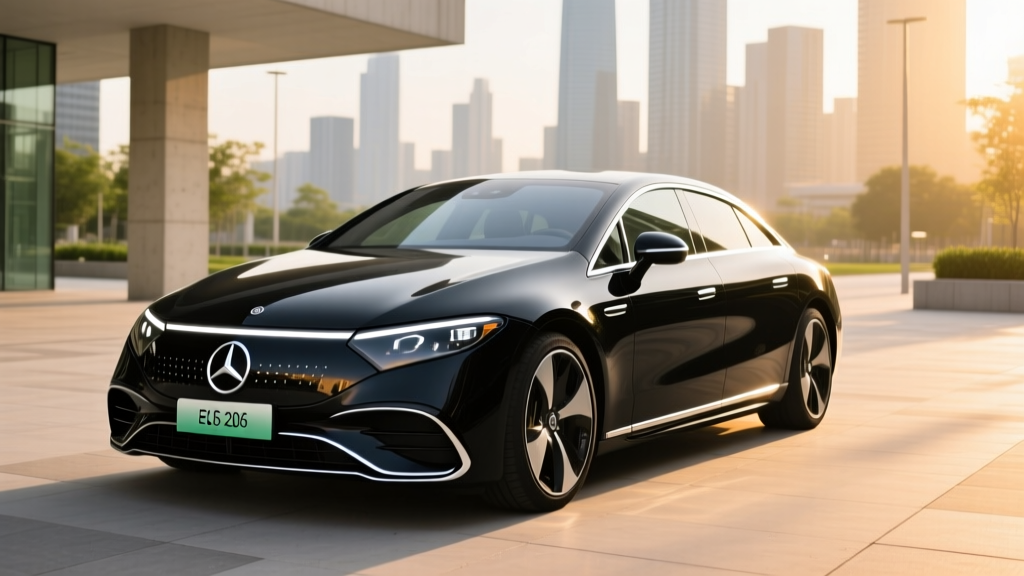
The Mercedes-Benz EQS sedan remains the brand's flagship electric luxury statement — a full-size, tech-dense executive hauler that competes directly with the Tesla Model S, Lucid Air, and BMW i7. For 2026, the EQS EV retains the 118 kWh (usable) battery pack introduced in the previous generation's refresh, a 400-volt architecture, and the Hyperscreen dashboard that spans 56 inches of glass. But flagship status doesn't automatically mean flawless execution. This review examines what the EQS actually delivers in range, charging speed, and daily usability — with the exact numbers buyers need before signing a six-figure lease or purchase agreement.
Quick Verdict: Who the EQS EV Is Actually For
The 2026 EQS targets luxury sedan buyers who prioritize cabin isolation, ride comfort, and brand cachet over outright performance or charging speed. If your use case is executive commuting, airport runs, and long-distance highway cruising in near-silence, the EQS delivers. If you need rapid DC charging for frequent road trips or maximum cargo versatility, rivals like the Lucid Air or even the Tesla Model S make stronger cases. The EQS EV is a comfort-first luxury cruiser that happens to be electric — not an efficiency-obsessed range king.
Range, Efficiency, and Real-World Expectations
The EPA rates the rear-wheel-drive EQS 450+ at 390 miles of combined range, while the dual-motor AWD EQS 450 4MATIC drops to approximately 371 miles. The high-performance EQS 580 4MATIC sits at roughly 345 miles EPA. These figures place the EQS among the longest-range luxury sedans available, though the Lucid Air Grand Touring (516 mi EPA) still holds the segment crown.
Efficiency for the EQS 450+ is rated at 97 MPGe combined (approximately 34 kWh/100 miles). That's respectable for a 5,700-pound sedan but trails the Lucid Air's ~131 MPGe and the Tesla Model S Long Range's ~124 MPGe. The EQS's aerodynamic drag coefficient of 0.20 Cd is among the lowest of any production car, but mass and a 400V architecture limit its efficiency ceiling.
| Spec | EQS 450+ (RWD) | EQS 450 4MATIC (AWD) | EQS 580 4MATIC (AWD) |
|---|---|---|---|
| EPA Range | 390 mi | 371 mi | 345 mi |
| Battery (Usable) | 118 kWh (NMC) | 118 kWh (NMC) | 118 kWh (NMC) |
| Horsepower | 355 hp | 355 hp | 536 hp |
| 0–60 mph | 5.9 sec | 5.3 sec | 4.1 sec |
| Drivetrain | RWD (single motor) | AWD (dual motor) | AWD (dual motor) |
| DC Fast Charge (peak) | 200 kW | 200 kW | 200 kW |
| 10–80% DC Time | ~31 min | ~31 min | ~31 min |
| Level 2 Home Charge | 9.6 kW (~30 mi/hr) | 9.6 kW (~30 mi/hr) | 9.6 kW (~30 mi/hr) |
| Efficiency (MPGe) | 97 combined | 93 combined | 89 combined |
| Base MSRP | $104,350 | $107,350 | $125,950 |
Charging Speed: 400V Architecture Shows Its Age
The EQS EV uses a 400-volt electrical architecture, which caps its peak DC fast-charging rate at 200 kW. On a 350 kW Electrify America or Ionity station, the EQS will charge from 10% to 80% in approximately 31 minutes. That's adequate, but it falls short of 800V rivals: the Hyundai Ioniq 6 (800V, 350 kW peak, 10–80% in ~18 minutes) and the Porsche Taycan (800V, 270 kW peak, 10–80% in ~22 minutes) both recharge noticeably faster.
The charging curve matters as much as peak rate. The EQS holds close to 200 kW from roughly 10% to 35% State of Charge (SoC), then tapers progressively. By 60% SoC, the rate drops to approximately 120 kW, and above 80% it slows to under 50 kW. This taper is typical of NMC chemistry managed conservatively to protect long-term battery health, but it means a 10–90% charge takes closer to 45–50 minutes.
| Charging Level | Power | Speed (Approx.) | Typical Use |
|---|---|---|---|
| Level 1 (120V outlet) | 1.4 kW | ~4 mi/hr | Emergency/trickle only |
| Level 2 (240V home) | 9.6 kW | ~30 mi/hr | Daily home charging (full charge ~12 hrs) |
| DC Fast Charge | Up to 200 kW | ~170 mi in 15 min (peak) | Road trips; 10–80% in ~31 min |
For home Level 2 charging, the onboard 9.6 kW charger adds roughly 30 miles of range per hour. A full 0–100% charge from empty takes about 12 hours — fine for overnight top-ups but slower than the 11.5 kW or 19.2 kW onboard chargers found in some competitors. Mercedes recommends preconditioning the battery via the MBUX navigation system before DC fast-charging sessions; routing to a charger through the car's nav activates thermal preconditioning, which can reduce 10–80% times by 5–8 minutes in cold weather.
Performance and Driving Dynamics
The EQS 450+ delivers 355 horsepower from a single rear-mounted permanently excited synchronous motor, reaching 60 mph in 5.9 seconds. The dual-motor 450 4MATIC matches the horsepower but adds all-wheel grip for a 5.3-second run. The EQS 580 4MATIC bumps output to 536 hp and drops the 0–60 time to 4.1 seconds — genuinely quick for a sedan weighing nearly three tons.
Ride quality is where the EQS earns its luxury badge. Standard AIRMATIC air suspension with adaptive damping absorbs road imperactions with the composure expected of an S-Class successor. Rear-axle steering (standard at 4.5 degrees, optional at 10 degrees) shrinks the turning circle to as low as 35.8 feet, making this 207-inch sedan surprisingly manageable in parking structures. Regenerative braking offers multiple levels via steering-wheel paddles, including a one-pedal driving mode with up to 0.3 g of deceleration — adequate for most stops but not as aggressive as some competitors.
Interior, Tech, and Cargo Space
The cabin is dominated by the available MBUX Hyperscreen — a 56-inch curved glass panel housing three displays (12.3-inch instrument cluster, 17.7-inch central OLED, and 12.3-inch passenger screen). The system runs MBUX with augmented-reality navigation, wireless Apple CarPlay and Android Auto, and a fingerprint reader for driver profile authentication. Build quality, material selection, and seat comfort are exceptional, with available Nappa leather, heated/ventilated/massaging front seats, and a 64-color ambient lighting system.
However, the EQS's sloping roofline and sedan form factor create practicality trade-offs. Rear headroom measures 38.1 inches (adequate but not generous for a car this size), and rear legroom is 41.9 inches. Cargo volume behind the rear seats is 22 cubic feet — competitive with the BMW i7 (22.5 cu ft) but significantly less than a Tesla Model S (28 cu ft) or Model X. The EQS also lacks a front trunk (frunk), a missed opportunity given the packaging freedom of a dedicated EV platform.
Driver-assistance technology includes Mercedes' latest Driver Assistance Package: Active Distance Assist DISTRONIC (adaptive cruise), Active Steering Assist, Active Lane Change Assist, and Active Brake Assist with cross-traffic function. This is an SAE Level 2 system — the driver must remain engaged with hands on the wheel at all times. The available DRIVE PILOT system offers conditional Level 3 autonomy in specific traffic-jam scenarios (below 40 mph on qualified highways in approved states like Nevada and California), but availability remains geographically limited as of 2026.
Pricing, Trims, and Federal Tax Credit Eligibility
The 2026 EQS lineup starts at $104,350 for the EQS 450+ (including destination). The dual-motor 450 4MATIC begins at $107,350, and the performance-oriented 580 4MATIC starts at $125,950. Options like the Hyperscreen ($8,500), Executive Rear Seat Package ($5,000+), and AMG Line exterior packages can push as-tested prices well above $140,000.
Federal tax credit eligibility requires careful attention. Under current IRS §30D rules, new clean vehicle credits are subject to several requirements:
- MSRP Cap: Sedans must have an MSRP at or below $55,000 to qualify. All EQS trims exceed this cap and are ineligible for the new-vehicle §30D credit.
- Buyer Income Cap: AGI limits of $300,000 (joint), $225,000 (head of household), $150,000 (individual) — moot here due to MSRP cap.
- Battery Sourcing: Critical mineral and battery component requirements must be met (phased thresholds by year). Again, irrelevant for EQS due to MSRP exclusion.
- Point-of-Sale Transfer: Available for qualifying vehicles — but the EQS does not qualify.
Source: IRS §30D New Clean Vehicle Credit. Consult a tax professional for your specific situation. State and local incentives may still apply — check AFDC state incentive laws for details.
The bottom line: no EQS trim qualifies for the $7,500 federal purchase credit due to the $55,000 sedan MSRP cap. Buyers may still benefit from state-level rebates (California's CVRP, for example, has its own income and price thresholds) and should consult a tax advisor about potential commercial-lease loopholes (§45W) that some luxury EV lessees have historically utilized.
Battery Warranty, Longevity, and Chemistry
The EQS uses a lithium-ion battery pack with NMC (nickel-manganese-cobalt) chemistry, manufactured in Mercedes' Hedelfingen plant in Germany. NMC offers high energy density — critical for fitting 118 kWh of usable capacity into a sedan floorpan — but trades off some cycle life and thermal stability versus LFP (lithium iron phosphate) chemistry used in some Tesla and BYD models.
Mercedes provides an 8-year / 100,000-mile high-voltage battery warranty, guaranteeing the pack will retain at least 70% of its original capacity during that period. This matches the industry standard and aligns with BMW, Audi, and Porsche warranty terms. Independent long-term testing of earlier EQS models suggests degradation of approximately 5–8% over the first 60,000 miles under normal use — consistent with well-managed NMC packs. The EQS's conservative charge management (a sizable top and bottom buffer) helps protect the cells, though it means the "118 kWh usable" figure already excludes a significant gross capacity.
Pros, Cons, and Competitive Positioning
- Class-leading cabin quietness and ride isolation
- Up to 390 miles EPA range (RWD)
- Exceptional build quality and material selection
- Available Level 3 DRIVE PILOT (limited markets)
- Rear-axle steering for tight maneuverability
- 56-inch Hyperscreen is visually stunning
- 200 kW DC peak is slow for 2026 (400V architecture)
- No federal §30D tax credit (MSRP exceeds $55K cap)
- No frunk; cargo space trails Tesla Model S
- No standard heat pump — cold-weather efficiency suffers
- Hyperscreen adds $8,500 and can be distracting
- Heavy at ~5,700 lbs; dynamics prioritize comfort over sport
Against key competitors: the Lucid Air Grand Touring offers 516 miles of EPA range, 819 hp, and 300 kW+ DC charging — but with less rear-seat headroom and a smaller dealer/service network. The Tesla Model S Long Range undercuts on price (~$79,990), charges faster on the Supercharger network, and offers more cargo space — but can't match the EQS's interior refinement. The BMW i7 xDrive60 is the closest direct rival in luxury execution, offering comparable ride quality with slightly less range (318 mi EPA) and a higher starting price ($120,300).
Frequently Asked Questions
What is the real-world range of the 2026 EQS EV?
The EPA rates the EQS 450+ at 390 miles combined. In real-world highway driving at 75 mph, expect approximately 320–340 miles. In sub-freezing temperatures, range drops to roughly 270–310 miles due to cabin heating demands and battery thermal management. The AWD and 580 trims deliver proportionally less.
How fast does the EQS charge at home and on the road?
At home on a 240V Level 2 charger, the EQS accepts up to 9.6 kW, adding about 30 miles of range per hour (full charge in ~12 hours). On a DC fast charger, it peaks at 200 kW and charges from 10–80% in approximately 31 minutes. This is slower than 800V competitors like the Porsche Taycan (~22 min) and Hyundai Ioniq 6 (~18 min).
Does the EQS qualify for the federal EV tax credit?
No. Under current IRS §30D rules, the new-vehicle credit for sedans requires an MSRP at or below $55,000. All EQS trims start well above that threshold ($104,350–$125,950), making them ineligible for the $7,500 federal credit regardless of buyer income or battery sourcing. State incentives may still apply.
Is the EQS worth buying versus the Lucid Air or Tesla Model S?
It depends on priorities. Choose the EQS if cabin luxury, ride comfort, and Mercedes brand prestige are paramount. Choose the Lucid Air if maximum range and charging speed matter most. Choose the Tesla Model S for the best combination of performance, Supercharger access, cargo practicality, and value. The EQS wins on isolation and build quality but loses on charging speed and tax-credit eligibility.
What battery chemistry does the EQS use, and how long will it last?
The EQS uses NMC (nickel-manganese-cobalt) lithium-ion cells with an 118 kWh usable capacity. Mercedes warranties the battery for 8 years or 100,000 miles at a minimum 70% capacity retention threshold. Real-world degradation data from earlier model years suggests 5–8% loss over 60,000 miles under normal charging habits.
Does the EQS have a frunk or good cargo space?
No frunk. The EQS offers 22 cubic feet of trunk space behind the rear seats, which is competitive with the BMW i7 but less than the Tesla Model S (28 cu ft including the frunk). The sedan trunk opening is also narrower than a hatchback or liftback, limiting bulky-item loading.
Sources: U.S. EPA Fuel Economy, Mercedes-Benz USA EQS, IRS New Clean Vehicle Credit.