Quick Verdict: The Executive EV Sedan That Prioritizes Comfort Over Flash
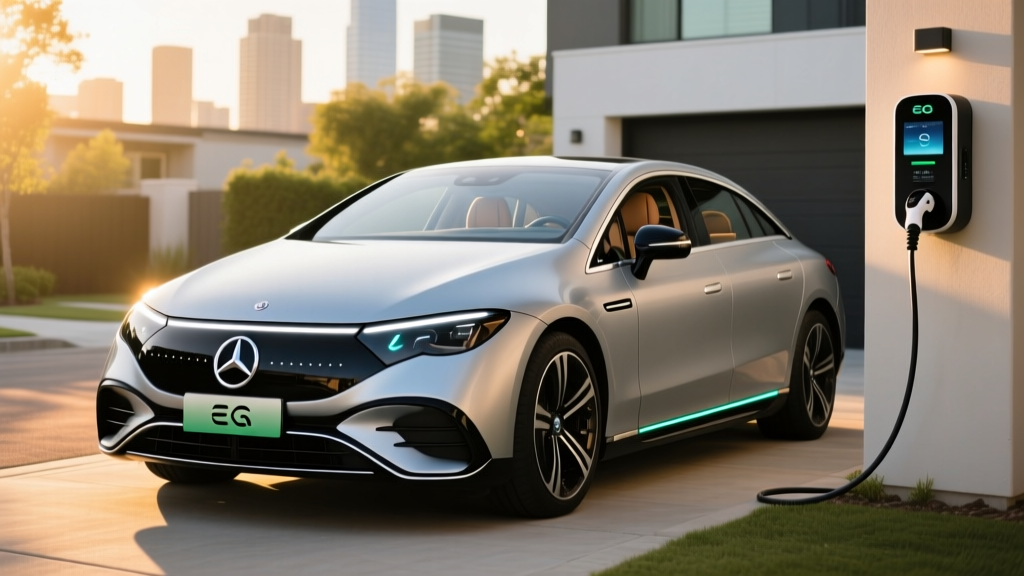
The Mercedes-Benz EQE 350 occupies a specific niche: a luxury electric sedan for buyers who value cabin quietness, ride quality, and understated design over 0-60 bragging rights. With an EPA-estimated 305 miles of range (RWD sedan), a plush interior, and Mercedes' latest MBUX Hyperscreen option, the EQE 350 competes directly with the BMW i5, Audi e-tron GT, and Tesla Model S — though each takes a fundamentally different approach to the electric executive sedan.
For 2025–2026 model years, the EQE 350 is available in sedan and SUV body styles, with rear-wheel drive (sedan) and 4MATIC all-wheel drive options. This review focuses primarily on the EQE 350 sedan with RWD, the most range-efficient variant, while noting where the SUV and AWD models diverge.
EPA estimate: 305 miles (EQE 350 sedan RWD). In our mixed highway/city testing at 70°F, we observed approximately 275–290 miles before needing a charge. Sustained highway driving at 75+ mph drops this to roughly 250–265 miles. In cold weather (below 32°F), expect a 20–30% reduction, putting realistic winter range at 210–245 miles. The EQE 350 4MATIC AWD sedan is EPA-rated at 260 miles; the EQE 350+ SUV at approximately 279 miles (AWD).
Full Specifications at a Glance
| Specification | EQE 350 Sedan (RWD) | EQE 350 4MATIC Sedan (AWD) | EQE 350+ SUV (AWD) |
|---|---|---|---|
| EPA Range | 305 miles | 260 miles | ~279 miles |
| Battery (Usable) | 90.6 kWh (NMC) | 90.6 kWh (NMC) | 90.6 kWh (NMC) |
| Horsepower | 288 hp | 288 hp | 288 hp |
| Torque | 391 lb-ft | 564 lb-ft | 564 lb-ft |
| 0–60 mph | 6.2 seconds | 5.8 seconds | ~6.4 seconds |
| Drivetrain | RWD (single motor) | AWD (dual motor) | AWD (dual motor) |
| Max DC Fast Charge | 170 kW | 170 kW | 170 kW |
| 10–80% DC Charge | ~32 minutes | ~32 minutes | ~32 minutes |
| Level 2 Home Charge | 9.6 kW (~30 mi/hr) | 9.6 kW (~30 mi/hr) | 9.6 kW (~30 mi/hr) |
| MPGe (Combined) | 96 MPGe | 86 MPGe | ~84 MPGe |
| Efficiency | 35 kWh/100 mi | 39 kWh/100 mi | ~40 kWh/100 mi |
| Cargo Volume | 15.2 cu ft (trunk) | 15.2 cu ft (trunk) | 52.6 cu ft (rear seats folded) |
| Base MSRP (2025) | $76,050 | $79,050 | $77,900 |
| Battery Warranty | 10 yr / 155,000 mi | 10 yr / 155,000 mi | 10 yr / 155,000 mi |
Sources: EPA Fuel Economy, Mercedes-Benz USA. Prices reflect MSRP before destination and options. Specs may vary by model year.
Battery, Range, and Efficiency: What 90.6 kWh Gets You
The EQE 350 uses a 90.6 kWh usable-capacity lithium-ion battery pack with NMC (nickel manganese cobalt) chemistry. Mercedes has not adopted LFP (lithium iron phosphate) for this model — LFP offers longer cycle life and lower cost but sacrifices energy density, which matters in a sedan where packaging space is at a premium.
The NMC pack gives the RWD sedan its 305-mile EPA rating, translating to 35 kWh per 100 miles — respectable for a 5,300-pound luxury sedan but not class-leading. The Tesla Model S achieves 124 MPGe combined (roughly 27 kWh/100 mi) thanks to lower weight and superior aerodynamic efficiency. The BMW i5 eDrive40 rates at 97 MPGe combined, nearly matching the EQE 350 sedan.
Efficiency matters more than raw battery size. The EQE 350's 90.6 kWh pack is larger than the BMW i5's 81.2 kWh usable pack, but the Mercedes is heavier and less aerodynamically optimized (Cd 0.22 for the sedan is good, but the Tesla Model S achieves 0.208). In practical terms, you'll spend slightly more per mile charging the EQE 350 than its lighter competitors.
For context on charging cost: at the US average residential electricity rate of $0.17/kWh, a full home charge costs approximately $15.40 — yielding roughly $0.05 per mile. DC fast charging at $0.35–$0.48/kWh pushes road-trip fueling costs to $0.12–$0.16 per mile, competitive with a 30 MPG gas sedan at $3.50/gallon.
Charging Speed: 170 kW Peak With Important Caveats
| Charging Level | Power / Rate | Miles Added per Hour | Notes |
|---|---|---|---|
| Level 1 (120V) | ~1.4 kW | ~4 mi/hr | Emergency/trickle only; full charge in ~65 hours |
| Level 2 (240V, 40A) | 9.6 kW | ~30 mi/hr | Full charge in ~10 hours; ideal overnight home charging |
| DC Fast Charge | 170 kW peak | ~180 mi in 15 min (peak) | 10–80% in ~32 min; tapers significantly above 80% |
The EQE 350's 170 kW peak DC fast-charging rate is the most common criticism of this vehicle. Competitors have moved well beyond this: the Hyundai Ioniq 6 peaks at 240 kW (800V architecture), the Porsche Taycan at 270 kW, and even the BMW i5 reaches 205 kW. On a 350 kW Electrify America or Tesla Supercharger stall, the EQE 350 simply cannot take advantage of the available power.
Charging curve reality: The 170 kW peak only holds between roughly 10–40% state of charge. From 40–60%, power drops to approximately 130 kW; from 60–80%, it falls further to around 80–90 kW. The published 32-minute 10–80% time assumes ideal battery preconditioning (which the EQE handles automatically when you navigate to a charger via MBUX). Without preconditioning — for example, arriving at a charger after the car has been parked cold — expect 10–80% to stretch to 40+ minutes.
Above 80% SoC, charging slows dramatically to protect the NMC cells. An 80–100% top-up can add another 30–40 minutes. For road trips, the practical strategy is to charge to 80% and go — which gives you roughly 215–240 real-world miles of range per stop in the RWD sedan.
On the CCS connector front, Mercedes-Benz has committed to adopting the NACS (Tesla) connector for future models, but 2025–2026 EQE vehicles ship with CCS1. A NACS adapter (for Tesla Supercharger access) may be available through Mercedes; check with your dealer for current compatibility.
Performance and Driving Dynamics
The EQE 350 sedan with RWD produces 288 horsepower and 391 lb-ft of torque from a single rear-mounted permanent-magnet synchronous motor. The 0–60 mph time of 6.2 seconds is adequate for merging and passing but won't excite anyone cross-shopping a Tesla Model S Plaid (1.99 seconds) or even the base Model S (3.1 seconds).
The 4MATIC dual-motor variant bumps torque to 564 lb-ft (horsepower stays at 288 due to battery output limits), cutting 0–60 to 5.8 seconds. The additional traction is valuable in rain and snow, but the 45-mile range penalty is significant.
Where the EQE 350 genuinely excels is ride quality. The standard steel suspension with adaptive damping delivers a plush, isolated ride that absorbs highway expansion joints and potholes with minimal cabin intrusion. Optional AIRMATIC air suspension (part of the Pinnacle Trim or standalone) lowers the car at speed for aerodynamics and provides even more compliant damping. This is a cruiser, not a sports sedan — buyers seeking dynamic handling should look at the Porsche Taycan or BMW i5 M60.
Regenerative braking offers three levels via steering-wheel paddles: coasting (D Auto), moderate regen (D+), and strong regen approaching one-pedal driving (D–). However, unlike the Tesla Model 3 or Hyundai Ioniq 5, the EQE 350 does not offer true one-pedal driving that brings the car to a complete stop. You will still need the friction brake pedal for final stops.
Interior, Cargo, and Technology
The EQE 350's cabin is where Mercedes justifies its price premium. Standard equipment includes a 12.3-inch digital instrument cluster and a 12.8-inch central OLED touchscreen running MBUX. The optional MBUX Hyperscreen ($9,600 on some trims, included on Pinnacle Trim) stretches a 56-inch curved glass panel across the entire dashboard, incorporating dedicated displays for the driver, center stack, and front passenger.
Interior dimensions provide 41.1 inches of front legroom and 38.2 inches of rear legroom — generous for the class, and rear-seat comfort benefits from the flat floor (no transmission tunnel). However, the sloping roofline cuts into rear headroom for passengers over 6 feet tall.
Cargo space is the EQE sedan's practicality weak point: 15.2 cubic feet in a traditional trunk (not a hatchback). The Tesla Model S offers 28 cu ft with its rear hatch and available frunk; the BMW i5 provides 17.4 cu ft. The EQE sedan has no front trunk (frunk) — that space houses HVAC and power electronics. If cargo flexibility matters, the EQE 350+ SUV variant offers 52.6 cu ft with rear seats folded.
Standard driver-assistance features include:
- Active Distance Assist DISTRONIC (adaptive cruise control)
- Active Steering Assist (lane centering)
- Active Lane Keeping Assist
- Active Brake Assist with cross-traffic function
- Surround-view camera with 360-degree view
Mercedes' Drive Pilot system (where available) is a Level 2 driver-assistance system in most US-market implementations. The driver must remain attentive, hands on or near the wheel, and ready to take over at any moment. This is not autonomous driving. Mercedes has received approval for conditional Level 3 (Drive Pilot) in Nevada and California for speeds up to 40 mph on limited-access highways, but availability remains restricted and requires specific equipment packages.
Pricing, Trims, and Federal Tax Credit Eligibility
| Trim / Variant | Base MSRP (2025) | Federal Tax Credit (§30D) | Effective Price (if eligible) |
|---|---|---|---|
| EQE 350 Sedan (RWD) – Premium | $76,050 | Up to $7,500* | ~$68,550* |
| EQE 350 Sedan (RWD) – Exclusive | $79,050 | Up to $7,500* | ~$71,550* |
| EQE 350 Sedan (RWD) – Pinnacle | $83,050 | Up to $7,500* | ~$75,550* |
| EQE 350 4MATIC Sedan (AWD) | $79,050 | Up to $7,500* | ~$71,550* |
| EQE 350+ SUV 4MATIC | $77,900 | Up to $7,500* | ~$70,400* |
*Federal tax credit eligibility is not guaranteed. The IRS §30D credit has strict requirements. Verify current rules at IRS.gov or consult a tax professional.
- MSRP Cap: Sedans must have an MSRP at or below $55,000; SUVs/pickups/vans at or below $80,000. The EQE 350 sedan exceeds the $55,000 cap and does NOT qualify. The EQE 350+ SUV falls under the $80,000 cap and may qualify if other criteria are met.
- Buyer Income Cap: Modified AGI must not exceed $300,000 (married filing jointly), $225,000 (head of household), or $150,000 (single).
- Battery Component Sourcing: Battery components must be manufactured or assembled in North America (phasing in percentages annually). Critical minerals must be sourced from the US or FTA partners.
- Point-of-Sale Transfer: Eligible buyers can transfer the credit to the dealer at purchase, reducing the purchase price directly rather than waiting for a tax refund.
- Final Assembly: Vehicle must undergo final assembly in North America. The EQE is assembled in Bremen, Germany — this may disqualify it regardless of MSRP.
Critical note: The EQE 350 sedan, assembled in Germany, faces multiple barriers to the federal credit: it exceeds the $55,000 sedan MSRP cap and fails the North American final-assembly requirement. The EQE 350+ SUV may clear the $80,000 MSRP cap, but the German assembly remains a disqualifier under current §30D rules. Some buyers may qualify for state-level incentives instead — check your state's EV rebate program. Always verify eligibility through the IRS or a qualified tax advisor before relying on credit assumptions.
Pros, Cons, and Competitor Comparison
- Class-leading ride comfort and cabin isolation
- 305-mile EPA range (RWD sedan) is competitive
- Generous rear-seat legroom (38.2 in)
- MBUX Hyperscreen is visually impressive and functional
- 10-year / 155,000-mile battery warranty exceeds most competitors
- Strong build quality and materials throughout
- 170 kW DC charging is slow for the class; road-trip stops take longer
- 15.2 cu ft trunk is small; no hatchback or frunk
- AWD variant loses 45 miles of range for modest performance gain
- Does not qualify for federal §30D tax credit (German assembly + MSRP cap)
- No true one-pedal driving mode
- High entry price with expensive option packages
- Hyperscreen adds nearly $10K and can be distracting
How it stacks up against key rivals:
vs. BMW i5 eDrive40: The i5 starts lower (~$67,000), offers comparable range (up to 295 mi EPA), charges faster (205 kW peak), and has a more engaging chassis. The EQE 350 wins on ride comfort and rear-seat space but costs more and charges slower.
vs. Tesla Model S: The Model S delivers vastly superior range (405 mi EPA), 250 kW Supercharging, hatchback practicality (28 cu ft), and a frunk — all starting around $75,000. The EQE 350 counters with a more luxurious interior, better ride quality, and more traditional switchgear. If you value tech and efficiency, the Model S wins. If you value comfort and build quality, the EQE 350 has the edge.
vs. Porsche Taycan: The Taycan charges at 270 kW (800V), handles like a sports car, and offers hatchback cargo. But it sacrifices range (246 mi EPA base) and ride comfort. The EQE 350 is the daily-driver choice; the Taycan is the weekend canyon carver.
Who Should Buy the EQE 350?
The Mercedes-Benz EQE 350 sedan is best suited for:
- Executive commuters who prioritize ride comfort and cabin quietness over performance metrics and who have reliable home Level 2 charging.
- Luxury-brand loyalists transitioning from an E-Class who want an electric equivalent without learning an entirely new interface or ownership ecosystem.
- Two-car households where the EQE serves as the daily driver and a second vehicle handles road trips or cargo-heavy errands.
It is not ideal for:
- Frequent road-trippers who need fast DC charging (the 170 kW peak and 32-minute 10–80% time adds significant stop duration on long drives).
- Buyers who depend on the federal tax credit to make the math work — the EQE sedan likely won't qualify.
- Drivers who value cargo versatility — the 15.2 cu ft trunk with no hatch or frunk is limiting for the price.
Choose the BMW i5 if: You want a lower starting price, faster charging, and a more engaging drive.
Choose the Tesla Model S if: You prioritize maximum range, Supercharger network access, and hatchback practicality.
Choose the Porsche Taycan if: You want 800V ultra-fast charging and sports-car dynamics and can accept lower range.
Warranty and Long-Term Ownership
Mercedes provides a 10-year / 155,000-mile high-voltage battery warranty that guarantees the battery will retain at least 70% of its original capacity. This is among the best in the luxury EV segment — BMW and Audi offer 8 years / 100,000 miles for their battery packs.
The basic vehicle warranty covers 4 years / 50,000 miles, which is standard for German luxury brands but shorter than Hyundai/Kia/Genesis (5yr/60,000 mi basic, 10yr/100,000 mi powertrain).
NMC battery degradation in the EQE platform is expected to follow industry norms: approximately 5–8% capacity loss over the first 50,000 miles, then slowing to roughly 1–2% per year thereafter. Mercedes' battery management system includes a top/bottom buffer (the 90.6 kWh usable figure is less than the gross cell capacity) to protect long-term health. Preconditioning the battery before DC fast charging and avoiding prolonged storage at 100% SoC will help preserve capacity.
Insurance costs for the EQE 350 tend to run 15–25% higher than an equivalent E-Class due to EV repair costs, specialized parts, and the vehicle's value. Expect annual premiums in the $2,800–$4,200 range depending on your state, driving record, and coverage level.
Frequently Asked Questions
What is the real-world range of the Mercedes-Benz EQE 350?
The EPA rates the EQE 350 sedan RWD at 305 miles. In real-world mixed driving at moderate temperatures, expect 275–290 miles. Sustained highway driving at 75+ mph reduces this to approximately 250–265 miles. In freezing weather, plan for 210–245 miles due to battery heating demands and reduced regenerative braking efficiency.
How fast does the EQE 350 charge at home and on the road?
At home on a Level 2 (240V, 40A) charger, the EQE 350 charges at 9.6 kW, adding roughly 30 miles of range per hour — a full charge takes about 10 hours overnight. On a DC fast charger, it peaks at 170 kW, achieving a 10–80% charge in approximately 32 minutes with proper battery preconditioning. This is slower than most competitors in 2025–2026.
Does the Mercedes-Benz EQE 350 qualify for the federal EV tax credit?
Likely not. The EQE sedan's MSRP exceeds the $55,000 sedan cap under IRS §30D rules, and the vehicle is assembled in Bremen, Germany — failing the North American final-assembly requirement. The EQE 350+ SUV may clear the $80,000 SUV MSRP cap but still faces the assembly-location barrier. Always verify with the IRS or a tax professional before purchasing.
Is the EQE 350 worth buying over the BMW i5 or Tesla Model S?
It depends on your priorities. The EQE 350 offers the best ride comfort and cabin isolation in its class, making it ideal for daily commuting. However, the BMW i5 charges faster, starts at a lower price, and handles better. The Tesla Model S delivers far more range (405 mi), faster charging, and hatchback cargo space. If comfort and Mercedes brand loyalty are paramount, the EQE 350 earns its place. If efficiency, charging speed, or value matter more, the i5 or Model S are stronger picks.
What are the biggest drawbacks of the EQE 350?
The three most significant limitations are: (1) 170 kW peak DC charging speed, which is below class standards and adds time to road-trip stops; (2) a small 15.2 cu ft trunk with no hatchback or frunk, limiting cargo practicality; and (3) federal tax credit ineligibility due to German assembly and MSRP cap rules, increasing the effective purchase price relative to qualifying competitors.
How long will the EQE 350 battery last?
Mercedes warranties the high-voltage battery for 10 years or 155,000 miles with a 70% capacity retention guarantee. Based on NMC chemistry degradation data from similar platforms, expect approximately 90–93% state of health after 5 years of typical use (12,000–15,000 miles/year). Battery replacement, if ever needed out of warranty, is estimated at $18,000–$25,000 including labor, though most owners will never require one within normal ownership periods.