Quick Answer: Which Mercedes-Benz EV Fits You?
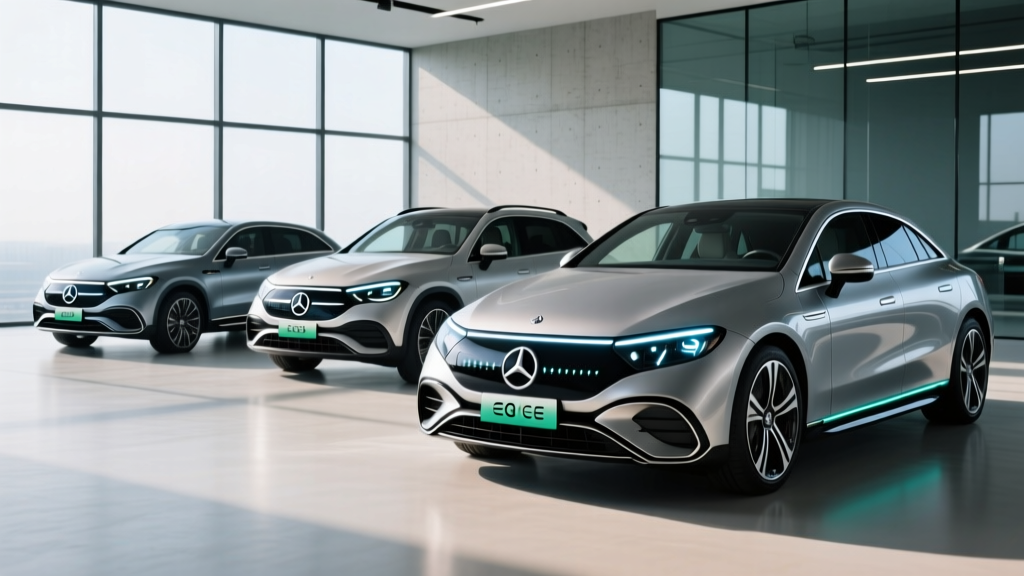
Mercedes-Benz sells three core battery-electric models in the US for 2026: the compact EQB (EPA 245 mi, ~$54k), the midsize EQE Sedan/SUV (EPA 287–307 mi, ~$75k–$87k), and the flagship EQS Sedan/SUV (EPA 305–345 mi, ~$105k–$130k). None currently qualify for the full $7,500 federal §30D tax credit due to battery-sourcing rules, though point-of-sale lease credits may apply. If you want a luxury EV with the best range-per-dollar, the EQE 350+ Sedan is the sweet spot. If you need three rows, the EQB or EQS SUV are your only options.
The 2026 Mercedes-Benz Electric Vehicle Lineup at a Glance
Mercedes consolidated its EQ branding strategy for 2026, but the vehicles remain distinct in size, battery, and mission. Here is the full US-available BEV lineup with verified specs:
| Model | Battery (usable kWh) | Chemistry | EPA Range | Peak DC Charge | 10–80% Time | 0–60 mph | HP | Base MSRP |
|---|---|---|---|---|---|---|---|---|
| EQB 300 4MATIC | 66.5 | NMC | 245 mi | 100 kW | ~32 min | 7.7 s | 225 | $54,200 |
| EQE 350+ Sedan | 90.6 | NMC | 308 mi | 170 kW | ~31 min | 6.2 s | 288 | $75,050 |
| EQE 350 4MATIC SUV | 90.6 | NMC | 279 mi | 170 kW | ~32 min | 6.4 s | 288 | $86,050 |
| EQS 450+ Sedan | 118.0 | NMC | 345 mi | 200 kW | ~31 min | 5.9 s | 355 | $105,550 |
| EQS 450 4MATIC SUV | 118.0 | NMC | 305 mi | 200 kW | ~34 min | 5.7 s | 355 | $110,550 |
| EQS 580 4MATIC SUV | 118.0 | NMC | 285 mi | 200 kW | ~34 min | 4.3 s | 536 | $128,550 |
Sources: fueleconomy.gov, Mercedes-Benz USA. EPA estimates; real-world range varies.
Real-World Range Reality Check
EPA stickers are best-case composites. In real-world highway driving at 70–75 mph, expect roughly 85–90% of EPA range from any Mercedes EQ model. In freezing temperatures (below 30°F), range drops 20–30% even with the heat pump equipped on EQE/EQS. The EQB lacks a standard heat pump in all trims, making it more susceptible to cold-weather losses. Plan for ~210 highway miles from the EQB in winter, ~260 from the EQE 350+, and ~290 from the EQS 450+ Sedan.
Mercedes-Benz EV vs Gas: The Ownership Cost Comparison
Luxury buyers cross-shopping a Mercedes-Benz EV against a gas equivalent (like the GLE or S-Class) need a clear picture of total cost, not just sticker price. Here is a 5-year comparison between the EQE 350+ Sedan and a comparably equipped GLE 350:
| Cost Factor (5 Years / 75,000 mi) | EQE 350+ Sedan | GLE 350 (Gas) |
|---|---|---|
| Purchase Price (MSRP) | $75,050 | $63,550 |
| Federal Tax Credit (§30D) | $0 (sourcing rules)* | $0 |
| Fuel/Energy Cost | $4,875 (home L2, $0.13/kWh avg) | $11,250 (premium, $3.60/gal, 22 mpg) |
| Maintenance | $1,800 (tire rotations, cabin filter, brake fluid) | $4,500 (oil, filters, brakes, spark plugs) |
| Insurance (avg) | $12,500 | $10,500 |
| Estimated Depreciation | $32,000 | $25,000 |
| 5-Year Total Cost | ~$62,225 | ~$64,800 |
*As of 2026, Mercedes-Benz EQ models do not meet the §30D critical-mineral and battery-component sourcing requirements for the purchase credit. However, leasing may qualify for the commercial clean vehicle credit passed through as a lease incentive — confirm with your dealer and tax professional.
The EQE breaks even against the GLE around year 4, primarily through fuel and maintenance savings. The gap narrows if you rely exclusively on public DC fast charging ($0.35–$0.55/kWh), which pushes the EQE's energy cost closer to $7,500 over five years.
Charging Mercedes-Benz Electric Vehicles: Home and Public
Every Mercedes EQ vehicle sold in the US for 2026 uses the NACS (Tesla-style) charge port, following Mercedes-Benz's adoption of the North American Charging Standard. This grants native access to Tesla Superchargers (the largest US network) without an adapter — a significant practical advantage over CCS-equipped competitors.
| Charging Level | Power | Connector | Miles Added/Hour (EQE 350+) | Use Case |
|---|---|---|---|---|
| Level 1 | 1.4–1.9 kW | NACS (120V) | 4–6 mi/hr | Overnight trickle; emergency only |
| Level 2 | 7.2–11.5 kW | NACS (240V) | 22–35 mi/hr | Home daily charging; full overnight refill |
| DC Fast | Up to 170–200 kW | NACS | ~180 mi in 15 min (peak) | Road trips; 10–80% in ~31 min |
Home Level 2 Installation: What to Budget
| Item | Typical Cost Range |
|---|---|
| Level 2 charger (48A hardwired, e.g., ChargePoint Home Flex, Tesla Wall Connector) | $400–$750 |
| Electrician labor (240V/50A circuit run) | $800–$2,500 |
| Permit & inspection | $100–$300 |
| Electrical panel upgrade (if needed, 200A service) | $1,500–$4,000 |
| Total (no panel upgrade) | $1,300–$3,550 |
| Total (with panel upgrade) | $2,800–$7,550 |
The onboard charger in the EQE and EQS is 9.6 kW (single-phase), meaning a 40A circuit delivers the maximum practical AC speed. The EQB's onboard charger tops at 7.2 kW. Always have a licensed electrician assess your panel capacity before committing to equipment.
Public DC Fast Charging: The Curve Matters
Mercedes quotes peak charge rates (170 kW for EQE, 200 kW for EQS), but sustained rates are lower. The EQS 450+ holds above 150 kW from 10–40% SoC, then tapers to ~100 kW by 60%, and drops below 50 kW past 80%. This is why the 10–80% time is ~31 minutes, not the ~20 minutes a flat 200 kW rate would suggest. On road trips, plan stops at 15–20% remaining SoC and charge to 80% for the best time efficiency — charging from 80–100% can take as long as 10–80%.
Battery Longevity, Warranty, and What Replacement Costs
All 2026 Mercedes-Benz EQ models use NMC (nickel manganese cobalt) lithium-ion cells, supplied primarily by CATL and Farasis Energy. Mercedes provides a high-voltage battery warranty of 8 years or 100,000 miles, guaranteeing a minimum of 70% state of health (SoH) — meaning the battery retains at least 70% of its original usable capacity.
Independent fleet data suggests NMC packs in thermally managed systems like the EQ lineup lose roughly 8–12% capacity over 150,000 miles under normal use. Factors that accelerate degradation:
- Frequent DC fast charging above 150 kW without preconditioning
- Regularly charging to 100% and leaving the car at full SoC in heat
- Deep discharges below 10% SoC repeatedly
For daily driving, set your charge limit to 80% (the MBUX system allows this) and use the built-in departure-time preconditioning to warm the battery before fast charging. Out-of-warranty battery replacement for an EQS is estimated at $22,000–$30,000 based on current parts pricing; the EQE is roughly $18,000–$24,000. These figures will likely decrease as the supply chain matures.
Common Misconceptions About Mercedes-Benz EVs
| Myth | Fact |
|---|---|
| "Mercedes EVs get the $7,500 federal tax credit." | As of 2026, no Mercedes EQ purchase qualifies for the §30D credit due to battery-component and critical-mineral sourcing requirements (IRS §30D rules). Lease structures may pass through the commercial credit — verify with your dealer. |
| "The EQS has 400+ miles of range." | The EQS 450+ Sedan is EPA-rated at 345 miles. Real-world highway driving yields ~290–310 miles. WLTP (European) ratings are higher and do not apply in the US. |
| "EVs need no maintenance." | No oil changes, but tires wear 15–20% faster due to weight and instant torque. Brake fluid flushes, cabin filters, and coolant service still apply. Budget ~$350–$500/year. |
| "I can charge on any public network." | With NACS ports, Mercedes EQ vehicles access Tesla Superchargers natively plus Electrify America and other networks via adapter or built-in support. Verify connector compatibility at each station. |
| "The battery will need replacing in 5 years." | NMC packs in liquid-cooled systems routinely exceed 150,000 miles with <15% degradation. The 8-year/100,000-mile warranty provides a safety net. |
Decision Framework: Which Mercedes-Benz EV Should You Buy?
If X, Then Y
- If you need three rows and want the lowest entry price: Choose the EQB 300 4MATIC ($54,200). It seats up to 7 (tight third row), but accept 245 mi EPA range and slower 100 kW DC charging. Best as a commuter with home Level 2 charging.
- If range-per-dollar is your priority: Choose the EQE 350+ Sedan ($75,050). At 308 mi EPA and 90.6 kWh, it delivers the best efficiency in the lineup. RWD only — skip if you need AWD in snow country (step up to the EQE 350 4MATIC at $79k, 279 mi).
- If you want flagship luxury and max range: Choose the EQS 450+ Sedan ($105,550). 345 mi EPA and 118 kWh battery mean fewer charging stops on road trips. The Hyperscreen interior is class-leading.
- If you need luxury SUV space for family road trips: Choose the EQS 450 4MATIC SUV ($110,550). Three rows, 305 mi range, AWD. The heaviest option — expect higher tire wear.
- If you do NOT have home charging access: Reconsider. Public-only charging adds $2,500–$4,000 in extra energy cost over 5 years vs home Level 2, plus 2–3 hours/week of charging time. A PHEV like the GLE 350e (38 mi electric-only range, 56 MPGe) may fit better until you secure home charging.
- If you live in a cold climate (sustained sub-30°F winters): Choose EQE or EQS (heat pump equipped). Expect 20–30% range loss. The EQB's lack of a standard heat pump makes it less ideal in harsh winters.
What First-Time Mercedes EV Buyers Must Know
Transitioning from a gas Mercedes to an EQ model involves practical adjustments that brochures gloss over:
- Install Level 2 charging before delivery. A 240V/40–50A circuit with a NACS-compatible charger (Tesla Wall Connector, ChargePoint Home Flex with NACS cable) is essential. Budget $1,300–$3,500 and allow 2–4 weeks for electrician scheduling and permitting.
- Set your daily charge limit to 80%. Use the MBUX charge settings to cap SoC. This alone can add years to battery life. Only charge to 100% before long trips.
- Use preconditioning for every DC fast charge. Navigate to a charger in the MBUX system and the car will warm the battery en route, enabling peak charge rates. Without preconditioning, a cold battery may accept only 50–80 kW even at a 250 kW station.
- Budget for higher insurance. Luxury EVs carry 15–25% higher premiums than gas equivalents due to repair costs and battery replacement exposure. Get quotes before purchasing.
- Understand regenerative braking modes. Mercedes EQ vehicles offer adjustable regen (including a smart auto mode that uses radar to modulate braking). One-pedal driving is available but not as aggressive as Tesla or Hyundai. Expect a learning curve of 1–2 weeks.
- The §30D tax credit is not guaranteed. Do not factor $7,500 into your budget for a Mercedes EQ purchase in 2026. If a dealer claims credit eligibility, verify against the IRS clean vehicle credit page and consult a tax professional.
Frequently Asked Questions
Are Mercedes-Benz electric vehicles reliable?
Mercedes EQ models are too new for long-term reliability data spanning a full ownership cycle. However, the EV powertrain itself (motor, inverter, battery) has fewer moving parts than an ICE drivetrain and historically shows lower failure rates. Build quality concerns in early EQS models (panel gaps, MBUX glitches) have been largely addressed in 2025–2026 production. Check NHTSA for recall status on any specific VIN.
How does Mercedes-Benz EV range compare to Tesla or BMW?
The EQS 450+ Sedan (345 mi EPA) competes closely with the Tesla Model S Long Range (402 mi EPA) and BMW i7 eDrive50 (318 mi EPA). The EQE 350+ (308 mi) trails the Tesla Model S but matches the BMW i5 eDrive40 (295 mi). Mercedes prioritizes ride comfort and interior luxury over maximizing range-per-kWh — expect slightly lower efficiency (kWh/mi) than Tesla, offset by superior NVH and build quality.
Can I use Tesla Superchargers with a Mercedes EQ?
Yes. All 2026 Mercedes-Benz EQ vehicles sold in the US are equipped with NACS charge ports, granting native access to Tesla's Supercharger network (17,000+ stalls in North America). No adapter is needed. Access to non-Tesla DC networks (Electrify America, EVgo) may require a NACS-to-CCS adapter — check with your dealer for included accessories.
What is the cheapest Mercedes-Benz electric vehicle?
The EQB 300 4MATIC at $54,200 MSRP is the entry point. With destination charge, expect ~$55,500 out the door before incentives. The EQB is essentially an electric GLB — practical, compact, but limited to 245 miles of range and 100 kW DC charging.
Should I lease or buy a Mercedes EQ in 2026?
Leasing often makes financial sense for Mercedes EQ models because the lessor (not you) claims the commercial clean vehicle credit, and dealers frequently pass this through as a $7,500 lease incentive — effectively giving you the tax credit that a purchase does not qualify for. Leasing also shields you from depreciation risk on a rapidly evolving technology segment. If you plan to keep the car 7+ years and drive under 10,000 miles/year, buying may still be competitive once you factor in lease money-factor costs.