Quick Answer: How Do You Pay to Charge an Electric Car?
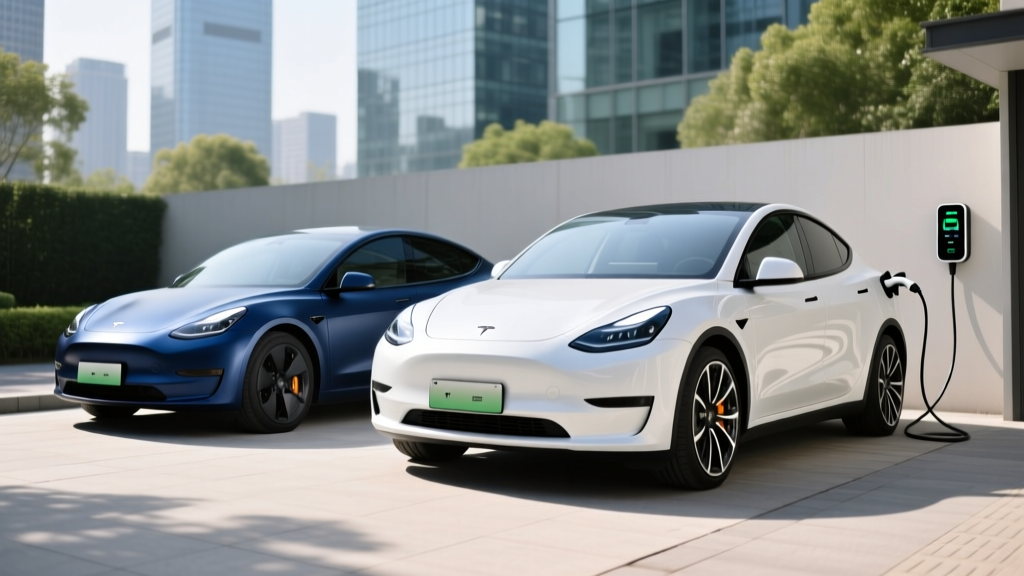
You pay to charge an EV in three main ways: at home (added to your monthly electric bill, typically $0.12–$0.18/kWh), at public Level 2 stations (via network apps or RFID cards, $0.20–$0.40/kWh), or at DC fast chargers (via network apps, credit cards, or subscriptions, $0.30–$0.60+/kWh). Most EV owners do 80%+ of their charging at home, where a full charge for a typical 75 kWh battery costs roughly $9–$14 — compared to $45–$65 to fill a comparable gas car's tank.
Charging an electric vehicle is fundamentally different from fueling a gas car. There's no single price-per-gallon posted on a sign. Instead, what you pay depends on where you charge, when you charge, which network you use, and how you authenticate. Understanding these variables is essential to budgeting accurately as a current or prospective EV owner.
Home Charging: Your Electric Bill Is Your Gas Station
For the roughly 80% of EV owners with access to home charging — whether a garage, carport, or dedicated driveway outlet — the answer to "how do you pay" is simple: it shows up on your monthly utility bill, just like running your air conditioner or clothes dryer.
Here's how the math works. The average US residential electricity rate in early 2026 sits around $0.16/kWh (per the EIA). A mainstream EV like the 2026 Hyundai Ioniq 5 (84 kWh usable battery, NMC chemistry) driven from 10% to 90% state of charge requires roughly 67 kWh. At $0.16/kWh, that's $10.72 for about 260 real-world miles — or roughly $0.04 per mile.
Compare that to a 28 MPG gas car at $3.40/gallon: $0.12 per mile. Home charging is roughly one-third the per-mile cost of gasoline.
Time-of-Use Rates: When You Charge Matters
Many utilities offer time-of-use (TOU) plans that reward off-peak charging. In California, for example, PG&E's EV rate can drop to $0.10/kWh overnight (midnight–6 AM) but spike to $0.45/kWh during peak evening hours. Scheduling your EV to charge at 1 AM instead of 6 PM can cut your charging cost by more than half.
Most modern EVs and Level 2 home chargers (like the ChargePoint Home Flex or Tesla Wall Connector) have built-in scheduling — you set a departure time, and the car or charger begins charging during the cheapest window automatically.
Real-World Home Charging Cost Scenarios
| Scenario | Monthly Miles | kWh Used | Rate | Monthly Cost | Gas Equivalent (28 MPG) |
|---|---|---|---|---|---|
| Light commuter (TOU off-peak) | 800 mi | 240 kWh | $0.10/kWh | $24 | $97 |
| Average driver (flat rate) | 1,200 mi | 360 kWh | $0.16/kWh | $58 | $146 |
| High mileage (TOU peak) | 2,000 mi | 600 kWh | $0.35/kWh | $210 | $243 |
Based on 3.3 miles/kWh average efficiency. Gas price: $3.40/gal. Real-world efficiency varies by vehicle, terrain, and climate.
Public Charging Networks: Apps, Cards, and Subscriptions
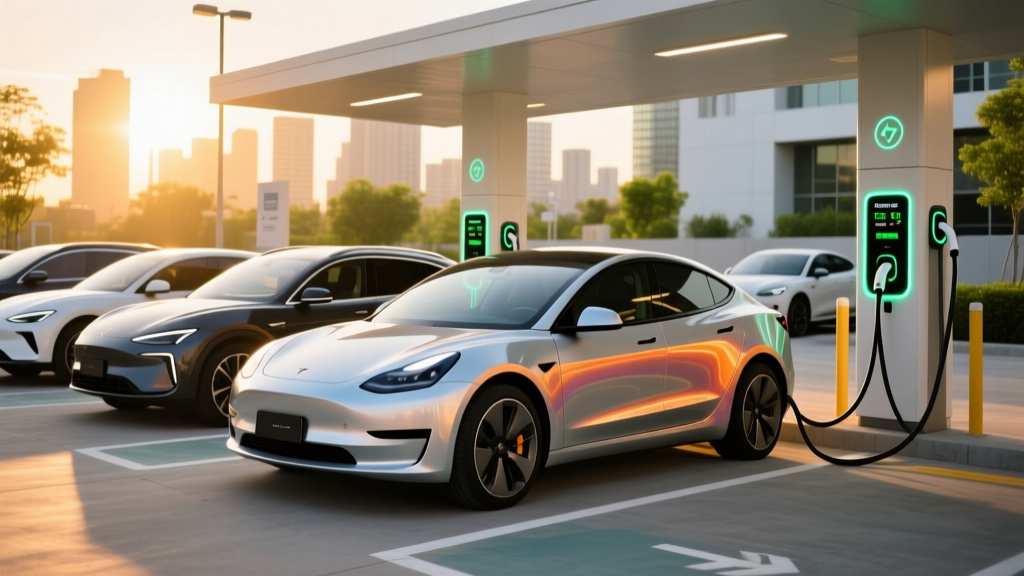
When you're away from home, how you pay depends on the charging network. Public charging has fragmented into several payment ecosystems, and understanding them before you need them is critical — there's nothing worse than pulling up to a charger at 8% battery and discovering you need to download an app and create an account first.
How Payment Actually Works at Public Chargers
Most public charging networks in 2026 support some combination of these payment methods:
- Network-specific mobile apps — You create an account, add a credit card, and start sessions from your phone. Examples: Tesla (Supercharger app), Electrify America, EVgo, ChargePoint.
- RFID cards or fobs — Tap to start. ChargePoint and EVgo offer these for users who prefer not to fiddle with phones.
- Plug & Charge (ISO 15118) — The car identifies itself automatically when plugged in, and billing goes to your pre-registered account. Supported by Ford, GM, Rivian, Mercedes-Benz, and Tesla vehicles at compatible stations.
- Credit card readers — Federally funded NEVI chargers are required to accept contactless credit/debit cards without an app. This is slowly becoming standard across networks.
Public Charging Pricing Models
Unlike gas stations that post a single price, public chargers use several pricing structures:
| Pricing Model | How It Works | Typical Rate | Where You'll See It |
|---|---|---|---|
| Per kWh | Pay for energy delivered | $0.25–$0.55/kWh | Most DC fast chargers, many Level 2 |
| Per minute | Pay for time connected | $0.20–$0.40/min | Some older Level 2 stations, certain states where per-kWh resale is restricted |
| Session fee + per kWh | Flat fee plus energy cost | $1.00–$1.50 + $0.30/kWh | EVgo, some ChargePoint locations |
| Subscription | Monthly fee for lower per-kWh rate | $4.99–$7.99/mo for 10–25% discount | EVgo Plus+, Electrify America Pass+ |
| Idle fees | Penalty for staying plugged in after charging completes | $0.40–$1.00/min | Tesla Superchargers, Electrify America |
DC Fast Charging: The Road-Trip Reality Check
DC fast charging is where costs climb fastest — and where new EV owners often get sticker shock. A typical DC fast charger in 2026 delivers 50–350 kW of power (remember: kW is the charge rate, kWh is the energy capacity in your battery). Pricing reflects the convenience and infrastructure cost.
Let's run the numbers on a real road-trip scenario. Say you're driving a 2026 Tesla Model Y Long Range (75 kWh usable battery, EPA 320 miles) from Los Angeles to Las Vegas — roughly 270 miles. You'd need one DC fast charge stop, adding roughly 50 kWh (from ~15% to ~80% state of charge).
- At a Tesla Supercharger averaging $0.35/kWh: $17.50
- At an Electrify America station at $0.48/kWh: $24.00
- Equivalent gas for 270 miles at 28 MPG, $3.40/gal: $32.79
Even at the most expensive public DC fast charger rates, you're typically still paying less than gasoline per mile — but the gap narrows significantly compared to home charging.
The Charge Curve Tax: Why You Pay More per Mile at Fast Chargers
DC fast chargers don't deliver their peak kW rate for the entire session. A charger rated at 250 kW might deliver that rate only between 10–40% state of charge, then taper to 150 kW, then 75 kW, and finally below 30 kW above 80%. This is the charge curve, and it means:
- Charging from 10–80% might take 18–25 minutes at a 250 kW station
- Charging from 80–100% can take an additional 30–40 minutes
- You're paying per kWh at the same rate even as the charge slows — so the last 20% costs you more in time per mile added
Practical rule: on road trips, charge to 80% and move on. It's faster and more cost-effective to make two shorter stops than one long one.
Cost Per Mile: EV vs Gas vs Hybrid (2026)
| Vehicle / Fueling Method | Energy Cost | Efficiency | Cost Per Mile |
|---|---|---|---|
| EV — home charging (off-peak TOU) | $0.10/kWh | 3.3 mi/kWh | $0.030 |
| EV — home charging (national avg) | $0.16/kWh | 3.3 mi/kWh | $0.048 |
| EV — public DC fast charger | $0.40/kWh | 3.3 mi/kWh | $0.121 |
| PHEV (Toyota RAV4 Prime, electric mode) | $0.16/kWh | 3.0 mi/kWh | $0.053 |
| PHEV (Toyota RAV4 Prime, gas mode) | $3.40/gal | 38 MPG | $0.089 |
| Gas sedan (28 MPG combined) | $3.40/gal | 28 MPG | $0.121 |
| Hybrid (Toyota Camry HEV) | $3.40/gal | 51 MPG | $0.067 |
Efficiency figures based on EPA data from fueleconomy.gov. Real-world results vary with driving style, climate, and terrain.
Total Ownership Cost: Beyond the Charger
What you pay to charge is one piece of the ownership puzzle. Here's a realistic 5-year cost picture comparing a 2026 EV (Hyundai Ioniq 5 SEL, ~$47,000 MSRP) with a comparable gas crossover (2026 Toyota RAV4 XLE, ~$33,500 MSRP), assuming 12,000 miles/year and primarily home charging.
| Cost Category | EV (Ioniq 5 SEL) | Gas (RAV4 XLE) |
|---|---|---|
| Purchase price (MSRP) | $47,000 | $33,500 |
| Federal tax credit (§30D, if eligible) | −$7,500* | $0 |
| Effective purchase price | $39,500 | $33,500 |
| Fuel/energy (5 years, 60K mi) | $2,880** | $7,286 |
| Maintenance (5 years) | $1,200 | $3,500 |
| Insurance (5 years, avg) | $9,000 | $7,200 |
| Estimated depreciation (5 years) | $18,000 | $14,500 |
| 5-Year Total Cost of Ownership | $67,580 | $65,986 |
*Federal §30D credit eligibility depends on MSRP caps ($55K for SUVs), buyer income limits ($150K single / $300K joint), and battery critical-mineral sourcing requirements. Verify current rules at IRS.gov and consult a tax professional.
**Assumes 80% home charging at $0.16/kWh, 20% public DC at $0.40/kWh, 3.3 mi/kWh efficiency.
The EV costs slightly more over 5 years in this scenario, driven by higher insurance premiums and steeper depreciation. But the fuel and maintenance savings are substantial — over $6,700 saved on energy and service alone. The equation tips further in the EV's favor if you have cheap home electricity, drive more miles annually, or live in a state with additional EV incentives.
Common Misconceptions About EV Charging Costs
| Myth | Fact |
|---|---|
| "Public charging is always more expensive than gas" | Only at the highest DC fast charger rates ($0.55+/kWh). At $0.35–$0.40/kWh, a typical EV still costs $0.10–$0.12/mile — equal to or less than a 28 MPG gas car at $3.40/gal. |
| "I need a special electricity plan to charge at home" | You can charge on a standard plan, but a TOU plan can save 30–50%. Contact your utility — most offer EV-specific rates. |
| "EV batteries cost $20,000 to replace, wiping out savings" | Most 2026 EVs carry 8-year/100,000-mile battery warranties (capacity retention ≥70%). Real-world degradation data shows 8–12% loss over 100K miles for NMC chemistries. Full replacement is rare and costs $5,000–$15,000 depending on pack size, trending downward. |
| "Free public charging means $0 fueling" | Free Level 2 chargers exist (workplaces, some retail), but they're slow (6–19 kW), often occupied, and unreliable as a primary strategy. Don't buy an EV assuming free fuel. |
| "Charging always takes hours" | Home Level 2 (7–11 kW) adds 25–40 miles per hour — fine for overnight. DC fast chargers (150–350 kW) add 100–250 miles in 15–25 minutes. The 10–80% session on a modern 800V architecture vehicle takes 18 minutes at a 350 kW station. |
Real-World Ownership Considerations
Do You Have Home Charging Access?
This is the single most important question. If you can install a Level 2 charger (240V, 32–48 amps) at home, EV ownership is convenient and cheap. A typical home Level 2 installation costs $500–$2,500 (charger + electrician + permit), depending on panel capacity and wiring distance. If your electrical panel needs an upgrade to 200A, add $1,500–$3,000.
If you cannot charge at home (apartment, street parking, no garage), your costs and inconvenience increase significantly. You'll rely on public Level 2 or DC fast charging, paying 2–4× more per kWh and spending 30–60 minutes per session several times a week. In this scenario, a PHEV like the Toyota RAV4 Prime (42 miles EPA electric-only range, 38 MPG gas) may be a more practical choice.
Climate Matters: Cold-Weather Charging Costs More
In sub-freezing temperatures, EV batteries lose 15–30% of their range due to increased internal resistance and cabin heating demands. A 300-mile EPA-rated EV might deliver only 210–250 real-world miles in a Minnesota January. This means more frequent charging sessions and higher winter electricity costs. Vehicles equipped with a heat pump (standard on the 2026 Ioniq 5, Tesla Model Y, and BMW iX) recover some of this loss — typically 10–15% better cold-weather efficiency than resistive heating.
Driving Patterns: Highway vs City Efficiency
EVs are most efficient in stop-and-go city driving (thanks to regenerative braking) and least efficient at sustained 75+ MPH highway speeds. An EV rated at 3.5 mi/kWh in the city might drop to 2.8 mi/kWh on the interstate — increasing your per-mile charging cost by roughly 25%. If your commute is 90% highway, factor this into your budget.
Decision Framework: Which Charging Strategy Fits You?
Choose primarily home charging (and a full BEV) if:
- You have a garage or driveway where a Level 2 charger can be installed
- Your daily driving is under 80 miles round-trip
- Your utility offers off-peak TOU rates below $0.12/kWh
- You take road trips fewer than 6 times per year
Choose a PHEV if:
- You lack reliable home charging access
- You frequently drive 200+ miles in a day without predictable charging stops
- You live in an area with sparse DC fast charging infrastructure
- You want electric commuting but gas flexibility for road trips
Choose public charging as your primary strategy only if:
- Your workplace offers free or subsidized Level 2 charging
- You live near reliable, affordable public chargers ($0.25/kWh or less)
- Your daily mileage is low (under 30 miles) and you can charge 2–3 times per week
Frequently Asked Questions
Can I use any credit card at any EV charger?
Not yet. While federally funded NEVI stations must accept contactless credit cards, many older chargers still require a network-specific app. The trend is moving toward open payment, but in 2026 you should still keep accounts set up with at least two major networks (e.g., Electrify America and EVgo) before a road trip.
Is it cheaper to charge my EV at home or at a public station?
Home charging is almost always cheaper. At the national average of $0.16/kWh, you'll pay about $0.05/mile. Public DC fast chargers average $0.35–$0.55/kWh, pushing costs to $0.11–$0.17/mile — comparable to or exceeding a fuel-efficient gas car.
Do I need a subscription to use public chargers?
No. All major networks allow pay-as-you-go charging without a subscription. However, if you DC fast charge more than 4–5 times per month, a subscription like EVgo Plus+ ($4.99/month) or Electrify America Pass+ ($7/month) can save 10–25% per session, paying for itself quickly.
What happens if I unplug someone else's car at a public charger?
Don't. It's considered tampering in most jurisdictions. If a charger is occupied by a finished session, use the network app to report it — many networks will remotely notify the driver or begin idle fees to encourage them to move.
How do I find the cheapest chargers near me?
Apps like PlugShare, A Better Routeplanner, and ChargePrice aggregate pricing across networks. Filter by price per kWh, connector type (NACS, CCS, CHAdeMO), and charge speed. Some utilities also publish maps of discounted partner chargers.
Does charging to 100% cost more and hurt my battery?
It costs proportionally more (you're buying more kWh), and for NMC battery chemistries, regularly charging to 100% accelerates long-term degradation. Most manufacturers recommend daily charging to 80% and reserving 100% for road trips. LFP batteries (found in some Tesla Model 3/Y Standard Range trims) tolerate 100% charging better and can be charged fully without significant degradation concern.