The Mercedes-Benz CLA EV: What Buyers Need to Know Right Now
Quick Answer: The 2026 Mercedes-Benz CLA EV (based on the Concept CLA Class and MMA platform) is Mercedes' entry-level electric sedan, targeting an EPA range of approximately 350+ miles on a single charge with an 85 kWh usable battery. It supports 800-volt DC fast charging at up to 250 kW, enabling a 10–80% charge in roughly 20 minutes. Pricing is expected to start near $45,000 before incentives, positioning it against the Tesla Model 3, BMW i4, and Hyundai Ioniq 6. As an announced vehicle, final EPA certification and MSRP are preliminary — confirm specs at your dealer before purchasing.
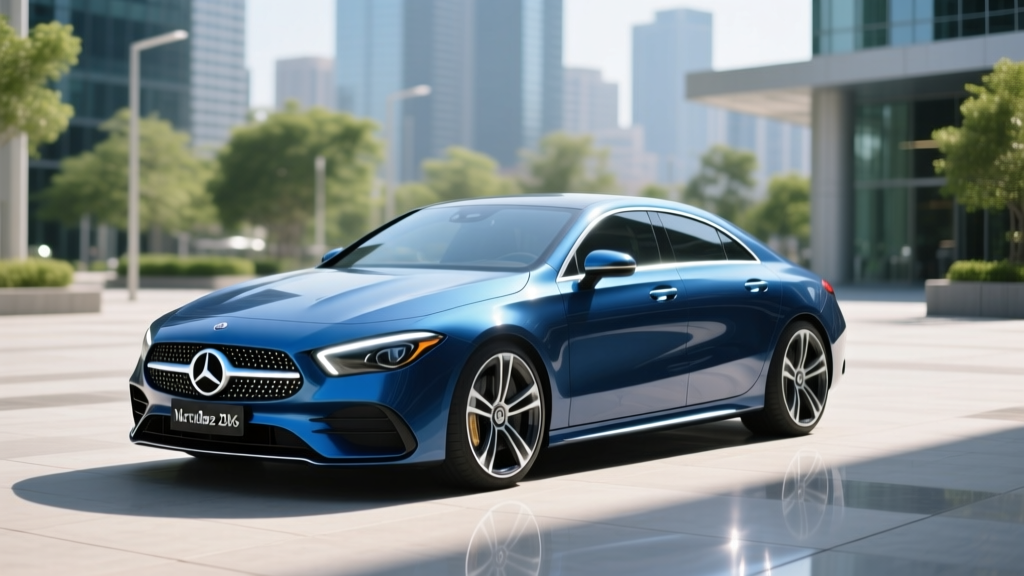
The Mercedes-Benz CLA EV represents a significant pivot for the brand's compact segment. Built on Mercedes' new Modular Mercedes Architecture (MMA), it's designed from the ground up as an electric-first vehicle, not a converted gas platform. For buyers cross-shopping luxury compact EVs, the CLA EV introduces serious range and charging credentials wrapped in a Mercedes interior that aims to justify its premium pricing. But whether it makes financial sense depends heavily on your charging access, driving patterns, and eligibility for federal incentives.
Range, Battery, and Charging: The Numbers That Matter
Mercedes has targeted a WLTP range exceeding 750 km (~466 miles) for the top-efficiency variant. However, WLTP figures consistently overestimate range compared to EPA testing — typically by 15–20%. A reasonable EPA estimate lands between 340 and 380 miles depending on trim and wheel size. In real-world highway driving at 70–75 mph, expect closer to 280–320 miles before needing to charge. Cold-weather conditions (below 32°F) can reduce range an additional 20–30%, putting winter highway range potentially around 220–260 miles.
| Specification | Estimated Value |
|---|---|
| Battery (usable capacity) | ~85 kWh (NMC chemistry) |
| EPA Range (estimated) | 340–380 miles |
| Real-World Highway Range | ~280–320 miles |
| Peak DC Fast Charge Rate | 250 kW (800V architecture) |
| 10–80% DC Fast Charge Time | ~20 minutes |
| Level 2 AC Charge Rate | 11 kW (estimated) |
| Level 2 Full Charge Time | ~8–9 hours |
| Motor Output (RWD base) | ~268 hp (200 kW) |
| 0–60 mph (estimated) | ~5.8 seconds (RWD) |
| Drivetrain | RWD standard; AWD available |
| Starting MSRP (estimated) | ~$45,000–$48,000 |
| Battery/Powertrain Warranty | 8 years / 100,000 miles (typical Mercedes) |
Real-World Range Reality: The EPA sticker will likely read 350+ miles, but plan your road trips around 280–300 miles of usable range at highway speeds. The 800V architecture means charging stops are short — roughly 20 minutes from 10–80% at a compatible 250+ kW station. However, most public chargers in the US still max out at 150 kW, where your charge time stretches to approximately 28–32 minutes for the same 10–80% session.
The CLA EV's 800-volt electrical architecture is a genuine advantage. It allows the car to accept higher power at the charger without excessive battery heating, and it sustains peak charge rates longer than 400V competitors. Where a 400V vehicle might peak at 150 kW and taper quickly, the CLA EV's charge curve should hold closer to 200+ kW through the mid-SoC range before tapering above 80%. This matters for road trips: the difference between a sustained 200 kW and a peaked-then-tapered 150 kW is roughly 8–10 minutes per charging stop on a 300-mile drive.
How the CLA EV Compares: EV vs. Gas CLA vs. Rivals
Many buyers considering the CLA EV are either upgrading from a gas-powered CLA or cross-shopping against established electric rivals. Here's how the numbers stack up against the most relevant alternatives.
| Vehicle | Est. Price | Range / MPG | Annual Fuel/Energy Cost* | 0–60 mph |
|---|---|---|---|---|
| 2026 Mercedes CLA EV (est.) | $45,000–$48,000 | ~350 mi EPA | $550–$700 | ~5.8s |
| 2025 Mercedes CLA 250 (gas) | $39,000–$43,000 | ~30 MPG combined | $1,800–$2,200 | ~6.2s |
| Tesla Model 3 Long Range | $42,490 | 363 mi EPA | $500–$650 | 4.2s |
| BMW i4 eDrive40 | $52,200 | 301 mi EPA | $600–$750 | 5.5s |
| Hyundai Ioniq 6 SEL | $42,750 | 361 mi EPA | $500–$650 | 5.1s |
*Annual energy/fuel cost based on 12,000 miles/year. EV costs assume 70% home charging at $0.16/kWh national average and 30% public DC charging at $0.35/kWh. Gas costs assume $3.50/gallon regular. Source: fueleconomy.gov and EIA energy data.
The gas CLA 250 costs $6,000–$9,000 less upfront, but the CLA EV recoups that difference through fuel savings of roughly $1,200–$1,500 per year. At that rate, the break-even point on fuel alone is approximately 4–6 years — before factoring in reduced maintenance (no oil changes, fewer brake replacements due to regenerative braking) and potential federal tax credits. Against the Tesla Model 3, the CLA EV trades some performance and charging infrastructure convenience for a more traditional luxury interior and Mercedes brand cachet. Against the BMW i4, the CLA EV undercuts on price while offering more estimated range, though the i4 is an established model with confirmed specs today.
Total Cost of Ownership: Breaking Down the Real Numbers
Purchase price is only the starting point. Here's a 5-year cost projection comparing the CLA EV with the gas CLA 250, assuming 12,000 miles annually, 70% home / 30% public charging, and $3.50/gallon gas.
| Cost Category | CLA EV (est.) | CLA 250 (gas) |
|---|---|---|
| Purchase Price (base MSRP) | $46,000 | $41,000 |
| Federal Tax Credit (§30D) | –$3,750 to –$7,500* | $0 |
| Fuel / Electricity (5 years) | $3,000–$3,500 | $9,500–$11,000 |
| Maintenance (5 years) | $1,200–$1,800 | $3,000–$4,000 |
| Insurance (5 years, avg.) | $8,500–$10,000 | $7,000–$8,500 |
| Estimated Depreciation | $18,000–$22,000 | $16,000–$20,000 |
| 5-Year Total (approx.) | $52,000–$60,000 | $60,500–$68,500 |
*Federal tax credit under IRS §30D ranges from $3,750 to $7,500 depending on battery component and critical mineral sourcing requirements. The CLA EV's eligibility is not yet confirmed — Mercedes must certify sourcing compliance. Buyer income caps ($150K single / $300K joint) and MSRP caps ($55,000 for sedans) apply. Consult a tax professional before relying on credit estimates.
The CLA EV wins on operating costs, but two factors can erode savings: insurance premiums (EVs typically cost 15–25% more to insure due to higher repair costs and specialized labor) and depreciation uncertainty (the used-EV market has shown volatility, and luxury EVs have historically depreciated faster than luxury gas cars). If you lease, depreciation risk shifts to Mercedes, which can be a smart strategy for a first-generation EV platform.
Federal Tax Credit Eligibility: What We Know for 2026
The §30D clean vehicle credit offers up to $7,500 for qualifying new EVs, split into two halves: $3,750 for battery component sourcing (North America) and $3,750 for critical mineral sourcing (US or FTA-partner countries). For 2026, the sourcing requirements are stricter than in prior years, meaning fewer vehicles qualify for the full amount.
- MSRP Cap: Sedans must have an MSRP at or below $55,000 to qualify. The CLA EV base trim should clear this, but loaded trims may exceed it.
- Buyer Income Cap: Modified AGI must not exceed $150,000 (single), $225,000 (head of household), or $300,000 (married filing jointly).
- Battery Sourcing: Battery components must be manufactured or assembled in North America (phase-in percentage increases yearly). Critical minerals must be sourced from the US or FTA partners.
- Point-of-Sale Transfer: Buyers can transfer the credit to the dealer at purchase, reducing the sale price directly — you don't need to wait until tax filing.
- Final Assembly: Vehicle must undergo final assembly in North America. The CLA EV's assembly location is not yet confirmed for the US market.
Because the CLA EV is a new model on a new platform, Mercedes has not yet published §30D qualification status. Buyers should check the fueleconomy.gov tax credit database closer to the on-sale date and verify with their dealer. Never assume full $7,500 eligibility without confirmation.
First-Time EV Buyer Considerations: Charging, Climate, and Daily Use
If this is your first EV purchase, the CLA EV's ownership experience hinges on three factors most gas-car buyers never think about:
1. Home Charging Access. This is the single biggest determinant of EV satisfaction. A Level 2 home charger (240V, 40–48 amp circuit) adds roughly 25–35 miles of range per hour of charging, meaning an overnight session from 10 PM to 6 AM fully replenishes the CLA EV's battery. Professional installation of a Level 2 charger typically costs $800–$2,500 depending on panel capacity, wiring distance, and local permit fees. If your electrical panel is at capacity (common in older homes), a panel upgrade adds $1,500–$3,500. If you cannot install home charging — because you rent, live in a condo without EV infrastructure, or rely on street parking — public-only charging will cost 2–3× more per mile and add significant time to your routine.
2. Climate and Range Loss. The CLA EV's estimated 350-mile EPA range assumes moderate temperatures. In sustained sub-freezing conditions, lithium-ion batteries lose efficiency, and cabin heating draws substantial energy. Expect 20–30% range reduction in cold climates — roughly 245–280 miles from a full charge. The MMA platform is expected to include a heat pump (more efficient than resistive heating), which mitigates but does not eliminate cold-weather losses. If you live in northern states and regularly drive 200+ miles in winter, plan for charging stops you wouldn't need in summer.
3. Charging Network Realities. The CLA EV will use the NACS connector (Tesla's standard, now adopted industry-wide), granting access to Tesla Superchargers via native compatibility — a major advantage over CCS-only vehicles that require adapters. However, not all Supercharger stalls deliver 250 kW; older V2 stalls max out at 150 kW. For the CLA EV's 800V system to shine, you need V3/V4 Superchargers or Electrify America's 350 kW stations. In rural areas and parts of the Mountain West, DC fast-charging infrastructure remains sparse. Map your common road-trip routes on PlugShare before committing.
Common Misconceptions About the CLA EV and Luxury EVs
| Myth | Fact |
|---|---|
| "The battery will need replacing in 5 years." | NMC batteries in modern EVs with active thermal management typically retain 85–90% capacity after 100,000 miles. Mercedes warranties the battery for 8 years / 100,000 miles with a minimum 70% capacity retention threshold. |
| "I'll save $7,500 on taxes automatically." | The §30D credit has strict sourcing, income, MSRP, and assembly requirements. The CLA EV's qualification is not yet confirmed. Many luxury EVs qualify for only $3,750 or nothing. |
| "Charging takes too long for road trips." | At a 250 kW charger, the CLA EV adds ~200 miles in 15–20 minutes. That's a restroom and coffee stop. The issue isn't speed — it's charger availability and reliability on your specific routes. |
| "EVs cost more to own overall." | Over 5 years, the CLA EV's lower fuel and maintenance costs typically offset its higher purchase price, especially with tax credits. Insurance and depreciation are the wildcards. |
| "I need a special electrical setup at home." | Most homes with a 200-amp panel can support a 48-amp Level 2 charger on a 60-amp circuit. An electrician can confirm in a $100–$200 inspection. A standard 120V outlet (Level 1) adds ~3–5 miles/hour — enough for low-mileage drivers. |
Decision Framework: Is the CLA EV the Right Choice for You?
Choose the Mercedes-Benz CLA EV if:
- You have reliable home Level 2 charging (garage or driveway with 240V access)
- You drive 10,000–15,000 miles annually and want to reduce fuel costs by $1,200–$1,500/year
- You value Mercedes interior quality, MBUX infotainment, and brand prestige over absolute performance
- Your typical road trips are under 300 miles or follow well-served NACS/Supercharger corridors
- You plan to keep the car 4+ years to recoup the upfront premium through operating savings
Consider the gas CLA 250 or a hybrid alternative if:
- You cannot install home charging and public infrastructure in your area is limited
- You regularly drive 400+ miles in single trips through rural or cold-climate regions
- Your budget is firm below $40,000 and you need a vehicle immediately (the CLA EV may not be available until late 2025 or 2026)
- You plan to keep the car only 2–3 years, making the EV's operating savings insufficient to offset higher purchase price and potential depreciation
Consider the Tesla Model 3 or Hyundai Ioniq 6 instead if:
- Confirmed specs, immediate availability, and established charging reliability matter more than luxury brand prestige
- You want the most mature Supercharger network access (Model 3) or the best value per mile of range (Ioniq 6)
- You prioritize proven real-world range data over preliminary estimates
Frequently Asked Questions
When will the Mercedes-Benz CLA EV be available to buy?
Mercedes has announced the CLA EV based on the MMA platform, with production expected to begin in late 2025 for the European market and 2026 for North America. US delivery timing depends on factory ramp-up and homologation. Check with your local Mercedes dealer for the most current availability.
Will the CLA EV qualify for the $7,500 federal tax credit?
It's too early to confirm. Eligibility under IRS §30D depends on battery sourcing, critical mineral origin, final assembly location, MSRP (must be ≤$55,000 for sedans), and buyer income. Mercedes will need to certify compliance. Check fueleconomy.gov closer to launch for official determination.
What connector does the CLA EV use for charging?
The CLA EV is expected to use the NACS (North American Charging Standard) connector, compatible natively with Tesla Superchargers and the growing NACS-equipped public charging network. This eliminates the need for a CCS-to-NACS adapter that current CCS vehicles require.
How long will the CLA EV battery last before needing replacement?
Modern NMC batteries with active liquid thermal management, like the one expected in the CLA EV, are designed to retain at least 70–80% of original capacity over 150,000–200,000 miles. Mercedes typically warranties the high-voltage battery for 8 years or 100,000 miles (whichever comes first) against capacity loss below a defined threshold. Full battery replacement, if ever needed, currently costs $12,000–$20,000 for a pack of this size, though prices are declining.
Is the CLA EV self-driving?
No. The CLA EV will feature Mercedes' latest driver-assistance systems (likely an updated version of Drive Pilot or Distronic adaptive cruise with lane-keeping), which are classified as SAE Level 2. This means the driver must remain attentive, keep hands on or near the wheel, and be prepared to take over at any time. Mercedes has certified Level 3 (conditional hands-off) Drive Pilot in limited markets and conditions, but this is not full self-driving and availability varies by jurisdiction.
How much does home charging cost compared to gas for the CLA EV?
At the US average electricity rate of ~$0.16/kWh, fully charging the CLA EV's ~85 kWh battery costs approximately $13.60, yielding roughly 300+ real-world miles. That's about $0.04–$0.05 per mile. A comparable gas car at 30 MPG and $3.50/gallon costs about $0.12 per mile. Over 12,000 miles annually, home charging saves roughly $900–$1,100 per year versus gasoline.