Quick Answer: Is the Mercedes B-Class Electric Worth Buying in 2026?
The Mercedes-Benz B-Class Electric Drive (sold only for the 2015–2017 model years in the U.S.) is a used-only, compliance-era EV with an EPA-estimated 87 miles of range from its 28 kWh usable Tesla-sourced battery. In 2026, it remains a viable second car or short-commute runabout for buyers who can charge at home and drive under 50 miles daily. Expect to pay $8,000–$14,000 on the used market. It does not qualify for the federal §30D new-EV tax credit (discontinued), and the used-EV credit (§25E) has strict income and dealer requirements. If you need highway range, fast DC charging, or modern ADAS, look at a newer used EV like the Chevy Bolt EUV or Hyundai Kona Electric instead.
What Is the Mercedes B-Class Electric?
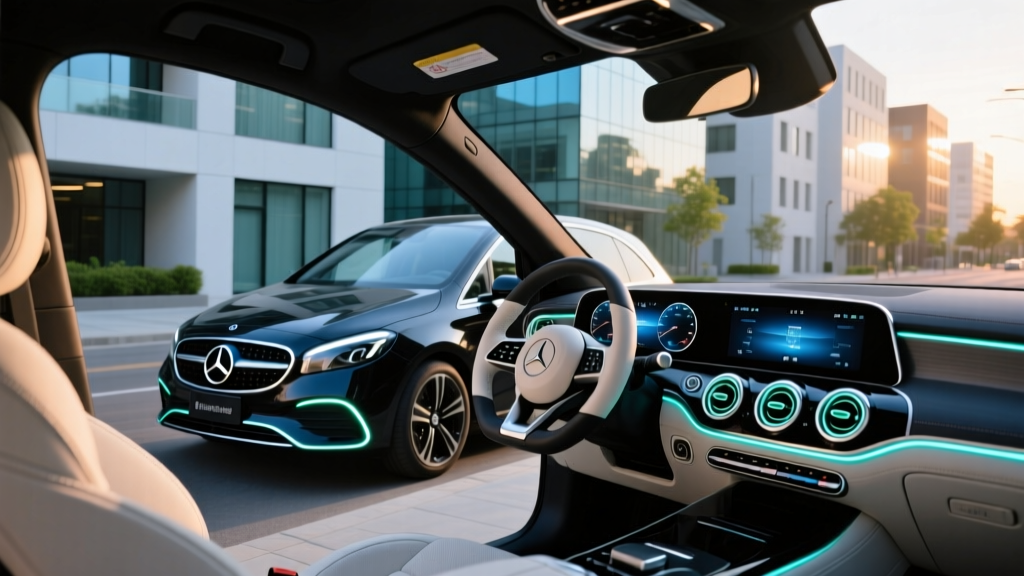
Mercedes-Benz introduced the B-Class Electric Drive for the 2015 model year as a compliance vehicle to meet California ZEV mandate requirements. It was sold exclusively in California and a handful of ZEV-states through 2017 before Mercedes discontinued it. The powertrain was co-developed with Tesla: the B-Class uses a Tesla-sourced AC induction motor and a 36 kWh gross (28 kWh usable) lithium-ion battery pack mounted in a modified "Energy Space" floorpan beneath the rear seats.
The result was a premium-feeling compact hatchback with surprisingly good torque for its era — 177 horsepower and 251 lb-ft of torque — but range and charging technology that were already behind competitors like the 2015 Nissan Leaf (84 miles) and the BMW i3 (81 miles, with an optional range extender). By 2026 standards, 87 miles of EPA range is severely limiting for anything beyond urban commuting.
Key Specs at a Glance
| Specification | Mercedes B-Class Electric Drive (2015–2017) |
|---|---|
| EPA Range | 87 miles |
| Battery (Usable) | 28 kWh (lithium-ion, NMC) |
| Battery (Gross) | 36 kWh |
| Motor | AC Induction (Tesla-sourced) |
| Horsepower | 177 hp |
| Torque | 251 lb-ft |
| 0–60 mph | ~7.9 seconds |
| MPGe (Combined) | 84 MPGe |
| DC Fast Charging | Not available (no DCFC port) |
| Level 2 Charge Rate | ~10 kW (240V, 40A onboard charger) |
| Level 2 Time (0–100%) | ~3.5 hours |
| Level 1 Time (120V) | ~22+ hours |
| Connector | J1772 (Level 2 AC only) |
| Original MSRP | $41,450 (before incentives) |
| Used Price Range (2026) | $8,000–$14,000 |
| Battery Warranty (Original) | 8 years / 100,000 miles |
Real-World Range: What to Actually Expect
The EPA sticker says 87 miles, but real-world results vary significantly:
- Mild weather, city driving (55°F, stop-and-go): 90–100 miles (regen braking helps)
- Highway driving (70 mph sustained): 65–75 miles
- Cold weather (30°F, with cabin heat): 55–65 miles
- Cold weather + highway: 45–55 miles
The B-Class lacks a heat pump — it uses resistive cabin heating, which draws heavily from the small 28 kWh battery. In sub-freezing climates, plan on losing 30–40% of rated range. Source: fueleconomy.gov.
How Does the B-Class Electric Compare to Gas and Modern EVs?
To put this early EV in context, here's how it stacks up against a comparable gas-powered Mercedes A-Class and a modern budget EV:
| Metric | B-Class Electric (2016) | A 220 Sedan (Gas, 2024) | Chevy Bolt EV (Used 2022) |
|---|---|---|---|
| EPA Range | 87 miles | ~400 miles (12.4 gal tank) | 259 miles |
| Energy Cost per Mile | ~$0.04 (home charging) | ~$0.14 (gas at $3.50/gal, 32 MPG) | ~$0.04 |
| Annual Fuel/Energy (12k mi) | ~$480 | ~$1,313 | ~$480 |
| DC Fast Charging | None | N/A (gas station) | Yes, 55 kW CCS |
| Level 2 Charge Time | ~3.5 hrs | N/A | ~7 hrs (full) |
| 0–60 mph | 7.9 sec | 7.1 sec | 6.5 sec |
| Cargo (rear seats up) | 14.3 cu ft | 13.1 cu ft (trunk) | 16.6 cu ft |
| Used Price (2026) | $8,000–$14,000 | $25,000–$32,000 | $14,000–$20,000 |
The bottom line: The B-Class Electric saves roughly $800–$900 per year in energy costs versus a gas Mercedes, but that savings is offset by its extremely limited range, lack of DC fast charging, and accelerating depreciation. A used Chevy Bolt EV from 2020–2022 offers three times the range, DC fast charging capability, and similar or lower used pricing.
Real Ownership Costs: The Full Picture
Buying a used B-Class Electric in 2026 means weighing low energy costs against aging-battery risk and limited utility.
| Cost Category | B-Class Electric | Notes |
|---|---|---|
| Purchase Price | $8,000–$14,000 | Depends on mileage, battery health, region |
| Home Charger (Level 2) | $500–$1,500 | 240V outlet or hardwired; electrician + equipment |
| Annual Electricity (12k mi) | $400–$600 | At $0.13–$0.18/kWh national avg; varies by utility |
| Annual Insurance | $1,200–$1,800 | Mercedes badge raises premiums; get quotes first |
| Maintenance (Annual) | $300–$600 | No oil changes; tires, brakes, cabin filter, coolant |
| Battery Replacement (if needed) | $8,000–$15,000+ | Likely exceeds vehicle value; check warranty status |
| 5-Year Total (est.) | $15,000–$28,000 | Purchase + energy + insurance + maintenance |
| Federal Tax Credit | Not eligible for §30D | Used-EV credit (§25E) up to $4,000 may apply — see IRS rules below |
Used EV Tax Credit (§25E): Can You Claim It?
The IRS §25E used clean vehicle credit offers up to $4,000 or 30% of the sale price (whichever is less) for qualifying used EVs. However, strict rules apply:
- Sale price must be $25,000 or less — the B-Class qualifies here
- Buyer income caps: $75,000 single / $112,500 head of household / $150,000 joint (modified AGI)
- Must purchase from a licensed dealer (private-party sales don't qualify)
- Vehicle must be at least 2 model years old — all B-Class models qualify
- Can only claim once every 3 years
- Point-of-sale transfer is available from participating dealers
At a typical $11,000 purchase price, the credit would be $3,300 (30% of $11,000), bringing effective cost to roughly $7,700. Consult a tax professional to confirm eligibility.
Charging Reality: What First-Time EV Buyers Must Know
The B-Class Electric's biggest practical limitation isn't range — it's the complete absence of DC fast charging. This was a deliberate omission by Mercedes to keep costs down for a compliance car, but it fundamentally limits how you can use the vehicle.
Charging Speeds in Practice
| Charging Level | Power (kW) | Miles Added per Hour | Time (0–100%) | Where |
|---|---|---|---|---|
| Level 1 (120V household) | ~1.4 kW | ~4–5 miles/hr | 22+ hours | Standard outlet |
| Level 2 (240V, 40A) | ~10 kW | ~30–34 miles/hr | ~3.5 hours | Home wallbox, public L2 |
| DC Fast Charging | N/A | N/A | N/A | Not supported — no CCS/CHAdeMO port |
kW vs. kWh reminder: kW (kilowatts) measures power — how fast energy flows into the battery. kWh (kilowatt-hours) measures energy capacity — how much the battery holds. The B-Class has a 28 kWh battery and accepts up to ~10 kW of charging power on Level 2.
Home Charging Is Essential
With no DC fast charging and Level 1 being impractically slow (22+ hours for a full charge), Level 2 home charging is effectively mandatory for B-Class ownership. Budget for:
- 240V NEMA 14-50 outlet installation: $300–$800 (if panel has capacity)
- Level 2 EVSE (charger): $300–$600 for a quality J1772 unit (ChargePoint Home Flex, Emporia Level 2)
- Electrical panel upgrade (if needed): $1,500–$3,500 for older homes with 100A service
If you cannot install Level 2 charging at home or at work, the B-Class Electric is not a practical choice. Relying solely on public Level 2 chargers means 3.5-hour sessions multiple times per week.
Common Misconceptions About the B-Class Electric
| Myth | Fact |
|---|---|
| "It's a Tesla underneath" | The motor and battery were sourced from Tesla, but the powertrain integration, BMS, and vehicle are entirely Mercedes. Tesla Superchargers are not compatible — no NACS or DCFC port exists. |
| "87 miles is enough for anyone's commute" | The average U.S. commute is ~32 miles round-trip (Census Bureau), but detours, errands, climate control, and cold weather can cut real range to 50–60 miles. Range planning becomes a daily chore. |
| "The battery warranty still covers me" | The original 8-year/100,000-mile battery warranty has expired or is expiring for all 2015–2017 models by 2025. You're likely on your own for battery replacement costs unless you purchased an extended warranty. |
| "It qualifies for the $7,500 EV tax credit" | The §30D credit applies only to new EVs. The B-Class is only available used. The §25E used-EV credit (up to $4,000) may apply — see eligibility rules above. |
| "I can take road trips if I plan carefully" | Without DC fast charging, a 200-mile trip requires two 3.5-hour Level 2 stops. This is a commuter car, not a road-trip vehicle. |
Battery Health: The Critical Used-EV Question
The B-Class uses an NMC (nickel-manganese-cobalt) lithium-ion pack. After 8–11 years of service, degradation is a real concern:
- Expected degradation at 8–10 years: 15–25% capacity loss, depending on climate and charging habits
- Real-world range with 20% degradation: ~70 miles EPA (possibly 50–55 miles highway/cold)
- Battery replacement cost: $8,000–$15,000+ (limited aftermarket supply; Mercedes parts pricing)
Before buying, insist on a battery health check. Ask the dealer or a Mercedes specialist to pull the State of Health (SoH) reading via OBD-II diagnostics. An SoH below 80% means significantly reduced range and potential warranty issues. Independent EV shops can often perform this check for $100–$150.
Tips to Maximize Battery Longevity
- Avoid routinely charging to 100% — set a daily limit of 80% if your EVSE supports it
- Minimize Level 1 (120V) trickle charging, which keeps the battery at high SoC for extended periods
- In hot climates, park in shade or a garage; heat accelerates NMC degradation
- Use preconditioning while plugged in to warm/cool the cabin without draining the battery
Decision Framework: Should You Buy the B-Class Electric?
Buy the B-Class Electric IF:
- ✅ You need an affordable second car for short commutes (under 40 miles round-trip)
- ✅ You can install Level 2 charging at home
- ✅ You live in a mild climate (rarely below 40°F)
- ✅ You want a premium-badge EV at a bargain used price
- ✅ You have a gas or long-range EV for longer trips
- ✅ You qualify for the §25E used-EV credit (income caps apply)
Look Elsewhere IF:
- ❌ This will be your only vehicle
- ❌ Your daily driving exceeds 50 miles
- ❌ You live in a cold-winter climate (regular sub-30°F temps)
- ❌ You cannot install home Level 2 charging
- ❌ You need DC fast charging for any road trips
- ❌ You want modern ADAS (the B-Class lacks adaptive cruise, lane-keep, and automatic emergency braking as standard)
Better Alternatives in the $10,000–$20,000 Used EV Market (2026)
- Chevy Bolt EV/EUV (2020–2023): 247–259 miles EPA, 55 kW DCFC, CCS connector — far more versatile
- Hyundai Kona Electric (2019–2021): 258 miles EPA, 75 kW DCFC, great efficiency
- Nissan Leaf Plus (2019–2022): 212–226 miles EPA, 100 kW DCFC (CHAdeMO), widely available
- VW ID.4 (2021–2022): 249–260 miles EPA, 125 kW DCFC, more space and modern tech
Frequently Asked Questions
Can I charge a Mercedes B-Class Electric at a Tesla Supercharger?
No. Despite its Tesla-sourced powertrain components, the B-Class Electric has only a J1772 AC charging port. It has no DC fast charging capability and no NACS (Tesla) connector. It cannot use Tesla Superchargers or any DC fast charging network.
What happens if the battery fails out of warranty?
You're facing an $8,000–$15,000+ replacement bill that likely exceeds the car's value. This is the single biggest financial risk of buying an early-era used EV. Before purchasing, get a State of Health (SoH) diagnostic and factor potential battery replacement into your budget. Some independent EV shops offer refurbished pack options at lower cost.
Is the B-Class Electric safe?
The B-Class received good crash-test ratings for its era, with standard stability control and multiple airbags. However, it lacks modern active safety features like automatic emergency braking, blind-spot monitoring (standard on later trims only), and lane-keeping assist that are now expected even in budget vehicles. Check NHTSA for specific ratings.
How does cold weather affect the B-Class Electric's range?
Expect a 30–40% range reduction in freezing temperatures. The B-Class uses resistive cabin heating (no heat pump), which draws 3–5 kW from the small 28 kWh battery. In 25°F weather with the heater on, real range drops to roughly 55–65 miles. Preconditioning while plugged in helps, but doesn't eliminate the loss.
What's the difference between kW and kWh?
kW (kilowatts) measures power — the rate at which energy flows. Think of it as the "speed" of charging. The B-Class accepts up to ~10 kW on Level 2. kWh (kilowatt-hours) measures energy capacity — how much the battery stores. The B-Class holds 28 kWh usable. A useful analogy: kW is like the diameter of a water hose; kWh is the size of the bucket.
Does the B-Class Electric qualify for any tax credits in 2026?
It does not qualify for the §30D new-EV credit (it's only sold used). The §25E used clean vehicle credit may provide up to $4,000 (30% of sale price) if you meet income requirements, buy from a licensed dealer, and the sale price is under $25,000. Review current rules at IRS.gov and consult a tax professional.