Quick Verdict: Should You Buy a Used 2015 Mercedes-Benz B-Class Electric Drive?
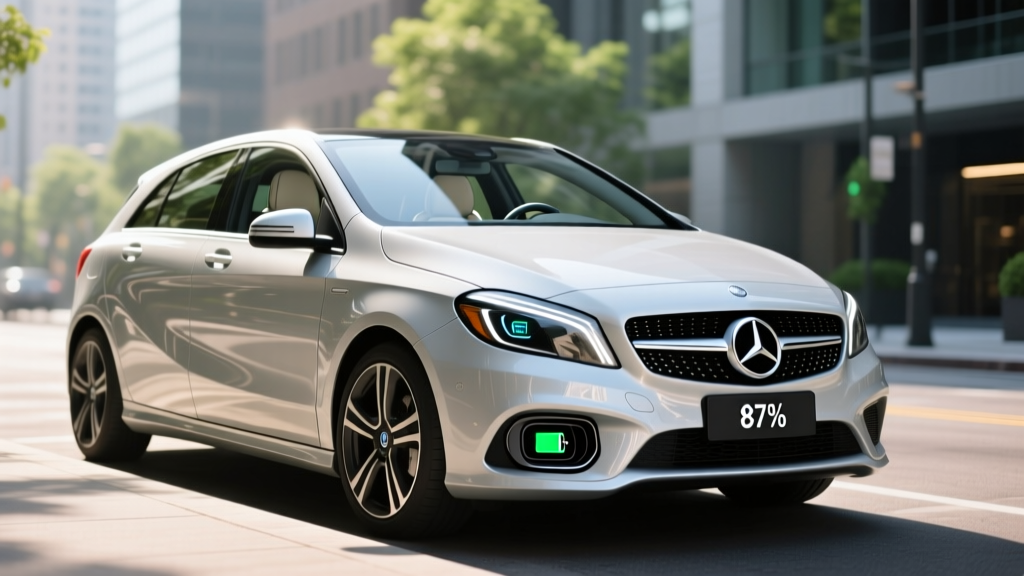
The 2015 Mercedes-Benz B-Class Electric Drive (later rebadged the B250e) is a comfortable, well-built luxury hatchback with an EPA-estimated 87 miles of range from its 36 kWh (28 kWh usable) lithium-ion battery pack. In 2026, used examples typically sell for $7,500–$12,000 depending on mileage and battery state of health. It works as a commuter or second car if you can charge at home and your daily driving stays under ~65 miles round-trip. It does not support DC fast charging—a critical limitation for road trips. If you need more range or fast-charging capability, modern used EVs like the Chevrolet Bolt EUV or Hyundai Kona Electric offer 200+ miles for similar money.
What Is the 2015 Mercedes-Benz B-Class Electric Drive?
Mercedes-Benz partnered with Tesla to develop the electric powertrain for the B-Class Electric Drive, which debuted for the 2014 model year and continued through 2017 (renamed B250e for 2016–2017). The vehicle uses a Tesla-supplied AC induction motor and a 36 kWh battery pack (approximately 28 kWh usable, with a large top/bottom buffer to protect longevity). It was built on Mercedes' MFA platform—the same architecture as the gas-powered B-Class sold in Europe, adapted for electric drive.
This is significant: you get Mercedes interior quality, a solid chassis, and Tesla-derived electric drivetrain components from an era when Tesla was still proving its technology in the Model S. The trade-off is a range figure that feels dated by 2026 standards.
Key Specifications at a Glance
| Specification | 2015 B-Class Electric Drive |
|---|---|
| EPA Range | 87 miles |
| Battery (Total / Usable) | 36 kWh / ~28 kWh |
| Battery Chemistry | NMC (Nickel Manganese Cobalt) |
| Motor Type | AC Induction (Tesla-supplied) |
| Horsepower / Torque | 177 hp / 251 lb-ft |
| 0–60 mph | 7.9 seconds |
| EPA Efficiency | 84 MPGe combined (40 kWh/100 mi) |
| Level 2 Charging (Max) | ~10 kW (240V / 40A onboard charger) |
| DC Fast Charging | Not supported |
| Level 2 Charge Time (0–100%) | ~3.5 hours |
| Original MSRP (2015) | $41,450 (before incentives) |
| Used Price Range (2026) | $7,500–$12,000 |
| Battery/Powertrain Warranty (Original) | 8 years / 100,000 miles |
| Cargo Volume | 23.0 cu ft (rear seats up) |
Real-World Range: What to Actually Expect
EPA Sticker: 87 miles
Real-World Expectation: 65–80 miles in mixed driving; 50–60 miles in cold weather (below 40°F) or sustained highway speeds above 70 mph.
The 87-mile EPA figure was modest even in 2015. In practice, owners report achieving 70–80 miles in mild weather with city-heavy driving where regenerative braking recovers energy. Highway driving at 75+ mph pushes consumption higher—the B-Class Electric Drive is a tall, heavy hatchback (3,982 lbs curb weight), and aerodynamic drag takes its toll.
Cold weather is the bigger concern. Lithium-ion batteries lose efficiency in low temperatures, and the B-Class uses resistive cabin heating rather than a heat pump. Expect 25–35% range loss in winter conditions, which compresses real-world range to roughly 50–60 miles. If your commute is 30 miles each way in a cold climate, this car will be tight—you'll need to charge daily and may not have enough buffer for detours.
The large battery buffer (roughly 8 kWh reserved) was designed to minimize degradation, and many 2015 examples still show strong state of health (SoH) after a decade. However, always request a battery health report before purchasing—any used EV with unknown battery history is a risk.
Charging: The Dealbreaker for Some Buyers
The 2015 B-Class Electric Drive has no DC fast charging capability. This is the single biggest ownership limitation and the reason many buyers cross it off their list.
| Charging Level | Power (kW) | Connector | Miles Added per Hour | Full Charge Time |
|---|---|---|---|---|
| Level 1 (120V household) | ~1.4 kW | J1772 | ~3–4 miles/hr | ~20+ hours |
| Level 2 (240V, 40A) | ~10 kW | J1772 | ~25–28 miles/hr | ~3.5 hours |
| DC Fast Charge | N/A | N/A | N/A | Not supported |
The onboard 10 kW charger is actually generous for a 2015-era EV—many competitors offered only 6.6 kW. With a proper Level 2 home charger (240V, 40-amp circuit), you can recharge the full battery in about 3.5 hours. This is practical for overnight charging and even mid-day top-ups if you work from home.
However, without DC fast charging, road trips beyond the car's ~70-mile real-world radius require planning multi-hour stops at Level 2 public chargers. A 200-mile trip that takes 3.5 hours in a modern EV with 150+ kW DC fast charging could take 8–10 hours in the B-Class Electric Drive with two or three charging stops.
Home Charging Installation Costs
If you're buying this as a used EV, budget for Level 2 home charging installation. Here's what to expect:
| Item | Cost Range |
|---|---|
| Level 2 Charger (e.g., ChargePoint Home Flex, Emporia Vue) | $350–$700 |
| Electrician Labor (240V/50A circuit run) | $500–$2,000 |
| Electrical Permit | $50–$200 |
| Panel Upgrade (if needed, 100A → 200A) | $1,500–$4,000 |
| Total (no panel upgrade) | $900–$2,900 |
| Total (with panel upgrade) | $2,400–$6,900 |
The B-Class Electric Drive's 10 kW onboard charger can accept up to 40 amps, so a 50-amp circuit (standard for most Level 2 chargers) is ideal. Consult a licensed electrician to confirm your panel has capacity.
Ownership Costs: B-Class Electric Drive vs. Gas Equivalent
How does a used B-Class Electric Drive compare to a similarly priced gas car? Let's model a realistic comparison: a 2015 B-Class Electric Drive at $9,500 versus a 2018 Honda Civic (gas) at $12,000.
| Cost Category (Annual) | B-Class Electric Drive | 2018 Honda Civic (Gas) |
|---|---|---|
| Purchase Price | $9,500 | $12,000 |
| Fuel / Electricity (12,000 mi/yr) | $480 (at $0.16/kWh) | $1,440 (at $3.60/gal, 30 MPG) |
| Oil Changes | $0 | $180 |
| Brake Wear (regen extends pad life) | ~$50/yr avg | ~$120/yr avg |
| Insurance (avg) | $1,200–$1,500 | $1,100–$1,400 |
| Annual Maintenance (other) | ~$200 | ~$400 |
| Total Annual Operating Cost | ~$1,930–$2,230 | ~$3,240–$3,540 |
| 5-Year Operating Cost | ~$9,650–$11,150 | ~$16,200–$17,700 |
The electric Mercedes saves roughly $1,000–$1,300 per year in fuel and maintenance compared to the gas Civic, assuming home charging at the national average electricity rate of ~$0.16/kWh. Over five years, that's $5,000–$6,500 in savings. These savings assume you can charge at home; relying on public Level 2 chargers (which often cost $0.25–$0.49/kWh) erodes the advantage significantly.
Federal Tax Credit on a Used EV
Under current IRS §30D rules for used clean vehicles, you may qualify for a tax credit of up to $4,000 (or 30% of the sale price, whichever is less) when purchasing from a dealer. At a $9,500 purchase price, 30% equals $2,850, which is the maximum credit you could claim. Eligibility requirements include:
- Vehicle sale price must be $25,000 or less (the B-Class qualifies)
- Buyer adjusted gross income: ≤$75,000 (single), ≤$112,500 (head of household), ≤$150,000 (joint)
- Vehicle must be at least two model years old (2015 qualifies)
- Must purchase from a licensed dealer (private-party sales do not qualify)
- Credit is non-refundable—you must have sufficient tax liability to use it
- Vehicle must have a battery capacity of at least 7 kWh (the B-Class has 36 kWh total)
Consult a tax professional for your specific situation. Rules and eligibility can change; verify current-year requirements at irs.gov.
Common Misconceptions About the B-Class Electric Drive
| Myth | Fact |
|---|---|
| "The Tesla powertrain means it charges at Superchargers." | False. The B-Class uses a J1772 connector and has no DC fast charging. It cannot use Tesla Superchargers or any DC fast network. |
| "87 miles of range is useless." | The average American drives ~37 miles per day (FHWA data). For a commuter with home charging, 70–80 real-world miles is sufficient for most weekday driving. |
| "The battery will need replacement soon." | The large 8 kWh buffer was designed to protect longevity. Many 2015 examples show 85–92% state of health after 10 years. The original battery warranty was 8 years/100,000 miles—now expired, but degradation has been slower than expected. |
| "It qualifies for the full $7,500 federal tax credit." | That credit applies only to new EVs. As a used vehicle, the maximum is $4,000 (or 30% of sale price) under the used clean vehicle credit, with income and dealer-purchase requirements. |
| "It's a compliance car with no real value." | While it was partly a California compliance vehicle, the Tesla-derived drivetrain, Mercedes build quality, and strong Level 2 charging make it a genuinely usable used EV at the right price. |
What First-Time EV Buyers Should Know
If the 2015 B-Class Electric Drive is your entry point into EV ownership, here are practical realities that spec sheets don't convey:
Home charging is almost mandatory. Without it, you'll rely on public Level 2 chargers that are slower, more expensive, and sometimes unreliable. The B-Class cannot use DC fast chargers, so public charging means 1–3 hour waits. If you live in an apartment without charging access, this car is a poor fit.
Plan for range compression. The 87-mile EPA number is a best-case scenario. Budget your daily driving around 65 miles of usable range, and less in winter. If your routine regularly exceeds that, you'll experience the frustration of daily range management.
Maintenance is simpler but not zero. You'll never change oil, spark plugs, or a transmission fluid. Brake pads last far longer thanks to regenerative braking. But you still need tire rotations, cabin air filter replacements, coolant checks (the battery thermal management system uses coolant), and 12V auxiliary battery monitoring—the 12V battery dies just like in any car and will strand you even if the main pack is full.
Insurance can be higher. EV insurance premiums tend to run 10–25% higher than equivalent gas cars due to repair costs and specialized parts. Get quotes before buying. The B-Class's Mercedes badge may push premiums further.
Decision Framework: Is This the Right Used EV for You?
Buy the 2015 B-Class Electric Drive IF:
- Your daily round-trip commute is under 60 miles
- You have access to Level 2 home charging (garage or driveway with a 240V outlet)
- You want a premium-feeling hatchback at a bargain used-EV price
- This is a second car, and you have a gas vehicle for longer trips
- You live in a mild climate where cold-weather range loss is minimal
- You can find one with a documented battery SoH above 85%
Look Elsewhere IF:
- You need to drive more than 70 miles in a day regularly
- You cannot install a Level 2 charger at home
- You live in a cold climate and your commute is near the car's range limit
- You want to take road trips without extensive Level 2 planning
- You need DC fast charging for any reason
- You want modern ADAS features (the 2015 B-Class has basic collision warning but no adaptive cruise or lane-keeping)
Better Alternatives at Similar Used Prices (2026 Market)
If the B-Class Electric Drive's range or charging limitations are dealbreakers, consider these alternatives in the $8,000–$15,000 used range:
- 2017–2019 Chevrolet Bolt EV: 238 miles EPA, 55 kW DC fast charging, far more practical for the money.
- 2018–2020 Hyundai Kona Electric: 258 miles EPA, 75 kW DC fast charging, good cargo space.
- 2016–2018 Nissan Leaf (30 kWh): 107 miles EPA, but still limited by CHAdeMO and passive battery cooling.
- 2017–2019 Volkswagen e-Golf: 125 miles EPA (2017+), CCS DC fast charging, excellent driving dynamics.
Frequently Asked Questions
What is the battery replacement cost for the 2015 B-Class Electric Drive?
A replacement battery pack, if needed out of warranty, typically costs $8,000–$14,000 including labor at a Mercedes-Benz dealer. However, total battery failure is rare—gradual degradation is more common, and most 2015 examples still retain 85–92% of original capacity thanks to the large buffer. Third-party EV repair shops may offer refurbished packs for less.
Can I use a Tesla Supercharger with the B-Class Electric Drive?
No. The B-Class Electric Drive uses a standard J1772 connector for Level 2 AC charging only. It has no DC fast charging port and is incompatible with Tesla Superchargers, Electrify America, EVgo, or any DC fast charging network, even with adapters.
How does the B-Class Electric Drive compare to a 2015 Nissan Leaf?
The 2015 Leaf has a smaller 24 kWh battery and 84 miles of EPA range. The B-Class offers slightly more range (87 miles), a more powerful motor (177 hp vs. 107 hp), a larger battery buffer for longevity, and a faster onboard charger (10 kW vs. 6.6 kW). The Leaf, however, offers optional CHAdeMO DC fast charging (the 2015 B-Class does not). Interior quality favors the Mercedes significantly. According to fueleconomy.gov, the Leaf achieves 114 MPGe combined vs. the B-Class at 84 MPGe, making the Leaf slightly more efficient per mile.
Does the 2015 B-Class Electric Drive qualify for any tax credits in 2026?
It may qualify for the federal used clean vehicle credit of up to $4,000 (30% of sale price) if purchased from a licensed dealer and you meet income requirements. It does not qualify for the new-vehicle §30D credit. Check current rules at irs.gov/used-clean-vehicle-credit and consult a tax professional.
What should I check before buying a used B-Class Electric Drive?
Prioritize these items: (1) Battery state of health—request a diagnostic report from a Mercedes dealer or use an OBD-II EV scanner. (2) Charging port condition and cable integrity. (3) Service history for coolant system maintenance (the battery thermal management system requires it). (4) 12V battery age—replace proactively if over 3 years old. (5) Tire condition, as the car's 3,982-lb weight accelerates tire wear.