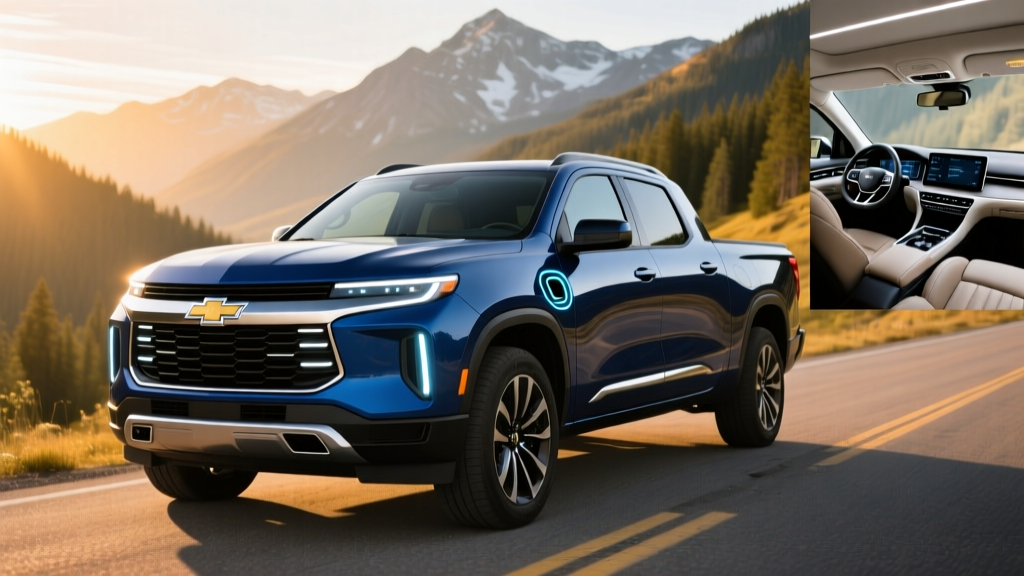
The electric pickup segment has matured past early-adopter novelty, and the 2025 Chevrolet Silverado EV sits at a pivotal crossroads. Chevy's strategy with this truck diverges sharply from the Ford F-150 Lightning and Rivian R1T: it rides on GM's dedicated Ultium platform (shared with the GMC Sierra EV and Hummer EV), stretches to a crew-cab-only configuration, and offers what is currently the longest EPA-estimated range of any production pickup sold in the United States. But spec sheets don't tell the whole story. After spending time analyzing the 2025 Silverado EV lineup — from the value-oriented Work Truck to the fully loaded RST — here's what the numbers actually mean for buyers.
2025 Silverado EV Full Specifications at a Glance
| Specification | 3WT / 4WT (Work Truck) | LT | RST |
|---|---|---|---|
| EPA Range | 390 mi (3WT) / 440 mi (4WT) | 440 mi (est.) | 440 mi |
| Battery (Usable) | ~200 kWh (4WT) | ~200 kWh | ~200 kWh |
| Chemistry | NMC (Ultium) | NMC (Ultium) | NMC (Ultium) |
| Drivetrain | AWD (Dual Motor) | AWD (Dual Motor) | AWD (Dual Motor) |
| Horsepower | 510 hp | 645 hp | 754 hp |
| Torque | 615 lb-ft | 780 lb-ft | 785 lb-ft |
| 0–60 mph | ~5.8 sec | ~4.5 sec | ~4.2 sec |
| Max DC Fast Charge | 200 kW | 200 kW | 200 kW (350 kW capable) |
| 10–80% DC Time | ~45 min | ~45 min | ~20 min (at 350 kW) |
| Level 2 Home Rate | 11.5 kW (~31 mi/hr) | 11.5 kW (~31 mi/hr) | 19.2 kW (~52 mi/hr) |
| Efficiency | ~54 MPGe / 62 kWh/100mi | ~54 MPGe | ~51 MPGe |
| Max Towing | 10,000 lb | 10,000 lb | 10,000 lb (12,000 lb avail.) |
| Payload | 1,750 lb | 1,600 lb | 1,300 lb |
| Bed Length | 5'11" | 5'11" | 5'11" |
| Base MSRP | $55,000 (3WT) | $78,000 (est.) | $87,300 |
| Federal Tax Credit | Up to $7,500 | Up to $7,500 | Up to $7,500 |
Range and Efficiency: The 440-Mile Claim, Tested Against Reality
The headline figure — 440 miles of EPA-estimated range on the 4WT and RST trims — is extraordinary for a vehicle this size. It's made possible by an Ultium battery pack with approximately 200 kWh of usable capacity using NMC (nickel manganese cobalt) chemistry. GM opted against LFP (lithium iron phosphate) for the Silverado EV, prioritizing energy density over the lower cost and longer cycle life that LFP provides. For a truck this heavy (curb weight exceeds 8,500 lbs on some trims), energy density is the correct engineering call: an LFP pack large enough to deliver 440 miles would be prohibitively heavy.
The 440-mile EPA figure assumes mixed driving at moderate speeds and temperatures. Expect the following in practice:
- Highway cruising (70–75 mph): ~340–370 miles. Aerodynamic drag dominates at speed, and a truck this large is no exception.
- Cold weather (below 32°F): ~280–330 miles. NMC chemistry loses 20–30% range in sustained freezing temps, even with the Silverado EV's heat pump and battery preconditioning.
- Towing near max capacity: ~180–220 miles. Towing is an efficiency killer for every EV; plan charging stops accordingly.
- City / suburban mixed driving: ~400–440 miles. This is where the EPA estimate is most achievable, thanks to regenerative braking recovery.
Efficiency lands around 54 MPGe combined (roughly 62 kWh per 100 miles) for the WT and LT trims, dropping slightly to about 51 MPGe on the RST with its larger wheels and performance tuning. These figures are competitive with the Rivian R1T but trail the more aerodynamic F-150 Lightning extended-range by a small margin on MPGe — the Silverado's advantage is pure battery capacity.
Charging Speeds: DC Fast, Level 2, and the 350 kW Advantage
Charging a 200 kWh battery is a patience exercise unless you have access to serious infrastructure. Here's how the Silverado EV stacks up across charging scenarios:
| Charging Level | Power | Miles Added per Hour | Notes |
|---|---|---|---|
| Level 1 (120V) | ~1.4 kW | ~3 mi/hr | Emergency/trickle only; full charge in ~6 days |
| Level 2 (240V, WT/LT) | 11.5 kW | ~31 mi/hr | Full charge in ~17 hours; standard home setup |
| Level 2 (240V, RST) | 19.2 kW | ~52 mi/hr | Requires 100A circuit; full charge in ~10 hours |
| DC Fast (WT/LT) | 200 kW peak | ~260 mi/hr (peak) | 10–80% in ~45 min; tapers above 80% |
| DC Fast (RST) | 350 kW peak | ~450 mi/hr (peak) | 10–80% in ~20 min; requires 350 kW station |
The RST's 350 kW DC fast-charging capability is a genuine differentiator. At a compatible Electrify America or EVgo 350 kW station, the RST can add roughly 100 miles of range in under 10 minutes. However, the charging curve matters: peak 350 kW is only sustained between roughly 10–30% state of charge. Above 50%, the rate drops significantly, and above 80%, it slows to a trickle to protect battery health. The 10–80% time of ~20 minutes is impressive, but plan for 30+ minutes if you need to push past 90%.
The WT and LT trims cap at 200 kW DC fast charging, which is adequate but unremarkable for a pack this large. A 200 kW charge rate on a 200 kWh battery means a C-rate of roughly 1C at peak — acceptable, but the ~45-minute 10–80% window means road trips require more planning than in the RST.
For home charging, the RST's 19.2 kW onboard charger is among the fastest available in any EV, but it demands a 100-amp dedicated circuit and a hardwired Level 2 station (like the ChargePoint Home Flex or Emporia Vue configured for 80A output). Budget $1,500–$3,000 for professional installation if your panel supports it; older homes may need a $2,000–$5,000 panel upgrade. The WT and LT's 11.5 kW rate works with a more common 60A circuit.
Performance, Towing, and Payload
The Silverado EV RST's 754 horsepower and 785 lb-ft of torque deliver a 0–60 mph time of approximately 4.2 seconds — genuinely quick for a truck that weighs over four tons. The dual-motor AWD system provides instant torque delivery with no transmission lag, and the low center of gravity (batteries mounted under the floor) keeps body roll surprisingly controlled.
Towing capacity maxes at 10,000 pounds on standard configurations, with an available 12,000-pound max tow package on the RST. Payload ranges from 1,300 lbs (RST) to 1,750 lbs (WT), with the heavier battery pack eating into payload compared to a gas Silverado. If you regularly tow heavy loads, understand that range drops by roughly 50% — a 440-mile truck becomes a ~200-mile truck with a loaded trailer. This is physics, not a Chevy-specific flaw, and it applies equally to the F-150 Lightning and Rivian R1T.
The 5-foot-11-inch bed is shorter than a traditional short-box Silverado, but the available Multi-Flex Midgate (a folding partition between cab and bed, borrowed from the old Avalanche) extends effective load length to over 9 feet with the tailgate down. This is a genuinely clever feature that no competitor currently matches.
Interior, Technology, and Driver Assistance
The cabin is crew-cab only, with generous rear-seat legroom (approximately 43 inches) and a flat floor thanks to the skateboard platform. The RST features a 17.7-inch diagonal infotainment touchscreen and an 11-inch driver display, running GM's latest Ultifi software platform. Wireless Apple CarPlay and Android Auto are standard across trims.
Driver assistance comes via Super Cruise (available on LT and RST), GM's hands-off, eyes-on Level 2 system that operates on over 750,000 miles of mapped highways in North America. Super Cruise is one of the best SAE Level 2 systems available, with reliable lane centering, automatic lane changes, and a driver-monitoring camera that ensures attention. It is not autonomous driving — you must remain alert and ready to take over at any moment.
The available Four-Wheel Steer (RST) reduces the turning circle by several feet, a welcome feature on a truck this long. The 4WT trim also offers V2L (Vehicle-to-Load) capability with up to 9.6 kW of exportable power through bed and cabin outlets — enough to run power tools at a job site or serve as emergency home backup during outages.
Pricing, Trims, and Federal Tax Credit Eligibility
The 2025 Silverado EV lineup has expanded significantly from its limited First Edition launch, though pricing remains premium for the higher trims:
| Trim | Base MSRP | Federal Credit (§30D) | Effective Price (if eligible) |
|---|---|---|---|
| 3WT (Fleet/Work Truck) | $55,000 | Up to $7,500 | ~$47,500 |
| 4WT (Extended Range) | $65,000 | Up to $7,500 | ~$57,500 |
| LT | ~$78,000 | Up to $7,500 | ~$70,500 |
| RST | $87,300 | Up to $7,500 | ~$79,800 |
The Silverado EV qualifies for up to $7,500 under current IRS §30D rules, but eligibility is not automatic. Requirements include:
- MSRP cap: Trucks/vans/SUVs must have an MSRP at or below $80,000. The RST at $87,300 exceeds this cap and is not eligible for the new-vehicle credit. The WT and LT trims qualify.
- Buyer income limits: Modified AGI must not exceed $300,000 (joint), $225,000 (head of household), or $150,000 (single).
- Battery sourcing: A percentage of critical minerals and battery components must be sourced from the US or free-trade-agreement countries. GM has worked to qualify the Ultium pack, but verify current-year compliance on the fueleconomy.gov tax credit page before purchasing.
- Point-of-sale transfer: Eligible buyers can transfer the credit to the dealer at purchase, reducing the out-of-pocket price immediately rather than waiting for a tax refund.
Consult a tax professional for your specific situation. Rules are subject to change.
How It Compares: Silverado EV vs. the Competition
The Silverado EV's closest rivals are the Ford F-150 Lightning and Rivian R1T. Each takes a fundamentally different approach:
vs. Ford F-150 Lightning: The Lightning uses a modified gas-truck platform, resulting in a more traditional look and feel but less interior innovation. Its extended-range battery delivers 320 miles EPA — 120 miles less than the Silverado 4WT. The Lightning charges faster (peak ~210 kW on a smaller pack means quicker 10–80% times), starts at a lower MSRP (~$55,000 for the Pro), and has broader dealer service availability. Choose the Lightning if budget and familiar truck ergonomics matter most; choose the Silverado if maximum range and the Midgate are priorities.
vs. Rivian R1T: The R1T is smaller, more adventurous, and tech-forward with a quad-motor option delivering over 1,000 hp. Its max range tops out around 410 miles (Dual-Motor Max Pack), and its base price is significantly higher. The R1T excels off-road and as a lifestyle vehicle; the Silverado EV wins on cargo versatility (Midgate), towing, and fleet/work capability.
vs. GMC Sierra EV: The Sierra EV shares the Ultium platform and is mechanically similar but wears GMC styling and targets a more premium audience. If you want the same hardware with Denali-level luxury, the Sierra EV is the cross-shop. Pricing is comparable at the high end.
Pros and Cons
- Class-leading 440-mile EPA range (4WT/RST)
- Multi-Flex Midgate extends cargo length beyond any competitor
- 350 kW DC fast charging on RST is among the fastest available
- Super Cruise hands-free highway driving is mature and reliable
- V2L capability (9.6 kW) powers tools and home essentials
- WT trim offers genuine fleet value at ~$47,500 after credit
- RST exceeds $80,000 MSRP cap — ineligible for $7,500 federal credit
- ~200 kWh battery means very long home charging times without a 19.2 kW station
- Crew-cab only; no regular cab or extended cab options
- 5'11" bed is shorter than traditional Silverado configurations
- Heavy curb weight reduces payload vs. gas Silverado
- Real-world highway and cold-weather range drops significantly from EPA sticker
Warranty and Long-Term Ownership
GM covers the Silverado EV's battery and powertrain with an 8-year / 100,000-mile warranty, with a capacity retention guarantee of 70% over that period. The bumper-to-bumper warranty is 3 years / 36,000 miles. These terms are industry-standard and match Ford, Rivian, and most competitors.
The NMC Ultium pack is liquid-cooled with active thermal management, which is essential for longevity given the pack's size and the charge/discharge stresses of DC fast charging. GM has not published long-term degradation data specific to the Silverado EV, but early Ultium vehicles (Hummer EV, Cadillac Lyriq) have shown minimal degradation in the first 2–3 years of ownership based on owner-reported data. A replacement pack, should one be needed out of warranty, would likely exceed $25,000–$35,000 given the pack's capacity — a sobering long-term cost to factor in.
Who Should Buy the 2025 Silverado EV?
- Choose the 3WT/4WT if: You're a fleet buyer or contractor who needs range, V2L power on job sites, and a sub-$60,000 effective price after the tax credit. This is the value sweet spot.
- Choose the LT if: You want a personal-use truck with strong range, Super Cruise, and comfort features — and you need to stay under the $80,000 MSRP cap for the tax credit.
- Choose the RST if: You want maximum performance (754 hp), the fastest possible DC charging (350 kW), and premium features — and you're comfortable paying $87,000+ without the federal credit.
- Look elsewhere if: You need a regular-cab work truck, want a sub-$40,000 entry point, or drive in areas with sparse DC fast-charging infrastructure (a 200 kWh battery is a liability if you can only access 50 kW chargers).
Frequently Asked Questions
What is the real-world range of the 2025 Silverado EV?
The EPA rates the 4WT and RST at 440 miles. In real-world highway driving at 70+ mph, expect 340–370 miles. In freezing temperatures, plan for 280–330 miles. Towing near max capacity cuts range roughly in half to around 200 miles.
How fast does the Silverado EV charge at home and on the road?
At home, the WT/LT charge at 11.5 kW (~31 miles per hour), while the RST charges at 19.2 kW (~52 miles per hour) but requires a 100A circuit. On DC fast chargers, the RST peaks at 350 kW (10–80% in ~20 minutes), while WT/LT peak at 200 kW (10–80% in ~45 minutes).
Does the 2025 Silverado EV qualify for the $7,500 federal tax credit?
The WT and LT trims qualify (MSRP under $80,000), subject to buyer income limits and battery-sourcing requirements verified on fueleconomy.gov. The RST at $87,300 exceeds the MSRP cap and does not qualify for the new-vehicle credit. Always verify current rules with a tax professional.
Is the Silverado EV worth buying over the F-150 Lightning or Rivian R1T?
If maximum range (440 miles), the Midgate cargo system, and V2L capability are priorities, the Silverado EV is the strongest choice. The F-150 Lightning wins on lower starting price and broader service networks. The Rivian R1T is the pick for off-road capability and lifestyle-oriented design. Each excels in different use cases.
What battery chemistry does the Silverado EV use?
The Silverado EV uses GM's Ultium platform with NMC (nickel manganese cobalt) lithium-ion chemistry. NMC offers higher energy density than LFP, which is necessary for a 440-mile range in a heavy truck, but it trades some cycle life and thermal stability for that density. The pack is liquid-cooled with active thermal management.
How much does it cost to charge a Silverado EV at home?
Filling a ~200 kWh battery from empty at the US average residential electricity rate of ~$0.16/kWh costs roughly $32. For comparison, fueling a gas Silverado 1500 (26-gallon tank at $3.50/gallon) costs about $91. Over a year of 12,000 miles, home charging saves approximately $1,500–$2,500 versus gasoline depending on local rates.