The Short Answer for Mercedes-AMG Electric SUV Buyers
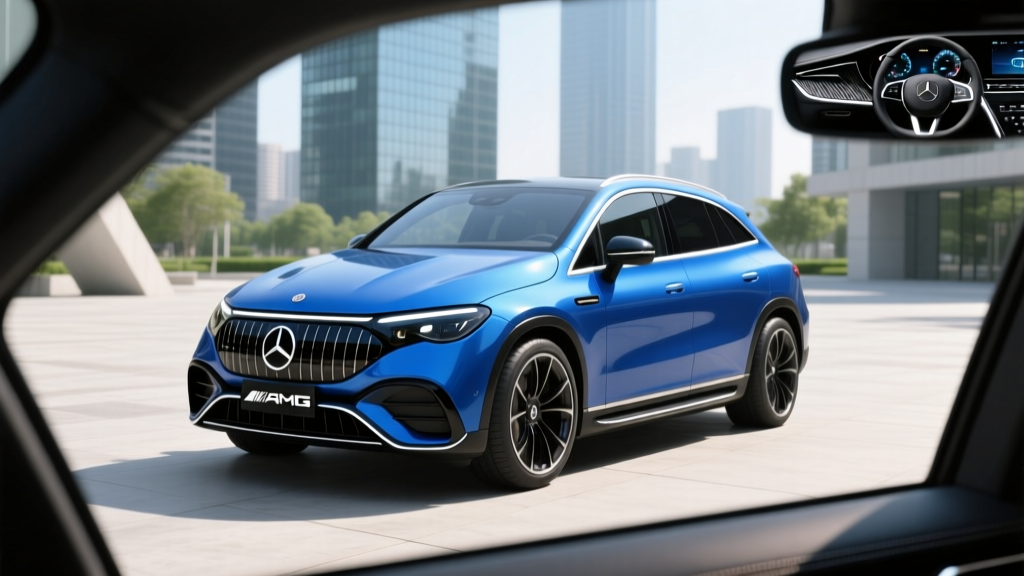
The 2026 Mercedes-AMG EQE SUV is the brand's performance-electric midsize SUV, offered in two trims: the EQE 43 4MATIC AMG (469 hp, EPA est. 230 miles of range, starting around $108,050) and the more powerful EQE 53 4MATIC+ AMG (617 hp, EPA est. 220 miles, starting around $117,550). Both use a 90.6 kWh usable NMC battery and support up to 170 kW DC fast charging (10–80% in roughly 28 minutes). Real-world highway range drops to approximately 185–205 miles, and cold weather can shave another 15–25%. Neither trim currently qualifies for the §30D federal EV tax credit due to battery-sourcing and MSRP-cap restrictions. If you want AMG-badged performance with daily usability and can charge at home, the EQE 43 is the value pick; if you need sub-3.5-second 0–60 sprints and track-day capability, the 53 justifies its premium.
Mercedes-AMG EQE SUV Lineup at a Glance
Mercedes-Benz funnels its AMG electric SUV ambitions through the EQE SUV platform. Unlike the larger EQS SUV (which leans luxury-cruiser), the EQE SUV AMG targets the performance-SUV buyer cross-shopping the Porsche Cayenne E-Hybrid, BMW iX M60, and Tesla Model X Plaid. Here's what you're working with for the 2026 model year:
| Spec | EQE 43 4MATIC AMG | EQE 53 4MATIC+ AMG |
|---|---|---|
| Horsepower | 469 hp | 617 hp (677 w/ RACE START) |
| 0–60 mph | 4.0 sec | 3.3 sec (w/ RACE START) |
| Battery (usable) | 90.6 kWh, NMC | 90.6 kWh, NMC |
| EPA Range | ~230 mi | ~220 mi |
| MPGe (combined) | 74 MPGe | 70 MPGe |
| Max DC Charge Rate | 170 kW | 170 kW |
| 10–80% DC Time | ~28 min | ~28 min |
| Level 2 (11 kW) | ~9.5 hrs (0–100%) | ~9.5 hrs (0–100%) |
| Drivetrain | Dual-motor AWD | Dual-motor AWD |
| Base MSRP | ~$108,050 | ~$117,550 |
| Federal Tax Credit (§30D) | Not eligible | Not eligible |
| Battery Warranty | 8 yr / 100,000 mi | 8 yr / 100,000 mi |
Sources: Mercedes-Benz USA EQE SUV, fueleconomy.gov.
Real-World Range vs. the EPA Sticker
The EPA range figure is a laboratory-derived combined-cycle estimate. In real-world driving, several factors compress that number — and AMG-tuned suspension, wider performance tires, and aggressive torque delivery make the EQE AMG SUV more susceptible to range variance than its non-AMG siblings.
What to Actually Expect
- Mild-weather mixed driving (55–70 mph, 65°F): ~210–220 mi (EQE 43), ~200–210 mi (EQE 53)
- Highway sustained (75 mph, flat terrain): ~190–205 mi (43), ~185–195 mi (53)
- Cold weather (30°F, highway): ~160–180 mi (43), ~155–170 mi (53) — NMC chemistry loses efficiency in cold, and cabin heating draws heavily without a standard heat pump on earlier model years
- City/regen-heavy driving: Can approach or slightly exceed EPA estimates thanks to aggressive regenerative braking
The EQE 53's lower range despite the same battery comes from its higher-output motors, stickier tires (more rolling resistance), and the tendency for owners to use RACE START and Sport+ modes. Drive it like a grand tourer and the gap narrows; drive it like an AMG and expect 170-mile road-trip legs between charges.
Charging: Home Setup and Public DC Speeds
DC Fast Charging (170 kW Peak)
The EQE AMG SUV maxes out at 170 kW on a DC fast charger using the CCS1 connector. That's competitive with the BMW iX but trails the Porsche Cayenne Electric and Hyundai Ioniq 5's 350 kW capability. Here's the charging-curve reality:
- 10–30% SoC: Sustains near 170 kW
- 30–60% SoC: Tapers to ~140–150 kW
- 60–80% SoC: Drops to ~100–110 kW
- 80–100% SoC: Slows dramatically to ~40–50 kW (typical lithium-ion taper to protect the battery)
On a 350 kW Electrify America or EVgo station, expect a 10–80% session in roughly 28 minutes. Plan for 35–40 minutes if the charger is shared or operating at 150 kW.
Level 2 Home Charging
The onboard charger supports up to 11 kW (48 amps at 240V). A full 0–100% charge takes approximately 9.5 hours — fine for overnight replenishment. Most owners will arrive home at 30–50% SoC and wake up fully charged in 5–6 hours.
Typical Level 2 Home Installation Costs
| Item | Estimated Cost |
|---|---|
| Level 2 charger (48A, hardwired; e.g., ChargePoint Home Flex, Wallbox Pulsar Plus) | $500–$750 |
| Electrician labor (240V/60A circuit run, 20–40 ft) | $800–$2,000 |
| Permit and inspection | $100–$300 |
| Electrical panel upgrade (if 100A panel needs upgrade to 200A) | $1,500–$3,500 |
| Total (no panel upgrade) | $1,400–$3,050 |
| Total (with panel upgrade) | $2,900–$6,550 |
Always get a quote from a licensed electrician before purchasing equipment — your panel capacity and conduit run distance dictate final cost.
Cost of Ownership: Mercedes-AMG EQE SUV vs. Gas AMG GLE
The most common cross-shop for a buyer considering a Mercedes-AMG electric SUV is the gas-powered AMG GLE 53 or GLE 63 S. Here's how five-year costs stack up:
| Cost Factor (5 Years) | EQE 53 AMG SUV | AMG GLE 53 (Gas) |
|---|---|---|
| Base MSRP | $117,550 | $83,850 |
| Federal Tax Credit | $0 (MSRP cap + sourcing) | $0 |
| Estimated Insurance (5 yr) | $14,500–$18,000 | $11,000–$14,000 |
| Energy/Fuel (75,000 mi) | $4,800–$6,200 (home + public DC) | $12,500–$15,000 (premium 93 octane, 17 MPG combined) |
| Maintenance (5 yr) | $2,500–$3,500 | $5,000–$7,500 |
| Estimated Depreciation | ~45–55% | ~40–50% |
| Approx. 5-Yr Total Cost | $170,000–$195,000 | $150,000–$175,000 |
The EQE 53 costs more to buy and insure, but saves roughly $7,000–$10,000 on fuel and maintenance over five years. The gap narrows further when you factor in EV depreciation, which has been steeper than gas-AMG depreciation in recent years. If you drive fewer than 10,000 miles per year, the fuel savings shrink; above 15,000 miles, the EV advantage grows.
For more on insurance variability, check IIHS safety ratings — vehicles with top ratings may qualify for lower premiums with some carriers.
Federal Tax Credit and Incentive Reality
Under the current IRS §30D clean vehicle credit rules, the Mercedes-AMG EQE SUV does not qualify for the $7,500 federal tax credit. Three barriers apply:
- MSRP cap: SUVs must be under $80,000. Both AMG trims exceed this ($108,050 and $117,550 base).
- Battery sourcing: The EQE's battery pack does not meet the critical-minerals and battery-component requirements tied to US or FTA-partner sourcing.
- Buyer income cap: Even if the vehicle qualified, buyers must earn under $300,000 (joint) / $150,000 (single) MAGI.
Some state-level incentives (California's CVRP, Colorado's state credit, New York's Charge Ready NY) may still apply depending on your jurisdiction — check your state's energy office for current programs. Always consult a tax professional before making purchase decisions based on incentive eligibility.
Common Misconceptions About the Mercedes-AMG Electric SUV
| Myth | Fact |
|---|---|
| "AMG electric means it drives like a gas AMG." | The instant torque and low center of gravity deliver different dynamics — brutally quick off the line and planted in corners, but heavier (5,600+ lbs) and less communicative through the steering than a gas GLE 63. |
| "230 miles of range is enough for road trips." | At highway speeds with A/C or heat, expect 185–205 real miles. That means charging stops every 2.5–3 hours on long trips. Plan routes around CCS chargers — Mercedes' own High Power Charging network is expanding but isn't ubiquitous yet. |
| "I can charge on any Tesla Supercharger." | The EQE SUV uses CCS1. Tesla's NACS connector is different. While Tesla has opened some Superchargers to non-Tesla vehicles via Magic Dock adapters, coverage is limited and charge speed may be reduced. Use PlugShare or the Mercedes me app to verify compatibility. |
| "The battery will need replacing in 5 years." | NMC batteries in modern EVs are engineered for 200,000+ miles with manageable degradation (typically 10–15% capacity loss over 8 years). The 8-year/100,000-mile warranty covers defects and excessive degradation below 70% capacity. |
| "It qualifies for the $7,500 federal tax credit." | It does not — the MSRP alone disqualifies it, even before battery-sourcing rules. See IRS §30D details above. |
Decision Framework: Should You Buy the Mercedes-AMG EQE SUV?
Buy the EQE 43 AMG If:
- You want AMG styling, exhaust-sound simulation, and Sport+ dynamics without paying the 53's $10K premium
- Your daily commute is under 80 miles round-trip and you can charge at home
- You value a quieter, smoother daily driver over track-day performance
- You live in a moderate climate (less cold-weather range penalty)
Buy the EQE 53 AMG If:
- Sub-3.5-second 0–60 and RACE START launches are non-negotiable
- You'll use AMG Dynamic Plus features (active roll stabilization, rear-axle steering) regularly
- You accept the ~10-mile range penalty for 148 additional horsepower
Look Elsewhere If:
- You regularly drive 300+ miles between charging stops — consider the EQS 580 SUV (305 mi EPA) or a PHEV like the Cayenne E-Hybrid
- You need the $7,500 federal credit to make the math work — look at the Rivian R1S, Cadillac Lyriq, or BMW iX xDrive50
- You lack home charging access and your area has sparse CCS public infrastructure
- You want the newest 800V architecture for faster charging — Porsche's Macan Electric and Cayenne EV charge at 270+ kW
What First-Time EV Buyers Should Know
If the Mercedes-AMG EQE SUV is your first electric vehicle, prepare for these ownership shifts:
- Home charging is essential. Public DC charging at $0.40–$0.60/kWh erases most fuel-cost savings. Home charging at $0.12–$0.18/kWh is where the economics work. Budget $1,400–$3,000 for a professional Level 2 install.
- Plan trips differently. Use A Better Routeplanner or the Mercedes me app to map charging stops. A 400-mile road trip requires 1–2 DC fast-charge stops of 25–35 minutes each.
- Precondition the battery. When navigating to a DC fast charger, the EQE's thermal management system warms the battery to optimal temperature, improving charge speed by 20–30% in cold weather. Always set this up in the navigation before arriving.
- Maintenance drops significantly. No oil changes, no transmission fluid, no spark plugs. Expect brake pad life of 80,000+ miles thanks to regenerative braking. Budget for cabin air filters, wiper fluid, and tire rotations.
- Insurance is higher. EV repair costs (especially battery-adjacent damage) push premiums 15–30% above gas equivalents. Get quotes from GEICO, Progressive, and EV-specialty carriers before signing the purchase agreement.
Frequently Asked Questions
What is the real-world range of the Mercedes-AMG EQE SUV?
The EQE 43 AMG delivers approximately 200–220 miles in mixed real-world driving; the EQE 53 AMG returns about 185–210 miles. Highway driving at 75 mph reduces this to roughly 185–205 mi (43) and 185–195 mi (53). Cold weather (below 35°F) can reduce range by an additional 15–25%.
How long does it take to charge the Mercedes-AMG EQE SUV at home?
On a Level 2 charger (11 kW / 48A), a full 0–100% charge takes about 9.5 hours. Most owners arriving at 30–50% SoC will be fully charged in 5–6 hours — easily overnight.
Does the Mercedes-AMG EQE SUV qualify for the federal EV tax credit?
No. Both the EQE 43 and EQE 53 AMG exceed the $80,000 MSRP cap for SUVs under §30D, and their battery sourcing does not meet current critical-mineral requirements. Check IRS.gov for the latest rules.
How does the EQE AMG compare to the BMW iX M60?
The BMW iX M60 (610 hp, EPA est. 285 mi range, ~$111,500 MSRP) offers significantly more EPA range and slightly faster DC charging. The EQE 53 AMG counters with a more traditional SUV driving feel, AMG-tuned air suspension, and Mercedes' MBUX Hyperscreen. Range is the BMW's clear advantage.
What happens if the battery degrades?
Mercedes-Benz warranties the EQE battery for 8 years or 100,000 miles against defects and capacity loss below 70%. Real-world NMC degradation data from similar platforms shows approximately 8–12% capacity loss over 5 years / 75,000 miles under normal use. Full battery replacement (out of warranty) costs $20,000–$30,000+ at current pricing.
Can I tow with the Mercedes-AMG EQE SUV?
Yes — the EQE SUV is rated to tow up to 4,000 lbs when properly equipped. Note that towing reduces range by 30–50% depending on trailer weight and aerodynamics. Expect 100–140 real-world miles while towing near max capacity.