Quick Answer: Should You Buy a Mercedes AMG Electric Car?
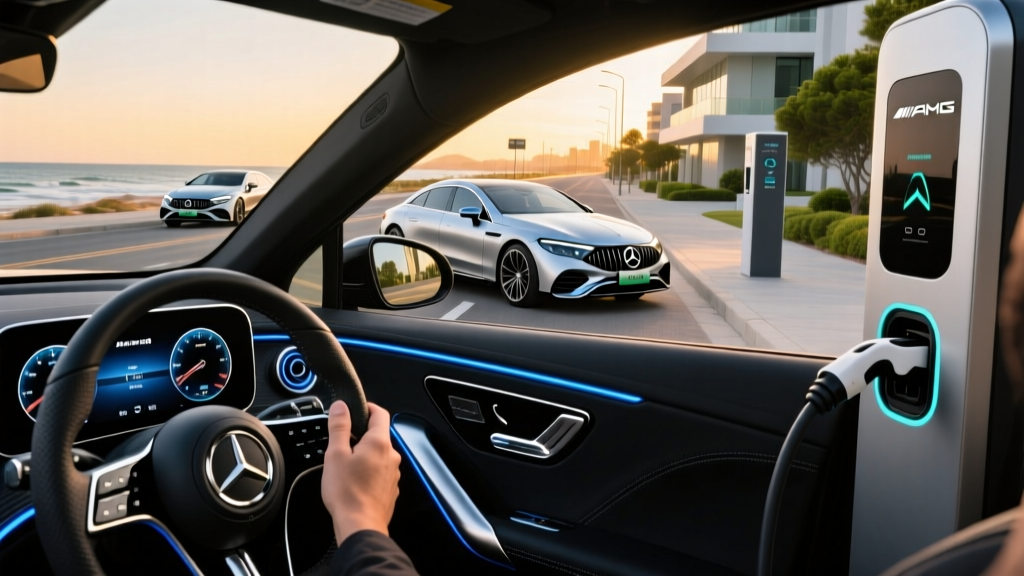
The Mercedes AMG electric car lineup — primarily the AMG EQE Sedan (EQE 43/53) and AMG EQS (EQS 53) — delivers genuine AMG performance (0-60 in as little as 3.4 seconds) with EPA ranges between 230 and 305 miles depending on trim and wheel size. Base MSRPs run from roughly $108,000 to over $150,000. These vehicles do not qualify for the federal §30D new EV tax credit due to MSRP caps and battery-sourcing rules. If you want silent, instant-torque performance with low daily running costs and have reliable home Level 2 charging, an AMG EV is compelling. If you regularly drive 400+ miles between stops or lack home charging access, a gas AMG (like the E 63 S or GT 63) remains more practical for road trips.
The 2026 Mercedes AMG Electric Car Lineup at a Glance
Mercedes-AMG's fully electric performance offerings center on two platforms built on the EVA architecture. Here are the core models available for the 2025–2026 model years:
| Spec | AMG EQE 43 4MATIC | AMG EQE 53 4MATIC+ | AMG EQS 53 4MATIC+ |
|---|---|---|---|
| Battery (usable) | 90.6 kWh (NMC) | 90.6 kWh (NMC) | 107.8 kWh (NMC) |
| Horsepower | 469 hp | 617 hp (up to 677 w/ AMG Dynamic Plus) | 649 hp (up to 751 w/ Dynamic Plus) |
| 0-60 mph | 4.2 sec | 3.2 sec | 3.4 sec |
| EPA Range | ~230 mi | ~230 mi | ~277–305 mi (wheel dependent) |
| MPGe (combined) | ~74 MPGe | ~73 MPGe | ~78–80 MPGe |
| Max DC Fast Charge | 170 kW | 170 kW | 200 kW |
| 10-80% DC Charge | ~32 min | ~32 min | ~31 min |
| Level 2 (AC) Rate | 9.6 kW | 9.6 kW | 9.6 kW |
| Base MSRP (approx.) | $108,000 | $112,000 | $150,000 |
| Drivetrain Warranty | 4 yr / 50,000 mi | 4 yr / 50,000 mi | 4 yr / 50,000 mi |
| Battery Warranty | 8 yr / 100,000 mi | 8 yr / 100,000 mi | 8 yr / 100,000 mi |
Sources: fueleconomy.gov, Mercedes-Benz USA. Real-world range varies with temperature, speed, and terrain — see below.
Real-World Range: What the EPA Sticker Doesn't Tell You
The EPA range figures above are laboratory estimates. In real-world AMG ownership, several factors compress those numbers significantly:
Real-World Range Expectations
- Highway cruising (70–80 mph, moderate climate): Expect 80–85% of EPA — roughly 185–195 miles for the EQE 53, and 225–260 miles for the EQS 53.
- Cold weather (below 32°F / 0°C): Lithium-ion NMC batteries lose 20–30% range in freezing temps. The EQE 53 may deliver only 160–185 miles. The EQS 53's heat pump (standard) helps mitigate this, but expect ~210–240 miles.
- Spirited driving (AMG mode, aggressive regen use): Hard acceleration and high speeds drain the 90.6–107.8 kWh pack quickly. Track-day or canyon-carving range can drop below 150 miles.
The AMG EQE's relatively modest 230-mile EPA figure is a consequence of its performance tuning: higher power output, wider tires, and sport-tuned suspension all increase rolling resistance and energy consumption compared to the standard EQE 350+ (which achieves ~305 miles EPA with RWD and less power). If daily range matters more than 0-60 times, the non-AMG EQE or EQS variants are worth considering.
Charging Speeds and the AMG Charging Curve Reality
Mercedes-AMG EVs use the CCS1 connector (with NACS adapter availability expanding through Mercedes' partnership with Tesla Supercharger access). Here's what charging actually looks like:
| Charging Level | Power (kW) | Miles Added per Hour | Typical Use Case |
|---|---|---|---|
| Level 1 (120V household) | ~1.4 kW | ~3–4 mi/hr | Emergency / overnight trickle |
| Level 2 (240V home wallbox) | 9.6 kW | ~25–30 mi/hr | Daily home charging (full charge in ~10–12 hrs) |
| DC Fast Charge (EQE AMG) | Peak 170 kW | ~150 mi in 15 min (at peak) | Road-trip stops; 10–80% in ~32 min |
| DC Fast Charge (EQS AMG) | Peak 200 kW | ~170 mi in 15 min (at peak) | Road-trip stops; 10–80% in ~31 min |
Charging curve caveat: Peak kW rates are not sustained. The EQS 53 hits 200 kW only between roughly 10–30% State of Charge (SoC), then tapers progressively. By 60% SoC, you're likely at 100–120 kW; above 80%, charging drops to under 50 kW to protect the NMC cells. This is why manufacturers quote 10–80% times rather than 0–100%.
Preconditioning matters. Use the Mercedes me app or MBUX navigation to route to a DC fast charger — the car will warm the battery to optimal temperature (~35–40°C), enabling faster charging. Without preconditioning in cold weather, your 170–200 kW peak might be capped at 80–100 kW for the first several minutes.
AMG Electric vs. Gas AMG: Cost and Performance Compared
How does an AMG electric car stack up against its internal-combustion siblings? Let's compare the AMG EQE 53 against the gas-powered AMG E 63 S (their closest analogs):
| Metric | AMG EQE 53 (Electric) | AMG E 63 S (Gas, 4.0L V8) |
|---|---|---|
| Base MSRP | ~$112,000 | ~$118,000 |
| 0-60 mph | 3.2 sec | 3.3 sec |
| Horsepower | 617 hp (677 w/ Dynamic Plus) | 603 hp |
| Range / Tank | ~230 mi EPA (195 real-world hwy) | ~380 mi (18.0-gal tank, ~21 mpg hwy) |
| Fuel / Energy Cost per Mile | ~$0.04–0.06/mi (home charging at $0.14/kWh) | ~$0.19/mi (premium at $4.20/gal, 18 mpg combined) |
| Annual Fuel/Energy (12,000 mi) | ~$480–$720 | ~$2,280 |
| Oil Changes / Year | None | 2–3 ($150–$250 each) |
| Federal Tax Credit (§30D) | Not eligible (MSRP & sourcing) | N/A |
| Estimated Insurance (annual) | $3,200–$4,500 | $2,800–$3,800 |
Fuel cost calculations based on national averages; your local electricity and gas prices will vary. Insurance estimates are approximations from industry data — get personal quotes.
5-Year Total Cost of Ownership Estimate (12,000 mi/year)
| Category | AMG EQE 53 | AMG E 63 S (Gas) |
|---|---|---|
| Purchase Price (base) | $112,000 | $118,000 |
| Energy/Fuel (5 years) | $2,400–$3,600 | $11,400 |
| Maintenance (5 years) | $1,500–$2,000 | $4,000–$5,500 |
| Insurance (5 years) | $16,000–$22,500 | $14,000–$19,000 |
| Federal Tax Credit | $0 | $0 |
| Estimated Depreciation (5 yr) | ~55–60% | ~50–55% |
| Approx. 5-Yr Operating Cost | $19,900–$28,100 | $29,400–$35,900 |
The AMG EQE 53 saves roughly $8,000–$12,000 in operating costs over five years, primarily from energy and maintenance savings. However, EV depreciation for luxury sedans currently runs steeper than gas equivalents — a factor that can erode those savings at resale.
Federal Tax Credit and Incentives: What AMG Buyers Need to Know
Under current IRS §30D rules, the federal new EV tax credit offers up to $7,500 — but the Mercedes AMG electric car lineup does not qualify. Here's why:
§30D Eligibility Checklist (2025–2026 Rules)
- ❌ MSRP cap: Sedans must be under $55,000; SUVs/vans/trucks under $80,000. All AMG EVs exceed these caps.
- ❌ Battery sourcing: Critical minerals and battery components must meet phased-in domestic/free-trade-agreement sourcing thresholds. Mercedes' EVA-platform batteries (sourced from CATL and other global suppliers) do not fully comply.
- ⚠️ Buyer income caps: AGI limits of $150K single / $300K joint — many AMG buyers exceed these regardless.
- ✅ Point-of-sale transfer: Available for qualifying vehicles, but moot here since AMG EVs don't qualify.
Always verify current rules at IRS.gov and consult a tax professional. State-level incentives (California, Colorado, etc.) may offer partial rebates — check your local DMV or energy office.
Myths vs. Facts: Common Misconceptions About AMG EVs
| Myth | Fact |
|---|---|
| "AMG EVs aren't real AMGs — they lack the soul of a V8." | The EQE 53 hits 617 hp and 3.2 seconds to 60 — faster than the V8 E 63 S. The AMG-tuned air suspension, rear-biased torque vectoring, and synthetic exhaust note (AMG Sound Experience) are genuine AMG engineering. Whether it has the "soul" of a V8 is subjective, but the performance is undeniable. |
| "You can't road-trip an AMG EV — charging takes too long." | A 10–80% DC fast charge takes ~31–32 minutes. On a 600-mile trip, you'd stop 2–3 times for ~35 minutes each. That's 1.5–2 hours of charging vs. ~15 minutes for gas. It's more time, but manageable with planning via the Mercedes me app and PlugShare/ChargePoint networks. |
| "The battery will need replacing in 5 years and cost $30,000." | Mercedes warranties the HV battery for 8 years/100,000 miles with a 70% capacity retention threshold. NMC degradation data from similar platforms shows ~10–15% capacity loss at 100,000 miles under normal use. Full pack replacement (if ever needed out of warranty) runs $20,000–$28,000, but catastrophic failure within the warranty period is rare. |
| "Home charging isn't necessary if there are public chargers." | Public DC fast charging costs $0.30–$0.50/kWh (vs. $0.12–$0.18/kWh at home). Exclusively using public chargers erases most of the per-mile cost advantage and adds inconvenience. Home Level 2 charging is strongly recommended for AMG EV ownership. |
| "EVs don't need any maintenance." | No oil changes, but you still need tire rotations (AMG-spec tires wear faster due to weight and torque), cabin air filters, brake fluid checks, coolant system service, and wiper replacement. Budget $300–$500/year for basic EV maintenance. |
Home Charging Setup: What AMG EV Owners Need
Charging a 90.6–107.8 kWh battery on a standard 120V outlet (Level 1) adds only 3–4 miles per hour — meaning a full charge would take 25–30+ hours. Level 2 home charging is effectively mandatory for AMG EV ownership.
| Item | Cost Range | Notes |
|---|---|---|
| Level 2 Wallbox (48A, hardwired) | $500–$800 | Mercedes-Benz Wallbox Home or ChargePoint Home Flex |
| Electrician labor (240V/50A circuit) | $800–$2,500 | Depends on panel proximity and conduit run |
| Electrical panel upgrade (if needed) | $1,500–$3,500 | Required if your panel is below 200A or has no spare breaker slots |
| Permit and inspection | $100–$300 | Required in most jurisdictions |
| Total (typical install) | $1,400–$3,600 | Without panel upgrade: $1,400–$3,300 |
| Total (with panel upgrade) | $2,900–$7,100 | Older homes with 100–150A panels |
Key consideration: At 9.6 kW, the AMG EQE's 90.6 kWh battery charges from 10–100% in roughly 9–10 hours on Level 2. Plug in when you get home, and it's full by morning. The EQS 53's larger 107.8 kWh pack needs ~11–12 hours for a full charge.
Have a licensed electrician evaluate your panel before purchasing. A 200-amp panel with available breaker space is the ideal scenario. Homes with 100-amp service will almost certainly need an upgrade to support both a Level 2 charger and normal household loads safely.
Decision Framework: Is a Mercedes AMG Electric Car Right for You?
Choose the AMG EQE 53 if:
- You have reliable home Level 2 charging (garage or dedicated parking with 240V access).
- Your daily commute is under 150 miles round-trip.
- You want sub-3.5-second 0-60 performance without V8 fuel bills.
- You rarely drive more than 300 miles in a single day without overnight stops.
- You value near-silent acceleration and one-pedal regenerative driving in traffic.
Choose the AMG EQS 53 if:
- You need more range (~277–305 mi EPA) for longer commutes or frequent road trips.
- You want maximum luxury and rear-seat space alongside AMG performance.
- Your budget extends to $150,000+.
Stick with a gas AMG (E 63 S, GT 63) if:
- You lack home charging and rely on street parking or apartments without EV infrastructure.
- You regularly drive 400+ miles between stops (rural routes, charging deserts).
- You live in extreme cold climates and need consistent 350+ mile range year-round.
- Long-term resale value is a top priority (gas AMG depreciation is currently more predictable).
- The V8 exhaust note and mechanical engagement are non-negotiable for you.
Frequently Asked Questions
What is the real-world range of the Mercedes AMG EQE 53?
The EPA rates the AMG EQE 53 at approximately 230 miles. In real-world highway driving at 70–80 mph, expect 185–200 miles. In freezing temperatures, that can drop to 160–185 miles. City driving with heavy regenerative braking can sometimes exceed the EPA estimate slightly.
Does the Mercedes AMG electric car qualify for the $7,500 federal tax credit?
No. Under current IRS §30D rules, the AMG EQE and EQS exceed the $55,000 MSRP cap for sedans and do not meet the battery-sourcing requirements. Consult a tax professional for your specific situation and check for any state-level incentives.
How much does it cost to charge an AMG EQE at home vs. public chargers?
At home with an average US electricity rate of ~$0.14/kWh, fully charging the 90.6 kWh battery costs about $12.70 — roughly $0.055/mile. At a public DC fast charger averaging $0.38/kWh, the same charge costs ~$34.40 — roughly $0.15/mile. Home charging saves about $0.10 per mile.
How long does the AMG EV battery last, and what does replacement cost?
Mercedes warranties the high-voltage battery for 8 years or 100,000 miles (whichever comes first) with a 70% State of Health threshold. Real-world NMC degradation data from similar platforms suggests 10–15% capacity loss over 100,000 miles with normal use. Out-of-warranty replacement costs are estimated at $20,000–$28,000, though most owners will not need this within the vehicle's typical ownership period.
Can I use Tesla Superchargers with a Mercedes AMG EV?
Mercedes-Benz has been expanding Supercharger access for its CCS-equipped EVs through a NACS adapter program. Availability depends on your model year and adapter rollout. Check with your Mercedes dealer for the latest adapter compatibility. Non-Tesla DC networks (Electrify America, EVgo, ChargePoint) work natively with the CCS1 port.
Is the AMG EQE faster than the gas AMG E 63 S?
Yes, marginally. The AMG EQE 53 (with Dynamic Plus Package) hits 0-60 in 3.2 seconds vs. the E 63 S at 3.3 seconds. The electric AMG delivers instant torque with no turbo lag or transmission shift delay, making it feel even quicker in real-world roll-on acceleration. However, the gas E 63 S offers greater top-end range and faster refueling.
What should a first-time EV buyer know before purchasing an AMG EV?
Plan your charging before you buy: confirm you can install a Level 2 home charger (240V, 50-amp circuit). Understand that real-world range will be 15–30% below the EPA sticker depending on conditions. Learn to use preconditioning for fast charging. Budget for higher insurance premiums ($3,200–$4,500/year). And accept that road trips require 30-minute charging stops every 180–220 miles — plan routes using apps like A Better Routeplanner or the Mercedes me Charge network.