The Short Answer: McLaren Does Not Sell an Electric Car Yet
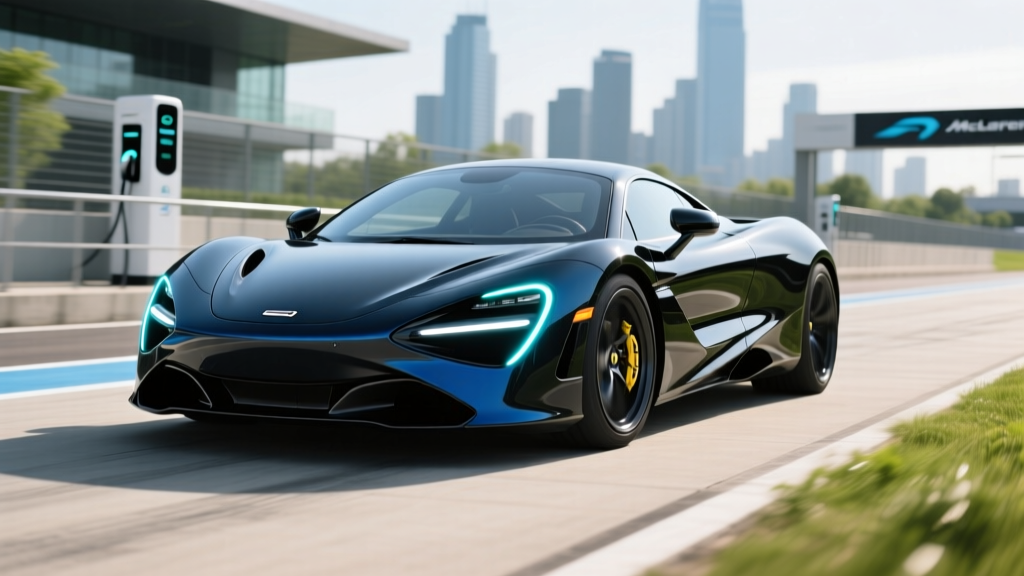
As of early 2026, McLaren Automotive has no production battery-electric vehicle on sale. The brand's current lineup — the Artura (plug-in hybrid V6), the 750S, and the GTS — are all powered by internal combustion engines, with only the Artura offering any form of electrification via its 18.7-mile EPA electric-only range. McLaren has confirmed it is developing a fully electric supercar, but no production model, pricing, or delivery date has been announced. If you want a McLaren today, you are buying a gas-powered or hybrid vehicle. If you want an electric supercar in 2026, you will need to look at competitors like the Lotus Evija, Rimac Nevera, or the Porsche Taycan Turbo GT.
McLaren's Current Electrified Option: The Artura PHEV
The closest thing to a McLaren electric car you can actually buy is the McLaren Artura, a plug-in hybrid supercar that pairs a twin-turbo 3.0L V6 with an electric motor and a 7.4 kWh battery pack. Here is what the numbers look like:
| Spec | McLaren Artura (2025/2026 MY) |
|---|---|
| Powertrain | Twin-turbo V6 + electric motor (PHEV) |
| Combined Output | 671 hp / 531 lb-ft torque |
| 0–60 mph | 3.0 seconds |
| Top Speed | 205 mph |
| Battery Capacity | 7.4 kWh (usable) |
| EPA Electric-Only Range | 18 miles |
| EPA Combined MPGe | 39 MPGe (electric + gas) |
| Gas-Only MPG (combined) | 18 MPG |
| Base MSRP | ~$249,750 |
| Federal §30D Tax Credit | Not eligible (MSRP and sourcing limits) |
The Artura's 18-mile electric-only range is enough for a short neighborhood loop or a quiet departure from your driveway, but it is not an EV experience. Once the battery is depleted, you are driving a 3,300-pound hybrid supercar sipping fuel at roughly 18 MPG combined. The Artura is a remarkable performance machine, but calling it an "electric McLaren" overstates what the powertrain delivers in daily use.
Real-World PHEV Note: The Artura's 18-mile EPA electric range drops to approximately 12–14 miles in cold weather or at sustained highway speeds above 65 mph. Aggressive throttle use engages the gas engine immediately regardless of battery state of charge — this is a performance-tuned PHEV, not an efficiency-first commuter.
McLaren's EV Future: What Has Been Announced
McLaren has acknowledged that a fully electric supercar is in development, with CEO Michael Leiters confirming the brand is targeting an EV launch. However, several critical details remain unknown as of 2026:
- No production name or model designation has been released
- No battery capacity (kWh), range (EPA miles), or charge rate (kW) figures have been published
- No pricing or delivery timeline has been confirmed
- No platform details — McLaren has historically used its own carbon-fiber architecture, and it is unclear whether the EV will use a bespoke platform or a partnership-derived one
McLaren's approach has been cautious compared to rivals. Lotus shipped the all-electric Evija (1,972 hp, claimed ~200-mile range) in limited numbers. Rimac has been producing the Nevera (1,914 hp, 120 kWh battery, EPA-estimated 287-mile range) since 2021. Porsche continues to iterate on the Taycan platform. McLaren's delay likely reflects the engineering challenge of packaging a large battery into a lightweight supercar chassis without compromising the handling dynamics the brand is known for.
What Performance EV Buyers Can Actually Purchase in 2026
If you searched "McLaren electric car" because you want supercar-level performance with a battery-electric powertrain, here is how the available alternatives stack up:
| Vehicle | Powertrain | HP | 0–60 mph | EPA Range | Battery (kWh) | Peak DC Charge (kW) | Base MSRP |
|---|---|---|---|---|---|---|---|
| Lotus Evija | BEV | 1,972 | <3.0 sec | ~200 mi (est.) | 70 | 800 (claimed) | ~$2,100,000 |
| Rimac Nevera | BEV | 1,914 | 1.85 sec | 287 mi | 120 | 500 | ~$2,400,000 |
| Porsche Taycan Turbo GT | BEV | 1,019 | 2.1 sec | 269 mi | 105 (gross) | 320 | ~$230,000 |
| Tesla Model S Plaid | BEV | 1,020 | 1.99 sec | 396 mi | 100 (gross) | 250 | ~$89,990 |
| McLaren Artura | PHEV | 671 | 3.0 sec | 18 mi (EV) + 320 mi (gas) | 7.4 | N/A (Level 2 AC only) | ~$249,750 |
The Tesla Model S Plaid remains the most accessible sub-2-second 0–60 vehicle ever sold, at a fraction of the cost of the European hypercars. The Porsche Taycan Turbo GT delivers track-capable performance with the build quality and dealer network that low-volume marques cannot match. Neither is a McLaren, but both answer the question of what an electric performance car looks like today.
The Real Cost of Owning a Performance EV vs. a McLaren
Let's compare a five-year ownership scenario between the McLaren Artura (the closest thing to a McLaren electric car) and the Porsche Taycan Turbo GT (the most comparable electric performance car with a real dealer network):
| Cost Category (5 Years) | McLaren Artura (PHEV) | Porsche Taycan Turbo GT (BEV) |
|---|---|---|
| Purchase Price (base MSRP) | $249,750 | $230,000 |
| Federal Tax Credit (§30D) | $0 (not eligible) | $0 (MSRP cap: $55K sedans) |
| Fuel/Energy (75K miles) | ~$18,500 (premium gas + electricity) | ~$7,200 (electricity at $0.16/kWh avg) |
| Maintenance (5 yr est.) | ~$12,000 (oil, brakes, hybrid system) | ~$4,500 (no oil, regen saves brakes) |
| Insurance (5 yr avg.) | ~$42,000 ($700+/mo) | ~$30,000 ($500/mo) |
| Estimated Depreciation | ~$100,000 (40%) | ~$115,000 (50%) |
| 5-Year Total Cost | ~$422,250 | ~$386,700 |
The Artura's fuel costs are higher despite its hybrid system because most miles will be driven on gasoline — the 7.4 kWh battery only covers short trips. The Taycan's electricity cost assumes a national average of $0.16/kWh for a mix of home Level 2 and public DC fast charging. Insurance for McLarens is notoriously expensive due to limited production volume, carbon-fiber repair costs, and low parts availability. EPA fueleconomy.gov data confirms the Artura's combined gas-only rating of 18 MPG.
Common Misconceptions About a McLaren Electric Car
| Myth | Fact |
|---|---|
| "McLaren already makes an electric supercar" | McLaren has no production BEV. The Artura is a PHEV with 18 miles of electric range. |
| "The Artura is basically an EV" | With a 7.4 kWh battery and no DC fast charging, the Artura operates as a gas car for 90%+ of typical driving. |
| "McLaren's EV will be affordable" | McLaren's cheapest current car starts near $215K. An electric McLaren will likely exceed $250K at launch. |
| "Electric supercars can't match McLaren's handling" | The Rimac Nevera holds multiple production-car speed records. EV performance is not the bottleneck — weight and packaging are. |
| "I'll get the $7,500 federal tax credit on a McLaren EV" | The §30D credit has a $55,000 MSRP cap for sedans and $80,000 for SUVs/trucks/vans per IRS guidelines. A McLaren EV will far exceed both caps. |
Decision Framework: Should You Wait for McLaren or Buy Now?
Choose the McLaren Artura (PHEV) Now If:
- You want a McLaren specifically and cannot wait 2–4+ years for an unannounced EV
- You prioritize lightweight handling and carbon-fiber construction over electric-only driving
- You have access to premium fuel and accept ~18 MPG in regular driving
- You plan to drive fewer than 5,000 miles per year (minimizing fuel and depreciation impact)
Choose an Existing Performance EV (Taycan, Model S Plaid) If:
- You want instant electric torque and sub-3-second 0–60 times today
- You can install a Level 2 home charger (240V, 40–80A circuit) for overnight charging
- You want lower running costs: ~$0.04–0.06/mile electricity vs. ~$0.25/mile premium gas in the Artura
- You value a real dealer and service network over exclusivity
Wait for the McLaren EV If:
- Brand loyalty to McLaren is non-negotiable and you want a BEV
- You are comfortable with a 2028–2030+ timeline and unknown pricing
- You have a second vehicle for daily driving and can absorb the wait
What First-Time Performance EV Buyers Should Know
If a McLaren electric car search brought you to the EV performance segment for the first time, here are the ownership realities that spec sheets do not capture:
Charging access is the first question. A performance EV like the Taycan Turbo GT has a 105 kWh (gross) battery. Charging from 10–80% on a 320 kW DC fast charger takes approximately 18–22 minutes, but only if the battery is preconditioned and the charger can sustain peak output. Most public chargers in the U.S. deliver 50–150 kW in practice, which extends that session to 30–45 minutes. Home Level 2 charging at 11.5 kW (48A) adds roughly 30–35 miles of range per hour — sufficient for overnight replenishment.
Cold weather reduces range by 20–35%. The Taycan Turbo GT's 269-mile EPA range drops to approximately 180–215 miles in sustained sub-40°F highway driving. Battery preconditioning and a heat pump (standard on the Taycan) mitigate this, but physics cannot be fully engineered away.
kW vs. kWh matters. Kilowatts (kW) measure power — how fast energy flows during charging. Kilowatt-hours (kWh) measure energy — the battery's total capacity. A 105 kWh battery charged at 320 kW (peak) does not fill in 20 minutes at that rate; the charge curve tapers significantly above 80% state of charge to protect battery longevity. Expect the final 20% to take as long as the first 60%.
Insurance is higher for performance EVs. Average annual premiums for a Taycan Turbo GT run $5,500–$7,500 depending on state, driving record, and coverage. The instant torque and high repair costs of battery packs and carbon-ceramic brakes drive premiums above comparable gas sports cars. Get quotes before purchasing.
Tax credits are unlikely at this price point. The federal §30D credit caps vehicle MSRP at $55,000 for sedans and $80,000 for SUVs/trucks/vans, with buyer income limits ($150K single / $300K joint). No current or foreseeable performance EV from McLaren, Porsche, or Lotus will qualify. Some states offer separate incentives — check your state's energy office for details, as these vary by jurisdiction.
Frequently Asked Questions
Does McLaren make a fully electric car in 2026?
No. McLaren has no production battery-electric vehicle available for purchase. The brand has confirmed an electric supercar is in development but has not released a model name, specifications, pricing, or delivery timeline.
What is the closest thing to a McLaren electric car I can buy?
The McLaren Artura is a plug-in hybrid supercar with 18 miles of EPA-rated electric-only range, a 7.4 kWh battery, and a combined 671 hp from its V6 and electric motor. It starts at approximately $249,750. For a fully electric performance car, the Porsche Taycan Turbo GT (1,019 hp, 269-mile EPA range, ~$230,000) is the closest market alternative with a comparable price point.
Will the McLaren EV qualify for the $7,500 federal tax credit?
Almost certainly not. The IRS §30D credit has MSRP caps ($55,000 for sedans, $80,000 for SUVs/trucks/vans) and buyer income limits. A McLaren electric supercar will far exceed these price thresholds. Always verify current eligibility on irs.gov or with a qualified tax professional.
How does the Artura's hybrid system compare to a full EV?
The Artura's 7.4 kWh battery provides 18 miles of electric range and functions primarily as a torque-fill assist for the gas engine. A full BEV like the Taycan Turbo GT has a 105 kWh battery — roughly 14 times the energy capacity — enabling 269 miles of range and sustained high-speed electric driving. The Artura is a performance hybrid; it is not an electric car with a gas backup.
When will McLaren release an electric supercar?
McLaren has not announced a specific date. Industry estimates suggest 2028–2030 is plausible, but this is speculative. The brand has emphasized that it will not compromise on weight or handling dynamics, which are significant engineering challenges for a battery-electric supercar.
What should I budget for home charging a performance EV?
A Level 2 home charger installation (240V, 48–80A hardwired unit) typically costs $1,200–$3,500 including equipment, electrician labor, and permits. If your home's electrical panel needs an upgrade from 100A to 200A service, add $2,000–$5,000. Always get a quote from a licensed electrician before purchasing an EV.