The Honest Take on the Mazda MX-30
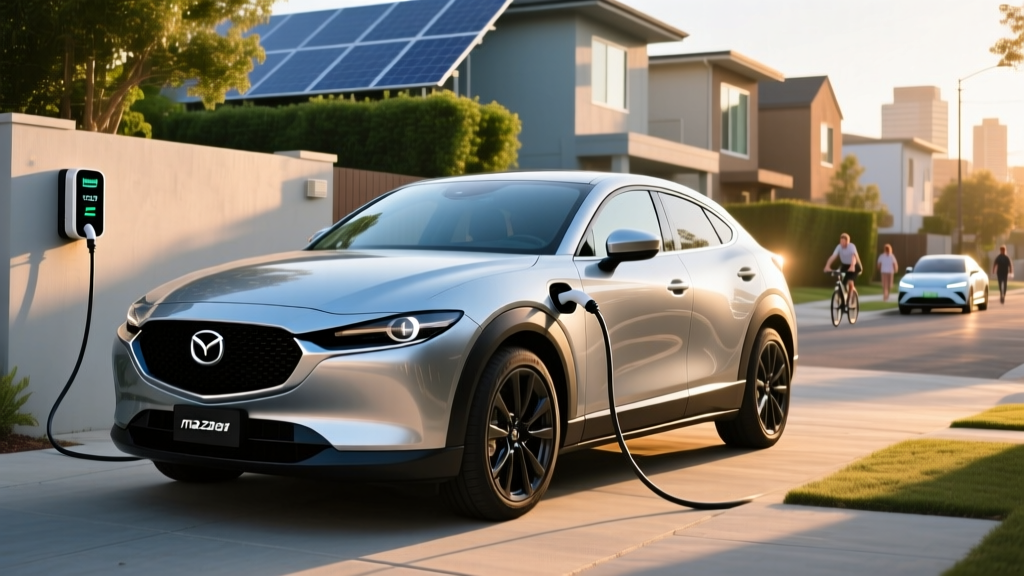
The Mazda MX-30 occupies a specific and increasingly rare niche in the 2026 EV market: a subcompact electric crossover designed for urban commuters who prioritize driving dynamics, interior material quality, and distinctive styling over maximum range. With an EPA-estimated 100 miles of range from a compact 35.5 kWh battery, the MX-30 is not a road-trip vehicle. It is, however, one of the most thoughtfully built entry-level EVs available — if your daily driving pattern fits within its envelope.
Mazda has kept the MX-30 in limited availability for 2026, primarily in states with ZEV mandates such as California, Oregon, and select Northeast markets. Pricing remains competitive for the segment, and Mazda's premium interior execution sets it apart from rivals like the Chevrolet Bolt EV and Nissan Leaf. But the range limitation is real and non-negotiable. Let's break down exactly what you get.
Specs at a Glance
| Attribute | 2026 Mazda MX-30 |
|---|---|
| EPA Range | 100 miles |
| Real-World Range (mixed) | 85–95 mi highway; ~75–85 mi cold weather |
| Battery Capacity | 35.5 kWh (usable ~32 kWh), NMC lithium-ion |
| Motor Output | 143 hp / 200 lb-ft torque |
| Drivetrain | Front-wheel drive (FWD) |
| 0–60 mph | ~9.1 seconds |
| Max DC Fast Charge | 50 kW (CCS) |
| 10–80% DC Time | ~36 minutes |
| Level 2 AC Charge Rate | 6.6 kW (~22 mi/hr) |
| MPGe (combined) | 92 MPGe |
| Efficiency | 36 kWh/100 mi |
| Cargo Volume (rear seats up) | 21.0 cu ft |
| Rear Legroom | 30.4 inches |
| Base MSRP (Base) | ~$34,000 |
| Premium Plus MSRP | ~$37,500 |
| Battery Warranty | 8 years / 100,000 miles |
Range Reality: What 100 EPA Miles Actually Means
Real-World Expectation: In moderate temperatures with mixed city/highway driving, expect 85–95 miles. Sustained highway speeds above 70 mph reduce range to approximately 80–85 miles. In freezing temperatures (below 32°F), range drops to roughly 75–85 miles due to battery chemistry limitations and cabin heating demands. The MX-30 does not include a heat pump, which compounds cold-weather losses.
The MX-30's 35.5 kWh battery is small by 2026 standards — roughly half the capacity of a Tesla Model Y Long Range. Mazda made this choice deliberately: a smaller battery means lower production cost, lighter weight, and a reduced environmental footprint in manufacturing. The trade-off is a hard ceiling on range.
For a commuter covering 30–40 miles round trip with home charging, the MX-30's range is workable. You'll plug in nightly and wake up with a full battery. But any deviation — an unplanned 50-mile detour, a cold snap, or a highway-heavy route — demands planning. According to EPA data on fueleconomy.gov, the MX-30's 92 MPGe combined rating places it behind more efficient competitors like the Hyundai Kona Electric (120 MPGe) and Chevrolet Bolt EV (120 MPGe).
Charging Speeds: Home and Public
The MX-30's charging capabilities reflect its urban-commuter positioning. Here's what to expect across charging levels:
| Charging Level | Power / Rate | Speed | Time (10–80%) |
|---|---|---|---|
| Level 1 (120V household) | ~1.4 kW | ~4–5 mi/hr | ~24+ hours (full charge) |
| Level 2 (240V home/public) | 6.6 kW | ~22 mi/hr | ~4.5 hours (full charge) |
| DC Fast Charge (CCS) | 50 kW peak | ~150 mi/hr (peak) | ~36 minutes |
The 50 kW DC fast-charging cap is the MX-30's most significant charging limitation. In a 2026 market where competitors like the Hyundai Ioniq 5 accept up to 240 kW and the Chevrolet Equinox EV charges at up to 150 kW, the MX-30's peak rate feels dated. A 36-minute 10–80% session is manageable for a planned stop but impractical for spontaneous road trips. The charge curve is relatively flat — Mazda limits the peak rate to protect the smaller battery's longevity, so you won't see dramatic taper the way larger batteries do, but the ceiling is low regardless.
At home, the 6.6 kW onboard charger means a full charge from empty takes roughly 4.5 hours on a Level 2 wallbox. For nightly top-ups from 30–40% remaining, you'll need only 2–3 hours. Most MX-30 owners will find a standard 32-amp Level 2 home charger (such as the ChargePoint Home Flex or Emporia V2) more than sufficient.
Performance and Driving Dynamics
The MX-30's 143-horsepower e-SKYACTIV motor and 200 lb-ft of torque deliver adequate but unexciting acceleration. The 0–60 mph time of approximately 9.1 seconds places it well behind the Chevrolet Bolt EV (6.5 seconds with the Ultium platform) and the Hyundai Kona Electric (7.4 seconds). In city driving, the instant torque response makes the MX-30 feel peppy off the line, but highway merging requires planning, especially at full passenger load.
Where the MX-30 genuinely excels is ride and handling. Mazda tuned the suspension with a firmness and precision uncommon in this price bracket. Steering is well-weighted, body roll is minimal, and the overall driving feel is closer to a premium hatchback than a budget crossover. Regenerative braking is adjustable via paddle shifters, though the MX-30 does not offer true one-pedal driving with a full stop — you'll still need the brake pedal at low speeds.
Interior, Tech, and Practicality
Mazda's interior execution is the MX-30's strongest selling point. The cabin features sustainably sourced materials including recycled PET fabrics, cork trim accents (a nod to Mazda's origins as a cork manufacturer), and vegan leather on higher trims. Build quality and fit-and-finish rival vehicles costing $10,000 more.
The 8.8-inch infotainment display is controlled via a rotary dial — no touchscreen. This will divide buyers. The interface is logical and distraction-free, with wireless Apple CarPlay and Android Auto standard. A 12-speaker Bose audio system is available on the Premium Plus trim.
The MX-30's most controversial design choice remains its rear-hinged "freestyle" doors. These eliminate the B-pillar and create a wide opening, but they require the front door to open first, making rear-seat access awkward in tight parking spaces. Rear legroom at 30.4 inches is tight for adults on longer trips. Cargo space of 21.0 cubic feet behind the rear seats is adequate for groceries and carry-ons but trails the Bolt EV (23.2 cu ft) and Kona Electric (25.8 cu ft).
Standard driver-assistance features include Mazda's i-Activsense suite: adaptive cruise control, lane-keeping assist, blind-spot monitoring, and automatic emergency braking. These are SAE Level 2 driver-assist features — the driver must remain fully engaged at all times.
Pricing, Trims, and Federal Tax Credit
| Trim | MSRP (est.) | Key Additions |
|---|---|---|
| Base | ~$34,000 | 8.8" display, i-Activsense, heated front seats |
| Premium Plus | ~$37,500 | Bose audio, head-up display, power moonroof, 360° camera |
The Mazda MX-30 may qualify for up to $7,500 under the IRS §30D clean vehicle credit, but eligibility depends on several factors:
- MSRP Cap: The MX-30 (as an SUV/crossover) falls under the $80,000 MSRP cap — it qualifies.
- Buyer Income Cap: AGI must not exceed $150,000 (single), $225,000 (head of household), or $300,000 (joint filers).
- Battery Sourcing: The credit splits into $3,750 for critical minerals and $3,750 for battery component sourcing. Mazda's supply chain compliance determines the partial or full credit amount — verify current-year status.
- Point-of-Sale Transfer: Eligible buyers can transfer the credit to the dealer at purchase for an immediate price reduction.
With the full $7,500 credit, the MX-30 Base drops to an effective price near $26,500 — a compelling entry point for an EV with this level of interior quality. The Premium Plus at approximately $30,000 after credit rivals loaded competitors. However, if you only qualify for a partial credit ($3,750) due to battery-sourcing rules, the value proposition narrows.
Warranty and Battery Longevity
Mazda covers the MX-30's high-voltage battery and electric powertrain with an 8-year/100,000-mile warranty — standard for the segment and compliant with CARB-state requirements. The warranty guarantees the battery will retain a minimum capacity (typically 70% of original, though confirm with your dealer for exact threshold). The smaller 35.5 kWh NMC battery experiences less thermal stress than larger packs due to conservative charge/discharge management, which bodes well for long-term degradation. Real-world data from earlier MX-30 markets (Europe, Japan) suggests degradation of roughly 5–8% over the first 60,000 miles, which is acceptable.
Who Should Buy the MX-30 — and Who Shouldn't
- Your daily commute is under 40 miles round trip
- You have reliable home Level 2 charging
- You prioritize interior quality and driving refinement over range
- You want a distinctive, non-ubiquitous EV design
- You qualify for the full or partial federal tax credit
- You regularly drive more than 60 miles between charges
- You need DC fast-charging for road trips
- You carry adult rear-seat passengers frequently
- You live in a region with extreme winters and no garage charging
Pros and Cons
- Premium interior materials and build quality
- Engaging, well-tuned ride and handling
- Distinctive freestyle-door design
- Competitive pricing after tax credit
- Comprehensive standard i-Activsense safety suite
- 100-mile EPA range is the lowest in its class
- 50 kW DC fast-charging is slow by 2026 standards
- No heat pump — significant cold-weather range loss
- Freestyle doors are impractical in tight spaces
- Tight rear legroom for adults
- Limited availability outside ZEV-mandate states
Frequently Asked Questions
What is the real-world range of the Mazda MX-30?
In moderate weather with mixed driving, expect 85–95 miles. Highway-heavy routes at 70+ mph drop range to around 80–85 miles. In freezing temperatures, plan for 75–85 miles due to the lack of a heat pump and NMC battery behavior in cold.
How fast does the MX-30 charge?
On a Level 2 home charger (6.6 kW), you'll add roughly 22 miles of range per hour, with a full charge taking about 4.5 hours. On DC fast charging, the MX-30 peaks at 50 kW, taking approximately 36 minutes from 10–80% SoC.
Does the Mazda MX-30 qualify for the federal EV tax credit?
It may qualify for up to $7,500 under IRS §30D, depending on your income, the vehicle's battery-sourcing compliance, and current-year rules. The MX-30 falls under the $80,000 MSRP cap. Confirm with a tax professional and check irs.gov for the latest sourcing requirements.
Is the MX-30 worth buying over the Chevrolet Bolt EV or Hyundai Kona Electric?
If your priority is range, no — the Bolt EV offers 259 EPA miles and the Kona Electric offers 261 miles. But if you value interior quality, driving dynamics, and a unique design over maximum range, and your commute fits the MX-30's envelope, it's a compelling and distinctive choice at its effective post-credit price.
Can I take the MX-30 on road trips?
You can, but it requires careful planning. With 50 kW DC charging and ~100 miles of range, you'll stop every 70–80 miles for roughly 35 minutes. This is viable for occasional trips but frustrating compared to competitors with 200+ mile range and 150+ kW charging.
Does the MX-30 have one-pedal driving?
The MX-30 offers adjustable regenerative braking via paddle shifters, but it does not bring the vehicle to a complete stop — you still need the brake pedal at low speeds and for full stops.