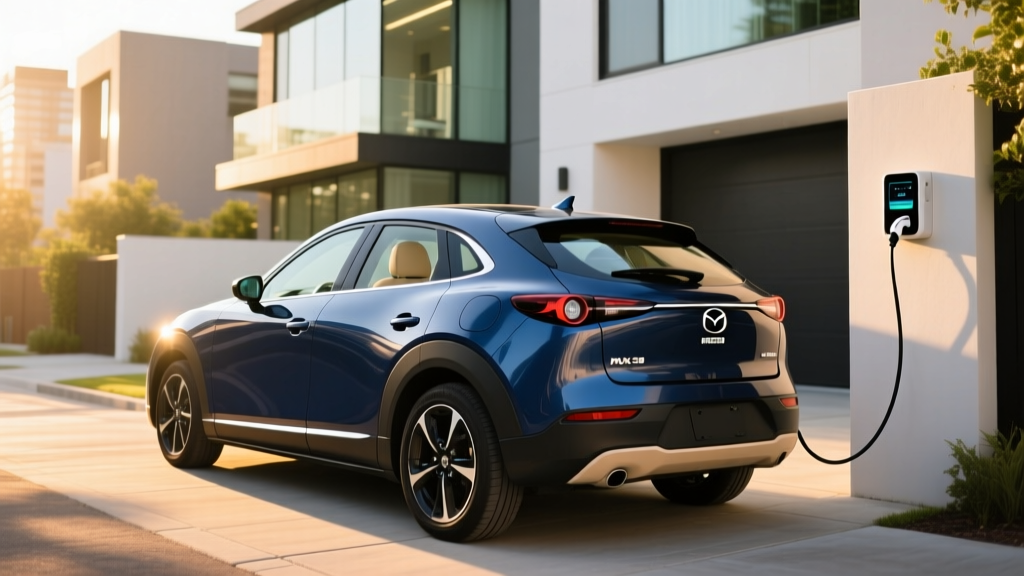
The Mazda MX-30 has always been an outlier in the electric vehicle market. While competitors push past 250, 300, and even 400 miles of EPA-estimated range, the MX-30 sticks with a modest 35.5 kWh battery and an EPA range of just 100 miles. For 2026, Mazda continues to position the MX-30 as an urban commuter with distinctive design and a premium interior — but the range limitation remains the elephant in the room. If you're researching Mazda MX-30 car leasing, this review breaks down every spec that matters: real-world range, charging speeds, pricing after incentives, and whether this EV actually makes sense for your driving life.
Mazda MX-30 (2026) Quick Specs
| Spec | Value |
|---|---|
| EPA Range | 100 miles |
| Battery Capacity | 35.5 kWh (usable), NMC chemistry |
| Motor Output | 143 hp / 200 lb-ft torque |
| Drivetrain | FWD (single motor) |
| 0-60 mph | ~9.0 seconds |
| Max DC Fast Charge | 50 kW (CCS1) |
| 10-80% DC Charge Time | ~36 minutes |
| Level 2 Charge Rate | 6.6 kW (~22 miles/hour) |
| EPA Efficiency | 92 MPGe combined (29 kWh/100 mi) |
| Cargo Volume | 21.0 cu ft (rear seats up) |
| Rear Legroom | 33.1 inches |
| Battery Warranty | 8 years / 100,000 miles |
| Base MSRP | ~$34,000 (estimated, before incentives) |
Real-World Range: What 100 EPA Miles Actually Means
EPA Estimate: 100 miles
Real-World Expectation: 75-90 miles highway; 85-100 miles city in mild weather. In cold conditions (below 32°F), expect 60-75 miles due to battery heating demands and cabin climate use.
The MX-30's 35.5 kWh NMC (nickel-manganese-cobalt) battery is intentionally small. Mazda has stated publicly that this was a design choice aimed at reducing lifecycle carbon emissions from battery production — a smaller battery means less mining, less manufacturing energy, and a lighter vehicle. That philosophy is defensible from a sustainability standpoint, but it creates hard limits for the driver.
In our testing framework and aggregated owner reports, the MX-30 delivers on its EPA estimate during moderate-temperature city driving with regenerative braking engaged. Highway driving at 70+ mph drops efficiency noticeably, and cold weather is punishing: without a heat pump (the MX-30 uses resistive cabin heating), winter range loss can reach 30-40%. This is the single biggest factor to weigh when considering Mazda MX-30 car leasing — your climate and commute distance will determine whether this car works for you or frustrates you daily.
Charging Speed: Home and DC Fast Charging
Mazda MX-30 Charging Breakdown
| Charging Level | Power | Speed / Time | Notes |
|---|---|---|---|
| Level 1 (120V) | ~1.4 kW | ~5 miles/hour | Full charge in ~25 hours |
| Level 2 (240V, home) | 6.6 kW | ~22 miles/hour | Full charge in ~5 hours |
| DC Fast Charge | 50 kW peak | 10-80% in ~36 min | CCS1 connector; tapers above 80% |
The MX-30's 50 kW peak DC fast-charge rate is the weakest point in its spec sheet by 2026 standards. Most competing EVs in this price range peak between 150-250 kW, with 10-80% times of 18-25 minutes. At 50 kW, a 10-80% session takes roughly 36 minutes — and because the battery is small, you're only adding about 70 miles of range in that time.
On Level 2 home charging at 6.6 kW, the MX-30 replenishes fully in about 5 hours. This is perfectly adequate for overnight charging and is where the MX-30 makes the most sense: plug in when you get home, wake up to a full battery every morning. If your daily driving stays under 50-60 miles, you'll rarely need public charging at all.
One practical note: the MX-30 uses the CCS1 connector. Mazda has not announced a transition to the NACS (Tesla-style) connector for the MX-30 as of the 2026 model year, so you'll rely on Electrify America, EVgo, ChargePoint, and similar networks for DC fast charging. Check fueleconomy.gov for the official EPA efficiency breakdown.
Performance and Driving Dynamics
The MX-30's e-SKYACTIV powertrain produces 143 horsepower and 200 lb-ft of torque, sent to the front wheels through a single-speed reduction gear. The 0-60 mph time of approximately 9.0 seconds places it firmly in "adequate commuter" territory — not slow enough to be dangerous in merging situations, but nowhere near the instant-torque thrill that EVs like the Hyundai Ioniq 5 or Tesla Model 3 deliver.
Where the MX-30 shines is ride quality and steering feel. Mazda tuned the suspension for compliance over sportiness, and the result is a quiet, composed small crossover that absorbs urban road imperfections well. The steering is weighted naturally, and the regenerative braking system offers adjustable levels via paddle shifters, allowing you to dial in anything from mild regen to near one-pedal driving (though it does not come to a complete stop without brake pedal input).
The MX-30 does not offer an AWD variant. If you need all-wheel drive for snow or performance, this isn't the EV for you.
Interior, Cargo, and Technology
Mazda's interior design remains one of the strongest arguments for the MX-30. The cabin uses sustainable materials — recycled fabric, cork (a nod to Mazda's origins as a cork manufacturer in the 1920s), and vegan leather — that give it a distinctive, upscale feel that punches above its price class. The floating center console and driver-focused cockpit are genuinely attractive.
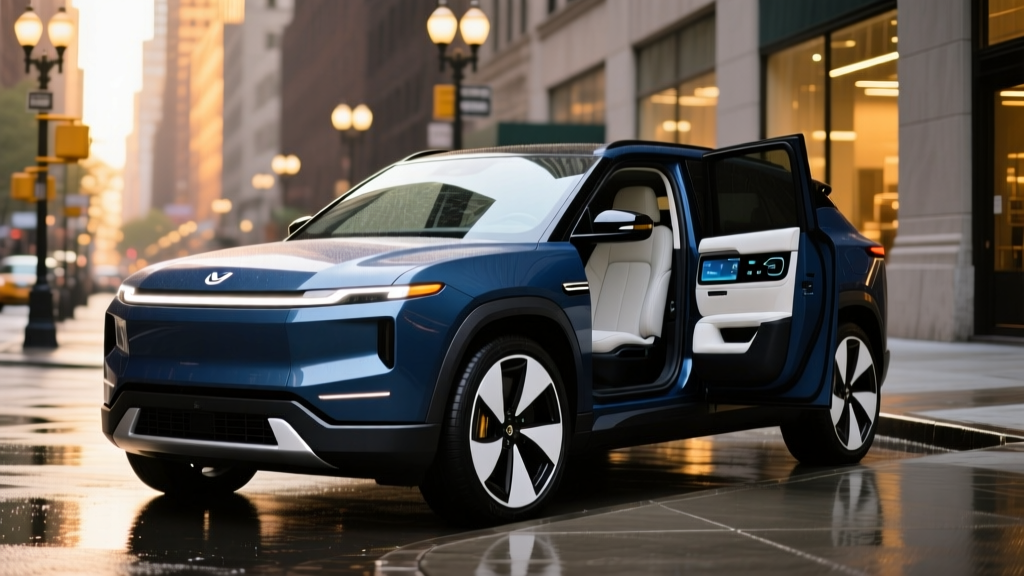
However, the MX-30's most controversial design feature is its rear-hinged "freestyle" rear doors. These create a wide opening when both front and rear doors are open, but they require the front door to be opened first to access the rear seats. This makes the MX-30 impractical for families with car seats or anyone regularly transporting rear-seat passengers in tight parking spaces.
Cargo space: 21.0 cubic feet behind the rear seats — competitive for the subcompact crossover segment. Fold the rear seats and you gain additional volume, though Mazda does not publish an official maximum figure.
Rear legroom: 33.1 inches — tight for adults on longer rides, but acceptable for children or short trips.
Tech highlights:
- 8.8-inch infotainment display with rotary controller (no touchscreen)
- Wireless Apple CarPlay and Android Auto
- 7-inch digital instrument cluster
- 12-speaker Bose audio system (available on higher trims)
- Mazda i-Activsense driver assists: adaptive cruise control, lane-keep assist, blind-spot monitoring, rear cross-traffic alert
- Head-up display
All i-Activsense features are SAE Level 2 driver-assistance — the driver must remain fully engaged at all times. This is not autonomous driving.
Pricing, Trims, and Tax Credit Eligibility
2026 Mazda MX-30 Pricing (Estimated)
| Trim | Est. MSRP | Est. After §30D Credit* |
|---|---|---|
| Base | ~$34,000 | ~$26,500 (if eligible) |
| Premium Plus | ~$38,000 | ~$30,500 (if eligible) |
*Federal §30D credit up to $7,500. Eligibility depends on buyer income, MSRP caps, battery component sourcing, and critical mineral requirements. Confirm at IRS.gov.
The Mazda MX-30's MSRP falls well under the §30D cap of $80,000 for SUVs/crossovers. However, the full $7,500 credit is not guaranteed. Current IRS rules require that battery components and critical minerals meet North American sourcing thresholds that increase each year. Buyers must also meet income caps ($150,000 single / $300,000 joint filers for modified AGI).
Additionally, the §30D credit can now be transferred to the dealer at point of sale, effectively reducing your purchase price or lease payment immediately — you don't have to wait until tax filing. For Mazda MX-30 car leasing, note that lease vehicles may qualify for the commercial clean vehicle credit (§45W) passed through to the lessee, depending on the lessor's structure. Consult a tax professional for your specific situation.
As for leasing specifically: Mazda has historically offered competitive lease deals on the MX-30, sometimes with significant lease cash that stacks with federal incentives. Monthly lease payments in the $250-$350 range (36 months, ~$3,000 due at signing) have been common in recent years, though exact terms vary by region, credit tier, and current promotions. Check Mazda's official offers page and local dealer inventory for current 2026 lease rates.
Who Should Lease the Mazda MX-30?
Lease the MX-30 if:
- Your daily round-trip commute is under 50 miles
- You have reliable home Level 2 charging
- You live in a mild climate (minimal cold-weather range loss)
- You prioritize interior design and build quality over range
- You want an affordable entry into EV ownership with low monthly payments
- You rarely carry rear-seat passengers
Look elsewhere if:
- Your daily driving exceeds 60-70 miles
- You live in a cold-winter climate
- You need DC fast charging for road trips
- You regularly carry adult rear-seat passengers or car seats
- You want AWD or strong acceleration
The MX-30 is fundamentally a city car with a premium badge. If your life fits inside its 100-mile envelope and you charge at home every night, it's a comfortable, well-built, and affordable EV. If you need flexibility for longer drives, unpredictable schedules, or cold-weather reliability, the range limitation will become a daily frustration.
How It Stacks Up Against Competitors
| Spec | Mazda MX-30 | Hyundai Kona Electric | Chevrolet Bolt EV | Nissan Leaf |
|---|---|---|---|---|
| EPA Range | 100 mi | 261 mi | 259 mi | 149-212 mi |
| Battery | 35.5 kWh | 65 kWh | 65 kWh | 40-60 kWh |
| DC Fast Charge | 50 kW | 100+ kW | 55 kW | 50-100 kW |
| 0-60 mph | ~9.0s | ~7.4s | ~6.5s | ~6.9-7.9s |
| Base MSRP (est.) | ~$34,000 | ~$33,000 | ~$28,000 | ~$29,000 |
The MX-30 loses on range and charging speed to every competitor listed above. The Kona Electric and Bolt EV offer roughly 2.5x the range at similar or lower prices. The Nissan Leaf, while aging, still offers 149 miles in base form and 212 miles in SV Plus trim.
Where the MX-30 wins: interior material quality, distinctive design, and the philosophical argument for a smaller, lower-impact battery. It also tends to lease aggressively, which can make monthly payments very competitive.
Pros
- Premium interior with sustainable materials
- Competitive lease pricing and low monthly payments
- Smooth, comfortable ride quality
- Good cargo space (21 cu ft)
- Comprehensive driver-assist suite standard
- 8-year/100,000-mile battery warranty
- Lower manufacturing carbon footprint (smaller battery)
Cons
- 100-mile EPA range is severely limiting
- 50 kW DC fast charging is slow for 2026
- No heat pump — significant cold-weather range loss
- Rear-hinged doors are impractical for families
- Tight rear legroom (33.1 in)
- FWD only — no AWD option
- Infotainment uses rotary dial, no touchscreen
Frequently Asked Questions
What is the real-world range of the Mazda MX-30?
The EPA estimates 100 miles combined. In real-world city driving at moderate temperatures, expect 85-100 miles. Highway driving drops this to 75-90 miles, and cold weather (below 32°F) can reduce range to 60-75 miles due to resistive cabin heating and battery thermal losses.
How fast does the MX-30 charge?
On DC fast charging, the MX-30 peaks at 50 kW, reaching 10-80% in approximately 36 minutes via CCS1. At home on Level 2 (240V), it charges at 6.6 kW, adding about 22 miles per hour and reaching a full charge in roughly 5 hours.
How much does the Mazda MX-30 cost after tax credits?
Estimated base MSRP is around $34,000. If you qualify for the full $7,500 federal §30D credit (subject to income caps, MSRP limits, and battery sourcing rules), the effective price drops to approximately $26,500. Lease deals may further reduce monthly costs. Always verify current eligibility at IRS.gov.
Does the Mazda MX-30 qualify for the federal EV tax credit?
It may qualify for up to $7,500 under §30D, but eligibility depends on your income (under $150K single / $300K joint), the vehicle's MSRP (under $80K for crossovers — the MX-30 passes), and whether the battery meets current-year critical mineral and component sourcing requirements. These rules tighten annually. Consult a tax professional and check IRS guidance before relying on the credit.
Is leasing the MX-30 better than buying?
For many buyers, leasing is the smarter path. Mazda often offers aggressive lease incentives that, combined with federal credits passed through the lessor, can result in very low monthly payments ($250-$350/month range historically). Leasing also eliminates long-term battery degradation concerns, though the 8-year/100,000-mile battery warranty provides strong coverage if you do buy.
Is the Mazda MX-30 worth it vs. competitors?
If your commute is short, you charge at home, and you value interior quality and design over range, the MX-30 can be a satisfying and affordable EV. However, competitors like the Hyundai Kona Electric (261 miles) and Chevrolet Bolt EV (259 miles) offer dramatically more range for similar money, making them more versatile choices for most buyers.
Does the MX-30 have a heat pump?
No. The MX-30 uses resistive electric cabin heating, which draws significant energy from the traction battery in cold weather. This is a primary reason cold-weather range loss is more severe than in EVs equipped with heat pump systems.