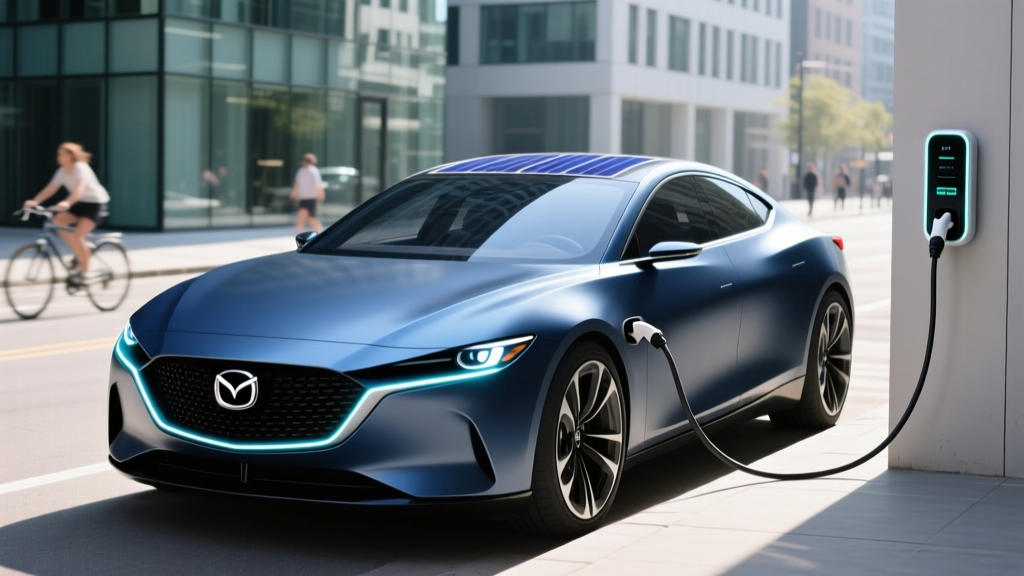
Quick Answer: Mazda's EV lineup in 2026 centers on two models: the Mazda CX-70 PHEV (a plug-in hybrid SUV with ~26 miles of electric-only range) and the fully electric Mazda CX-60e (announced for select markets, with approximately 250 miles of EPA-estimated range and a ~72 kWh battery). Mazda has been slower to commit to full battery-electric vehicles than rivals like Hyundai or Tesla, instead leaning on plug-in hybrid technology for the U.S. market. If you want a pure BEV from Mazda today, options remain extremely limited — the brand's strength is in electrified hybrids that bridge the gap for buyers not yet ready to go fully electric.
Mazda's Electrified Lineup: BEV vs. PHEV Explained
Mazda's path to electrification has been cautious and deliberate. While competitors launched dedicated EV platforms years ago, Mazda prioritized its "multi-solution" strategy — offering mild hybrids, plug-in hybrids, and a growing number of battery-electric models tailored to regional markets.
For U.S. buyers in 2026, here is what is actually available or confirmed:
- Mazda CX-70 PHEV: A midsize two-row SUV with a 2.5L four-cylinder engine paired with an electric motor and a 17.8 kWh battery pack. EPA-estimated 26 miles of electric-only range, 56 MPGe combined when using both power sources, and roughly 400 miles of total range.
- Mazda CX-90 PHEV: The three-row sibling to the CX-70, sharing the same powertrain. EPA-estimated 26 miles electric-only range, 56 MPGe, starting around $50,000 MSRP.
- Mazda CX-60e (Announced/Select Markets): Mazda's first dedicated battery-electric vehicle for global markets, built on a new large-platform architecture. Preliminary specs suggest a ~72 kWh NMC battery, approximately 250 miles of range (WLTP; U.S. EPA figures pending), and DC fast charging up to ~150 kW. U.S. availability remains unconfirmed for 2026.
The distinction matters: a PHEV gives you electric-only commuting for short trips (under 26 miles) while retaining a gas engine for longer drives. A BEV eliminates gasoline entirely but requires reliable charging access. Mazda is betting that most American buyers still want the safety net of a gas engine.
Spec Breakdown: Mazda CX-70 PHEV vs. CX-90 PHEV
| Specification | CX-70 PHEV (2026) | CX-90 PHEV (2026) |
|---|---|---|
| Powertrain | 2.5L I4 + electric motor | 2.5L I4 + electric motor |
| Combined HP | 323 hp | 323 hp |
| Battery (usable) | 17.8 kWh (NMC) | 17.8 kWh (NMC) |
| EPA Electric-Only Range | 26 miles | 26 miles |
| EPA MPGe (combined) | 56 MPGe | 56 MPGe |
| MPG (gas-only, combined) | 25 MPG | 25 MPG |
| Total Range (gas + electric) | ~400 miles | ~430 miles |
| Level 2 Charge Time (0-100%) | ~2.5 hours (7.2 kW) | ~2.5 hours (7.2 kW) |
| DC Fast Charging | Not available | Not available |
| 0-60 mph | ~6.3 sec | ~6.8 sec |
| Starting MSRP | $55,850 | $50,695 |
| Federal Tax Credit (§30D) | Up to $3,750 (partial) | Up to $3,750 (partial) |
| Battery Warranty | 8 yr / 100,000 mi | 8 yr / 100,000 mi |
Sources: fueleconomy.gov, Mazda USA specifications.
A critical note on charging: neither Mazda PHEV supports DC fast charging. You are limited to Level 1 (120V, roughly 3 hours for a full charge) or Level 2 (240V, approximately 2.5 hours). This is fine for overnight home charging but means no quick top-ups on road trips. If you regularly drive more than 26 miles one-way, you will be burning gasoline for the majority of your commute.
Mazda PHEV vs. Gas vs. Full EV: Cost Comparison
How does owning a Mazda PHEV actually compare to a conventional gas SUV or a full battery-electric vehicle? Let's model five years of ownership with concrete numbers.
| Cost Factor (5 Years / 75,000 mi) | Mazda CX-90 PHEV | Gas SUV (e.g., Honda Pilot, 22 MPG) | Full EV (e.g., Tesla Model Y, 310 mi range) |
|---|---|---|---|
| Purchase Price (base MSRP) | $50,695 | $39,000 | $44,990 |
| Federal Tax Credit (§30D) | -$3,750* | $0 | -$7,500** |
| Effective Purchase Price | $46,945 | $39,000 | $37,490 |
| Fuel/Energy Cost (5 yr) | ~$5,800 | ~$10,200 | ~$3,200 |
| Maintenance (5 yr) | ~$2,800 | ~$4,500 | ~$1,500 |
| Insurance (5 yr avg) | ~$9,500 | ~$8,000 | ~$9,800 |
| Estimated 5-Year Total Cost | ~$65,045 | ~$61,700 | ~$51,990 |
*Tax credit eligibility depends on battery sourcing, MSRP caps, and buyer income limits under IRS §30D rules. Mazda PHEVs currently qualify for partial credit due to critical-mineral sourcing requirements. **Full EV credit assumes the buyer and vehicle meet all §30D criteria. Consult a tax professional.
Key takeaway: The Mazda CX-90 PHEV costs roughly $13,000 more over five years than a comparable full EV like the Model Y, primarily because of the higher purchase price and partial tax credit. However, it costs about $3,300 more than a gas SUV — a gap narrowed significantly by fuel savings. The PHEV makes financial sense if you value the gas-engine backup and cannot reliably charge a full EV at home.
Real-World Ownership: What Mazda PHEV Buyers Should Expect
Spec sheets tell one story; daily life tells another. Here are the practical realities of owning a Mazda plug-in hybrid in 2026.
Home Charging Is Essential (But Simpler Than a Full EV)
With a 17.8 kWh battery, you can fully recharge a Mazda PHEV overnight on a standard 120V outlet (Level 1) in roughly 5-6 hours — or in about 2.5 hours on a 240V Level 2 home charger. Unlike full EVs, which benefit enormously from expensive 48-amp Level 2 installations, a basic 16-amp Level 2 unit ($300-$500 for equipment, $500-$1,500 for electrician installation) is more than adequate.
If you lack home charging access — apartment dwellers, street parkers — a PHEV still works because the gas engine covers you. But you will lose most of the efficiency benefit, essentially driving a heavy hybrid that gets around 25 MPG combined instead of 56 MPGe.
Electric-Only Range: Honest Expectations
The EPA rates both the CX-70 and CX-90 PHEV at 26 miles of electric-only range. In real-world conditions:
- Mild weather, city driving: Expect 22-28 miles — close to the EPA estimate, since regenerative braking recaptures energy in stop-and-go traffic.
- Highway driving (70+ mph): Expect 16-20 miles. Electric motors are less efficient at sustained high speeds.
- Cold weather (below 30°F): Expect 14-18 miles. Battery chemistry loses efficiency in cold temperatures, and cabin heating draws heavily from the pack.
If your round-trip commute is under 20 miles and you charge nightly, you will rarely visit a gas station. If it exceeds 30 miles, you will burn gas daily and the PHEV advantage shrinks considerably.
Driving Dynamics and the Weight Penalty
Mazda has built its reputation on engaging driving dynamics, and the PHEV models retain the brand's signature steering feel and chassis tuning. However, the added battery and electric motor contribute roughly 300-400 pounds of extra weight compared to gas-only variants. You will notice this in cornering body roll and braking distances, though the instant electric torque (323 combined hp) delivers confident acceleration from stops.
Federal Tax Credit: What Mazda Electrified Vehicles Qualify For
Federal tax credit eligibility for Mazda's electrified lineup is nuanced and changes as battery sourcing requirements tighten under the Inflation Reduction Act.
- Credit amount: Up to $3,750 for Mazda PHEVs (partial credit; the full $7,500 requires meeting both critical-mineral and battery-component sourcing thresholds).
- MSRP cap: SUVs must have an MSRP at or below $80,000 — both CX-70 and CX-90 PHEV qualify.
- Buyer income cap: Modified adjusted gross income must not exceed $150,000 (single), $225,000 (head of household), or $300,000 (joint filing).
- Point-of-sale transfer: As of 2024, buyers can transfer the credit to the dealer at purchase, reducing the out-of-pocket price immediately rather than waiting for a tax refund.
- Sourcing requirements: Battery components and critical minerals must meet escalating domestic/free-trade-agreement sourcing percentages that increase each year. This is why Mazda currently qualifies for partial rather than full credit.
Rules are current as of 2026 and subject to legislative change. Always verify eligibility at irs.gov or with a qualified tax professional before purchasing.
Common Misconceptions About Mazda Electric Vehicles
| Myth | Fact |
|---|---|
| "Mazda doesn't make any electric cars." | Mazda offers two PHEV models (CX-70, CX-90) in the U.S. and has announced the CX-60e BEV for global markets. The brand's EV strategy is slower but active. |
| "PHEVs are the best of both worlds with no compromises." | PHEVs carry extra weight from two powertrains, have limited electric range (26 mi for Mazda), and lack DC fast charging. They excel only when your daily driving stays under the electric range and you charge nightly. |
| "I don't need home charging for a PHEV." | Without nightly charging, a PHEV operates as a heavy conventional hybrid, getting roughly 25 MPG combined — worse than many dedicated hybrids like the Toyota RAV4 Hybrid (39 MPG). Home charging unlocks the efficiency advantage. |
| "The battery will need expensive replacement soon." | Mazda warranties its PHEV batteries for 8 years / 100,000 miles. PHEV batteries are smaller (17.8 kWh) and experience less stress than full EV packs. Degradation data from similar platforms shows ~10-15% capacity loss over 100,000 miles — manageable given the gas-engine backup. |
| "Mazda PHEVs qualify for the full $7,500 tax credit." | Current §30D rules limit Mazda PHEVs to a partial credit of up to $3,750 due to battery-sourcing requirements. The full $7,500 requires meeting both critical-mineral and battery-component thresholds. |
Decision Framework: Is a Mazda Electrified Vehicle Right for You?
Choose a Mazda CX-70 or CX-90 PHEV if:
- Your daily commute is under 25 miles round-trip and you can charge at home every night.
- You regularly take road trips exceeding 300 miles and do not want to plan around DC fast-charging stations.
- You want Mazda's premium interior, driving dynamics, and all-wheel-drive capability in an electrified package.
- You live in a cold climate where full EV range loss (20-30% below 20°F) would be a concern.
Choose a full EV (Tesla Model Y, Hyundai Ioniq 5, etc.) instead if:
- Your commute exceeds 30 miles and you want to eliminate gasoline use entirely.
- You have reliable home Level 2 charging and access to DC fast-charging networks for road trips.
- You want to maximize the $7,500 federal tax credit and minimize long-term fuel costs.
- You prioritize the lowest possible 5-year total cost of ownership.
Choose a conventional hybrid (Toyota RAV4 Hybrid, Honda CR-V Hybrid) instead if:
- You cannot install a home charger (apartment, street parking, landlord restrictions).
- Your budget is below $40,000 and the PHEV premium doesn't justify the limited electric range.
- You want simpler maintenance with no plug-in charging habits to manage.
Frequently Asked Questions
Does Mazda have a fully electric vehicle available in the U.S.?
As of 2026, Mazda does not sell a dedicated battery-electric vehicle in the United States. The brand offers two plug-in hybrids (CX-70 PHEV and CX-90 PHEV) and has announced the CX-60e BEV for international markets, but U.S. availability and EPA certification remain unconfirmed. Mazda has indicated additional BEVs are in development on its new large platform.
How long does it take to charge a Mazda PHEV at home?
On a standard 120V household outlet (Level 1), expect approximately 5-6 hours for a full charge of the 17.8 kWh battery. On a 240V Level 2 home charger at 7.2 kW, a full charge takes roughly 2.5 hours. Mazda PHEVs do not support DC fast charging.
What is the real-world electric range of the Mazda CX-90 PHEV?
The EPA rates the CX-90 PHEV at 26 miles of electric-only range. In real-world driving, expect 22-28 miles in mild city conditions, 16-20 miles at highway speeds, and 14-18 miles in cold weather (below 30°F). These figures assume a fully charged battery at departure.
Do Mazda PHEVs qualify for the federal tax credit?
Yes, but only for a partial credit of up to $3,750 under current IRS §30D rules. The full $7,500 credit requires meeting both critical-mineral and battery-component sourcing thresholds that Mazda's supply chain does not yet fully satisfy. Buyer income caps and MSRP limits also apply. Verify current eligibility at irs.gov.
Is a Mazda PHEV better than a Toyota or Honda hybrid?
It depends on your driving pattern. If you charge nightly and drive under 26 miles daily, the Mazda PHEV uses zero gasoline on those trips — an advantage over conventional hybrids. But if you cannot charge at home, a Toyota RAV4 Hybrid (39 MPG combined, ~$33,000 MSRP) or Honda CR-V Hybrid (40 MPG combined, ~$35,000 MSRP) will deliver better real-world fuel economy at a lower purchase price, with no plug-in requirement.
What is the battery warranty on Mazda PHEVs?
Mazda covers the high-voltage battery in its PHEV models for 8 years or 100,000 miles, whichever comes first. This warranty covers defects and capacity loss below a specified threshold (typically 70% state of health). The powertrain is covered for 5 years / 60,000 miles.
The Bottom Line on Mazda Electric Vehicles
Mazda's electrified strategy in 2026 is pragmatic rather than ambitious. The CX-70 and CX-90 PHEVs are well-built, premium-feeling SUVs that serve a specific buyer: someone who wants electric commuting for short trips, a gas engine for long hauls, and Mazda's driving character. They are not the most efficient or cost-effective electrified vehicles on the market — that title goes to dedicated EVs and conventional hybrids — but they fill a legitimate niche for buyers who aren't ready to commit to full electrification.
If Mazda brings the CX-60e or a dedicated BEV to the U.S. market with competitive range (280+ miles EPA), 200+ kW DC fast charging, and full §30D tax credit eligibility, the calculus will change. Until then, Mazda's electrified vehicles are best understood as excellent SUVs with an electric assist — not as EVs that happen to have a gas engine.