Quick Answer: Does Mazda Have an Electric Vehicle?
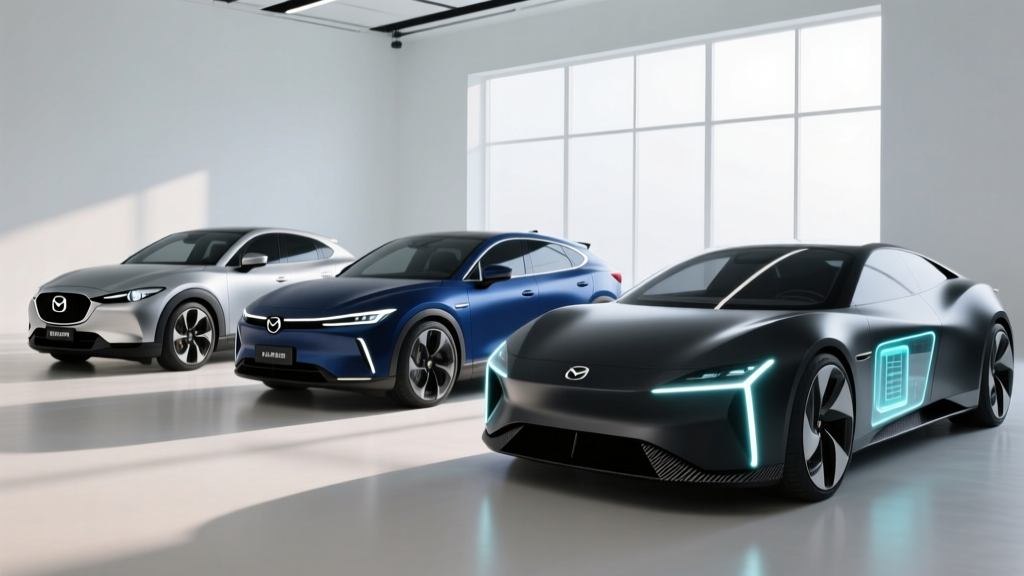
Yes — but with major caveats. For the 2026 model year, Mazda offers one battery-electric vehicle: the MX-30 EV, which is limited to select California dealerships and carries an EPA-estimated range of just 100 miles. More broadly available is the CX-70 PHEV, a plug-in hybrid with 26 miles of electric-only driving and 250 miles of total range. Mazda has no long-range, nationwide EV on sale as of early 2026. If you need 250+ miles of pure electric range and access to DC fast charging, Mazda is not yet the right brand for you.
Mazda's Electrified Lineup for 2026: What's Actually Available
Mazda's approach to electrification has been cautious compared to rivals like Hyundai, Kia, and Tesla. Here's what you can actually buy in the U.S. right now:
| Model | Type | EPA Range (Electric) | Battery (kWh) | HP | 0-60 mph | Starting MSRP |
|---|---|---|---|---|---|---|
| MX-30 EV | BEV | 100 mi | 35.5 kWh (usable ~32) | 143 hp | 9.0 sec | ~$34,000 (CA only) |
| CX-70 PHEV | PHEV | 26 mi (electric) / ~490 mi total | 17.8 kWh | 323 hp combined | 6.3 sec | ~$55,000 |
| CX-90 PHEV | PHEV | 26 mi (electric) / ~490 mi total | 17.8 kWh | 323 hp combined | 6.5 sec | ~$53,000 |
The MX-30 launched in 2022 as a compliance-style EV and has seen minimal updates. Its 35.5 kWh battery is among the smallest in any new EV sold in America — for context, the Chevrolet Equinox EV carries a ~85 kWh pack, and the Tesla Model Y uses roughly 75 kWh. Mazda has announced plans for a dedicated EV platform in the late 2020s, but nothing is on sale yet.
The MX-30 EV: Range, Charging, and Real-World Reality
MX-30 Range Reality Check
EPA estimate: 100 miles
Real-world highway (65-75 mph): ~80-85 miles
Cold weather (below 32°F): ~65-75 miles
Combined city/highway in mild weather: ~90-95 miles
The MX-30's small battery and relatively heavy curb weight (~3,700 lbs) mean efficiency suffers on the highway. Expect roughly 2.5-3.0 miles per kWh in mixed driving, dropping to ~2.0 mi/kWh at sustained highway speeds.
Charging Speeds
The MX-30 supports DC fast charging at a peak of 50 kW — far below the 150-350 kW rates common on modern EVs. Here's what that means in practice:
| Level | Power | Time (10-80%) | Miles Added per Hour |
|---|---|---|---|
| Level 1 (120V household) | ~1.2 kW | ~24+ hours | ~3-4 mi/hr |
| Level 2 (240V home/public) | 6.6 kW (max) | ~4.5 hours | ~18-20 mi/hr |
| DC Fast Charge | 50 kW (peak) | ~36 minutes (10-80%) | N/A (session-based) |
At 50 kW peak, a 10-80% session takes roughly 36 minutes — but only adds about 70 miles of range. This makes the MX-30 impractical for road trips. If your commute is under 40 miles round-trip and you can charge at home overnight, the math works. For anything beyond that, you'll feel the limitation.
The MX-30 uses a CCS1 connector for DC fast charging and a J1772 inlet for Level 2. It does not have NACS (Tesla Supercharger) compatibility, and no adapter has been announced.
CX-70 and CX-90 PHEV: The Practical Mazda Electrified Option
For most buyers asking "does Mazda have an electric vehicle," the more honest answer is Mazda's plug-in hybrids. The CX-70 PHEV and CX-90 PHEV share the same powertrain: a 2.5-liter inline-four paired with an electric motor and a 17.8 kWh lithium-ion battery.
CX-70 PHEV vs. CX-70 Gas (Mild Hybrid) — Annual Fuel Cost Comparison
Assumes 15,000 miles/year, $3.50/gal gas, $0.14/kWh electricity, 50% of miles on electric
| Metric | CX-70 PHEV | CX-70 Gas (Turbo) |
|---|---|---|
| EPA Combined | 56 MPGe / 25 mpg (gas-only) | 25 mpg combined |
| Annual fuel/energy cost | ~$1,650 | ~$2,100 |
| 5-year energy cost | ~$8,250 | ~$10,500 |
| Oil changes per year | 1-2 (fewer electric miles) | 2-3 |
The PHEV models make sense if you can plug in nightly and your daily driving stays under 25 miles — you'll rarely visit a gas station. But once the battery depletes, you're driving a ~4,700-lb SUV getting 25 mpg, which is no better than the conventional gas version. The PHEV premium of roughly $5,000-$7,000 over the gas trim takes 4-6 years to recoup through fuel savings alone.
PHEV Charging
Both PHEVs accept Level 2 charging at 6.6 kW, replenishing the 17.8 kWh battery in about 2.5 hours. They do not support DC fast charging — this is a key difference from a full EV. You'll charge exclusively at home or at destination Level 2 chargers.
Real Costs: Buying and Owning a Mazda Electrified Vehicle
5-Year Total Cost of Ownership Estimate
| Cost Category | MX-30 EV (CA) | CX-70 PHEV | CX-70 Gas |
|---|---|---|---|
| Purchase price (MSRP) | $34,000 | $55,000 | $47,000 |
| Federal tax credit (§30D) | $0* | $0* | $0 |
| Estimated depreciation (5yr) | -$15,000 | -$24,000 | -$20,000 |
| Energy/fuel (5yr) | $3,500 | $8,250 | $10,500 |
| Maintenance (5yr) | $1,500 | $3,000 | $3,500 |
| Insurance (5yr avg) | $7,500 | $8,500 | $7,800 |
| 5-Year Net Cost | ~$31,500 | ~$50,750 | ~$48,800 |
*The MX-30 and CX-70 PHEV do not currently meet the §30D battery sourcing and critical mineral requirements for the federal EV tax credit as of 2026. Always verify current eligibility on IRS.gov. Point-of-sale transfer is available for qualifying vehicles.
Home Charging Considerations
Neither the MX-30 nor the PHEVs requires a panel upgrade for most homes, since they max out at 6.6 kW on Level 2. A standard 240V/30A circuit handles this easily. Expect to pay $500-$1,500 for a quality Level 2 home charger (ChargePoint Home Flex, Emporia Vue, or Wallbox Pulsar Plus) and $300-$800 for electrician installation if your panel is nearby. If you need a new 240V circuit run from a distant panel, costs can reach $1,500-$2,500.
Important: If you live in an apartment or lack dedicated parking with electrical access, owning the MX-30 becomes very difficult. Public DC charging at 50 kW is too slow for regular top-ups, and relying on Level 1 (120V) means 24+ hours for a full charge.
Mazda EV vs. Competitors: The Honest Comparison
If you're cross-shopping Mazda's electrified options, here's how they stack up against similarly priced alternatives:
| Spec | Mazda MX-30 | Hyundai Kona Electric | Chevrolet Equinox EV |
|---|---|---|---|
| EPA Range | 100 mi | 261 mi | 319 mi |
| Battery (usable kWh) | ~32 kWh | ~64 kWh (NMC) | ~85 kWh (NMC) |
| Peak DC Charge | 50 kW | 100 kW | 150 kW |
| 10-80% DC Time | ~36 min | ~43 min | ~20 min |
| HP | 143 | 201 | 213 |
| Starting MSRP | ~$34,000 | ~$33,000 | ~$33,000 |
| Nationwide Availability | No (CA only) | Yes | Yes |
The comparison is stark. For the same price or less, competitors offer 2.5-3x the range, faster charging, and nationwide availability. The MX-30's only advantage is Mazda's interior quality and driving dynamics — but that's a high price to pay for a 100-mile range ceiling.
Common Misconceptions About Mazda EVs
| Myth | Fact |
|---|---|
| "Mazda doesn't make any electric cars" | The MX-30 EV exists but is limited to California dealerships with 100 miles of range. |
| "The CX-70 PHEV is a full electric vehicle" | It's a plug-in hybrid. After 26 electric miles, the gas engine takes over. It cannot DC fast charge. |
| "Mazda EVs qualify for the $7,500 tax credit" | As of 2026, neither the MX-30 nor the CX-70 PHEV meets §30D battery-sourcing requirements. Check fueleconomy.gov for current eligibility. |
| "Mazda has a long-range EV coming soon" | Mazda has announced an EV platform for the late 2020s, but no specific model, range figure, or on-sale date has been confirmed for the U.S. |
| "The MX-30 can use Tesla Superchargers" | The MX-30 uses CCS1. No NACS adapter is available, and Supercharger access requires a NACS inlet or approved adapter. |
Decision Framework: Should You Buy a Mazda Electrified Vehicle?
Choose the MX-30 EV if:
- You live in California and can find one at a participating dealer
- Your daily round-trip commute is under 40 miles
- You have reliable home Level 2 charging
- You want a premium-feeling interior at a low entry price
- You never need to road-trip in your EV (or have a second gas car)
Choose the CX-70 / CX-90 PHEV if:
- You want Mazda's driving dynamics and interior in a midsize SUV
- Your daily driving is under 25 miles and you can plug in nightly
- You need the flexibility of a gas engine for longer trips
- You're not ready to commit to a full EV but want some electric miles
Look at other brands if:
- You need 250+ miles of electric range for road trips
- You want DC fast charging above 100 kW
- You live outside California
- You need access to the Tesla Supercharger network
- You want to claim the §30D federal tax credit
Frequently Asked Questions
Does Mazda have a fully electric SUV available nationwide?
No. The only Mazda BEV is the MX-30, which is restricted to select California dealerships. Mazda has not announced a nationwide long-range EV as of early 2026. The CX-70 and CX-90 PHEVs are available nationwide but are plug-in hybrids, not full EVs.
What is the real-world range of the Mazda MX-30?
The EPA rates it at 100 miles. In real-world mixed driving, expect 85-95 miles in mild weather. At sustained highway speeds (70+ mph), that drops to roughly 80 miles. In freezing temperatures, plan for 65-75 miles. This makes it strictly a commuter and errand vehicle.
Does the Mazda CX-70 PHEV qualify for the federal tax credit?
As of 2026, no. The CX-70 PHEV does not meet the §30D battery component and critical mineral sourcing requirements established under the Inflation Reduction Act. Tax credit eligibility changes frequently — verify at IRS.gov before purchasing, and consult a tax professional.
Can I charge the Mazda MX-30 at Tesla Superchargers?
No. The MX-30 uses a CCS1 connector. Tesla Superchargers require a NACS (North American Charging Standard) inlet. No Mazda-approved NACS adapter exists for the MX-30. You'll rely on Electrify America, EVgo, ChargePoint, and other CCS-compatible networks.
Is the Mazda PHEV battery covered under warranty?
Yes. Mazda covers the hybrid/EV battery in the CX-70 and CX-90 PHEV for 8 years or 100,000 miles (whichever comes first), which is the federal minimum for emissions-related components. In CARB states (California and states adopting CARB standards), coverage extends to 10 years or 150,000 miles. Capacity degradation below 70% is typically the threshold for a warranty claim.
When will Mazda release a long-range electric vehicle?
Mazda has outlined a multi-phase electrification strategy that includes a dedicated EV platform expected in the late 2020s. However, no specific model name, range target, pricing, or U.S. on-sale date has been officially confirmed. Treat any reported specs as preliminary until Mazda issues a formal announcement.