The Short Answer
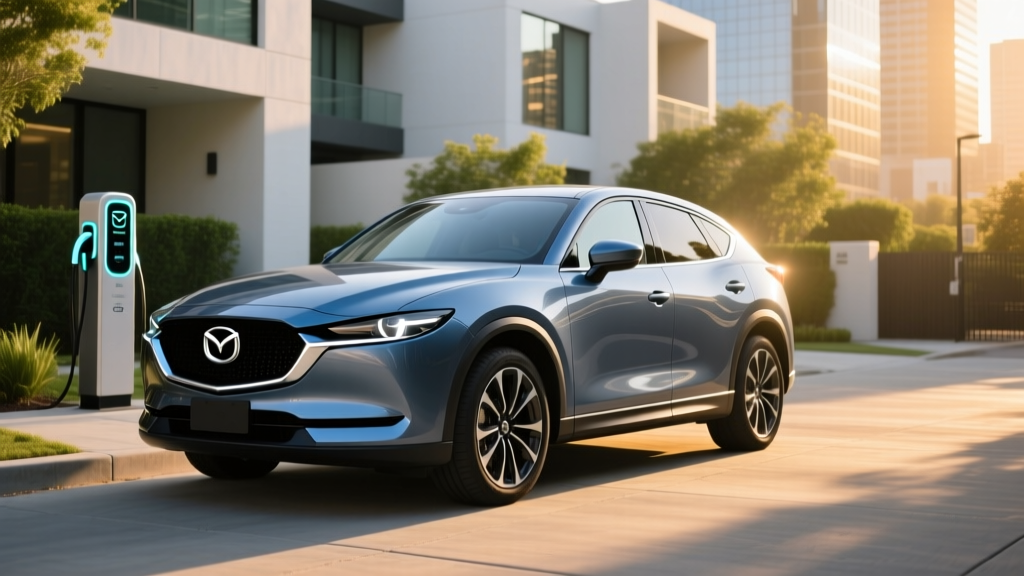
As of early 2026, Mazda has not released a fully electric CX-5. The current CX-5 remains a conventional gasoline compact SUV. Mazda's electric strategy in the U.S. centers on the Mazda CX-70 PHEV (plug-in hybrid) and the Mazda CX-90 PHEV, while a dedicated battery-electric SUV platform is announced for the latter half of the decade. If you're searching for a "Mazda CX-5 electric," you're likely weighing whether to wait for Mazda's upcoming EV, consider a Mazda PHEV instead, or cross-shop an electric compact SUV from another brand. Below, we break down exactly what Mazda has confirmed, what it costs to own a comparable EV today, and how to decide.
What Mazda Has Actually Announced for Electric SUVs
Mazda's electrification roadmap has been measured compared to rivals. The brand's U.S. lineup for the 2026 model year includes:
- Mazda CX-5 — Gasoline only (2.5L naturally aspirated and 2.5L turbo). No hybrid or EV variant.
- Mazda CX-50 — Available as a hybrid (HEV) using Toyota's 2.5L hybrid powertrain. Not a plug-in.
- Mazda CX-70 PHEV — Plug-in hybrid with approximately 26 miles of electric-only range, 327 combined HP, and a starting MSRP around $54,400.
- Mazda CX-90 PHEV — Three-row plug-in hybrid, ~26 miles electric range, 327 HP, starting near $50,000.
Mazda's mid-term plan, published on their corporate strategy page, targets a full battery-electric vehicle lineup later this decade, with models built on a dedicated EV architecture. However, no specific model wearing a "CX-5" badge with a fully electric powertrain has been confirmed for the U.S. market as of this writing. Any "Mazda CX-5 electric" you see referenced online is speculative.
What this means for buyers: If you want a Mazda compact SUV today, your electrified option is the CX-50 Hybrid (a conventional HEV — no plug, no electric-only range). If you want a plug-in Mazda, you'll need to step up to the CX-70 PHEV or CX-90 PHEV, both larger and pricier than a CX-5.
Mazda CX-5 Gas vs. Competitor EVs: The Real Comparison
Since a Mazda CX-5 electric doesn't exist yet, the practical question becomes: should you buy the gas CX-5 now, or cross-shop an electric compact SUV from another manufacturer? Here's how the current CX-5 stacks up against two popular EV alternatives.
| Spec | 2026 Mazda CX-5 (2.5L Turbo AWD) | 2026 Hyundai Ioniq 5 (AWD Long Range) | 2026 Tesla Model Y (Long Range AWD) |
|---|---|---|---|
| Powertrain | 2.5L Turbo I-4 + 6AT | Dual-motor BEV | Dual-motor BEV |
| Horsepower | 256 HP | 320 HP | 384 HP |
| 0-60 mph | ~6.4 sec | ~4.5 sec | ~4.8 sec |
| EPA Range / MPG | 26 MPG combined | 290 mi (EPA) | 310 mi (EPA) |
| Fuel / Battery | 15.3 gal tank | 84 kWh (NMC) | ~78 kWh (NMC) |
| Max DC Fast Charge | N/A | ~240 kW peak (10-80% in ~18 min) | ~250 kW peak (10-80% in ~20 min) |
| Starting MSRP | ~$31,500 | ~$47,000 | ~$44,000 |
| Federal Tax Credit (§30D) | None | Up to $7,500 (eligibility varies) | Up to $7,500 (eligibility varies) |
The CX-5's advantage is its low entry price. The EV alternatives start $12,000–$16,000 higher, though the federal EV tax credit under IRS §30D can narrow that gap — if you meet income limits, MSRP caps, and battery-sourcing requirements. The credit is not guaranteed for every buyer or every trim; always verify eligibility with a tax professional.
5-Year Cost Breakdown: Gas CX-5 vs. Electric Alternative
Sticker price is only part of the equation. Here's a realistic 5-year/75,000-mile ownership comparison between the gas CX-5 and an EV like the Ioniq 5, assuming 15,000 miles/year, $3.40/gallon regular gas, and $0.16/kWh average electricity (national residential rate).
| Cost Category | Mazda CX-5 (2.5L Turbo AWD) | Hyundai Ioniq 5 AWD (EV) |
|---|---|---|
| Purchase Price (base MSRP) | $31,500 | $47,000 |
| Federal Tax Credit | $0 | –$7,500 (if eligible) |
| Effective Purchase Price | $31,500 | $39,500 |
| Fuel / Energy (75,000 mi) | $9,800 (gas) | $2,400 (electricity, home charging) |
| Maintenance (5 years) | $3,200 (oil, filters, brakes) | $1,100 (cabin filter, wipers, tire rotation) |
| Insurance (avg.) | $7,500 | $9,000 (EVs often 15-25% more) |
| Estimated Depreciation | $12,600 (~40%) | $19,750 (~50%) |
| Total 5-Year Cost | ~$64,600 | ~$71,750 |
Key takeaways: The EV saves roughly $9,500 in fuel and maintenance over five years, but the higher purchase price, steeper depreciation, and elevated insurance premiums mean the gas CX-5 still comes out ahead on total cost for most buyers. The equation shifts in the EV's favor if you drive more than 15,000 miles/year, have access to cheap electricity (under $0.12/kWh), or if gas prices rise significantly above $3.40/gallon.
Note: public DC fast charging costs significantly more than home charging — typically $0.30–$0.50/kWh. If you cannot charge at home and rely on public chargers, the EV's energy cost could double or triple, erasing most of the fuel savings.
Real-World Ownership: What First-Time EV Buyers Must Know
If you're considering abandoning the CX-5 search and buying an EV from another brand, here are the practical realities that spec sheets don't emphasize.
Home Charging Is Non-Negotiable for Most Owners
Over 80% of EV charging happens at home. A Level 2 home charger (240V, 32–48 amps) delivers roughly 7.7–11.5 kW, adding 25–40 miles of range per hour of charging — enough to fully replenish any compact SUV battery overnight. Installation typically costs $800–$2,500 depending on your electrical panel's capacity. If your home has a 100-amp panel, you may need a $2,000–$4,000 panel upgrade to 200 amps, which is a real cost barrier for some buyers.
If you live in an apartment or lack a dedicated parking spot with outlet access, EV ownership becomes substantially more challenging. Public charging works, but it's slower, more expensive, and less reliable than plugging in at home.
Real-World Range Is Less Than the EPA Sticker
An EV rated at 290 miles EPA will typically deliver:
- ~260–275 miles in mild weather, mixed driving
- ~230–250 miles at sustained 75+ mph highway speeds
- ~200–220 miles in freezing temperatures (below 30°F) due to battery chemistry limitations and cabin heating demand
This isn't a flaw — it's physics. Cold temperatures increase internal battery resistance and reduce the energy available for propulsion. Heat pumps (standard on many 2026 EVs) mitigate but don't eliminate this loss.
DC Fast Charging Slows Above 80%
When manufacturers advertise "10-80% in 18 minutes," that's the useful fast-charging window. Above 80% state of charge (SoC), the charging curve tapers dramatically to protect battery health. Charging from 80-100% can take as long as the 10-80% session. On road trips, plan to charge to 80% and go — don't wait for a full battery.
Should You Wait for Mazda's EV or Buy Now?
Decision Framework: What Should You Do?
Buy the gas Mazda CX-5 now if:
- You need a compact SUV immediately and want Mazda's driving dynamics and interior quality
- Your budget is under $35,000
- You lack reliable home charging access
- You drive in extreme cold regularly and don't want range-loss headaches
- You plan to keep the vehicle 3–5 years and want predictable depreciation
Cross-shop an EV from another brand (Ioniq 5, Model Y, EV6) if:
- You have home Level 2 charging or can install it
- Your daily commute is under 80 miles round-trip (most EVs handle this easily, even in cold weather)
- You qualify for the §30D federal tax credit and your state offers additional EV incentives
- You want lower running costs and plan to keep the vehicle 5+ years
- Performance matters — EVs in this class are significantly quicker than the CX-5
Consider a Mazda PHEV (CX-70/CX-90) if:
- You want Mazda brand loyalty with some electric driving
- You need more space than the CX-5 offers
- Your daily commute is under 25 miles (covering most errands on electric-only power)
- Your budget allows $50,000+
Wait for Mazda's dedicated EV SUV if:
- Your current vehicle is functional and you can wait 2–4 years
- Mazda brand identity and design language are important to you
- You want to see how Mazda's EV platform handles charging speed, range, and battery warranty before committing
Common Misconceptions About a Mazda CX-5 Electric
| Myth | Fact |
|---|---|
| "The Mazda CX-5 has an electric version I can buy." | As of 2026, no fully electric CX-5 exists. The CX-5 is gasoline-only. The CX-50 Hybrid is a conventional HEV, not a plug-in. |
| "Mazda's MX-30 is the electric CX-5." | The MX-30 is a separate, subcompact EV with only ~100 miles of EPA range. It was never widely sold in the U.S. and has been discontinued in most markets. |
| "If I wait a year, Mazda will release an electric CX-5." | Mazda has announced future EVs on a dedicated platform but has not confirmed a CX-5 EV specifically or a U.S. launch date before 2028 at the earliest. |
| "EVs always save money compared to gas cars." | EVs save on fuel and maintenance but cost more upfront, depreciate faster (currently), and carry higher insurance. Total savings depend on your mileage, electricity cost, and tax-credit eligibility. |
| "The $7,500 tax credit applies to everyone buying an EV." | The §30D credit has buyer income caps ($150K single / $300K joint), MSRP caps ($55K cars / $80K SUVs), and battery-sourcing requirements. Many buyers and some EV trims do not qualify. Check IRS guidance and consult a tax professional. |
What to Watch: Mazda's EV Roadmap Beyond 2026
Mazda has committed to electrifying its lineup, but the brand is taking a phased approach that prioritizes hybrids and plug-in hybrids before full battery-electric vehicles. Based on Mazda's published corporate strategy, here's what to expect:
- 2025–2027: Expanded PHEV offerings across the CX-70 and CX-90 lines; potential CX-50 PHEV variant. Continued hybrid partnership with Toyota.
- 2027–2030: Dedicated battery-electric platform launch. Likely a compact or midsize SUV first for the U.S. market, potentially wearing a new nameplate rather than reusing "CX-5."
- Battery technology: Mazda has not confirmed LFP vs. NMC chemistry for future EVs. Given the brand's premium aspirations, NMC (higher energy density, better cold-weather performance) is more likely, though LFP (lower cost, longer cycle life) could appear in base trims.
Until Mazda confirms specific models, pricing, and battery specs, any "Mazda CX-5 electric" details found online should be treated as speculation.
Frequently Asked Questions
Is there a fully electric Mazda CX-5 for 2026?
No. The 2026 Mazda CX-5 is available only with gasoline engines (2.5L naturally aspirated or 2.5L turbo). Mazda has not announced an electric CX-5 variant. The brand's current electrified options are the CX-50 Hybrid (HEV) and the CX-70/CX-90 PHEVs.
What is the closest electric alternative to a Mazda CX-5?
In terms of size and price, the Hyundai Ioniq 5, Kia EV6, and Tesla Model Y are the closest EV competitors. The Ioniq 5 starts around $47,000 with 290 miles of EPA range (AWD Long Range), while the Model Y starts near $44,000 with approximately 310 miles of range.
Does the Mazda CX-50 Hybrid plug in?
No. The CX-50 Hybrid uses Toyota's hybrid system as a conventional HEV — it recovers energy during braking and assists the gas engine, but it has no plug, no electric-only driving mode, and no meaningful electric-only range. Think of it like a Toyota RAV4 Hybrid: better fuel economy (roughly 38 MPG combined vs. the CX-5's 26 MPG), but you never plug it in.
How much does home EV charger installation cost?
A Level 2 home charger (240V, 32–48A) installation typically ranges from $800 to $2,500 for the electrician's labor, permits, and wiring — plus $300–$700 for the charger hardware itself. If your home needs a 200-amp electrical panel upgrade, add $2,000–$4,000. Always get a quote from a licensed electrician before purchasing an EV.
Will Mazda ever make an electric SUV?
Yes — Mazda has announced plans to introduce battery-electric vehicles on a dedicated EV platform in the latter half of this decade. However, no specific model name, range, price, or U.S. launch date has been confirmed as of early 2026. A compact electric SUV is a likely candidate given market demand, but it may not carry the CX-5 name.
Do EVs cost more to insure than gas cars?
Generally yes. EV insurance premiums run 15–25% higher than comparable gas vehicles, driven by higher repair costs (specialized parts, battery replacement risk) and higher vehicle values. For a compact SUV EV, expect to pay $150–$250 more per year in insurance compared to a gas equivalent, though this varies significantly by state, driver profile, and insurer.