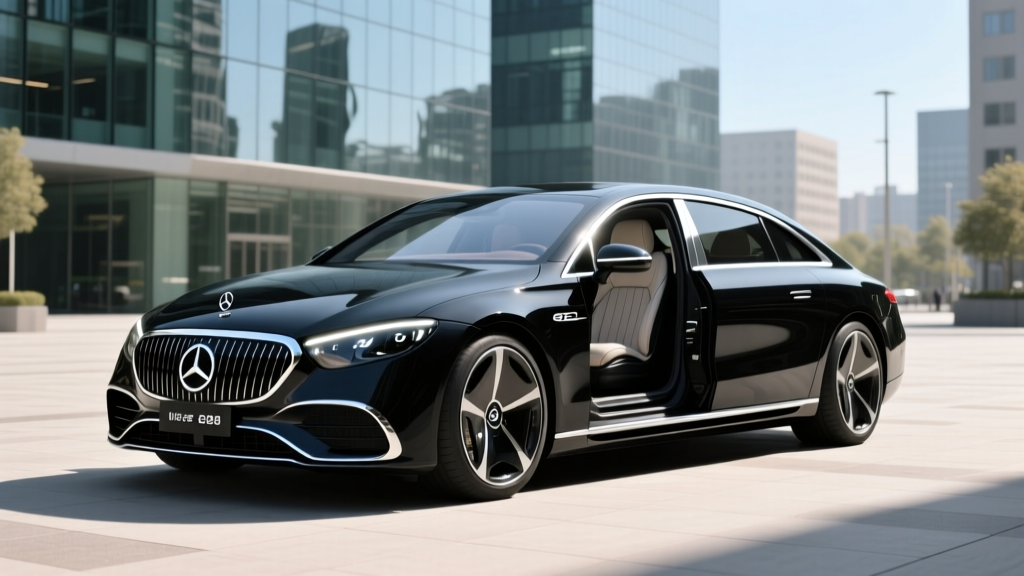
The Mercedes-Maybach EQS 680 SUV occupies a strange corner of the electric-vehicle market: it is simultaneously one of the most opulent EVs ever built and one of the hardest to justify on pure efficiency grounds. Priced well north of $180,000, this ultra-luxury electric SUV trades maximum range for maximum comfort, wrapping a 640-horsepower dual-motor powertrain in hand-stitched Nappa leather, active ambient lighting, and a rear-seat experience that rivals a private jet cabin. But beneath the Maybach moniker lies the same EVA2 platform that underpins the Mercedes-Benz EQS SUV — which raises an important question for prospective buyers: what exactly does the Maybach premium buy you, and where does it fall short?
This review breaks down the 2026 Maybach EQS 680 with the data that matters to EV buyers: real-world range versus the EPA sticker, actual charging speeds at DC fast chargers, federal tax credit eligibility under current IRS §30D rules, and how it stacks up against rivals like the BMW iX M70, Cadillac Escalade IQ, and even its own corporate sibling, the EQS 580 SUV.
Quick Verdict: Who Is the Maybach EQS 680 For?
The Maybach EQS 680 is not an efficiency play. It is a statement vehicle for buyers who prioritize rear-seat luxury, whisper-quiet ride quality, and brand prestige above all else — and who have access to reliable home charging. If your daily routine involves being chauffeured 30–80 miles in urban or suburban comfort and you can plug in overnight at a Level 2 charger, the EQS 680 delivers an unmatched experience. If you need maximum highway range for frequent long-distance road trips, the standard Mercedes-Benz EQS 580 SUV or the Tesla Model X offer more practicality at a fraction of the cost.
- You value rear-seat luxury and ride isolation above range maximization
- You have reliable home Level 2 charging and drive mostly under 150 miles/day
- Brand prestige and exclusivity are primary purchase drivers
- You want 640 HP of effortless, silent acceleration in a full-size SUV
- You regularly drive 300+ miles between charges on highway trips
- You want the best kWh-per-mile efficiency in a luxury EV
- Tax credit eligibility is a meaningful part of your purchase equation
Range, Battery & Efficiency: The Numbers Behind the Luxury
The 2026 Maybach EQS 680 SUV draws power from a 108.4 kWh usable lithium-ion battery pack (118 kWh gross) using NMC (nickel-manganese-cobalt) cell chemistry. NMC offers higher energy density than LFP (lithium iron phosphate), which is critical in a vehicle this heavy — the EQS 680 tips the scales at over 6,200 pounds. The trade-off is that NMC batteries benefit more from staying between 10–90% state of charge for daily use, whereas LFP packs tolerate regular 100% charges.
The EPA rates the Maybach EQS 680 at 305 miles of combined range. However, that sticker number tells only part of the story.
EPA Estimate: 305 miles (combined)
Highway (70 mph, 75°F): Expect ~250–270 miles. The EQS 680's aerodynamic drag and 6,200+ lb curb weight reduce efficiency significantly at sustained highway speeds.
Cold Weather (30°F, highway): Range can drop to ~200–220 miles. The EQS 680 includes a heat pump for cabin heating, which mitigates some cold-weather loss, but battery chemistry and cabin heating demands still take a 20–30% toll.
City/Stop-and-Go: Closer to EPA or slightly above, ~300–320 miles, thanks to regenerative braking recuperating energy in traffic.
Efficiency lands at approximately 79 MPGe combined, or roughly 43 kWh per 100 miles, according to fueleconomy.gov. That is thirsty by EV standards — for comparison, the Hyundai Ioniq 5 achieves 114 MPGe and the standard EQS 450+ (RWD) manages around 89 MPGe. The Maybach's weight, all-wheel-drive system, and performance tuning all conspire against efficiency.
| Spec | Value |
|---|---|
| EPA Range (combined) | 305 miles |
| Battery (usable / gross) | 108.4 kWh / 118 kWh, NMC |
| Efficiency | 79 MPGe / ~43 kWh/100mi |
| Powertrain | Dual-motor AWD |
| Horsepower | 640 HP |
| Torque | 701 lb-ft |
| 0–60 mph | 4.1 seconds |
| Max DC Fast Charge | 200 kW (CCS1) |
| 10–80% DC Charge Time | ~31 minutes |
| Level 2 Charge Rate | 9.6 kW (~28 mi/hr) |
| Cargo Volume (behind 2nd row) | ~23 cu ft |
| Base MSRP | ~$181,050 |
| Battery/Powertrain Warranty | 8 years / 100,000 miles |
Charging Speed: DC Fast Charging and Home Level 2
The Maybach EQS 680 supports a maximum DC fast-charge rate of 200 kW via the CCS1 connector (the North American standard, though Mercedes-Benz is expected to transition future models to NACS/Tesla Supercharger compatibility). In practice, charging from 10% to 80% state of charge takes approximately 31 minutes at a capable 200+ kW station.
However, the charging curve tells the full story. The EQS 680 reaches peak charge rate only when the battery is preconditioned (via the MBUX navigation system routing to a charger) and the state of charge is low — typically between 10–30%. Above 50% SoC, the rate tapers significantly. By 80%, you are typically pulling 50–70 kW. This is standard behavior for large NMC packs, but it means that the last 20% of a charge (80–100%) can take nearly as long as the first 70%. For road trips, plan to charge to 80% and move on rather than waiting for a full battery.
| Level | Power | Miles Added per Hour | Notes |
|---|---|---|---|
| Level 1 (120V) | ~1.4 kW | ~3–4 mi/hr | Emergency/trickle only; impractical for daily use |
| Level 2 (240V, 40A) | 9.6 kW | ~28 mi/hr | Full charge in ~11.5 hours; ideal for overnight |
| DC Fast (200 kW peak) | 200 kW | ~190 mi in 31 min (10–80%) | Preconditioning required for peak rate |
For home charging, a 48-amp Level 2 wall connector on a 60-amp circuit delivers the full 9.6 kW, adding roughly 28 miles of range per hour. A full overnight charge (10 hours) restores approximately 280 miles — more than enough for most daily driving. Home installation typically costs $800–$2,500 depending on panel capacity and wiring distance, plus $500–$800 for a quality Level 2 unit like a ChargePoint Home Flex or Emporia V2.
Performance: 640 HP of Silent, Effortless Acceleration
The dual-motor all-wheel-drive powertrain produces 640 horsepower and 701 lb-ft of torque, launching the 6,200-pound SUV from 0 to 60 mph in 4.1 seconds. That is genuinely quick for a vehicle of this size and weight — comparable to a Porsche Cayenne S — and it arrives with zero drama. There is no turbo lag, no transmission shift, just a seamless wave of torque that makes highway merging and passing feel effortless.
The Maybach-specific tuning emphasizes ride comfort over sportiness. The standard Airmatic air suspension with adaptive damping isolates occupants from road imperfections with remarkable effectiveness. Rear-axle steering (up to 10 degrees) shrinks the turning circle, making this large SUV surprisingly manageable in city driving. The regenerative braking system offers multiple levels, selectable via steering-wheel paddles, though true one-pedal driving (coming to a full stop via regen alone) is not as aggressive as some competitors.
Interior, Cargo & Technology: Where the Maybach Premium Lives
Step inside — or more accurately, be ushered inside — and the Maybach EQS 680 justifies its price premium over the standard EQS SUV. The cabin features standard Nappa leather on every surface, open-pore wood trim, rose-gold accent stitching, and the signature Maybach quilted seat pattern. The MBUX Hyperscreen spans the full 56-inch dashboard width, combining the instrument cluster, central infotainment, and passenger display behind a single glass panel.
The rear seat is where the Maybach truly differentiates. Available Executive Rear Seat Plus packages include individual reclining rear seats with calf rests, heated and cooled cupholders, a rear-seat entertainment system with dual tablets, and a refrigerated compartment for champagne. Active ambient lighting with 64 colors and the Burmester 4D surround sound system (1,400 watts, 15 speakers) complete the sensory experience.
Practicality is more modest. Cargo space behind the second row measures approximately 23 cubic feet — adequate for luggage but less than a Cadillac Escalade IQ. Rear legroom is generous at around 41 inches, though the sloping roofline of the SUV body style limits headroom for taller passengers compared to a traditional boxy luxury SUV. There is no front trunk (frunk), as Mercedes uses that space for HVAC and power electronics.
Pricing, Trims & Federal Tax Credit Eligibility
The 2026 Mercedes-Maybach EQS 680 SUV starts at an MSRP of approximately $181,050, including destination. With popular options — Executive Rear Seat package, MANUFAKTUR exclusive paint, 22-inch forged wheels, and the rear-seat entertainment system — as-tested prices routinely reach $200,000–$215,000.
| Item | Details |
|---|---|
| Base MSRP | ~$181,050 |
| As-Tested (loaded) | ~$200,000–$215,000 |
| Federal §30D Tax Credit | Does NOT qualify — MSRP exceeds the $80,000 SUV cap |
| State/Local Incentives | Varies by jurisdiction; check official state resources |
Here is the critical point for buyers researching incentives: the Maybach EQS 680 does not qualify for the federal §30D EV tax credit. Under current IRS rules, the §30D credit caps eligible SUVs at an MSRP of $80,000. At $181,050 base, the Maybach is more than double that threshold. Buyer income caps ($300,000 joint / $150,000 single) and battery critical-mineral sourcing requirements are moot — the price alone disqualifies it.
If federal tax credit eligibility is a meaningful factor in your EV purchase, this vehicle is not designed for that buyer. The credit was structured to incentivize mainstream EV adoption, not ultra-luxury purchases.
Warranty & Long-Term Ownership
Mercedes-Benz covers the EQS 680's high-voltage battery and electric powertrain for 8 years or 100,000 miles, whichever comes first. The battery warranty guarantees a minimum of 70% state of health (capacity retention) over that period. If the pack degrades below that threshold within the warranty window, Mercedes will repair or replace it to bring capacity back above 70%.
The limited vehicle warranty runs 4 years / 50,000 miles. Given the vehicle's price, most buyers will want to explore extended warranty options or certified maintenance programs. Long-term NMC battery degradation data from the broader EQS fleet suggests approximately 8–12% capacity loss over the first 100,000 miles under normal use patterns, which is within the warranty buffer.
- Unmatched rear-seat luxury and ride isolation in an electric SUV
- 640 HP provides effortless, silent acceleration
- Excellent cabin quietness even at highway speeds
- MBUX Hyperscreen is visually stunning and functional
- Rear-axle steering improves city maneuverability
- Heat pump included for cold-weather efficiency
- 305-mile EPA range is modest for the price class
- ~79 MPGe efficiency is poor; high electricity cost per mile
- No federal tax credit eligibility (MSRP far exceeds cap)
- 200 kW DC charging is slower than rivals (Hyundai at 350 kW)
- Cargo space (23 cu ft) trails traditional luxury SUVs
- Extremely high purchase price; steep depreciation expected
- CCS1 connector; limited Supercharger access vs NACS vehicles
How It Compares: Maybach EQS 680 vs. Key Rivals
The Maybach EQS 680 competes in a small but growing segment of ultra-luxury electric SUVs. Here is how it stacks up against the most relevant alternatives:
| Spec | Maybach EQS 680 | BMW iX M70 | Cadillac Escalade IQ | Mercedes EQS 580 SUV |
|---|---|---|---|---|
| EPA Range | 305 mi | ~302 mi | ~450 mi (est.) | ~330 mi |
| Horsepower | 640 HP | 610 HP | ~750 HP (est.) | 536 HP |
| 0–60 mph | 4.1 sec | 3.6 sec | ~3.5 sec (est.) | 4.3 sec |
| DC Fast Charge | 200 kW | ~200 kW | ~200+ kW | 200 kW |
| Starting MSRP | ~$181K | ~$112K | ~$130K (est.) | ~$127K |
| Federal Tax Credit | No | No (MSRP cap) | No (MSRP cap) | No (MSRP cap) |
The EQS 580 SUV is the most compelling internal rival: it shares the same platform, battery, and most technology at $50,000+ less. The BMW iX M70 is sportier and quicker but lacks the rear-seat opulence. The Cadillac Escalade IQ offers far more range and cargo space for buyers who need practicality alongside luxury.
Frequently Asked Questions
What is the real-world range of the Maybach EQS 680?
The EPA rates it at 305 miles combined. In real-world highway driving at 70 mph in mild weather, expect 250–270 miles. In cold weather (below freezing), that can drop to 200–220 miles. City driving with regenerative braking can approach or slightly exceed the EPA figure.
How fast does the Maybach EQS 680 charge at home and on the road?
At home on a 9.6 kW Level 2 charger, it adds about 28 miles of range per hour, with a full charge taking roughly 11.5 hours. On a DC fast charger, it peaks at 200 kW, reaching 10–80% in approximately 31 minutes when the battery is preconditioned. Charging above 80% slows significantly to protect battery health.
Does the Maybach EQS 680 qualify for the federal EV tax credit?
No. Under current IRS §30D rules, the federal clean vehicle credit caps eligible SUVs at an MSRP of $80,000. The Maybach EQS 680 starts at ~$181,050, more than double the limit. Buyer income caps and battery-sourcing requirements are irrelevant here — the price alone disqualifies it.
Is the Maybach EQS 680 worth buying over the standard EQS 580 SUV?
It depends entirely on your priorities. The EQS 580 shares the same platform, similar battery, and most core technology for $50,000+ less. The Maybach premium buys hand-finished interior materials, Executive rear seating, Maybach-specific suspension tuning, and brand exclusivity. If rear-seat luxury and prestige are paramount, the Maybach delivers. If you value value-for-money, the EQS 580 is the rational choice.
What connector does the Maybach EQS 680 use for charging?
The current model uses the CCS1 connector for DC fast charging and the J1772 connector for Level 2 AC charging. This provides access to Electrify America, EVgo, and most non-Tesla public charging networks. Tesla Supercharger access may require an adapter, depending on Mercedes-Benz's NACS transition timeline.
How long will the battery last?
Mercedes-Benz warranties the high-voltage battery for 8 years / 100,000 miles with a minimum 70% capacity retention guarantee. Based on NMC chemistry degradation patterns in the broader EQS fleet, expect 8–12% capacity loss over the first 100,000 miles under normal use. Avoiding frequent DC fast charging and keeping daily charge between 20–80% will maximize longevity.
Can the Maybach EQS 680 tow?
Mercedes-Benz rates the EQS SUV platform for up to 3,500 pounds of towing capacity when properly equipped. However, towing will significantly reduce range — expect a 30–50% reduction depending on trailer weight and aerodynamics. This is a luxury cruiser, not a tow vehicle.
Sources: fueleconomy.gov (EPA range and efficiency data), IRS.gov (§30D clean vehicle credit rules), Mercedes-Benz USA press specifications. Pricing and specifications reflect 2026 model year data available at time of publication. Tax credit eligibility rules are subject to change — consult a tax professional for your specific situation.