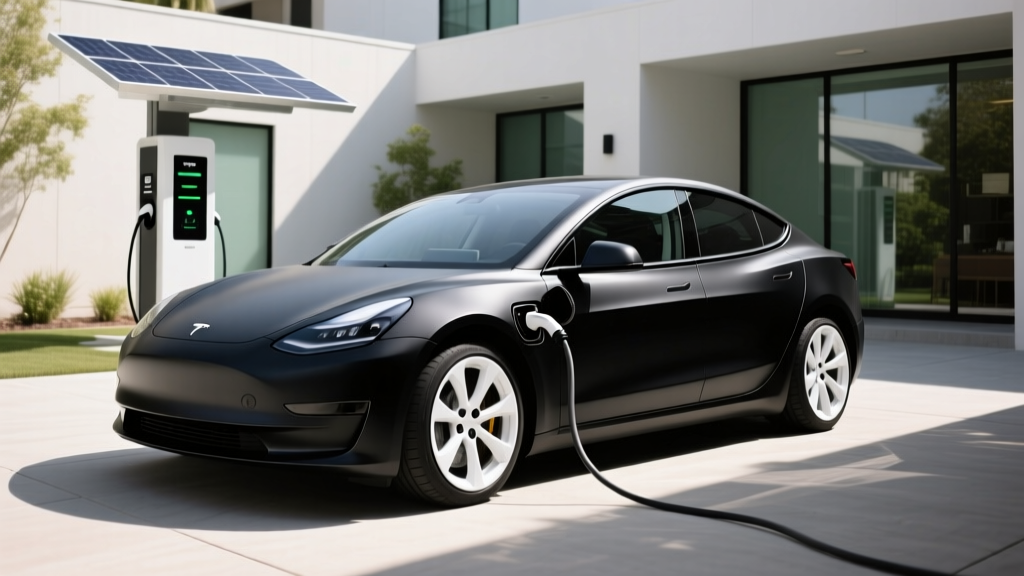
The Tesla Model 3 has defined the affordable premium electric sedan segment for years, and for 2026, it returns with the refreshed Highland architecture, improved cabin materials, and — yes — a stealthy matte black aesthetic that continues to draw buyers who want something a little different from the glossy showroom standard. If you've been searching for a matte black Model 3, you're likely weighing whether the visual upgrade is worth the premium and, more importantly, whether the underlying EV still holds up against a growing field of competitors.
This review covers the 2026 Model 3 Long Range AWD and Performance trims — the two most popular configurations for buyers seeking that matte black look — with exact numbers on range, charging, pricing, and real-world ownership. We'll separate EPA sticker claims from highway reality and break down whether this car still earns its reputation.
Spec Sheet: 2026 Tesla Model 3 at a Glance
| Specification | Long Range AWD | Performance |
|---|---|---|
| EPA Range | 341 miles | 315 miles |
| Battery (usable) | ~79 kWh, NMC | ~79 kWh, NMC |
| Drivetrain | Dual Motor AWD | Dual Motor AWD |
| Horsepower | ~346 hp | ~510 hp |
| 0–60 mph | 4.2 sec | 2.9 sec |
| Peak DC Fast Charge | 250 kW | 250 kW |
| 10–80% DC Charge Time | ~25 min | ~25 min |
| Level 2 Home Charge | 11.5 kW (~44 mi/hr) | 11.5 kW (~44 mi/hr) |
| MPGe (combined) | 132 MPGe | 121 MPGe |
| Energy Consumption | 25 kWh/100 mi | 28 kWh/100 mi |
| Cargo Volume | 23 cu ft (trunk + frunk) | 23 cu ft (trunk + frunk) |
| Rear Legroom | 35.4 in | 35.4 in |
| Base MSRP | $47,740 | $52,990 |
| Battery Warranty | 8 yr / 120,000 mi | 8 yr / 120,000 mi |
Real-World Range: What the EPA Number Doesn't Tell You
EPA Estimated Range: 341 miles (Long Range AWD) / 315 miles (Performance)
Real-World Expectation: Plan for roughly 270–295 miles on sustained highway driving at 70–80 mph. In cold weather (below 32°F), expect a 15–25% reduction, dropping effective range to 220–260 miles depending on cabin heat usage and whether you precondition the battery.
The Model 3 Long Range's EPA figure of 341 miles is among the best in its class, but EPA tests include generous city-regenerative driving and mild climate assumptions. In our experience and consistent with third-party highway tests, sustained 75-mph driving in moderate temperatures yields roughly 280–295 miles before you're hunting for a charger. The Performance trim, with its stickier tires and more aggressive power delivery, typically nets 260–280 miles highway.
Cold weather remains the equalizer for all EVs. Tesla's heat pump helps — it scavenges waste heat from the drivetrain rather than relying solely on resistive heating — but lithium-ion chemistry simply slows in the cold. If you garage your car and precondition while plugged in, you'll recover most of that lost efficiency on your commute. On a 300-mile winter road trip without preconditioning at departure, budget for two charging stops instead of one.
Charging Speed: DC Fast and Home Level 2
| Charging Level | Power / Rate | Miles Added per Hour |
|---|---|---|
| Level 1 (120V outlet) | ~1.4 kW | ~4–5 mi/hr |
| Level 2 (240V, 48A) | 11.5 kW | ~44 mi/hr |
| DC Fast (Supercharger V3/V4) | Peak 250 kW | ~170 mi in 15 min |
The Model 3 charges at a peak rate of 250 kW on Tesla's V3 and V4 Superchargers. In practice, the charge curve tapers significantly above 80% State of Charge — you'll see 250 kW only between roughly 10–30% SoC, with the rate stepping down to ~150 kW by 50% and ~75 kW by 80%. A 10–80% session takes approximately 25 minutes, which is competitive but no longer class-leading; vehicles on 800V architectures (Hyundai Ioniq 5, Kia EV6, Porsche Taycan) can complete the same session in 18 minutes.
For home charging, the onboard 11.5 kW AC charger is robust. On a properly installed 48-amp Level 2 circuit (requiring a 60-amp breaker), you'll add about 44 miles of range per hour — enough to fully replenish a depleted battery overnight in roughly 8 hours. Tesla's Wall Connector retails around $475 and is a reliable choice, though any J1772-compatible Level 2 unit (with Tesla's included adapter, or the native NACS connector on newer installations) will work.
Important note: Many homes with older 100-amp electrical panels may require a panel upgrade (typically $1,500–$3,000) to support a dedicated 60-amp EV circuit alongside existing loads. Factor this into your budget. A licensed electrician should evaluate your panel before you commit to equipment.
Performance and Driving Dynamics
The Long Range AWD delivers 346 horsepower through dual motors, reaching 60 mph in 4.2 seconds — quick enough to merge confidently and overtake without drama. The Performance trim bumps output to approximately 510 hp with a 2.9-second 0–60 time, placing it in sports-car territory.
Both trims benefit from Tesla's low center of gravity (battery pack under the floor) and well-tuned adaptive damping on the Performance variant. The Highland refresh brought meaningful improvements to ride quality: revised suspension bushings, acoustic glass, and improved sound deadening make the 2026 Model 3 noticeably quieter than pre-2024 versions. Road noise at highway speed, once a common complaint, is now well-managed.
Regenerative braking remains aggressive by default, enabling one-pedal driving in most situations. The blended brake feel is among the best in the EV segment — the transition from regen to friction braking is nearly imperceptible.
Interior, Tech, and the Matte Black Aesthetic
The 2026 Model 3 cabin is minimalist by design: a single 15.4-inch center touchscreen handles infotainment, climate, navigation, and vehicle settings. There's no traditional instrument cluster — speed and range information live in the upper-left corner of the main display. The rear passengers get an 8-inch screen for climate control and entertainment, a welcome addition from the Highland refresh.
Build quality has improved substantially. Panel gaps are tighter, materials are softer (vegan leather and textile trims), and the ambient lighting gives the cabin warmth that earlier Model 3s lacked. Ventilated front seats are now standard on Long Range and above.
About that matte black finish: Tesla does not currently offer a factory matte black paint option for the Model 3. The Solid Black paint ($1,500 premium) is a deep gloss. Buyers who want the matte aesthetic typically pursue one of two routes:
- Paint Protection Film (PPF) in satin/matte finish: A full-body matte PPF wrap costs $4,500–$7,000 installed by a reputable shop. It protects the underlying paint and delivers the flat, stealthy look. This is the most popular approach.
- Vinyl wrap: Slightly less expensive ($2,500–$4,000) but less durable and offers no paint protection. Expect a 3–5 year lifespan before replacement.
Neither option affects the vehicle's warranty, but inform your insurance carrier — wraps are typically covered under comprehensive policies if documented.
Pricing, Trims, and Federal Tax Credit Eligibility
| Trim | Base MSRP | Est. As-Tested (w/ options) | Potential §30D Credit |
|---|---|---|---|
| Long Range AWD | $47,740 | $49,240–$54,000 | Up to $7,500* |
| Performance | $52,990 | $54,500–$58,000 | Up to $7,500* |
*Federal tax credit eligibility under IRS §30D is not guaranteed. It depends on three factors:
- MSRP Cap: Sedans must have an MSRP ≤ $55,000. The Long Range AWD qualifies; the Performance trim's base MSRP of $52,990 qualifies, but adding certain packages can push it over the cap.
- Buyer Income Cap: Modified Adjusted Gross Income must not exceed $150,000 (single), $225,000 (head of household), or $300,000 (joint filers).
- Battery Sourcing: The credit is split into two halves — $3,750 for critical-minerals sourcing and $3,750 for battery-component manufacturing. Sourcing requirements tighten annually. Check fueleconomy.gov for the current Model 3 eligibility status, as supply chain shifts can change qualification mid-year.
As of early 2026, the Model 3 Long Range AWD has qualified for the full $7,500 credit when purchased by eligible buyers, and Tesla offers a point-of-sale transfer so you can apply the credit as a down-payment reduction at delivery rather than waiting for tax filing. Confirm eligibility at the time of purchase — rules evolve, and the IRS maintains a dedicated page with current qualified vehicle lists.
Who the Model 3 Suits Best
Ideal for: Daily commuters with home charging access who value efficiency, tech-forward features, and access to Tesla's Supercharger network. The Long Range AWD is particularly strong for 40–80 mile round-trip commutes with occasional road trips. The Supercharger network, now open to other brands via adapter, remains the most reliable DC fast-charging infrastructure in the U.S.
Less ideal for: Families needing more than two rear passengers regularly (rear legroom is adequate but not generous at 35.4 inches), buyers who prefer physical controls over touchscreen-driven interfaces, or those who tow (the Model 3 is not rated for towing).
Road-trip viability: Strong. With 341 miles of EPA range and Supercharger stations spaced roughly 150–200 miles apart on major corridors, you'll typically charge for 15–20 minutes every 2.5–3 hours of driving — a natural rest-stop rhythm.
Model 3 vs. Key Competitors: Is It Still Worth It?
The Model 3's competitive set has expanded considerably. Here's how it stacks up against its most relevant rivals:
| Attribute | Tesla Model 3 LR AWD | BMW i4 eDrive40 | Hyundai Ioniq 6 SEL |
|---|---|---|---|
| EPA Range | 341 mi | 301 mi | 361 mi |
| Base MSRP | $47,740 | $52,200 | $42,450 |
| Peak DC Charge | 250 kW | 205 kW | 240 kW (800V) |
| 10–80% Time | ~25 min | ~31 min | ~18 min |
| Charging Network | Supercharger (native NACS) | CCS (EA, etc.) | CCS (EA, etc.) |
| Rear Legroom | 35.4 in | 34.7 in | 35.7 in |
| ADAS | Autopilot (L2), FSD optional | Driving Assist Pro (L2) | Highway Driving Assist 2 (L2) |
Choose the Model 3 if: You prioritize the Supercharger network's reliability, want strong range at a competitive price, and prefer a minimalist tech-heavy cabin. Tesla's over-the-air updates also mean the car improves post-purchase in ways competitors can't match.
Choose the Ioniq 6 if: Maximum range and fastest charging speed matter most, and you don't mind relying on Electrify America or other third-party DC networks (which have improved but still lag Supercharger uptime).
Choose the BMW i4 if: You want a more traditional luxury sedan feel with physical controls, superior sound insulation, and brand cachet — and you're willing to pay a premium for it.
Pros and Cons
Pros
- 341-mile EPA range among the best in its class
- Supercharger network: most reliable DC fast-charging in the U.S.
- Strong efficiency: 25 kWh/100 mi (Long Range)
- Highland refresh meaningfully improved ride quality and cabin noise
- OTA updates add features post-purchase
- Excellent regenerative braking and one-pedal driving experience
- 8-year/120,000-mile battery warranty
Cons
- 250 kW peak charge rate is no longer class-leading (800V rivals charge faster)
- Touchscreen-only controls frustrate some drivers (no physical volume knob or climate buttons)
- Matte black requires aftermarket wrap — not a factory option
- Rear seat space is adequate, not generous, for taller adults
- No towing capability
- FSD (Supervised) remains a Level 2 system requiring full driver attention, despite its name
- Insurance costs tend to run higher than segment average
Frequently Asked Questions
What is the real-world range of the 2026 Model 3 Long Range?
The EPA rates it at 341 miles, but expect 270–295 miles on sustained highway driving at 70–80 mph. In cold weather below freezing, plan for 220–260 miles unless you precondition the battery while plugged in.
How fast does the Model 3 charge at home and on the road?
On a 48-amp Level 2 home charger, it adds about 44 miles per hour (11.5 kW), fully recharging overnight. On a Tesla Supercharger, it peaks at 250 kW and charges from 10–80% in roughly 25 minutes. Expect about 170 miles of range in a 15-minute session.
Does the 2026 Model 3 qualify for the $7,500 federal EV tax credit?
The Long Range AWD (MSRP $47,740) has qualified for the full $7,500 under §30D for eligible buyers in recent quarters, but eligibility depends on your income, the vehicle's battery-sourcing compliance that month, and MSRP staying under the $55,000 sedan cap. Always verify on fueleconomy.gov before purchasing.
Is the matte black finish available from Tesla?
No. Tesla offers Solid Black as a glossy premium paint ($1,500). Matte black is achieved through aftermarket satin PPF ($4,500–$7,000) or vinyl wrap ($2,500–$4,000). PPF is recommended because it also protects the paint from rock chips and UV damage.
How does Autopilot and FSD (Supervised) work?
Autopilot is standard and provides adaptive cruise control and lane centering on highways — a solid SAE Level 2 system. Full Self-Driving (Supervised), a $8,000 add-on or $99/month subscription, adds automatic lane changes, navigation-based on-ramp to off-ramp driving, and traffic-light recognition. However, it remains Level 2: you must keep your hands on the wheel and eyes on the road at all times. It is not self-driving.
What is the battery warranty?
Tesla covers the Model 3 Long Range and Performance battery and drive unit for 8 years or 120,000 miles, whichever comes first, with a guarantee of at least 70% capacity retention over that period. NMC chemistry in Tesla packs has shown strong longevity in fleet data, with typical degradation of 10–12% over the first 100,000 miles.
Is it worth buying a Model 3 in 2026 vs. competitors?
If you value the Supercharger network, strong range, and continuous software improvement, yes — the Model 3 Long Range remains one of the best value propositions in premium electric sedans. If faster DC charging or a more traditional luxury interior is your priority, the Hyundai Ioniq 6 or BMW i4 are strong alternatives to cross-shop.