The Stealth Look Meets Electric Truck Reality
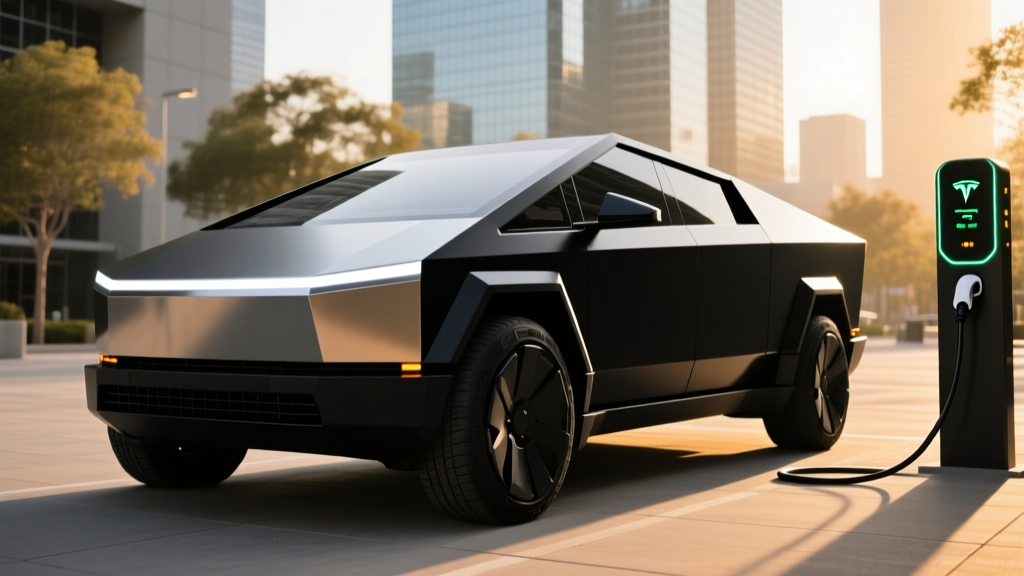
If you've spent any time on EV forums or Instagram truck builds in 2026, you've seen it: the matt black Cybertruck. While Tesla sells the stainless-steel exoskeleton in its bare "Ultra-Hard 30X Cold-Rolled" finish, a growing owner community is applying matte-black PPF (paint protection film) or vinyl wraps to achieve a stealth, blackout aesthetic. The result is a Cybertruck that looks like a military concept — but the real question for buyers isn't cosmetic. It's whether the 2026 Cybertruck AWD platform underneath that wrap delivers on range, charging, and daily-driver usability.
We've spent time with the 2026 Cybertruck AWD (Dual Motor) to separate the Instagram appeal from the ownership reality. Below: exact EPA numbers, real-world range reconciliation, charging-curve behavior, tax-credit math, and a verdict on whether this truck earns its $80K+ sticker.
Spec Sheet: 2026 Tesla Cybertruck AWD at a Glance
| Attribute | 2026 Cybertruck AWD (Dual Motor) |
|---|---|
| EPA Range | 340 miles |
| Battery Capacity (usable) | ~123 kWh (NMC chemistry) |
| Drivetrain | Dual Motor AWD |
| Horsepower | 600 hp |
| 0–60 mph | 3.9 seconds |
| Max DC Fast Charge | 350 kW peak (NACS) |
| 10–80% DC Charge Time | ~22 minutes (preconditioned) |
| Level 2 Home Charge Rate | 11.5 kW (~37 mi/hr) |
| MPGe (combined) | 79 MPGe |
| Efficiency | 43 kWh/100 mi |
| Towing Capacity | 11,000 lbs |
| Cargo Bed Length | 6 ft (72 in) |
| Cargo Volume (bed + frunk) | ~67 cu ft bed / ~14 cu ft frunk |
| Base MSRP | $79,990 |
| Battery/Drive Unit Warranty | 8 years / 120,000 miles |
Real-World Range: What the EPA Sticker Doesn't Tell You
Real-World Expectation: ~270–300 mi highway (70–75 mph); ~220–250 mi in sub-32°F cold; ~300–320 mi mixed city/suburban driving.
The 340-mile EPA figure is measured on a blended cycle that favors lower speeds and regenerative braking. On a flat interstate at 70 mph in 65°F weather, expect roughly 280–300 miles before hitting a low-State-of-Charge warning. Push 80 mph or climb sustained grades (I-70 through Colorado, for instance), and that number drops toward 250 miles.
Cold weather is the Cybertruck's real range enemy. At 20°F, lithium-ion internal resistance increases and cabin heating draws heavily from the 123 kWh pack. Tesla's heat pump helps, but without preconditioning, expect a 25–35% range reduction in deep cold — bringing usable range to roughly 220–250 miles. Always precondition the battery via the Tesla app before a DC fast-charge stop or a cold-weather departure; it warms the cells and restores charge-acceptance rates.
The stainless-steel body is heavier than aluminum-bodied competitors (the Cybertruck AWD has a curb weight near 6,800 lbs), which contributes to its 43 kWh/100 mi efficiency — noticeably thirstier than a lighter SUV like the Rivian R1S or even the Ford F-150 Lightning at ~48 kWh/100 mi (though the Lightning is also heavy). The matte-black wrap adds negligible weight but can trap slightly more heat in direct sun compared to bare stainless steel, though real-world thermal impact on the battery is insignificant.
Charging Speed: 350 kW Peak, But Read the Curve
| Charging Level | Power (kW) | Miles Added per Hour | Notes |
|---|---|---|---|
| Level 1 (120V household) | ~1.4 kW | ~3 mi/hr | Emergency/trickle only |
| Level 2 (240V, 48A home) | 11.5 kW | ~37 mi/hr | Full charge overnight (~9 hrs) |
| DC Fast (Tesla V4 Supercharger) | 350 kW peak | Up to ~250 mi in 15 min | Preconditioned pack required |
| DC Fast (10–80%) | Avg ~200 kW sustained | — | ~22 minutes (tapers sharply above 80%) |
The 350 kW peak figure is real — but only under ideal conditions: a preconditioned battery, low State of Charge (below 15%), and a V4 Supercharger or compatible 350+ kW CCS/NACS station. The Cybertruck's charge curve is aggressive in the 10–50% SoC window, sustaining roughly 280–320 kW, then tapering progressively. Between 50–80%, expect 150–200 kW; above 80%, the rate drops below 50 kW as the battery management system protects the NMC cells.
This means the 10–80% time of ~22 minutes is achievable, but charging from 80–100% at a DC fast charger is painfully slow. Plan road trips to charge in the 10–80% window and hop to the next station rather than sitting for a full top-off.
At home on a properly installed Level 2 Wall Connector (48-amp circuit on a 60-amp breaker), you'll add roughly 37 miles of range per hour, meaning a full 0–100% charge takes about 9 hours. For most owners, plugging in nightly and charging to 80–90% daily (per Tesla's NMC battery-care recommendation) means waking up to 270+ miles every morning.
Performance and Drivetrain: 600 hp Dual-Motor AWD
The 2026 Cybertruck AWD pairs a front and rear permanent-magnet motor for a combined 600 hp and a manufacturer-claimed 0–60 mph time of 3.9 seconds. That's sports-car acceleration in a 6,800-pound stainless-steel truck — and it's genuinely startling the first time you floor it. The instant torque delivery (no turbo spool, no transmission shift) makes highway merging effortless, and the low center of gravity from the floor-mounted 123 kWh battery pack keeps body roll surprisingly controlled in corners.
The dual-motor AWD system provides genuine off-road traction, with selectable drive modes for sand, snow, and mud. The adaptive air suspension offers up to 12 inches of ground clearance and can lower for highway efficiency or raise for trail obstacles. However, the Cybertruck's 35-degree approach angle and long wheelbase limit it on tight technical trails compared to a purpose-built off-roader like the Rivian R1T.
Towing capacity is rated at 11,000 lbs — best-in-class for electric pickups — but towing at that limit will slash range by 40–50%. Expect roughly 170–200 miles of range when pulling a 10,000-lb trailer at highway speeds. For reference, the EPA's fueleconomy.gov database does not currently list separate towing-range figures for EVs, so plan conservatively.
Interior, Cargo, and Tech: Minimalist With Real Utility
The Cybertruck's cabin is aggressively minimalist — a single 18.5-inch touchscreen dominates the dash, with nearly all vehicle controls (glovebox, mirrors, climate vents) buried in software menus. Some owners love the clean aesthetic; others find it frustrating for simple adjustments like redirecting airflow. The rear seats offer 38 inches of legroom (adequate for adults on short trips, tight for long hauls), and the rear bench folds flat to extend interior cargo length.
The 6-foot bed is enclosed by a power-operated tonneau cover (standard), with integrated LED lighting and a 120V/240V outlet capable of powering tools or a campsite. The front trunk (frunk) adds ~14 cu ft of lockable storage — useful for charging cables and groceries. Total payload capacity is rated at 2,500 lbs.
On the tech front, the Cybertruck runs Tesla's latest infotainment OS with native Spotify, Netflix, and YouTube (parked only), plus wireless Apple CarPlay integration (added in 2025). The standard Autopilot suite includes adaptive cruise, lane-centering, and automatic emergency braking. Full Self-Driving (Supervised) remains a $8,000 add-on and is an SAE Level 2 system — it does not drive itself, and you must remain engaged with hands on the yoke at all times.
Pricing, Trims, and the Matt Black Wrap Factor
| Trim | Base MSRP | As-Tested (Typical Options) | Federal §30D Credit Eligibility |
|---|---|---|---|
| Cybertruck AWD (Dual Motor) | $79,990 | $87,990 (FSD + Foundation Series) | Eligible (see caveats below) |
| Cybertruck Cyberbeast (Tri-Motor) | $99,990 | $107,990+ | Exceeds $80K truck MSRP cap — NOT eligible |
| Matte Black Wrap (aftermarket) | $3,500–$7,000 | — | N/A (not a factory option) |
The AWD Dual Motor is the volume trim and the one most buyers wrap in matte black. At $79,990 base, it sits just under the IRS §30D MSRP cap of $80,000 for trucks — meaning it can qualify for the full $7,500 federal tax credit, provided the buyer meets income limits and the battery-sourcing requirements are satisfied.
§30D Tax Credit Eligibility Checklist (2026 rules):
- MSRP Cap: ≤$80,000 for trucks/vans/SUVs; ≤$55,000 for sedans. The AWD at $79,990 qualifies; the Cyberbeast at $99,990 does not.
- Buyer Income Cap: Modified AGI ≤$300,000 (joint filers), ≤$225,000 (head of household), ≤$150,000 (single). Verify via IRS §30D guidelines.
- Battery Sourcing: A percentage of critical minerals and battery components must be sourced from the U.S. or FTA partners. Tesla's domestic sourcing has improved, but confirm VIN-level eligibility on fueleconomy.gov before purchase.
- Point-of-Sale Transfer: As of 2024+, you can transfer the credit to the dealer at purchase, reducing your out-of-pocket cost by $7,500 at the point of sale (rather than waiting for tax filing).
After-credit price for the AWD: $79,990 – $7,500 = $72,490 (before destination, options, or state incentives).
The matte-black wrap itself is an aftermarket modification. High-quality matte PPF (paint protection film) runs $4,500–$7,000 installed; vinyl wraps are cheaper at $2,500–$4,000 but less durable. PPF is the preferred choice for the Cybertruck because it protects the stainless steel from fingerprints, scratches, and the inevitable parking-lot dings while delivering the stealth aesthetic. Importantly, wrapping does not void Tesla's battery or drive-unit warranty, but any electrical modification (lighting wraps, de-badging that affects sensors) could.
Warranty and Long-Term Ownership
Tesla covers the Cybertruck's battery pack and drive units for 8 years or 120,000 miles, whichever comes first, with a guaranteed minimum 70% capacity retention over that period. The limited vehicle warranty is 4 years / 50,000 miles. This is competitive with the Rivian R1T (8-yr/175,000-mi battery) and the Ford F-150 Lightning (8-yr/100,000-mi battery).
The 123 kWh NMC pack is large and, based on Tesla's historical degradation data from Model S/X fleets, should retain approximately 85–90% capacity after 100,000 miles under normal use. Avoid routinely charging to 100% on NMC chemistry (set daily limit to 80–90%) and minimize prolonged storage at very low SoC to maximize longevity.
Insurance is a real cost consideration. The Cybertruck's repair costs (stainless-steel body panels, proprietary glass, air suspension) push premiums higher than comparable trucks. Expect $2,400–$3,600/year for a clean-record driver, depending on state and coverage level — get a quote before committing.
Pros and Cons: The Matt Black Cybertruck Verdict
Pros
- 340 mi EPA range is strong for a full-size electric truck
- 350 kW DC fast charging (10–80% in ~22 min) among the fastest in class
- 11,000-lb towing capacity leads the electric pickup segment
- 600 hp / 3.9-sec 0–60 is absurd performance for a utility vehicle
- Matte black PPF adds protection + stealth aesthetic without voiding warranty
- Standard air suspension with 12" ground clearance adjustability
- Qualifies for $7,500 §30D credit at AWD trim (with caveats)
Cons
- 43 kWh/100 mi efficiency is thirsty — higher electricity cost per mile than rivals
- Cold-weather range loss (25–35%) is significant for northern-climate owners
- Cyberbeast trim exceeds MSRP cap — no federal credit
- Minimalist interior frustrates with screen-buried controls
- Insurance premiums are 20–40% higher than comparable ICE trucks
- Towing at max capacity slashes range to ~170–200 mi
- Matte black wrap requires careful hand-wash maintenance (no automatic car washes)
Who Should Buy the Matt Black Cybertruck?
The matte-black-wrapped Cybertruck AWD is best suited for:
- Style-conscious truck buyers who want a head-turning daily driver with genuine utility underneath the aesthetic
- Tech-forward commuters with home Level 2 charging who value the 340-mile range buffer and Supercharger network access
- Light-to-moderate towers (boats, small trailers under 7,000 lbs) who won't regularly push the 11,000-lb max
- Performance-truck enthusiasts who want 3.9-second 0–60 capability in a pickup form factor
It is less suited for:
- Heavy commercial towers who need consistent 300+ mile range while pulling max loads (consider diesel or the F-150 Lightning Extended Range for better tow-range balance)
- Extreme cold-climate owners in Alaska or northern Canada where 25–35% range loss compounds with already-long distances between chargers
- Budget-focused buyers — even after the $7,500 credit, this is an $80K+ vehicle with premium insurance and maintenance costs
Choose the Rivian R1T Dual-Motor instead if: You need a more traditional truck interior, better off-road articulation, or a larger battery option with 400+ mi range.
Choose the Ford F-150 Lightning Extended Range if: You want a more conventional truck experience, lower insurance costs, and Pro Power Onboard for job-site use.
Frequently Asked Questions
What is the real-world range of the 2026 Cybertruck AWD?
The EPA rates it at 340 miles. In real-world highway driving at 70–75 mph, expect 270–300 miles. In sub-freezing temperatures, that drops to 220–250 miles. City driving with regenerative braking can approach or slightly exceed the EPA figure.
How fast does the Cybertruck charge at home and on the road?
At home on a Level 2 (240V, 48A) charger, it adds ~37 miles of range per hour, fully charging overnight in ~9 hours. On a DC fast charger (Tesla V4 Supercharger at 350 kW), it charges from 10–80% in approximately 22 minutes when the battery is preconditioned. Charging above 80% slows dramatically — plan to hop between stations rather than waiting for a full charge.
How much does the Cybertruck cost after federal tax credits?
The AWD Dual Motor starts at $79,990 and qualifies for the $7,500 §30D federal tax credit (if you meet income limits and battery-sourcing requirements), bringing the effective price to $72,490 before options. The Cyberbeast trim at $99,990 exceeds the $80,000 MSRP cap for trucks and does not qualify. A matte black PPF wrap adds $4,500–$7,000 aftermarket.
Does the Cybertruck qualify for the federal EV tax credit?
The AWD trim at $79,990 MSRP qualifies, subject to IRS §30D rules: buyer income must be ≤$300K (joint) / $150K (single), and the battery must meet critical-mineral and component-sourcing thresholds. Check your specific VIN on fueleconomy.gov before purchasing. The credit can be transferred to the dealer at point of sale as of 2024.
Is the matt black Cybertruck worth buying vs. the Rivian R1T or F-150 Lightning?
If you prioritize range, charging speed, and the Supercharger network, the Cybertruck AWD is competitive — its 340-mile EPA range and 350 kW peak charging are strong. The Rivian R1T offers a more refined interior and better off-road capability. The F-150 Lightning is more conventional and often cheaper to insure. The matte-black wrap is purely aesthetic and can be applied to any of them, but the Cybertruck's stainless body makes it the most iconic canvas for the stealth look.
Does wrapping the Cybertruck in matte black void the warranty?
No. A vinyl or PPF wrap is a non-invasive exterior modification and does not affect Tesla's 8-year/120,000-mile battery and drive-unit warranty. However, any wrap that interferes with cameras, ultrasonic sensors, or lighting could affect Autopilot functionality and related warranty claims. Use an experienced installer familiar with the Cybertruck's sensor locations.
What maintenance does a matte black wrap require?
Matte PPF and vinyl require hand washing with pH-neutral soap and microfiber cloths. Automatic car washes with abrasive brushes will damage the matte finish. Matte-specific ceramic coatings can add hydrophobic protection ($800–$1,500) and make cleaning easier. Expect a quality PPF wrap to last 5–7 years; vinyl typically lasts 3–5 years before fading or lifting at edges.