Massachusetts EV Incentives: What's Actually Available in 2026
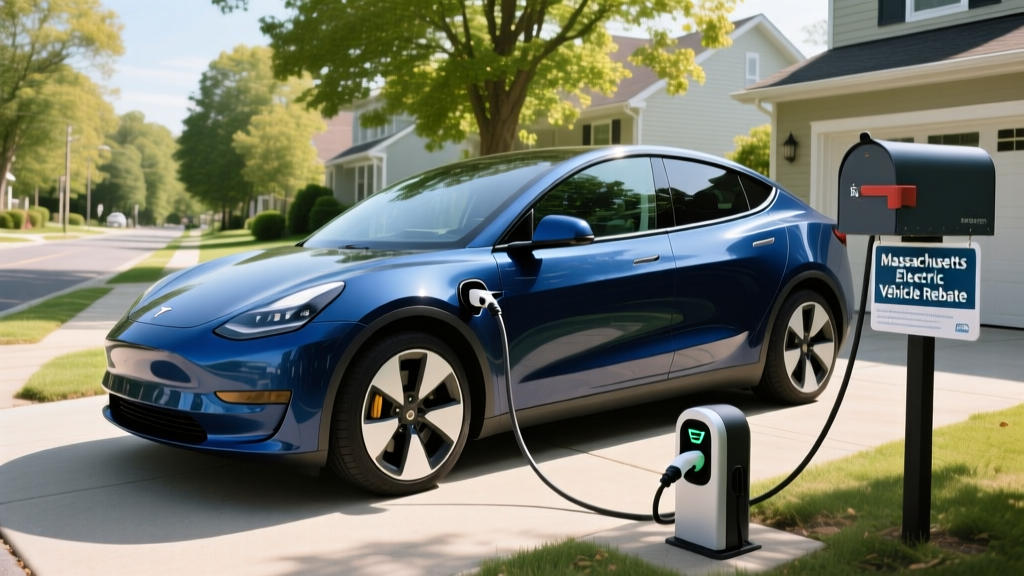
Massachusetts remains one of the more EV-friendly states in the U.S., but the landscape of incentives has shifted considerably over the last few years. If you're searching for a Massachusetts rebate for electric cars, you'll find that the state's flagship MOR-EV (Massachusetts Offers Rebates for Electric Vehicles) program is your primary target — but stacking it with federal tax credits, utility rebates, and local incentives is where the real savings materialize.
As of early 2026, the MOR-EV program offers up to $3,500 for the purchase or lease of a new battery-electric vehicle (BEV) and up to $1,500 for a plug-in hybrid (PHEV), subject to program funding availability and MSRP caps. Used EV purchases may qualify for up to $1,500 under the MOR-EV Used program. The program is administered by the Massachusetts Department of Energy Resources (DOER) and funded through the state's participation in the Regional Greenhouse Gas Initiative (RGGI).
Federal Tax Credit Under IRS §30D: The $7,500 Question
The federal Clean Vehicle Credit under IRS §30D remains the single largest purchase incentive for EV buyers — but qualifying for the full $7,500 requires navigating a complex web of requirements that tightened significantly after the Inflation Reduction Act. For 2026, here's what you need to know:
- Income caps (modified AGI): $300,000 joint filers / $225,000 head of household / $150,000 single filers
- MSRP caps: $80,000 for vans, SUVs, and pickup trucks; $55,000 for sedans and other passenger vehicles
- Battery sourcing requirements: The vehicle must meet critical minerals and battery component sourcing thresholds that phase up annually — for 2026, these thresholds exclude vehicles with battery components from foreign entities of concern (FEOC)
- Point-of-sale transfer: As of 2024, buyers can transfer the credit to the dealer at purchase, receiving it as an immediate price reduction rather than waiting to claim it on their tax return
- Vehicle eligibility: Must be a new qualifying BEV or PHEV with a battery capacity of at least 7 kWh, assembled in North America
The critical minerals and battery component requirements have eliminated several previously eligible models from the credit. Vehicles like certain Hyundai and Kia models assembled overseas may not qualify for the new-vehicle credit (though they may qualify for the used EV credit of up to $4,000 under §25E, which has no domestic assembly requirement). Always check the DOE's fueleconomy.gov tax credit page for the most current eligibility list before committing to a purchase.
Stacking Incentives: A Real Massachusetts EV Purchase Example
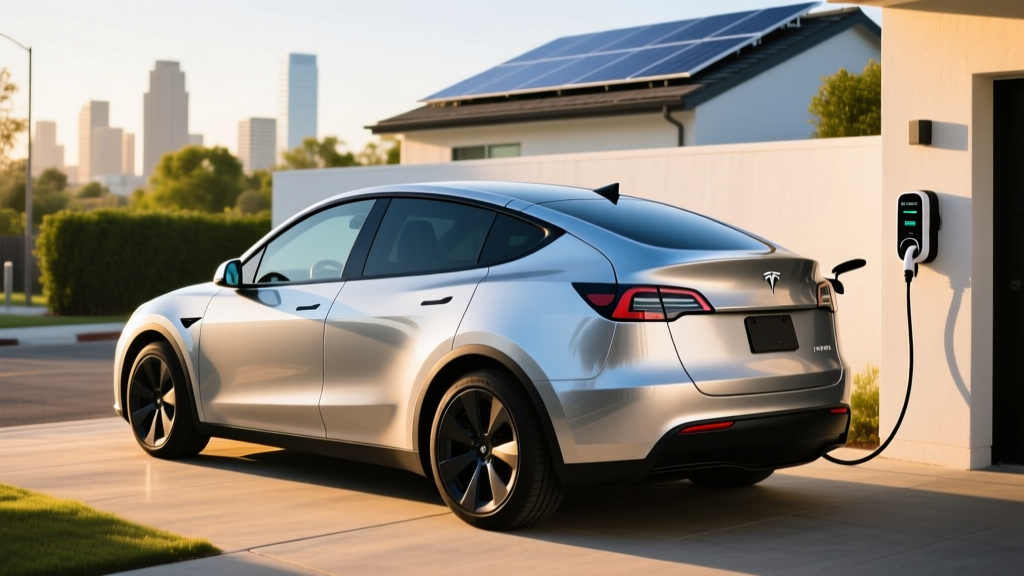
Let's model a realistic purchase to show how incentives stack. Consider a 2026 Tesla Model Y Long Range AWD:
| Item | Amount |
|---|---|
| Base MSRP | $44,990 |
| Federal §30D credit (point-of-sale) | −$7,500 |
| MOR-EV new BEV rebate | −$3,500 |
| Utility Level 2 charger rebate (Eversource example) | −$300 |
| Effective purchase price | $33,690 |
That's a combined $11,300 in incentives off the sticker price — assuming you meet all eligibility requirements for each program. The point-of-sale transfer for the federal credit means you walk out of the dealership paying the reduced price directly, which also reduces your sales tax burden in most cases (Massachusetts applies sales tax to the post-credit amount when the credit is transferred at point of sale).
5-Year Total Cost of Ownership: EV vs. Gas in Massachusetts
Incentives lower the entry price, but ownership costs determine long-term value. Here's a 5-year/75,000-mile TCO comparison between a 2026 Tesla Model Y LR AWD (EPA 320 mi range, 84 kWh usable battery) and a comparable 2026 Toyota RAV4 AWD (EPA 30 MPG combined) for a Massachusetts driver.
| Cost Category | Tesla Model Y LR (BEV) | Toyota RAV4 AWD (Gas) |
|---|---|---|
| Effective purchase price (after incentives) | $33,690 | $35,500 |
| Fuel / electricity (75,000 mi) | $3,375 | $9,375 |
| Maintenance (5 years) | $1,200 | $3,500 |
| Insurance (5 years) | $10,500 | $7,500 |
| Estimated depreciation (5 years) | $14,800 | $12,400 |
| Total 5-Year Cost | $63,565 | $68,275 |
| Cost per mile | $0.85 | $0.91 |
Assumptions: MA residential electricity at $0.29/kWh (EIA 2025 avg), vehicle efficiency 3.5 mi/kWh (Model Y) vs 30 MPG (RAV4), gas at $3.75/gal, 15,000 mi/year, home charging dominant (90%). Insurance based on MA average premiums. Depreciation based on 5-year retained value trends from Kelley Blue Book and Recurrent Auto data.
Charging vs. Gas: The Per-Mile Math for Massachusetts Drivers
Massachusetts has some of the highest residential electricity rates in the continental U.S. — averaging around $0.29/kWh as of late 2025 (per EIA data). That makes the fuel-savings equation tighter than in states with cheap electricity, but EVs still hold a significant edge.
| Scenario | Cost per Mile | Annual Cost (15k mi) |
|---|---|---|
| Home charging (MA avg $0.29/kWh, 3.5 mi/kWh) | $0.083 | $1,243 |
| Home charging with time-of-use off-peak ($0.19/kWh) | $0.054 | $814 |
| DC fast charging (avg $0.45/kWh) | $0.129 | $1,929 |
| Gas vehicle (30 MPG, $3.75/gal) | $0.125 | $1,875 |
| Gas vehicle (25 MPG, $3.75/gal) | $0.150 | $2,250 |
The critical insight: home charging is where the savings live. At MA residential rates, you save roughly $0.04–$0.07 per mile versus gas. Over 15,000 miles annually, that's $600–$1,050 in yearly fuel savings. If you rely primarily on DC fast charging (at $0.40–$0.55/kWh common at Electrify America and EVgo stations in the Boston metro), your per-mile cost can actually exceed a fuel-efficient gas car. This makes a home Level 2 charger installation — typically $800–$2,000 including equipment and electrician labor — one of the highest-return investments an EV owner can make.
Maintenance Savings: Where EVs Genuinely Cost Less
EVs have dramatically fewer moving parts than internal combustion vehicles — no engine oil, no transmission fluid, no spark plugs, no timing belts, no exhaust system. The maintenance savings are real and measurable.
| Maintenance Item | Gas Vehicle (5 yr) | BEV (5 yr) |
|---|---|---|
| Oil changes (2×/year) | $500–$750 | $0 |
| Transmission fluid | $150–$300 | $0 |
| Spark plugs / ignition | $200–$400 | $0 |
| Brake pads (front + rear) | $600–$1,000 | $150–$300 |
| Cabin air filter | $150–$250 | $150–$250 |
| Tire rotation / replacement | $1,200–$1,800 | $1,400–$2,000 |
| Coolant / misc. fluids | $200–$400 | $100–$200 |
| Total (estimated 5 yr) | $3,000–$4,900 | $1,800–$2,750 |
Two nuances worth highlighting. First, regenerative braking significantly extends brake pad life — many EV owners report original brake pads lasting 80,000–100,000+ miles because regen handles the majority of deceleration. Second, EVs tend to wear tires faster due to higher vehicle weight (battery mass) and instant torque delivery. Budget for tire replacement slightly earlier than you would on a comparable gas vehicle. Tesla Model Y owners typically see 30,000–40,000 miles from a set of OEM tires.
Insurance Costs: The Uncomfortable Reality
This is where the EV cost story gets less rosy. EV insurance premiums are typically 15–30% higher than comparable gas vehicles, and Massachusetts — already one of the more expensive states for auto insurance — amplifies this gap.
Why the premium? Several factors converge:
- Higher repair costs: EV battery packs, power electronics, and specialized structural components are expensive to replace after collision damage
- Fewer qualified repair shops: High-voltage system repairs require specialized training and equipment, limiting the body shop pool and driving up labor rates
- Higher vehicle values: Even after incentives, many EVs carry higher MSRPs than gas equivalents, increasing comprehensive and collision premiums
- Total-loss thresholds: Battery damage from even moderate collisions can push repair costs above the vehicle's total-loss threshold, leading insurers to write off vehicles that a gas car would survive
For our Model Y vs. RAV4 comparison in Massachusetts, expect roughly $2,100/year for the Tesla versus $1,500/year for the Toyota — a $600 annual gap that partially offsets fuel and maintenance savings. Always get insurance quotes before purchasing; premiums vary wildly by driver profile, ZIP code, and insurer. Some companies (like Tesla Insurance in eligible states) offer usage-based rates that can narrow the gap for safe drivers.
Depreciation and Resale Value Trends
EV depreciation has been volatile over the past few years. In 2023–2024, aggressive price cuts by Tesla and other manufacturers cratered used EV values, with some models losing 40–50% of their value within two years. The market has stabilized somewhat entering 2026, but EVs still generally depreciate faster than top-selling gas vehicles.
Key depreciation factors for Massachusetts EV buyers:
- Battery health perception: Even though modern LFP and NMC batteries are proving durable (Recurrent Auto data shows most EVs retaining 90%+ battery capacity at 100,000 miles), used buyers remain cautious, depressing resale values
- Technology obsolescence: Rapid advances in charging speed, range, and ADAS features make older EVs feel outdated faster than older gas cars
- Incentive compression: When new EVs are discounted by $7,500–$11,000 in incentives, used EVs must drop proportionally to remain competitive
- Charging standard transition: The industry-wide shift to NACS (Tesla's connector) means CCS-equipped vehicles from 2023–2025 may see slightly softer resale values as adapters become necessary
For our 5-year model, we estimate the Model Y retaining roughly 55% of its effective purchase price ($18,530 residual) and the RAV4 retaining 65% ($23,075 residual). The gap has narrowed compared to 2023–2024, but the RAV4's proven long-term resale strength remains an advantage.
Who Should Buy an EV in Massachusetts? A Decision Framework
✅ Buy an EV in Massachusetts if:
- You can install a Level 2 home charger (garage or driveway with 240V access)
- Your daily commute is under 80 miles round-trip
- You qualify for the federal §30D credit (income and vehicle eligibility)
- You plan to keep the vehicle 5+ years to amortize the purchase premium
- You value the driving experience (instant torque, quietness, one-pedal driving)
⚠️ Consider a PHEV or wait if:
- You live in an apartment or condo without charging access
- You frequently drive 300+ mile one-way trips in winter
- Your household income exceeds §30D caps and the MOR-EV rebate alone doesn't close the price gap
- You change vehicles every 2–3 years (depreciation risk is higher)
Frequently Asked Questions
How much does it really cost to own an EV over 5 years in Massachusetts?
Based on our analysis, a Tesla Model Y LR with full incentive eligibility costs approximately $63,565 over 5 years / 75,000 miles — roughly $4,700 less than a comparable gas RAV4 when you factor in fuel and maintenance savings offsetting higher insurance and depreciation. Your actual numbers depend heavily on electricity rates, driving habits, insurance profile, and whether you qualify for the full federal and state credits.
Do I qualify for the federal EV tax credit?
You may qualify for up to $7,500 under IRS §30D if: your modified AGI is under $150K (single) / $300K (joint), the vehicle MSRP is under $55K (cars) or $80K (SUVs/trucks/vans), the vehicle is assembled in North America, and it meets 2026 critical mineral and battery component sourcing thresholds. The credit can now be transferred to the dealer at point of sale for an immediate price reduction. Check the IRS Clean Vehicle Credits page for the most current rules.
How much do I save on fuel and maintenance with an EV?
In Massachusetts, expect to save $600–$1,050/year on fuel (home charging vs. gas at 30 MPG) and $400–$700/year on maintenance compared to a gas vehicle. Combined savings of $1,000–$1,750 annually are realistic for a typical driver covering 15,000 miles. These savings are largest for drivers who charge at home on off-peak rates and smallest for those relying primarily on DC fast charging.
Are EVs more expensive to insure in Massachusetts?
Yes — typically 15–30% more than comparable gas vehicles. For a Tesla Model Y in Massachusetts, expect annual premiums around $2,000–$2,400 versus $1,400–$1,700 for a Toyota RAV4, depending on your driving record, age, and ZIP code. Get quotes from multiple insurers before purchasing; the spread between insurers is often larger for EVs than for gas cars.
How well do EVs hold their value compared to gas cars?
EVs currently depreciate faster than top-selling gas vehicles, retaining approximately 45–60% of value after 5 years versus 55–70% for popular gas models like the RAV4 or CR-V. The gap is driven by rapid technology advances, incentive compression on new models, and lingering used-buyer concerns about battery longevity. However, battery warranty coverage (typically 8 years / 100,000 miles) provides some protection for second owners.
Is the MOR-EV rebate guaranteed, or can funding run out?
MOR-EV is subject to funding availability and has experienced pauses or reductions in the past when appropriations were exhausted. As of early 2026, the program is active and funded, but there's no permanent entitlement — apply promptly after purchase. The rebate is claimed through the dealer at point of sale for new vehicles, similar to the federal credit transfer.