Quick Answer: Is an EV Right for Manchester, NH Drivers?
If you live in or around Manchester, New Hampshire, an electric vehicle can save you $1,200–$2,100 annually in fuel and maintenance compared to a gas car — provided you have access to Level 2 home charging (a standard 120V outlet won't cut it for daily driving in New England winters). The upfront cost is typically $5,000–$12,000 higher than a comparable gas vehicle, but the 2026 federal §30D tax credit (up to $7,500, subject to income caps, MSRP limits, and battery-sourcing rules) plus New Hampshire's lack of a state sales tax can narrow that gap significantly. Cold weather is the real wildcard: expect 20–30% range loss on sub-freezing days. For Manchester's average commute of 25 miles round-trip, even a reduced-range EV handles daily driving easily — but I-93 road trips to the White Mountains or Boston require planning.
Manchester's EV Landscape: What Makes This Market Different
Manchester sits in a unique position for EV adoption. It's a mid-size New England city with a mix of urban density and suburban sprawl, cold winters that test battery chemistry, and a growing but still uneven public charging infrastructure. As of early 2026, the city has roughly 45 public Level 2 ports and 12 DC fast-charging stalls within city limits, concentrated around the Mall at Rockingham Park area, downtown garages, and a few dealership lots. That's improving, but it's not yet at the density of metro Boston or Portland, ME.
Here's what matters for Manchester-area EV shoppers:
- Climate: January lows average 10°F, with periodic dips below zero. Lithium-ion batteries lose efficiency in cold, and cabin heating draws directly from the traction battery. A vehicle rated at 300 miles EPA may deliver 210–240 real-world miles on a 15°F January morning.
- Commute patterns: Most Manchester residents drive 15–35 miles daily. Even with cold-weather degradation, a 250+ mile EPA-rated EV covers a full week of commuting without a charge.
- Home charging access: About 62% of Manchester-area housing is single-family or townhome with garage or driveway access — favorable for Level 2 installation. Apartment and condo dwellers face more challenges and should investigate workplace charging or nearby public options.
- Electricity rates: New Hampshire has some of the highest residential electricity rates in the continental U.S. — averaging around $0.28/kWh as of late 2025 (EIA state electricity profiles). That makes the cost-per-mile advantage over gas narrower than in states with cheaper power, but EVs still win on a per-mile basis.
Real Cost Breakdown: EV vs Gas Car in Manchester
Let's compare two realistic choices for a Manchester buyer in 2026: the Hyundai Ioniq 5 SEL (battery electric) and the Toyota RAV4 XLE AWD (gas). Both are popular compact crossovers suited to New England roads.
| Cost Factor | 2026 Hyundai Ioniq 5 SEL (EV) | 2026 Toyota RAV4 XLE AWD (Gas) |
|---|---|---|
| MSRP | $45,500 | $33,850 |
| Federal §30D Tax Credit (if eligible) | –$7,500 (point-of-sale) | $0 |
| NH Sales Tax | $0 (no state sales tax) | $0 (no state sales tax) |
| Effective Purchase Price | $38,000 | $33,850 |
| Annual Fuel/Energy (12,000 mi/yr) | $940 (home L2) / $1,410 (public DC mix) | $1,680 (27 MPG combined, $3.78/gal) |
| Annual Maintenance | ~$300 | ~$650 |
| Annual Insurance (avg NH) | ~$1,850 | ~$1,450 |
| 5-Year Total Operating Cost | $15,450–$17,800 | $18,650 |
| Battery/Powertrain Warranty | 10 yr / 100,000 mi | 5 yr / 60,000 mi (powertrain) |
The Ioniq 5's effective price after the tax credit is only about $4,150 more than the RAV4. Over five years, the EV's lower energy and maintenance costs recoup most or all of that difference — even with New Hampshire's relatively expensive electricity. The key variable is insurance: EVs typically cost 15–30% more to insure due to higher repair costs and parts pricing. Get quotes before committing.
Critical caveat on the §30D credit: Not every EV qualifies for the full $7,500 in 2026. Battery-sourcing and critical-mineral requirements have tightened. The Ioniq 5 (U.S.-assembled in Georgia since late 2024) currently qualifies, but eligibility can change based on supply-chain shifts. Always verify on the IRS qualified vehicles list before purchasing. Income caps also apply: $150,000 single / $300,000 joint modified AGI.
Charging at Home: What Manchester Homeowners Need to Know
Home charging is the single biggest factor in EV satisfaction. Plug in overnight, wake up to a full battery — it eliminates most "range anxiety" entirely. But the installation isn't always straightforward.
Level 1 (120V Standard Outlet)
Every EV comes with a cord that plugs into a standard household outlet. It delivers roughly 1.4 kW, adding about 4–5 miles of range per hour. For a 77 kWh battery (Ioniq 5), a full charge from empty takes over 50 hours. This works as a supplement but is not practical as a primary charging method, especially in winter when you'll use more energy for heating.
Level 2 (240V — Recommended)
A Level 2 home charger delivers 7–11 kW, adding 25–40 miles per hour. A full overnight charge is standard. Installation requires a 240V circuit (similar to a dryer outlet) and a licensed electrician.
| Item | Typical Cost Range |
|---|---|
| Level 2 Charger Hardware (e.g., ChargePoint Home Flex, Emporia Level 2) | $350–$700 |
| Electrician Labor (new 50A/240V circuit, ~30 ft run) | $800–$2,200 |
| Electrical Permit (City of Manchester) | $75–$150 |
| Panel Upgrade (if needed — 100A to 200A service) | $1,800–$3,500 |
| Total (no panel upgrade) | $1,225–$3,050 |
| Total (with panel upgrade) | $3,025–$6,550 |
Homes built after 1990 in the Manchester area typically have 200A panels with spare capacity, making installation straightforward. Older homes (common in neighborhoods like Rimmon Heights or the West Side) may need a panel upgrade. Get an electrician's assessment before buying the car.
Note: New Hampshire does not currently offer a state-level EV charger rebate, though some utilities (Eversource, Liberty Utilities) have offered time-limited programs. Check with your utility directly. Federal incentives under the Energy Efficient Home Improvement Credit may cover 30% of charger installation costs (up to $1,000), subject to eligibility.
Cold-Weather Range: The New England Reality Check
This is where most Manchester EV buyers have the most questions — and where marketing brochures fall short. Let's look at the data.
2026 Hyundai Ioniq 5 SEL — Range Expectations
| Condition | Estimated Range |
|---|---|
| EPA Combined (sticker) | 303 miles |
| Real-world, 65 mph highway, 55°F | ~265–280 miles |
| Real-world, mixed driving, 20°F | ~210–230 miles |
| Real-world, highway, 0°F with cabin heat | ~185–205 miles |
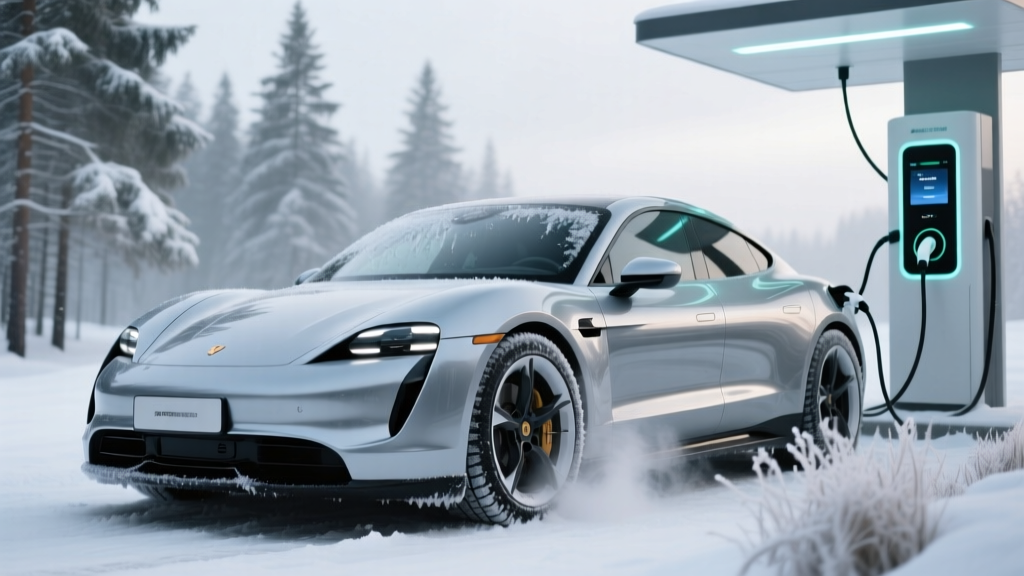
The Ioniq 5 uses a heat pump (standard on SEL and above), which recovers waste heat from the drivetrain to warm the cabin more efficiently than resistive heating. This typically limits cold-weather range loss to 25–30%, compared to 35–40% for EVs without a heat pump. Still, plan for reduced range from December through March.
Practical cold-weather tips for Manchester EV owners:
- Precondition while plugged in: Set your car to warm the battery and cabin while it's still connected to your Level 2 charger. This uses grid power instead of battery power, so you leave home with a full charge and a warm interior.
- Use heated seats/steering wheel: These draw far less energy than cabin air heating. On a 35°F morning, heated seats alone can keep you comfortable while you set the cabin temp lower.
- Plan for 70% of EPA range in deep winter: If your route requires 200 miles, make sure your EV's EPA rating is at least 290 miles to maintain a comfortable buffer.
Public Charging in and Around Manchester
Manchester's public charging network is growing but not yet comprehensive. Here's what's available as of early 2026:
| Charging Type | Locations (approx.) | Speed | Best For |
|---|---|---|---|
| Level 2 (public) | ~45 ports across 18 locations | 6.6–19.2 kW (25–75 mi/hr) | Top-ups while shopping, workplace charging |
| DC Fast Charging | ~12 stalls at 3 locations | 50–150 kW | Road-trip charging, apartment dwellers |
| Tesla Supercharger | Nearest: Salem, NH (~18 mi south) or Concord, NH (~17 mi north) | 150–250 kW | Tesla owners; NACS-equipped non-Teslas (expanding) |
For I-93 corridor travel, the fast-charging gap between Manchester and the Lakes Region or White Mountains is narrowing. Electrify America and EVgo stations in Concord and Salem provide 150+ kW DC charging. However, if you frequently drive north to Lincoln or Franconia, plan your charging stops — public fast chargers remain sparse in rural northern New Hampshire.
Connector note: The industry has standardized on NACS (Tesla's connector) for 2025+ model-year vehicles. Most 2026 EVs ship with NACS ports natively. If you buy a 2024–2025 model with a CCS port, adapters are available (typically $200–$250) to access Tesla Superchargers. Confirm connector compatibility with your vehicle before relying on a specific network.
Common Misconceptions — Fact-Checked
| Myth | Fact |
|---|---|
| "EV batteries need replacing every 5 years and cost $20,000." | Modern EV batteries (NMC and LFP chemistries) typically degrade 10–15% over 8–10 years. Hyundai, Tesla, and most brands warrant the battery for 8 years/100,000 miles at 70%+ capacity retention. Full replacements are rare and usually covered under warranty in the early years. Out-of-warranty replacement for a 77 kWh pack runs $12,000–$18,000, but most packs outlast the vehicle. |
| "EVs are worse for the environment because of battery mining." | Lifecycle analyses from Argonne National Lab and the ICCT consistently show that EVs produce 50–70% fewer lifetime CO₂ emissions than gas cars, even when accounting for battery manufacturing and U.S. grid mix. New England's grid is increasingly natural gas and renewable, making the equation even more favorable. |
| "I'll be stranded if I run out of charge." | With 250+ miles of EPA range and a home charger, most Manchester drivers charge daily and never dip below 40% state of charge. The real risk is on road trips in areas with sparse DC fast chargers — a solvable problem with route planning apps like A Better Routeplanner or PlugShare. |
| "EVs can't handle snow and AWD." | Many 2026 EVs offer dual-motor AWD with instant torque, which excels in snow. The Ioniq 5 AWD, Ford Mustang Mach-E AWD, and Tesla Model Y all perform well in winter conditions. The low center of gravity (battery pack under the floor) improves stability. Winter tires remain recommended for NH winters regardless of drivetrain. |
| "The tax credit is $7,500 for any EV." | The §30D credit has strict rules in 2026: the vehicle must be assembled in North America, meet battery-sourcing and critical-mineral thresholds, fall under MSRP caps ($55,000 for sedans, $80,000 for SUVs/trucks/vans), and the buyer must be under income caps. Always check the IRS qualified vehicle list before purchasing. |
EV vs Hybrid: Which Is Right for Manchester Drivers?
Not everyone is ready for a full battery-electric vehicle. Plug-in hybrids (PHEVs) and conventional hybrids (HEVs) offer intermediate steps. Here's a quick comparison for Manchester-area driving:
| Factor | Battery EV (e.g., Ioniq 5) | PHEV (e.g., Toyota RAV4 Prime) | HEV (e.g., Toyota RAV4 Hybrid) |
|---|---|---|---|
| Electric-Only Range | 303 mi (full battery) | 42 mi (EPA) | 0 mi (electric assist only) |
| Fuel Needed? | Never | For trips beyond 42 mi | Always |
| Home Charging Required? | Yes (Level 2 strongly recommended) | Recommended (Level 2, ~2.5 hrs for full charge) | No |
| Annual Fuel Cost (12k mi/yr) | $940–$1,410 | $600–$1,100 (mix of electric + gas) | $1,260 (40 MPG, $3.78/gal) |
| Federal Tax Credit | Up to $7,500 (if eligible) | Up to $7,500 (if eligible — RAV4 Prime currently qualifies) | $0 |
| Cold-Weather Impact | 20–30% range loss | Reduced electric range; gas engine compensates | Minimal (gas engine provides heat) |
| Best For Manchester Driver Who… | Has home L2 charging, drives <60 mi/day, wants lowest operating cost | Wants electric commuting but flexibility for White Mountains/Boston trips | Can't install home charger, wants simplicity with better MPG |
For Manchester specifically, a PHEV like the RAV4 Prime (42 mi electric range, 38 MPG on gas) is an excellent bridge option if you live in an apartment without charging access or regularly drive long routes north where DC fast chargers are scarce.
Decision Framework: Which Manchester EV Buyer Are You?
If-Then EV Recommendations for Manchester, NH
- If you have a garage/driveway with 240V access, commute under 50 miles daily, and rarely drive more than 200 miles one-way → Buy a battery EV with 280+ miles EPA range. Top picks: Hyundai Ioniq 5, Tesla Model Y, Chevrolet Equinox EV.
- If you have home charging but regularly drive 200+ miles (Boston, White Mountains, Maine coast) → Buy a long-range EV (320+ miles EPA) or a PHEV for flexibility. Top picks: Tesla Model Y Long Range (330 mi EPA), RAV4 Prime.
- If you live in an apartment/condo without charging access → Check workplace and public charging first. If reliable Level 2 is available within 0.5 miles, a battery EV still works. If not, choose a PHEV or HEV until charging access improves.
- If your household has two cars → Make one an EV for daily commuting and keep a gas or hybrid vehicle for long road trips. This is the lowest-risk path into EV ownership.
- If you're buying used → Check battery State of Health (SoH) before purchase. Ask the seller for a battery health report or have a dealer run a diagnostic. A used EV with 85%+ SoH and remaining warranty is a strong value, especially since the used-EV tax credit (up to $4,000 under §25E) applies to vehicles priced at $25,000 or less.
Frequently Asked Questions
Do I need to register my EV differently in New Hampshire?
New Hampshire registers EVs through the same process as gas vehicles, but there is an additional annual highway-use fee. As of 2026, EVs pay an extra $100/year at registration to offset lost gas-tax revenue. This is still far less than what a gas-car driver pays in annual fuel taxes (~$280 for 12,000 miles at 27 MPG).
What happens if my EV battery degrades in New Hampshire winters?
Battery degradation is driven more by charge cycles, fast-charging frequency, and sustained high temperatures than by cold. In fact, New Hampshire's cool climate is gentler on battery longevity than Arizona or Texas heat. Expect 10–15% capacity loss over 8–10 years. The 8-year/100,000-mile federal battery warranty mandates that manufacturers cover the pack if it falls below 70% capacity retention during that period.
Can I charge at a Tesla Supercharger with a non-Tesla EV in Manchester?
The nearest Superchargers to Manchester are in Salem and Concord. As of 2026, Tesla has opened many Supercharger stalls to non-Tesla vehicles equipped with NACS connectors through the "Charge Other EVs" program. Availability varies by station — check the Tesla app or PlugShare for real-time access status. CCS-to-NACS adapters from Ford, GM, and third-party makers enable older CCS-port EVs to use these stations.
Is it worth getting a home battery (like Tesla Powerwall) along with my EV?
For most Manchester homeowners, a home battery isn't necessary for EV ownership. It becomes worthwhile if you have solar panels (New Hampshire gets decent solar yield despite its reputation), experience frequent power outages, or want to optimize time-of-use electricity rates. Solar + storage + EV is a strong combo but adds $15,000–$30,000 to your investment. Treat it as a separate decision from the EV purchase.
What's the cheapest EV I can buy in Manchester in 2026?
The most affordable new EVs available in the Manchester area include the Chevrolet Equinox EV (starting ~$33,600) and the Nissan Leaf (starting ~$29,000, though with limited range and CHAdeMO connector, which is increasingly unsupported for DC fast charging). If the Equinox EV qualifies for the full §30D credit, the effective price drops to around $26,100 — competitive with many gas crossovers. Always verify current credit eligibility on fueleconomy.gov before purchasing.