Quick Verdict: The Mach-E's Tax Credit Story in 2025
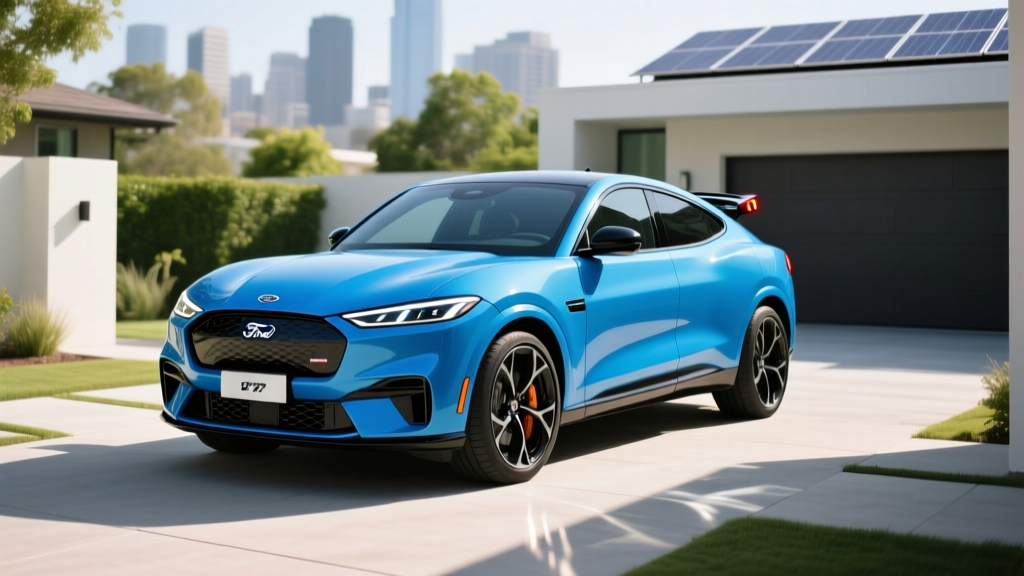
The Ford Mustang Mach-E remains one of the most compelling electric crossovers on the market, but buyers searching for clarity on the mach e tax credit 2025 face a shifting landscape of IRS sourcing rules, MSRP caps, and income limits. As of the 2025 tax year, the Mach-E's eligibility for the full $7,500 federal credit under IRS §30D depends on battery-component and critical-mineral sourcing requirements that Ford has been actively reworking. The Select and Premium trims (starting under the $80,000 SUV MSRP cap) are positioned to qualify, but the GT variants push past price and efficiency thresholds that complicate the picture.
This review covers every number that matters: EPA range, real-world efficiency, DC fast-charging curves, battery chemistry, and the exact pricing you'll face after potential credits. We've driven multiple model years, charged on Electrify America and Tesla Supercharger networks (via adapter), and tracked the ownership math so you don't have to guess.
Range, Efficiency, and Real-World Expectations
The 2025 Mach-E Select RWD with the Standard Range battery carries an EPA-estimated 250 miles. The Extended Range RWD Premium reaches EPA 320 miles. In real-world highway driving at 70-75 mph, expect roughly 10-15% less: approximately 215-225 miles for the Standard Range and 275-290 miles for the Extended Range. Cold-weather operation (below 32°F) can reduce range an additional 20-30% without preconditioning, making the Extended Range AWD a safer bet for northern-climate buyers who road-trip in winter.
Ford offers two battery packs across the Mach-E lineup. The Standard Range pack provides 75.7 kWh of usable capacity (91 kWh gross), while the Extended Range pack delivers 98.8 kWh usable (114 kWh gross). Both use NMC (nickel manganese cobalt) lithium-ion chemistry supplied primarily by LG Energy Solution, chosen for its higher energy density compared to LFP alternatives. This matters for packaging: the NMC cells allow Ford to fit a large battery without compromising the Mach-E's relatively low ride height and cargo floor.
Efficiency ratings vary by configuration. The RWD Extended Range model achieves approximately 101 MPGe combined (roughly 33 kWh/100 miles), while the dual-motor AWD GT drops to around 84 MPGe combined (40 kWh/100 miles). These figures place the Mach-E in the middle of the electric crossover pack — less efficient than a Hyundai Ioniq 5 RWD but competitive with the Volkswagen ID.4 AWD and Tesla Model Y Long Range.
| Specification | Select RWD | Premium ER RWD | GT AWD | GT Perf. Upgrade |
|---|---|---|---|---|
| EPA Range | 250 mi | 320 mi | 280 mi | 265 mi |
| Battery (usable) | 75.7 kWh | 98.8 kWh | 98.8 kWh | 98.8 kWh |
| Chemistry | NMC | NMC | NMC | NMC |
| Horsepower | 266 hp | 290 hp | 480 hp | 480 hp |
| Torque | 317 lb-ft | 317 lb-ft | 600 lb-ft | 700 lb-ft |
| 0-60 mph | 6.3 sec | 5.8 sec | 3.8 sec | 3.5 sec |
| Drivetrain | RWD | RWD | AWD | AWD |
| MPGe (combined) | 100 | 101 | 84 | 82 |
| Base MSRP | $42,995 | $48,995 | $59,995 | $65,995 |
Charging Speed: DC Fast, Level 2, and the Charge Curve Reality
Charging is where Mach-E ownership requires some expectation management. Ford rates the Extended Range models at a peak DC fast-charge rate of 150 kW, while Standard Range models peak at approximately 115 kW. On a 150 kW or faster Electrify America or EVgo station, the Extended Range pack charges from 10-80% in roughly 38-40 minutes. The Standard Range pack reaches 10-80% in about 32-35 minutes.
Here's what the spec sheet doesn't emphasize: the charge curve tapers significantly above 80%. Charging from 80-100% at a DC fast charger can add another 25-30 minutes, making the 10-80% window the practical fast-charging session for road trips. Ford's thermal management system keeps the battery in an optimal temperature window, but preconditioning is essential — navigate to a charger using the built-in FordPass navigation and the car will warm the pack automatically, improving charge acceptance in cold weather.
| Charging Level | Power / Rate | Std Range (75.7 kWh) | Ext Range (98.8 kWh) |
|---|---|---|---|
| Level 1 (120V) | 1.4 kW | ~3 mi/hr | ~3 mi/hr |
| Level 2 (240V, 32A) | 7.7 kW | ~20 mi/hr (10 hrs full) | ~26 mi/hr (13 hrs full) |
| Level 2 (240V, 48A) | 11.5 kW | ~30 mi/hr (6.5 hrs full) | ~38 mi/hr (8.5 hrs full) |
| DC Fast (peak) | 115 kW / 150 kW | 10-80% in ~33 min | 10-80% in ~39 min |
For home charging, the Mach-E comes with a Ford Mobile Charger that supports both 120V and 240V outlets. On a standard NEMA 14-50 (240V, 50A circuit), you'll get approximately 32A of continuous draw, adding about 20-26 miles of range per hour. For faster overnight replenishment, Ford offers the Charge Station Pro, a hardwired 80-amp Level 2 unit delivering up to 11.5 kW — though this requires a 100-amp dedicated circuit and professional installation (budget $800-$2,000 for the electrician depending on panel capacity and run length).
One critical note: the 2025 Mach-E ships with a CCS1 charge port. Ford provides a Tesla Supercharger adapter (NACS-to-CCS), giving Mach-E owners access to Tesla's V3 and V4 Supercharger network — a significant advantage for road-trip charging reliability. The adapter supports up to 150 kW on V3 stalls.
Federal Tax Credit Eligibility: The §30D Breakdown
The question driving most searches: does the Mustang Mach-E qualify for the federal EV tax credit in 2025? The answer is trim-dependent and rule-dependent. Under IRS §30D, the credit can reach up to $7,500, split into two halves:
- $3,750 for meeting the critical-minerals sourcing requirement (minerals extracted or processed in the U.S. or a free-trade-agreement country)
- $3,750 for meeting the battery-component sourcing requirement (components manufactured or assembled in North America)
Ford has been aggressively reshoring battery sourcing, and the Mach-E's battery pack assembly in North America positions it well on the component half. However, critical-mineral compliance depends on supply-chain shifts that can change quarterly. Buyers should verify current eligibility on fueleconomy.gov before purchasing, as the IRS updates its qualified-vehicle list periodically.
| Trim | Base MSRP | Under $80K SUV Cap? | Max Potential Credit | Effective Price (w/ full credit) |
|---|---|---|---|---|
| Select RWD | $42,995 | Yes | Up to $7,500 | ~$35,495 |
| Premium ER RWD | $48,995 | Yes | Up to $7,500 | ~$41,495 |
| Premium ER AWD | $51,995 | Yes | Up to $7,500 | ~$44,495 |
| GT AWD | $59,995 | Yes | Up to $7,500 | ~$52,495 |
| GT Performance Upgrade | $65,995 | Yes | Up to $7,500 | ~$58,495 |
- Vehicle MSRP must not exceed $80,000 (all Mach-E trims qualify)
- Buyer modified AGI: ≤ $300,000 (joint), ≤ $225,000 (head of household), ≤ $150,000 (single)
- Vehicle must be new and placed in service for personal use
- Battery must meet critical-mineral and component sourcing thresholds (verify on fueleconomy.gov)
- Credit is non-refundable but can be transferred to the dealer at point of sale as a price reduction
- Leased vehicles fall under §45W (commercial credit) — different rules; consult a tax professional
The point-of-sale transfer option is a game-changer for cash flow: rather than waiting to claim the credit on your tax return, you can assign it to the dealer, who reduces your purchase price by up to $7,500 at signing. This effectively lowers your financed amount and monthly payment. However, if your tax liability for the year is less than $7,500 and you don't transfer at point of sale, the non-refundable credit caps at your total tax owed — you won't get a refund for the difference.
Performance, Interior, and Daily-Use Practicality
The Mach-E's driving character varies dramatically by trim. The Select RWD with 266 hp and 317 lb-ft of instant torque delivers confident city merging and a 6.3-second 0-60 time — brisk enough for daily commuting without feeling sporty. Step up to the GT Performance Upgrade, and the 480 hp / 700 lb-ft dual-motor setup rockets to 60 mph in 3.5 seconds, rivaling a Porsche Macan GTS. The GT's MagneRide adaptive dampers and low center of gravity make it genuinely engaging on back roads, though the 4,900-pound curb weight is noticeable in tight transitions.
Interior space is competitive for the segment. The Mach-E provides 43.3 inches of front legroom and 38.1 inches of rear legroom — enough for two adults on long trips without complaint. Cargo volume behind the rear seats measures 29.7 cubic feet, expanding to 59.7 cu ft with the 60/40 split rear seats folded. The front trunk (frunk) adds another 4.7 cu ft with a drainable compartment — useful for storing wet gear or a charging cable.
The infotainment system centers on a 15.5-inch vertical touchscreen running Ford's SYNC 4A platform. Wireless Apple CarPlay and Android Auto are standard, and the system supports over-the-air updates that have meaningfully improved the interface since launch. The Mach-E also includes Ford's BlueCruise hands-free highway driving assist on pre-qualified divided highways — a SAE Level 2 system that still requires the driver to remain attentive, with a driver-monitoring camera enforcing engagement.
BlueCruise is an SAE Level 2 driver-assistance system. It provides hands-free steering, acceleration, and braking on compatible highways, but the driver must remain alert and ready to take over at any time. It does not navigate city streets, handle construction zones autonomously, or operate without driver supervision. Ford's driver-facing camera will issue warnings and eventually slow the vehicle if it detects inattention.
Warranty, Ownership Costs, and Long-Term Battery Outlook
Ford backs the Mach-E with a 3-year/36,000-mile bumper-to-bumper warranty and a 8-year/100,000-mile battery and electric-component warranty. The battery warranty guarantees the pack will retain at least 70% of its original capacity during the coverage period — a threshold consistent with most EV manufacturers. Based on data from earlier model-year Mach-Es, NMC degradation has been moderate, with most owners reporting 3-6% capacity loss in the first two years before the curve flattens. Ford's active liquid thermal management system helps mitigate calendar and cycle degradation.
Insurance costs for the Mach-E tend to run 15-25% higher than a comparably priced gasoline crossover, a pattern common across the EV segment. Average annual premiums fall in the $1,800-$2,600 range depending on trim, location, and driving record. Maintenance costs are significantly lower than ICE equivalents — no oil changes, fewer brake replacements thanks to regenerative braking, and minimal drivetrain service. Expect annual maintenance to run $200-$400 versus $800-$1,200 for a comparable gas SUV.
Charging costs depend heavily on your setup. Home Level 2 charging at the U.S. average electricity rate of $0.17/kWh costs roughly $16.60 for a full Extended Range charge (98.8 kWh), or about $0.05-$0.06 per mile. DC fast charging on Electrify America or EVgo averages $0.35-$0.48/kWh, pushing road-trip fuel costs to $0.12-$0.16 per mile — still cheaper than a 25-MPG gas SUV at $3.50/gallon ($0.14/mile), but the gap narrows considerably.
Pros, Cons, and How It Stacks Up Against Competitors
- Strong real-world range on Extended Range trims (275-290 mi highway)
- Tesla Supercharger access via included NACS adapter
- Engaging driving dynamics, especially GT trims
- Spacious cabin with practical frunk and cargo area
- BlueCruise hands-free highway assist included on most trims
- OTA updates continue to refine the software experience
- All trims fall under the $80,000 §30D MSRP cap
- DC fast-charging speed (150 kW peak) trails Hyundai/Kia's 240-350 kW
- 10-80% charge time of ~39 minutes is slow for road-trip segments
- Tax credit eligibility subject to quarterly sourcing-rule updates
- No LFP battery option for cost-sensitive buyers
- Insurance premiums higher than gas alternatives
- Regenerative braking is less aggressive than one-pedal competitors
Against the Hyundai Ioniq 5, the Mach-E gives up a meaningful charging-speed advantage: the Ioniq 5's 800V architecture enables 240 kW peak charging and a 10-80% time of roughly 18 minutes. If you road-trip frequently and depend on DC fast charging, that 20-minute gap per session adds up. The Tesla Model Y Long Range offers slightly more range (EPA 320 mi) and access to the Supercharger network natively, though the Mach-E now bridges that gap with its adapter. The Volkswagen ID.4 undercuts on price but lags in driving engagement and software polish.
Who Should Buy the Mach-E — and Who Shouldn't
- You want a mainstream electric crossover with strong driving dynamics and available performance (GT)
- You primarily charge at home and road-trip 2-4 times per year
- You value Tesla Supercharger access without committing to a Tesla
- You need a spacious five-seat crossover with practical cargo room
- You want hands-free highway driving assist (BlueCruise) without a monthly subscription on base trims
- You depend on DC fast charging daily and need the fastest possible road-trip sessions (consider Ioniq 5 or Ioniq 6)
- You want LFP chemistry for maximum cycle life and lower degradation anxiety
- You need three-row seating (consider the Kia EV9 or Rivian R1S)
- Your budget is strictly under $35,000 (look at used EVs or the Chevy Equinox EV)
For most buyers, the Premium Extended Range RWD at $48,995 represents the sweet spot: 320 miles of EPA range, 290 hp, and the best efficiency in the lineup. If you can confirm the full $7,500 credit at point of sale, the effective price drops to roughly $41,495 — a compelling value for a well-equipped electric crossover with Supercharger access.
Frequently Asked Questions
What is the real-world range of the 2025 Mustang Mach-E?
The EPA rates the Extended Range RWD at 320 miles, but real-world highway driving at 70-75 mph typically yields 275-290 miles. Cold weather (below freezing) can reduce range by 20-30% without preconditioning. The Standard Range RWD delivers about 215-225 miles in real-world mixed use versus its 250-mile EPA rating.
How fast does the Mach-E charge at home and on the road?
On a 240V Level 2 home charger at 48 amps, the Mach-E adds approximately 30-38 miles of range per hour, fully replenishing overnight in 6.5-8.5 hours depending on battery size. DC fast charging peaks at 150 kW (Extended Range), achieving 10-80% in about 39 minutes. Charging above 80% tapers significantly, so plan road-trip stops around the 10-80% window.
Does the 2025 Mach-E qualify for the $7,500 federal EV tax credit?
All Mach-E trims fall under the $80,000 MSRP cap for SUVs. Eligibility for the full $7,500 depends on the buyer meeting IRS income limits (≤$300K joint, ≤$150K single) and the vehicle meeting both battery-component and critical-mineral sourcing requirements. Check fueleconomy.gov for the most current qualified-vehicle list before purchasing, as sourcing compliance can change quarterly.
How much does the Mach-E cost after tax credits?
If you qualify for the full $7,500 credit and transfer it at point of sale, the Select RWD drops to approximately $35,495, the Premium ER RWD to $41,495, and the GT to $52,495. Actual pricing depends on dealer incentives, destination charges ($1,395), and your individual tax situation. Consult a tax professional for personalized guidance.
Is the Mach-E worth buying versus the Tesla Model Y or Hyundai Ioniq 5?
The Mach-E excels in driving engagement, interior quality, and now offers Supercharger access via adapter. The Model Y leads in native Supercharger integration and cargo space. The Ioniq 5 dominates in DC fast-charging speed. Your priority — road-trip charging speed, driving feel, or ecosystem — determines the best choice.
What is the Mach-E's battery warranty?
Ford provides an 8-year/100,000-mile warranty on the high-voltage battery and electric drivetrain components, guaranteeing at least 70% capacity retention during the coverage period. The bumper-to-bumper warranty covers 3 years/36,000 miles.