The Reverse Split Question and the Lucid Air in 2026
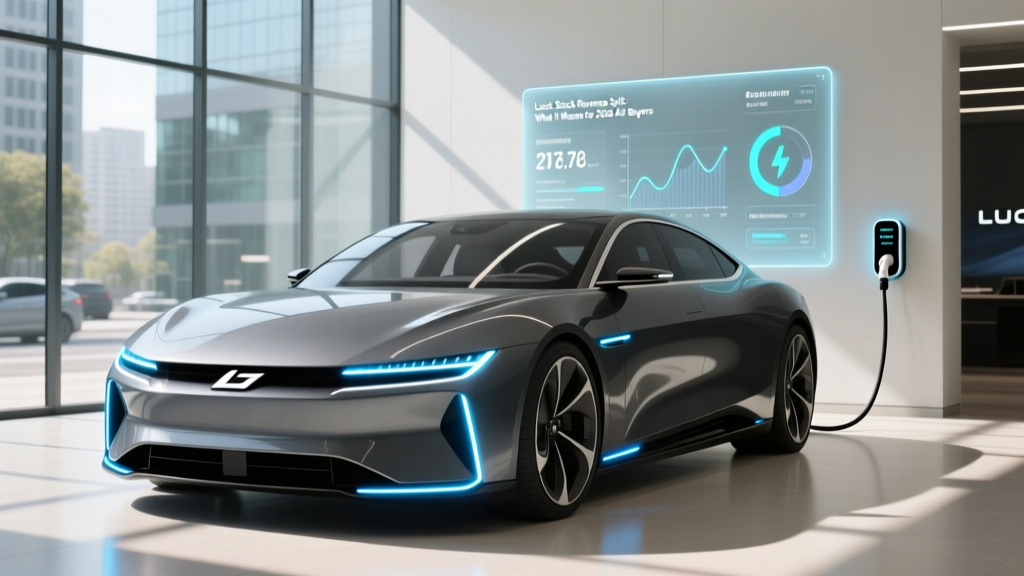
Search interest around a Lucid stock reverse split has spiked among EV enthusiasts and prospective buyers alike. When a company's share price lingers in the single digits, reverse splits become a financial tool to boost per-share price and maintain exchange listing compliance. But for the car buyer — not the day trader — the real question is simpler: Is the Lucid Air still one of the most capable luxury electric sedans on the market in 2026, regardless of what the stock ticker does?
Lucid Motors continues to manufacture and deliver the Air sedan from its Casa Grande, Arizona factory. Warranty obligations, parts supply, and service infrastructure remain intact whether or not the company undergoes a capital restructuring. Let's evaluate the 2026 Lucid Air on the metrics that matter to owners: real-world range, charging speed, pricing after tax credits, and how it stacks up against the Tesla Model S, Mercedes EQS, and BMW i7.
Range and Efficiency: The Air's Defining Advantage
Real-world expectation: ~340–370 miles highway at 70 mph; ~290–320 miles in cold weather (below 32°F). The Air's efficiency remains class-leading at approximately 4.0–4.2 miles/kWh combined.
The Lucid Air Pure's 419-mile EPA estimate still tops the luxury sedan segment in 2026. That figure is not marketing fluff — it's validated by fueleconomy.gov and rooted in Lucid's miniaturized drive unit technology, which packs a full electric powertrain into a unit small enough to fit in a carry-on bag. The result is less weight, less energy wasted as heat, and more miles per kilowatt-hour.
The Air Grand Touring pushes the envelope further with a 516-mile EPA rating on its larger battery pack. However, real-world highway driving at sustained speeds above 70 mph will reduce that figure by roughly 12–18%, and cold-weather operation can shave another 15–25% depending on cabin heating demand and whether you precondition the battery.
| Trim | Battery (kWh usable) | Chemistry | EPA Range | MPGe (Combined) | kWh/100 mi |
|---|---|---|---|---|---|
| Air Pure RWD | 88 kWh | NMC | 419 mi | 146 MPGe | 23 |
| Air Touring AWD | 112 kWh | NMC | 425 mi | 131 MPGe | 26 |
| Air Grand Touring AWD | 118 kWh | NMC | 516 mi | 131 MPGe | 26 |
| Air Sapphire AWD | 118 kWh | NMC | 427 mi | 109 MPGe | 31 |
Charging Speed: DC Fast and Home Level 2
The Lucid Air supports up to 300 kW peak DC fast charging on 800V-capable CCS chargers (and NACS via adapter as Lucid transitions to the Tesla connector standard). In practice, the charge curve is impressive: the Grand Touring can add roughly 200 miles of range in 15 minutes under optimal thermal conditions.
| Charging Method | Max Rate | 10–80% Time | Miles Added per Hour |
|---|---|---|---|
| Level 1 (120V / 12A) | 1.4 kW | N/A (trickle) | ~4 mi/hr |
| Level 2 (240V / 48A) | 11.5 kW | ~10–12 hours | ~46 mi/hr |
| Level 2 (240V / 80A) | 19.2 kW | ~6–8 hours | ~77 mi/hr |
| DC Fast Charge (peak) | 300 kW | ~20 min (10–80%) | ~200 mi in 15 min |
A critical ownership note: the Air's onboard AC charger supports up to 19.2 kW when paired with an 80-amp Level 2 circuit — one of the highest AC rates in the industry. This means a full overnight charge in roughly 6 hours on a properly installed high-amperage home charger. Most buyers will install a 48-amp circuit ($500–$1,500 for equipment and electrician), which delivers about 46 miles of range per hour of charging — sufficient to replenish a daily commute overnight.
On DC fast chargers, expect the 300 kW peak to taper significantly above 60% state of charge. Sustained average power from 10–80% hovers around 150–180 kW depending on ambient temperature and battery preconditioning. Always precondition via the Lucid app or navigation routing to a charger for optimal speeds.
Performance, Drivetrain, and the Sapphire Halo
The Air lineup spans efficient luxury cruiser to hypercar-rivaling performance machine:
- Air Pure (RWD): 430 hp, 0–60 mph in 5.0 seconds. A single rear motor delivers smooth, linear acceleration ideal for commuting.
- Air Touring (AWD): 620 hp, dual-motor, 0–60 in 3.4 seconds. Adds front motor traction for all-weather confidence.
- Air Grand Touring (AWD): 819 hp, 0–60 in 3.0 seconds. The range-and-performance sweet spot.
- Air Sapphire (AWD): 1,234 hp, tri-motor, 0–60 in 1.89 seconds. Lucid's answer to the Tesla Model S Plaid.
All trims feature Lucid's proprietary electric drive units with integrated inverters and gearboxes. The Sapphire's tri-motor layout (one front, two rear) enables torque vectoring that makes a 5,200-pound sedan handle like a sports car on a track. That said, the Pure RWD is the efficiency champion and the trim most buyers should consider for daily use.
Pricing, Trims, and Federal Tax Credit Eligibility
Lucid has repositioned the Air's pricing aggressively for 2026 to compete with Tesla, Mercedes, and BMW. Here's where each trim lands before incentives:
| Trim | Base MSRP | Sedan MSRP Cap (§30D) | §30D Credit Eligible? | Effective Price (with credit) |
|---|---|---|---|---|
| Air Pure | $69,900 | $55,000 | No — exceeds sedan cap | $69,900 |
| Air Touring | $77,900 | $55,000 | No — exceeds sedan cap | $77,900 |
| Air Grand Touring | $94,900 | $55,000 | No — exceeds sedan cap | $94,900 |
| Air Sapphire | $249,000 | $55,000 | No — exceeds sedan cap | $249,000 |
The federal IRS §30D clean vehicle credit imposes a $55,000 MSRP cap on sedans (and $80,000 on SUVs/trucks/vans). Because every Lucid Air trim exceeds $55,000, none currently qualify for the $7,500 federal tax credit. This is a significant disadvantage versus the Tesla Model 3 and certain BMW i5 configurations that fall under the cap.
Buyer income limits also apply under §30D: adjusted gross income cannot exceed $150,000 (single), $225,000 (head of household), or $300,000 (joint). Battery component and critical mineral sourcing requirements further restrict eligibility even for vehicles under the MSRP cap. Always consult a tax professional and verify current-year rules on IRS.gov before purchasing.
Some states offer separate EV rebates or tax credits that are not subject to the federal MSRP cap — check your state energy office or DMV for local programs.
Interior Space, Cargo, and Technology
The Air's cabin is a study in minimalist luxury with a glass canopy roof that creates an airy, open environment. Key dimensions:
- Front legroom: 45.3 inches
- Rear legroom: 37.1 inches (class-competitive, though the Mercedes EQS offers slightly more)
- Cargo volume (trunk + frunk): 32.1 cu ft total (22.1 cu ft trunk + 10.0 cu ft frunk)
- Infotainment: 34-inch curved Glass Cockpit display, upper and lower touchscreens, wireless Apple CarPlay/Android Auto
The Lucid Air runs on the Lucid UX software platform with over-the-air updates. The DreamDrive Pro ADAS suite includes adaptive cruise control, lane centering, and automated parking — all classified as SAE Level 2 driver assistance, meaning the driver must remain fully engaged at all times. This is not a self-driving system; it competes with Tesla Autopilot, BMW Highway Assistant, and Mercedes Drive Pilot in capability.
Notable tech drawbacks include the absence of native Android Automotive OS (Lucid uses a proprietary system), occasional software latency reported by early owners, and a learning curve for the multi-screen interface. The physical button count is low, which some buyers love and others find frustrating for climate and volume adjustments.
Warranty, Ownership Costs, and Long-Term Outlook
Lucid provides competitive warranty coverage:
- Basic vehicle warranty: 4 years / 50,000 miles
- Battery and powertrain: 8 years / 100,000 miles (with a minimum 70% capacity retention threshold)
- Roadside assistance: 4 years / 50,000 miles
The 8-year/100,000-mile battery warranty is industry-standard, matching Tesla and most legacy automakers. Lucid's NMC battery chemistry offers high energy density (enabling the Air's exceptional range) but historically degrades slightly faster than LFP chemistry over thousands of cycles. Real-world data from 2022–2024 Air owners suggests approximately 5–8% capacity loss over the first 50,000 miles, which is within normal expectations for NMC packs.
Insurance costs for the Air tend to run 15–30% higher than comparable ICE luxury sedans due to repair complexity and parts pricing. Expect annual premiums of $2,800–$4,500 depending on trim, location, and driving record. Get quotes before committing to a purchase.
Regarding the reverse split conversation: Lucid's financial restructuring, if it occurs, does not void existing warranties or halt production. The company has secured ongoing funding through the Saudi Arabia Public Investment Fund (PIF), which holds a majority stake. Service center expansion continues, with over 30 service locations and mobile service vans across the U.S. as of 2026.
Lucid Air vs. Key Competitors: Which Should You Choose?
Choose the Tesla Model S if: You want Supercharger network access without adapters, a more mature software ecosystem, and a lower starting price (~$74,990).
Choose the Mercedes EQS if: Rear-seat luxury, ride comfort, and dealer service infrastructure are your top priorities, and you accept lower range (~350 mi EPA).
Choose the BMW i7 if: You want a traditional luxury flagship feel with competitive range (~318 mi) and BMW's established service network.
- Class-leading 419–516 mile EPA range
- Exceptional efficiency (4.0+ mi/kWh)
- Up to 19.2 kW AC home charging
- Spacious frunk + trunk (32.1 cu ft total)
- Sapphire trim: 1,234 hp hypercar performance
- Refined, quiet ride quality
- No federal §30D tax credit (MSRP exceeds sedan cap)
- Limited service center network vs. legacy brands
- Proprietary infotainment (no Android Automotive)
- Higher insurance premiums
- Brand uncertainty tied to stock performance
- Public charging requires CCS-to-NACS adapter at some networks
Who Is the 2026 Lucid Air For?
The Lucid Air is best suited for the range-prioritizing luxury commuter who drives 40–100 miles daily, has access to Level 2 home charging, and takes occasional road trips where 400+ miles of range minimizes charging stops. It's an excellent choice for buyers who find the Tesla Model S too common and want a more exclusive, design-forward sedan.
It is less ideal for buyers who need the $7,500 federal tax credit to make the math work, who live far from a Lucid service center, or who prioritize the plug-and-charge simplicity of the Tesla Supercharger ecosystem. Families needing three-across rear seating or maximum cargo flexibility should look at the Lucid Gravity SUV instead.
Frequently Asked Questions
What is the real-world range of the 2026 Lucid Air?
The Air Pure achieves an EPA-estimated 419 miles. In real-world highway driving at 70 mph, expect approximately 340–370 miles. In freezing temperatures with cabin heating, plan for 290–320 miles. The Grand Touring's 516-mile EPA rating yields roughly 420–460 miles on the highway in mild conditions.
How fast does the Lucid Air charge at home and on DC fast chargers?
On a 48-amp Level 2 home charger, the Air adds about 46 miles of range per hour, fully charging overnight in 10–12 hours. On an 80-amp circuit, that drops to 6–8 hours. DC fast charging peaks at 300 kW, delivering a 10–80% charge in approximately 20 minutes under optimal conditions.
Does the Lucid Air qualify for the $7,500 federal EV tax credit?
No. The IRS §30D credit caps sedan MSRP at $55,000. All 2026 Lucid Air trims start at $69,900 or above, making them ineligible. Buyer income limits and battery sourcing rules further restrict the credit for other vehicles. Consult a tax professional for your specific situation.
Is the Lucid Air worth buying despite the stock reverse split concerns?
From a product standpoint, the Air remains the most range-efficient luxury sedan available. Lucid's majority backing by Saudi PIF provides financial stability. Warranty coverage remains intact regardless of stock movements. If you love the car and can afford it without the federal credit, the Air delivers on its promises. If brand longevity concerns you, consider leasing rather than purchasing outright.
What are the biggest pros and cons of the 2026 Lucid Air?
Top pros: unmatched range and efficiency, fast home and DC charging, spacious interior, and the Sapphire's supercar performance. Top cons: no federal tax credit, limited service centers, higher insurance costs, and brand uncertainty. See the pros/cons cards above for the full breakdown.
How does the Lucid Air compare to the Tesla Model S?
The Air Pure offers more EPA range (419 vs. ~405 mi) and better efficiency than the Model S Long Range, but the Tesla costs less, has access to the Supercharger network natively, and benefits from a more mature software and service ecosystem. The Air Grand Touring competes with the Model S Plaid on performance but trails on price. Choose the Air for efficiency and exclusivity; choose the Model S for infrastructure and value.