Quick Verdict: The Lucid Air Sapphire in 2025
The Lucid Air Sapphire is an anomaly in the luxury EV sedan market: it pairs hypercar-level acceleration with a usable 427-mile EPA range and a cabin that rivals the Mercedes EQS and BMW i7 in material quality. At a starting MSRP of $249,000, this is not a mass-market EV — it's a low-volume flagship aimed at buyers who want Tesla Model S Plaid performance without sacrificing interior refinement or real-world range.
This review focuses on what matters to prospective owners: real-world range expectations, charging behavior (DC fast and Level 2), the Lucid Sapphire interior experience, total pricing after federal incentives, and how it stacks up against the Model S Plaid, Porsche Taycan Turbo GT, and Mercedes-AMG EQS.
Lucid Sapphire Interior: Cabin, Space, and Tech
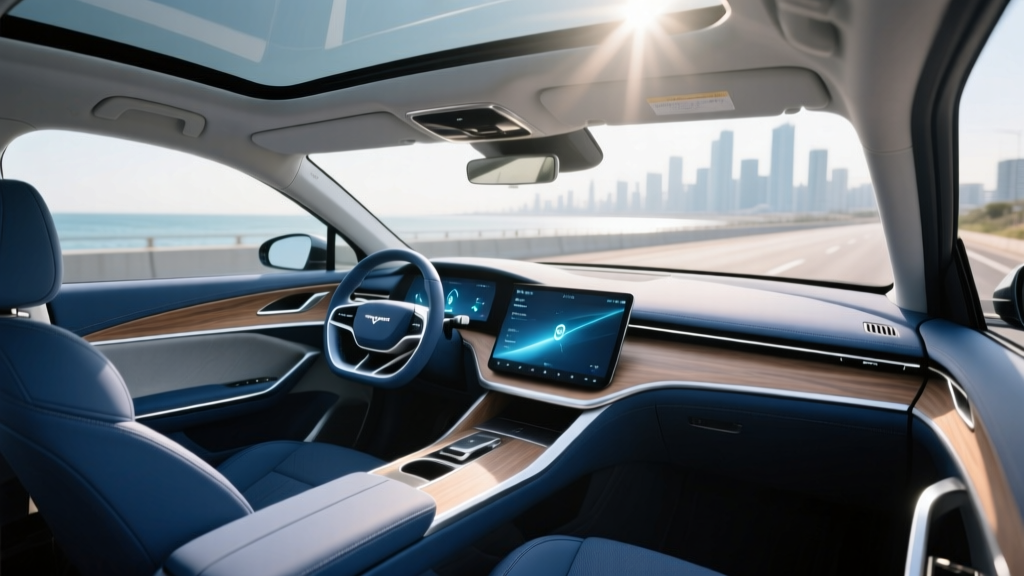
The Lucid Sapphire interior is where this sedan justifies its premium over the Air Grand Touring. Lucid uses a semi-aniline leather upholstery with Alcantara headliner and unique Sapphire-blue accent stitching throughout. The steering wheel is wrapped in Alcantara with a blue center stripe, and the carbon-fiber trim on the dash and door panels replaces the standard open-pore wood found on lower trims.
Seating and Passenger Dimensions
Despite the battery pack beneath the floor, Lucid's compact motor packaging preserves generous interior volume. The Air platform uses a "space concept" architecture that pushes the cabin forward:
- Front headroom: 39.6 inches
- Rear headroom: 37.8 inches
- Front legroom: 41.7 inches
- Rear legroom: 39.0 inches
The rear seat is a three-passenger bench (not a two-seat executive configuration like some rivals). In practice, two adults fit comfortably for long trips; the center position is best reserved for a child or short trips due to the transmission tunnel hump created by the rear drive unit packaging.
Cargo Capacity
The Air Sapphire retains the sedan's dual-trunk layout:
- Rear trunk: 22.1 cubic feet
- Front trunk (frunk): 10.0 cubic feet
- Total: 32.1 cubic feet
That total exceeds the Tesla Model S (28 cu ft combined) and is competitive with the Mercedes EQS sedan (22 cu ft trunk, no frunk). The frunk is deep enough for a standard carry-on bag or charging cables.
Infotainment and Glass Canopy Display
The centerpiece is Lucid's 34-inch curved Glass Canopy Display, which spans the entire dash in a single panel. It runs Lucid's proprietary infotainment OS with:
- Native navigation with real-time range prediction (accounts for elevation, temperature, driving style)
- Wireless Apple CarPlay and Android Auto
- Over-the-air update capability
- Sapphire-specific performance screens: G-meter, lap timer, torque vectoring display
Below the main display sits a lower touchscreen for climate controls and secondary functions. A physical volume knob is present — a welcome ergonomic choice. The Sapphire adds a dedicated "Sapphire" drive mode selector on the center console with Track, Sport, and Drag settings that adjust suspension damping, torque split, and stability control thresholds.
| Feature | Specification |
|---|---|
| Display | 34-inch curved Glass Canopy (5K resolution) |
| Audio | Surreal Sound Pro — 21 speakers, Dolby Atmos |
| Seats | Semi-aniline leather, 12-way power, heated/ventilated/massage |
| Roof | Fixed glass roof with UV/IR tinting |
| Climate | Heat pump standard; 4-zone automatic |
| ADAS | DreamDrive Pro (Level 2) — adaptive cruise, lane centering, 32 sensors |
Range, Battery, and Efficiency
The Lucid Air Sapphire carries a 123-kWh usable battery pack (gross capacity ~126 kWh) using NMC (nickel-manganese-cobalt) lithium-ion cells in a 900-volt architecture. Lucid sources cells from multiple suppliers and assembles packs in-house at its Casa Grande, Arizona factory.
Real-World Range vs. EPA Estimate
EPA estimated range: 427 miles
Real-world expectations:
- Highway (70-80 mph, moderate temps): ~340–370 miles. The Sapphire's aggressive tire compound and permanent-magnet/induction motor combo trades some efficiency for grip.
- Mixed city/highway (65-70°F): ~380–410 miles — close to EPA when regen is used heavily in city driving.
- Cold weather (below 32°F, highway): ~280–320 miles. NMC chemistry and the heat pump mitigate loss, but the Sapphire's high-performance thermal demands reduce range more than the Air Grand Touring.
- Track use: Expect 80–120 miles per charge depending on session intensity. The Sapphire's battery cooling is robust but sustained high-C-rate discharge depletes rapidly.
Efficiency on the combined EPA cycle is rated at approximately 116 MPGe (29 kWh/100 mi). That's less efficient than the Air Grand Touring (131 MPGe) due to the Sapphire's stickier Michelin Pilot Sport 4S tires, stiffer suspension, and higher-output motors. According to fueleconomy.gov, the Sapphire consumes roughly 29 kWh per 100 miles in mixed driving — still competitive for a 1,234-hp sedan.
Charging Speed: DC Fast and Home Level 2
The Sapphire uses a CCS1 connector for DC fast charging and a J1772 inlet for Level 2 AC. Its 900-volt architecture enables strong charge rates, though the Sapphire's peak is slightly lower than the Air Grand Touring due to its more performance-oriented cell configuration.
| Charging Level | Power | Speed / Time |
|---|---|---|
| DC Fast Charge (peak) | ~200 kW (sustained ~150 kW average to 80%) | 10–80% in approximately 30 minutes |
| DC Fast Charge — miles added | ~200 kW peak | ~150 miles in 15 min (optimal conditions, preconditioned) |
| Level 2 (240V, 48A) | 11.5 kW | ~38 miles per hour of charging |
| Level 2 (240V, 80A — Lucid Connected Home) | 19.2 kW | ~64 miles per hour of charging |
| Level 1 (120V, 12A) | 1.4 kW | ~4–5 miles per hour |
Charging curve reality: The Sapphire peaks near 200 kW only between roughly 10–35% state of charge (SoC). From 35–60% it sustains ~160 kW, then tapers to ~100 kW through 80%, and drops sharply above 80%. On a road trip, plan 25–30 minute stops at 350-kW Electrify America or Tesla Supercharger (with NACS adapter, included) stations for meaningful range additions.
Preconditioning matters: Use the navigation-routed battery preconditioning feature before arriving at a DC fast charger. Without it, cold-soaked batteries may peak at only 80–100 kW until the pack warms — adding 10+ minutes to your stop.
Home charging note: To achieve the full 19.2 kW Level 2 rate, you need a hardwired Lucid Connected Home charger on a 100-amp circuit. Most homes require a panel evaluation by a licensed electrician; a 200-amp service panel is typically sufficient, but older homes with 100-amp panels will need an upgrade ($1,500–$3,500 typical cost).
Performance: 0-60, Horsepower, and Drivetrain
The Sapphire is Lucid's halo performance model, and the numbers reflect it:
| Metric | Value |
|---|---|
| Horsepower | 1,234 hp (combined) |
| Torque | 1,430 lb-ft (combined) |
| Drivetrain | Tri-motor AWD (1 front, 2 rear) |
| 0–60 mph | 1.89 seconds (Lucid, rollout subtracted) |
| 0–100 mph | ~3.8 seconds |
| Quarter mile | 8.95 seconds @ 158 mph |
| Top speed | 205 mph |
| Suspension | Adaptive dampers, air springs, Sapphire-tuned |
| Brakes | Carbon-ceramic, 10-piston front calipers |
| Tires | Michelin Pilot Sport 4S (265/35R20 front, 305/30R21 rear) |
The tri-motor layout uses two independent rear motors with torque vectoring — each rear wheel receives independently managed torque, enabling cornering behavior closer to a mid-engine sports car than a heavy luxury sedan. The Sapphire weighs approximately 5,236 pounds, but its low center of gravity and rear-biased torque distribution mask that mass effectively on back roads.
In daily driving (Comfort mode), the Sapphire is docile and quiet — the carbon-ceramic brakes are progressive rather than grabby at low speeds, and the adaptive dampers absorb highway expansion joints without the crash typical of stiff performance setups.
Pricing, Tax Credits, and Ownership Costs
The Lucid Air Sapphire is a single-trim, fully loaded model. There are no packages or options beyond exterior color and wheel choice.
| Item | Cost |
|---|---|
| Base MSRP | $249,000 |
| Destination/delivery | $1,500 |
| As-tested (typical with metallic paint) | $250,500–$253,000 |
| Federal §30D EV tax credit | Not eligible — MSRP exceeds $55,000 sedan cap |
| Estimated annual insurance | $4,500–$7,000 (varies by state, driver profile) |
Federal tax credit reality: The Sapphire does not qualify for the IRS §30D clean vehicle credit. Under current rules, sedans must have an MSRP at or below $55,000 to be eligible (per irs.gov). At $249,000, the Sapphire is well above that threshold. State-level incentives (California's CVRP, for example) also typically exclude vehicles in this price range. Consult a tax professional for your specific situation.
Battery and Powertrain Warranty
- Battery: 8 years / 100,000 miles (whichever comes first), with a minimum 70% capacity retention guarantee
- Powertrain (motors, inverters): 8 years / 100,000 miles
- Vehicle (bumper-to-bumper): 5 years / 60,000 miles
- Roadside assistance: 5 years / 60,000 miles
The 8-year/100,000-mile battery warranty is standard for the luxury EV segment. The 70% retention threshold is typical; in practice, Lucid's thermal management system and NMC cell chemistry suggest degradation of approximately 8–12% over the first 100,000 miles based on early owner data and industry averages for liquid-cooled NMC packs.
Pros and Cons
Pros
- 427-mile EPA range — longest of any performance sedan in production
- 1.89-second 0–60 with usable daily drivability in Comfort mode
- Tri-motor torque vectoring delivers genuine sports-car cornering dynamics
- Lucid Sapphire interior materials and build quality exceed the Tesla Model S Plaid
- 32.1 cu ft total cargo (trunk + frunk) is practical for a luxury sedan
- 900V architecture enables ~200 kW DC fast charging
- Heat pump standard — better cold-weather efficiency and cabin heating
Cons
- $249,000 MSRP — no federal tax credit eligibility
- DC fast charging peaks at ~200 kW, not the 300+ kW of some 800V rivals (Porsche Taycan)
- DreamDrive Pro ADAS is competent but behind Tesla FSD and GM Super Cruise in hands-free capability
- Limited Lucid service center network outside major metros (mobile service available in some areas)
- High insurance premiums relative to non-performance luxury sedans
- Rear-seat headroom (37.8 in) is tighter than the Mercedes EQS or BMW i7
- Track use drains battery rapidly — plan for cooling laps and frequent charging
Lucid Sapphire vs. Key Competitors
| Spec | Lucid Air Sapphire | Tesla Model S Plaid | Porsche Taycan Turbo GT (w/ Weissach) |
|---|---|---|---|
| EPA Range | 427 mi | 359 mi | 269 mi |
| Battery (usable) | 123 kWh, NMC | ~95 kWh, NMC | 97 kWh (Performance Battery Plus), NMC |
| Horsepower | 1,234 hp | 1,020 hp | 1,019 hp (Launch Control) |
| 0–60 mph | 1.89 sec | 1.99 sec | 2.1 sec |
| Peak DC Charge | ~200 kW | ~250 kW | ~320 kW |
| 10–80% DCFC | ~30 min | ~25 min | ~18 min |
| Cargo (total) | 32.1 cu ft | 28.0 cu ft | 14.3 cu ft (no frunk w/ Weissach) |
| Base MSRP | $249,000 | $89,990 | $230,000 (Turbo GT) |
| Federal §30D Credit | No (MSRP cap) | Yes — eligible (sedan ≤$55K cap not met; however check current sourcing rules) | No (MSRP cap) |
Correction on Model S Plaid credit: The Tesla Model S Plaid at $89,990 also exceeds the $55,000 sedan MSRP cap for the §30D credit. Neither the Sapphire nor the Plaid qualifies. Buyers should verify current eligibility on fueleconomy.gov before purchasing.
Who Should Buy the Lucid Air Sapphire?
- Choose the Sapphire if: You want the fastest production sedan with the longest range, prioritize interior quality over brand cachet, and can charge at home (Level 2 is the primary refueling method at this price point).
- Choose the Model S Plaid if: Budget is under $100K, you need Supercharger network access without adapters, and Tesla's software ecosystem matters to you.
- Choose the Taycan Turbo GT if: Track-day charging speed (320 kW) and Porsche dealer service infrastructure are priorities, and you can accept 269 miles of range.
Frequently Asked Questions
What is the real-world range of the Lucid Air Sapphire?
The EPA rates the Sapphire at 427 miles. In real-world highway driving at 75 mph in moderate temperatures, expect 340–370 miles. Cold weather (below freezing) drops that to approximately 280–320 miles on the highway. City driving with heavy regen can approach 400 miles.
How fast does the Lucid Sapphire charge?
On a DC fast charger, it peaks at approximately 200 kW and averages ~150 kW to 80%, taking about 30 minutes for a 10–80% charge when the battery is preconditioned. At home on a 19.2 kW Level 2 charger (hardwired, 80A circuit), it adds roughly 64 miles per hour — a full overnight charge from 10% takes about 10–11 hours.
Does the Lucid Air Sapphire qualify for the federal EV tax credit?
No. Under IRS §30D rules, sedans must have an MSRP of $55,000 or less to be eligible. The Sapphire's $249,000 MSRP far exceeds this cap. State incentives also typically exclude vehicles in this price bracket. Always verify current rules at irs.gov or consult a tax professional.
Is the Lucid Sapphire worth buying vs. the Tesla Model S Plaid?
They serve different buyers. The Sapphire offers 68 more miles of EPA range, a more refined interior with higher-quality materials, tri-motor torque vectoring, and carbon-ceramic brakes standard. The Plaid costs roughly $160,000 less and benefits from Tesla's Supercharger network natively. If budget allows and you value cabin quality and range, the Sapphire delivers a more complete luxury-performance experience.
What is the Lucid Sapphire interior like compared to the Air Grand Touring?
The Sapphire adds Alcantara accents, carbon-fiber trim, unique Sapphire-blue stitching, a dedicated drive mode selector, and performance-specific display screens. The seat structure and dimensions are identical, but the Sapphire uses a unique upholstery pattern. The 34-inch Glass Canopy Display and 21-speaker Surreal Sound Pro audio are shared with the Grand Touring.
How reliable is the Lucid Air Sapphire's battery long-term?
Lucid warrants the battery for 8 years / 100,000 miles with a 70% capacity retention floor. The liquid-cooled NMC pack and sophisticated thermal management (including battery preconditioning) are designed to minimize degradation. Industry data for similar NMC packs suggests 8–12% loss over 100,000 miles under normal use. Track-heavy driving with frequent high-C-rate discharge will accelerate degradation.
Can I use Tesla Superchargers with the Lucid Sapphire?
Yes. Lucid provides a NACS (North American Charging Standard) adapter with the vehicle, enabling access to Tesla's Supercharger network. The Sapphire charges at CCS-native speeds on NACS stations (up to its ~200 kW peak), as most V3 Superchargers deliver up to 250 kW. The Lucid Motors official page details adapter compatibility.