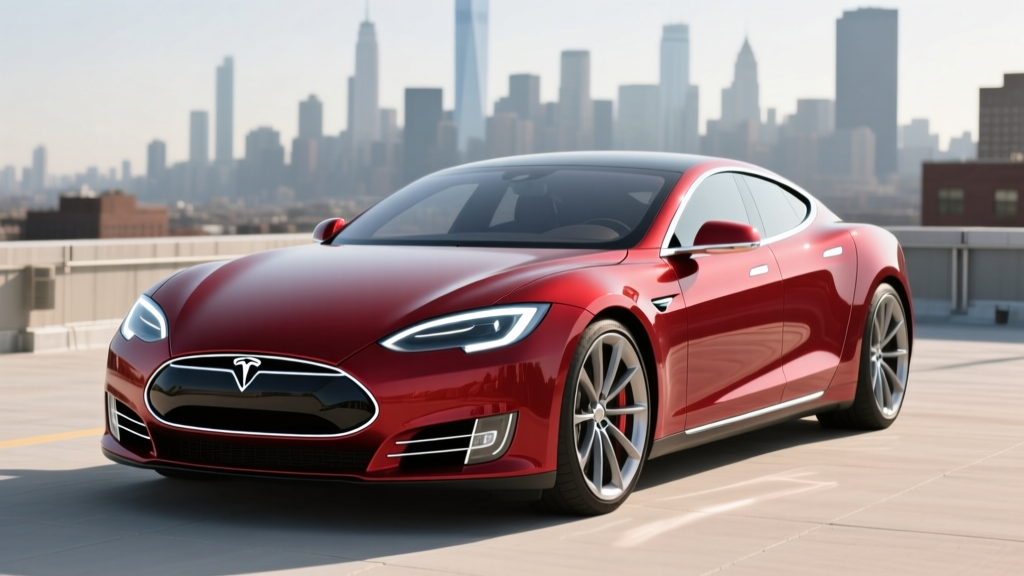
If you have been searching for information on the 2018 Roadster Tesla, you have likely encountered a confusing mix of record-breaking spec sheets, delayed timelines, and YouTube drag-race videos. The Tesla Roadster was originally unveiled in November 2017 alongside the Tesla Semi, with a promised production start that has slipped repeatedly. As of 2026, the second-generation Roadster remains an announced but unreleased vehicle — not currently available for purchase from Tesla or any authorized dealer.
This review dissects what Tesla has officially claimed, what is physically plausible, and what buyers chasing a used original 2008–2012 Roadster or waiting on the new model actually need to know. We will cover the original 2018 announcement specs, the real-world charging and range math, and the ownership economics including federal tax credit reality.
What Exactly Is the 2018 Tesla Roadster?
The name causes genuine confusion. There are two distinct Tesla Roadsters:
- First-generation Roadster (2008–2012): Tesla's original production car, based on the Lotus Elise chassis. Only about 2,450 were built. It featured a 53 kWh lithium-cobalt battery, an EPA-rated range of 244 miles, and a 3.7-second 0–60 mph time.
- Second-generation Roadster (announced 2017, unreleased as of 2026): A ground-up Tesla-designed four-seat sports car with claimed specs that would make it the fastest production car ever built. This is what most people mean when they search for the "2018 Roadster Tesla" — the vehicle Tesla began taking deposits for around that time.
This article focuses primarily on the second-generation Roadster as announced, while clarifying ownership realities for the first-generation car still circulating on the used market.
Announced Specifications: The Numbers Tesla Promised
At the November 2017 unveiling and in subsequent updates, Tesla published the following target specifications. All figures below are preliminary and manufacturer-claimed — none have been independently EPA-verified as of 2026 because the vehicle is not in production.
| Specification | Claimed Value | Status |
|---|---|---|
| EPA Range (estimated) | 620 miles | Unverified — no EPA certification |
| Battery Capacity | 200 kWh (claimed) | Unverified — chemistry undisclosed |
| 0–60 mph | 1.9 seconds | |
| 0–100 mph | 4.2 seconds | Unverified |
| Quarter Mile | 8.8 seconds | Unverified |
| Top Speed | 250+ mph | Unverified |
| Drivetrain | Tri-motor AWD (1 front, 2 rear) | Announced |
| Horsepower | ~1,000+ kW wheel torque (est. 1,300+ HP) | Derived from torque claims |
| Seating | 2+2 (four seats) | Announced |
| Base Price (announced) | $200,000 | Subject to change at launch |
| Founders Series Price | $250,000 (limited to first 1,000) | Deposits taken |
Range Reality: Can 620 Miles Actually Happen?
The headline 620-mile range figure would shatter every existing production EV record. For context, the longest-range EV available in 2026 — the Lucid Air Grand Touring — achieves an EPA-rated 516 miles with a 112 kWh battery pack. The Roadster's claimed 200 kWh pack would need to deliver approximately 3.1 miles per kWh to hit 620 miles, which is extraordinarily ambitious for a vehicle with the Roadster's projected weight and performance envelope.
Tesla has hinted at using advanced cell chemistry — possibly a variant of the 4680 cell architecture with silicon-dominant anodes — to reach 200 kWh in a sports-car footprint. Battery chemistry has not been officially disclosed (NMC vs. a future chemistry). Given current energy-density limits of roughly 250–300 Wh/kg at the cell level, a 200 kWh pack would weigh approximately 670–800 kg (1,480–1,760 lbs) just for cells, pushing total vehicle weight well above 4,500 lbs.
Charging Speed: The 200 kWh Problem
A 200 kWh battery introduces a charging challenge that no public infrastructure currently solves elegantly. Here is the math:
| Charging Method | Power (kW) | Miles Added per Hour | 10–80% Time (Estimated) |
|---|---|---|---|
| Level 1 (120V, 12A) | ~1.4 kW | ~4 mi/hr | ~100 hours |
| Level 2 (240V, 48A) | ~11.5 kW | ~34 mi/hr | ~12 hours |
| Tesla Supercharger V4 (current max) | ~350 kW peak | ~1,000+ mi/hr (peak) | ~30–40 minutes (est.) |
| Hypothetical 1 MW charger | 1,000 kW | ~3,000 mi/hr (peak) | ~12–15 minutes (est.) |
At a current-generation Tesla Supercharger V4 station (up to 350 kW peak), filling 70% of a 200 kWh pack (140 kWh) would take roughly 30–40 minutes assuming the battery can sustain high C-rates through the middle of the charge curve. Charge taper above 80% State of Charge (SoC) would add significant time for a full charge.
At home on a Level 2 wall connector, overnight charging would not fully replenish the pack in a single night. Owners would need to plan multi-night charging sessions after depleting the battery significantly — a practical consideration that the spec sheet does not address.
Tesla has previously mentioned the Roadster could support extremely high charge rates, but no confirmed peak DC fast-charge kW figure has been published. Until the vehicle enters production and is tested on real infrastructure, these numbers remain projections.
Performance and Drivetrain: Tri-Motor AWD
The announced tri-motor configuration — one motor driving the front axle and two motors on the rear — would enable torque vectoring across all four wheels. Tesla's claimed 1.9-second 0–60 mph time would make the Roadster the quickest-accelerating production car ever, surpassing even the Tesla Model S Plaid (1.99 seconds) and the Rimac Nevera (1.85 seconds, though at a $2.4 million price point).
The claimed 10,000 Nm of wheel torque (roughly equivalent to 1,300+ horsepower at the wheels) is a wheel torque figure that includes gear reduction multiplication — not direct motor output. This is an important distinction: actual motor output is likely in the 700–900 kW range, which is still extraordinary.
For comparison, the current Tesla Model S Plaid delivers 1,020 HP from a tri-motor setup with a 100 kWh battery and achieves an EPA-rated 396 miles. The Roadster would need to more than double the battery capacity while maintaining sports-car proportions.
Pricing, Tax Credits, and Ownership Economics
The announced base price of $200,000 and Founders Series price of $250,000 place the Roadster firmly in hypercar territory. For context on what this buys:
| Trim | Announced MSRP | Federal §30D Tax Credit | Effective Price |
|---|---|---|---|
| Base Roadster | $200,000 | $0 (exceeds MSRP cap) | $200,000 |
| Founders Series | $250,000 | $0 (exceeds MSRP cap) | $250,000 |
For buyers who placed the original $50,000 reservation deposit (fully refundable), the question is whether the eventual production price will remain at $200,000 or increase. Given Tesla's history of price adjustments between announcement and delivery (the Cybertruck launched significantly above its originally announced pricing), buyers should budget for a potential $220,000–$280,000 as-tested price depending on options.
First-Generation Roadster (2008–2012): Used Market Reality
If you are actually looking to buy a Tesla Roadster today, the first-generation model is your only option. Here is what the used market looks like in 2026:
- Used Price Range: $120,000–$225,000 depending on mileage, condition, and battery replacement history
- EPA Range (original): 244 miles (new battery)
- Battery: 53 kWh lithium-cobalt oxide (ESS — Energy Storage System)
- Battery Replacement: Tesla offered a $29,000 replacement program; most remaining examples have either had this done or need it
- 0–60 mph: 3.7 seconds (Sport trim: 3.2 seconds)
- Charging: J1772 Level 2 only (no DC fast charging); ~54 miles per hour of Level 2 charging via the original 70-amp Roadster Connector or adapter
- Warranty: Original 3-year/36,000-mile bumper-to-bumper and 5-year/60,000-mile powertrain — all long expired
The first-generation Roadster is a collector vehicle, not a daily driver. Parts availability is limited, Tesla service support is inconsistent, and the proprietary charging connector requires adapters for modern infrastructure. Buyers should treat it as a weekend car or investment piece.
Who Should Wait (or Look Elsewhere)?
The second-generation Roadster, if it reaches production, targets an extremely narrow buyer profile:
- Wait for the Roadster if: You have $200,000+ earmarked for a hypercar, you value record-breaking acceleration above all else, and you are comfortable with an indefinite delivery timeline and unproven production specs.
- Buy a Model S Plaid instead if: You want a proven 1,020-HP tri-motor Tesla today with an EPA-verified 396-mile range, Supercharger access, a functional interior, and a ~$90,000 price point.
- Consider the Rimac Nevera if: You want a delivered, road-proven electric hypercar with 1,914 HP, a 304-mile WLTP range, and verified sub-2-second acceleration — at $2.4 million.
- Look at a used Gen-1 Roadster if: You want Tesla history, collector value, and a Lotus-based driving experience, and you understand the maintenance and charging limitations.
Frequently Asked Questions
Can I buy the 2018 Tesla Roadster right now?
No. The second-generation Tesla Roadster has not entered production as of 2026. Tesla continues to accept reservations, but no delivery date has been confirmed. The only Tesla Roadster you can purchase today is a first-generation (2008–2012) example on the used collector market.
What is the real-world range of the Tesla Roadster?
For the second-generation Roadster: the 620-mile claim is unverified and not EPA-certified. Real-world highway range would likely fall between 450–530 miles in moderate conditions, with cold weather reducing that to 350–430 miles. For the first-generation Roadster (2008–2012): expect 180–220 miles on a replacement battery, with original batteries now degraded to 120–160 miles without replacement.
How fast does the Tesla Roadster charge?
Second-generation Roadster charging specs have not been confirmed by Tesla. Based on the claimed 200 kWh battery, a 10–80% charge on a 350 kW Supercharger would take an estimated 30–40 minutes. Home Level 2 charging at 11.5 kW would require approximately 12 hours for a 10–80% session. The first-generation Roadster charges only on Level 2 (no DC fast charging) at roughly 54 miles of range per hour.
Does the Tesla Roadster qualify for the $7,500 federal EV tax credit?
No. Under current IRS §30D rules, the Roadster's $200,000+ price far exceeds the MSRP cap ($55,000 for sedans, $80,000 for SUVs/trucks). Even if the Roadster were classified as an SUV (unlikely for a sports car), it would not qualify. Buyer income caps and battery sourcing requirements are additional barriers, though the price alone is disqualifying.
Is the Tesla Roadster worth waiting for vs. buying a Model S Plaid?
For nearly every buyer, the Model S Plaid is the rational choice. It delivers 1,020 HP, a verified 396-mile EPA range, full Supercharger network access, a usable interior with five seats, and a ~$90,000 price — all available today. The Roadster promises more extreme performance but at 2x+ the cost, with no confirmed delivery date and unverified specs. Unless you specifically want a low-production hypercar and can absorb the wait and risk, the Plaid is the proven alternative.
What happened to the Tesla Roadster SpaceX thruster package?
Elon Musk announced in 2018 that an optional "SpaceX package" would include cold-gas thrusters for improved cornering, braking, and acceleration. As of 2026, no technical details, pricing, or regulatory pathway for road-legal thrusters has been published. This feature should be considered speculative.