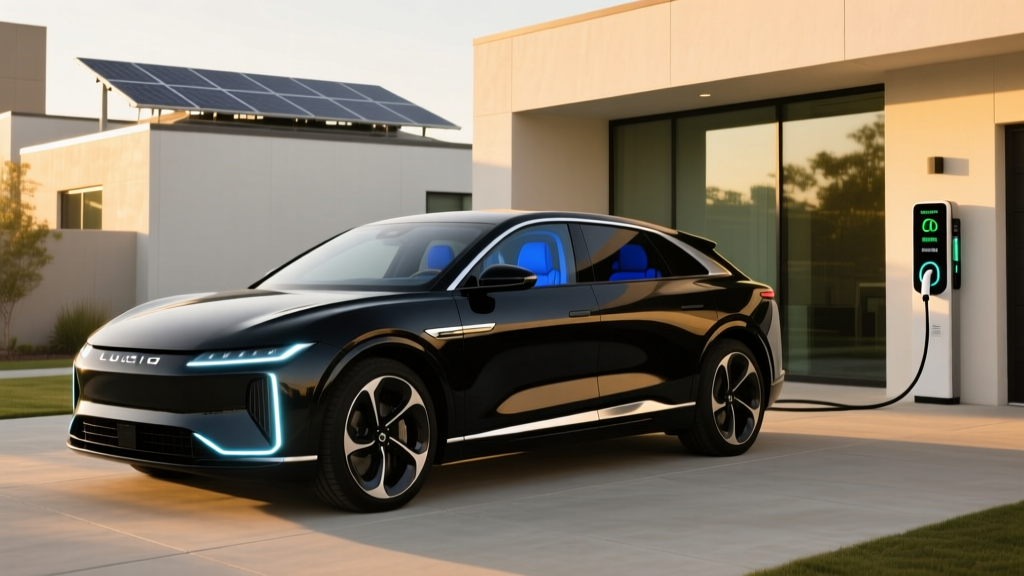
When the IRS tightened battery-sourcing requirements under §30D, luxury EV makers felt the impact immediately. Lucid Motors, with its Air sedan lineup priced well above the federal MSRP cap for sedans, became a case study in how incentive policy shapes premium EV demand. If you're researching Lucid sales after the EV credit cut — or considering a 2026 Lucid Air and wondering what ownership actually costs without the full $7,500 federal incentive — this analysis breaks down every dollar.
We'll walk through the real 5-year total cost of ownership (TCO) for the 2026 Lucid Air Pure, examine current §30D eligibility rules, compare fuel and maintenance savings against a gas rival, and address the insurance and depreciation realities that luxury EV buyers need to confront before signing.
Why Lucid Sales Shifted After the EV Credit Cut
The Inflation Reduction Act's §30D credit was always going to be a moving target. Starting in 2024 and tightening further through 2025–2026, the IRS imposed strict critical-mineral and battery-component sourcing requirements that disqualified most luxury EVs from the full $7,500 credit. Add the MSRP cap — $55,000 for sedans — and every Lucid Air variant (starting around $69,900 for the 2026 Air Pure) is categorically ineligible for the federal purchase credit.
Lucid's sales trajectory reflects this. While the brand never relied on mass-market credit eligibility the way Chevrolet or Hyundai did, the perception of incentive loss — combined with aggressive price cuts from Tesla and BMW in the luxury EV sedan segment — pressured Lucid's volume. According to Lucid's quarterly filings, deliveries fluctuated through 2025 as the company adjusted pricing and introduced the more accessible Gravity SUV.
But incentives are only one variable. For buyers who can absorb the sticker price, the 2026 Lucid Air Pure remains one of the most efficient luxury EVs ever built. The question is whether the math works without a federal subsidy.
2026 Lucid Air Pure: Spec Snapshot
| Spec | 2026 Lucid Air Pure |
|---|---|
| Base MSRP | $69,900 |
| EPA Range | 419 miles |
| Real-World Range (highway/cold) | ~330–360 miles |
| Battery (usable) | 88 kWh (NMC) |
| Efficiency | 146 MPGe / 24 kWh/100mi |
| Peak DC Fast Charge | 200+ kW (10–80% in ~25 min) |
| Level 2 Charge Rate | 19.2 kW (AC) |
| Drivetrain | RWD, 430 HP |
| 0–60 mph | ~5.0 sec |
| Battery/Powertrain Warranty | 8 years / 100,000 miles |
| Federal §30D Eligible | No (exceeds $55K sedan MSRP cap) |
5-Year Total Cost of Ownership Breakdown
Let's model a realistic 5-year ownership scenario for the 2026 Lucid Air Pure, driving 12,000 miles per year (60,000 miles total). We'll compare it against a similarly priced gas sedan — the 2026 BMW 540i xDrive (MSRP ~$68,000, 28 MPG combined).
| Cost Category | Lucid Air Pure | BMW 540i xDrive |
|---|---|---|
| Purchase Price (MSRP) | $69,900 | $68,000 |
| Federal Tax Credit | $0 (MSRP cap) | $0 |
| Estimated Sales Tax (6.5% avg) | $4,544 | $4,420 |
| 5-Year Fuel/Energy (60K mi) | $5,040* | $10,714** |
| 5-Year Insurance (avg) | $14,400 | $10,800 |
| 5-Year Maintenance | $1,800 | $4,500 |
| Estimated Depreciation (5yr) | $31,500 | $27,200 |
| 5-Year Total Cost | $95,684 | $98,434 |
| Cost Per Mile | $1.59 | $1.64 |
* Assumes 70% home charging at $0.14/kWh, 30% DC fast charging at $0.40/kWh, and 24 kWh/100mi efficiency.
** Assumes $3.80/gallon premium and 28 MPG combined.
The Air Pure narrowly beats the BMW on 5-year TCO despite zero federal credit, primarily through fuel and maintenance savings. But the margin is thin — and it depends heavily on your electricity rate, driving habits, and insurance profile.
Federal Tax Credit: §30D Eligibility Rules for 2026
The Lucid Air does not qualify for the §30D Clean Vehicle Credit. Here's why, and what the rules look like for EVs that do qualify:
- MSRP Cap: Sedans must be under $55,000; SUVs, vans, and trucks under $80,000. The Air Pure at $69,900 exceeds the sedan cap. (The Lucid Gravity SUV, starting ~$79,900, sits right at the SUV cap and may qualify depending on trim.)
- Buyer Income Limits: Modified AGI cannot exceed $300,000 (joint), $225,000 (head of household), or $150,000 (single).
- Battery Sourcing: For 2026, 80% of critical minerals by value must be extracted or processed in the US or an FTA partner country, and 100% of battery components must be manufactured or assembled in North America. These thresholds tighten annually.
- Point-of-Sale Transfer: Eligible buyers can transfer the credit to the dealer at purchase, reducing the sale price by up to $7,500 on the spot rather than waiting for tax filing.
- Final Assembly: Vehicle must undergo final assembly in North America (per IRS qualifying vehicle list).
For Lucid Air buyers, the federal credit is simply off the table. However, the Lucid Gravity SUV (starting at $79,900 for the 2026 model year) may still qualify at lower trims if it meets the battery-sourcing requirements. Always verify current eligibility on the IRS clean vehicle manufacturer list before purchasing.
State, Local, and Utility Incentives
Examples of incentives that may apply to a Lucid Air purchase (income and residency requirements vary):
- California: The Clean Fuel Reward was discontinued, but some air-quality districts still offer rebates for EVs. The state's CVRP rebate for low-income buyers can reach $7,000, but income caps apply.
- Colorado: State EV tax credit of up to $5,000 for vehicles under $80,000 (the Air Pure qualifies).
- Utility Rebates: Many utilities (PG&E, Xcel Energy, ConEdison) offer $500–$1,500 rebates for home Level 2 charger installation, and some offer time-of-use (TOU) rate plans that reduce charging costs to $0.06–$0.10/kWh overnight.
- HOV Lane Access: Several states (CA, CO, VA, NJ) grant solo HOV lane access to EVs regardless of credit eligibility — a meaningful perk for commuters.
Check the AFDC state incentive database for your specific location.
Charging Cost vs. Gas: The $/Mile Math
| Metric | Lucid Air Pure | BMW 540i xDrive |
|---|---|---|
| Energy Source | Electricity (24 kWh/100mi) | Premium Gasoline (28 MPG) |
| Home Charging ($0.14/kWh) | $0.034/mile | — |
| DC Fast Charging ($0.40/kWh) | $0.096/mile | — |
| Gasoline ($3.80/gal premium) | — | $0.136/mile |
| Blended Avg Cost/Mile | $0.053/mile* | $0.136/mile |
| Annual Cost (12K mi) | $636 | $1,632 |
| Annual Savings (EV) | ~$996/year | |
*Blended: 70% home at $0.14/kWh + 30% DCFC at $0.40/kWh = ~$0.218/kWh effective rate × 24 kWh/100mi ÷ 100.
The Lucid Air Pure's class-leading efficiency (24 kWh/100mi) makes it one of the cheapest luxury vehicles to "fuel" in existence. If you can charge primarily at home on a TOU plan, your effective rate could drop to $0.08–$0.10/kWh, cutting your per-mile cost to under $0.025 — a fraction of gas.
However, if you rely exclusively on DC fast charging (at $0.35–$0.55/kWh on networks like Electrify America or EVgo), the savings narrow significantly. Road-trip-heavy owners should model their fuel costs accordingly.
Maintenance Savings: Fewer Parts, Real Dollars
| Maintenance Item | Lucid Air Pure (5yr) | BMW 540i (5yr) |
|---|---|---|
| Oil Changes | $0 | $750 (10 changes) |
| Brake Pad Replacement | $0–$300* | $1,200 |
| Transmission Fluid | $0 | $350 |
| Air/Cabin Filters | $400 | $600 |
| Tire Rotation/Replacement | $2,400** | $2,000 |
| Coolant/Misc | $200 | $600 |
| Total (est. 5yr) | ~$1,800 | ~$4,500 |
* Regenerative braking dramatically reduces brake pad wear; many EV owners go 80,000+ miles on original pads.
** EVs are heavier and produce instant torque, which accelerates tire wear. Budget for premium tire replacement every 25,000–35,000 miles.
The Air Pure eliminates oil changes, spark plugs, timing belts, and most exhaust-system maintenance. Regenerative braking saves the friction brakes. The trade-off: EVs eat tires faster due to higher curb weight (~4,500 lbs for the Air Pure) and instant torque delivery. Factor in a set of premium all-season or EV-specific tires at ~$1,200–$1,600 every 30,000 miles.
Insurance: The Cost Most Buyers Underestimate
EV insurance premiums are typically 15–30% higher than equivalent gas vehicles. For the Lucid Air Pure, expect annual premiums in the $2,600–$3,200 range depending on your profile — compared to roughly $2,000–$2,400 for a BMW 540i.
Why the gap?
- Repair costs: EV battery packs and aluminum-intensive structures (the Air uses a spaceframe architecture) are expensive to repair after collision damage. Insurers price this risk.
- Total-loss thresholds: Even minor battery damage can trigger a total-loss declaration, inflating claim payouts.
- Specialized labor: Fewer shops are certified for high-voltage EV repair, raising labor rates.
- Parts availability: Lucid's smaller production volume means longer parts wait times and higher costs vs. BMW's established supply chain.
Shop multiple insurers — some (like GEICO and Progressive) have narrowed the EV insurance gap, while others still price EVs aggressively. Bundling home and auto, maintaining a clean record, and choosing higher deductibles can reduce premiums by $300–$600/year.
Depreciation and Resale Value Trends
Depreciation is the single largest ownership cost for any vehicle, and luxury EVs have historically depreciated faster than their gas counterparts. According to iSeeCars and Kelley Blue Book data through 2025, luxury EVs lose roughly 45–55% of value over 5 years, compared to 35–45% for comparable gas luxury sedans.
For the Lucid Air Pure, expect 5-year depreciation of approximately $31,000–$35,000 (roughly 45–50%), driven by:
- Brand recognition: Lucid remains a low-volume brand with limited service infrastructure, which depresses resale demand compared to Tesla, BMW, or Mercedes.
- Tech obsolescence: Battery energy density and charging speeds improve rapidly; a 2026 Air's 88 kWh pack may seem dated by 2031.
- Price cuts: Lucid has adjusted pricing multiple times since launch, which hurts early buyers' resale values.
- Limited CPO programs: Unlike BMW or Mercedes, Lucid doesn't yet have a robust certified pre-owned program to support resale floors.
The counterweight: the Air's 419-mile EPA range and 8-year/100,000-mile battery warranty provide a floor. If battery health remains above 90% at 60,000 miles (likely, given Lucid's conservative buffer management), the car retains meaningful appeal in the used market.
Decision Framework: Is the Air Pure Worth It Without the Credit?
Choose the Lucid Air Pure if:
- You prioritize range above all else (419 EPA miles is class-leading)
- You can charge at home and access TOU rates for $0.08–$0.14/kWh
- You value efficiency (146 MPGe) and a spacious interior over badge prestige
- You plan to keep the car 7+ years, amortizing the higher depreciation hit
- You live in a state with supplemental EV incentives (CO, CA, etc.)
Look elsewhere if:
- You need the $7,500 federal credit to make the math work (consider the Tesla Model S, BMW i5, or Lucid Gravity SUV for potential eligibility)
- You plan to sell or trade within 3 years (depreciation will sting)
- You lack home charging access and would rely heavily on DCFC
- Insurance quotes in your area exceed $3,500/year
Frequently Asked Questions
How much does it really cost to own a Lucid Air over 5 years?
Our model shows approximately $95,700 over 5 years / 60,000 miles for the 2026 Air Pure, or about $1.59/mile all-in. That includes purchase, energy, insurance, maintenance, and depreciation — but excludes state incentives and HOV lane time savings.
Does the Lucid Air qualify for any federal tax credit in 2026?
No. The Air sedan exceeds the §30D MSRP cap of $55,000 for sedans. The Lucid Gravity SUV (MSRP cap: $80,000 for SUVs) may qualify at base trims if battery-sourcing requirements are met. Always verify on the IRS qualifying vehicle list.
How much do I save on fuel with the Air Pure vs. a gas sedan?
Roughly $996/year (about $5,000 over 5 years) based on 12,000 miles/year, a blended home/DCFC charging mix, and $3.80/gallon premium. Savings increase if you charge primarily at home on off-peak rates, and decrease if you rely on public fast charging.
Are Lucid Airs expensive to insure?
Yes — expect $2,600–$3,200/year, roughly 20–30% more than a comparable BMW 5 Series. Higher repair costs, aluminum construction, and low production volume drive the premium. Always get quotes before purchasing.
How well does the Lucid Air hold its value?
Luxury EVs depreciate faster than gas equivalents. Expect the Air Pure to lose 45–50% of value over 5 years (~$31,000–$35,000). Lucid's smaller brand footprint and evolving pricing strategy contribute. Long-term owners (7+ years) will feel this less than those who trade frequently.
Can I still get state incentives for the Lucid Air?
Possibly. Colorado offers up to $5,000 in state EV credits for vehicles under $80,000. Some utilities offer $500–$1,500 for home charger installation. Check the AFDC state laws database for your area.