Lucid Reverse Split: Why Air Buyers Should Pay Attention in 2026
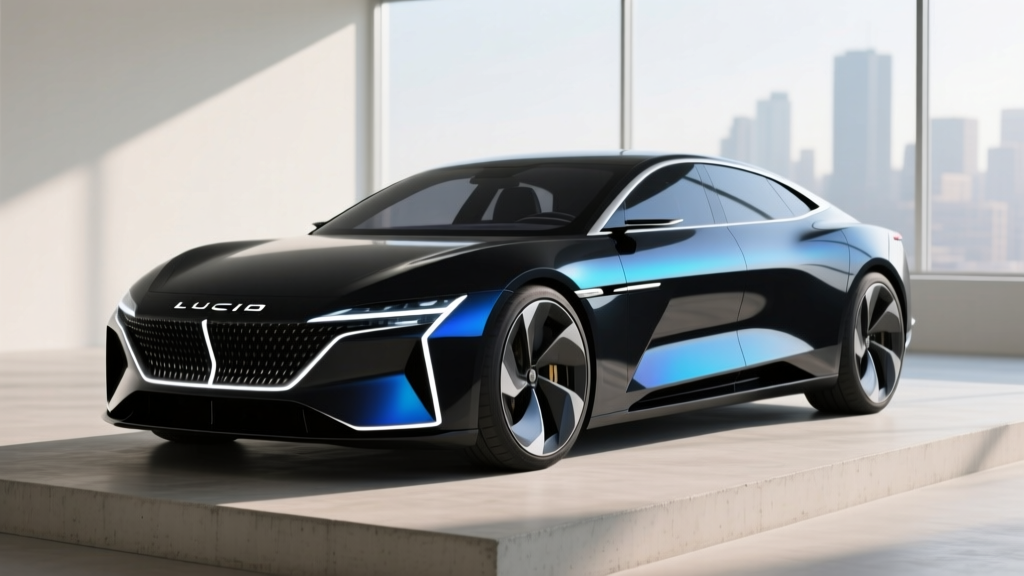
When an automaker executes a reverse stock split, it's rarely a celebration. For Lucid Group (NASDAQ: LCID), the Lucid reverse split of early 2026 — a 1-for-10 consolidation — pushed the share price above Nasdaq's $1 minimum bid threshold but raised uncomfortable questions about the company's long-term viability. For shoppers eyeing the 2026 Lucid Air sedan, the financial maneuver matters less than what it signals: Lucid is fighting for survival while producing one of the most efficient luxury electric sedans on the road.
This buyer's guide covers what the reverse split means for ownership, then dives deep into the 2026 Air's real-world range, charging performance, pricing, and tax-credit eligibility so you can make an informed decision — with clear eyes about both the car and the company behind it.
2026 Lucid Air at a Glance: Specifications
| Specification | Air Pure | Air Touring | Air Grand Touring | Air Sapphire |
|---|---|---|---|---|
| EPA Range | 419 mi | 425 mi | 516 mi | 427 mi |
| Battery (usable) | 88 kWh, NMC | 112 kWh, NMC | 112 kWh, NMC | 118 kWh, NMC |
| Drivetrain | RWD (single motor) | AWD (dual motor) | AWD (dual motor) | AWD (tri-motor) |
| Horsepower | 430 hp | 620 hp | 819 hp | 1,234 hp |
| 0-60 mph | 5.0 sec | 3.4 sec | 3.0 sec | 1.89 sec |
| Max DC Fast Charge | 200 kW | 200 kW | 300+ kW | 300+ kW |
| 10-80% DCFC Time | ~27 min | ~33 min | ~20 min | ~22 min |
| Level 2 Home Charging | 19.2 kW (~50 mi/hr) | 19.2 kW (~50 mi/hr) | 19.2 kW (~50 mi/hr) | 19.2 kW (~50 mi/hr) |
| Efficiency (MPGe) | 146 MPGe | 134 MPGe | 131 MPGe | 110 MPGe |
| Base MSRP | $69,900 | $87,400 | $125,600 | $249,000 |
| Connector | CCS1 (NACS adapter avail.) | CCS1 (NACS adapter avail.) | CCS1 (NACS adapter avail.) | CCS1 (NACS adapter avail.) |
All figures sourced from fueleconomy.gov and Lucid's official 2026 specifications. The Air's 900V+ electrical architecture remains one of the highest-voltage platforms in production, enabling its class-leading charging speeds on the Grand Touring and Sapphire trims.
Real-World Range: What the EPA Sticker Doesn't Tell You
Air Pure (EPA 419 mi): Expect ~350-380 mi on mixed highway driving at 70-75 mph. In cold weather (below 32°F), plan for 280-320 mi. City driving with regenerative braking can approach or slightly exceed EPA figures.
Air Grand Touring (EPA 516 mi): The headline number. Real-world highway testing yields ~420-460 mi in moderate temps, dropping to ~350-390 mi in freezing conditions. At sustained 80+ mph speeds, expect closer to 380-410 mi.
Air Sapphire (EPA 427 mi): Performance-oriented tuning and stickier tires reduce efficiency. Expect ~360-390 mi in real-world use, significantly less with aggressive driving.
Lucid's efficiency advantage is genuine. The Air Pure's ~24 kWh/100mi consumption is among the lowest of any full-size luxury sedan — a direct result of the miniaturized drive units Lucid developed in-house and the car's exceptional aerodynamics (a drag coefficient of 0.197 on the Pure). That said, no EV delivers its full EPA range at sustained highway speeds in cold weather. The Air's heat pump helps mitigate winter losses compared to resistive heating systems, but a 20-25% reduction in freezing temperatures is the norm, not the exception.
For road-trippers, the Grand Touring's 516-mile EPA rating translates to practical 400+ mile legs between stops — enough to cover most US interstate corridors with a single charge break. That's a tangible advantage over the Tesla Model S Long Range (EPA 402 mi) and the BMW i7 eDrive50 (EPA 318 mi).
Charging Speed: Where the Air's 900V Architecture Shines
| Charging Level | Power / Rate | Miles Added per Hour | Notes |
|---|---|---|---|
| Level 1 (120V) | ~1.4 kW | ~3-4 mi/hr | Emergency only; not practical for daily use |
| Level 2 (240V, 80A) | 19.2 kW | ~50 mi/hr | Requires hardwired 100A circuit; full charge overnight |
| Level 2 (240V, 48A) | 11.5 kW | ~30 mi/hr | Standard home charger; 12-15 hr full charge |
| DC Fast (Pure/Touring) | 200 kW peak | ~500+ mi/hr (peak) | 10-80% in ~27-33 min; tapers above 80% |
| DC Fast (GT/Sapphire) | 300+ kW peak | ~700+ mi/hr (peak) | 10-80% in ~20 min on 350 kW stations |
The Air's onboard charger accepts up to 19.2 kW on Level 2 — significantly more than most EVs (which typically max at 11.5 kW). This means home charging on a properly installed 80-amp circuit can add roughly 50 miles of range per hour, or replenish a full battery in about 6-7 hours. Note: achieving this rate requires a hardwired Level 2 station and a 100-amp dedicated circuit. Most homes will need an electrical panel assessment before installation — budget $1,500-$3,500 for professional installation, potentially more if a panel upgrade is needed.
On DC fast charging, the Grand Touring and Sapphire's ability to accept 300+ kW is a genuine differentiator. However, charge-curve reality matters: peak rates are sustained only between roughly 10-40% state of charge. Above 60%, the rate tapers substantially, and above 80%, charging slows to a trickle to protect the NMC battery cells. Preconditioning the battery (via navigation-routed preconditioning to a fast charger) is essential for achieving peak speeds — skip this step and your 20-minute stop becomes 35 minutes.
The Air uses the CCS1 connector natively, with a NACS adapter available for Tesla Supercharger access. As of 2026, Lucid offers this adapter to owners, expanding the usable fast-charging network considerably, though native NACS ports are not yet integrated into the Air's production line.
Pricing, Trim Levels & Federal Tax Credit Eligibility
| Trim | Base MSRP | Destination | §30D Credit Eligible? | Est. Net Price |
|---|---|---|---|---|
| Air Pure | $69,900 | $1,200 | No (MSRP over $55K sedan cap) | $71,100 |
| Air Touring | $87,400 | $1,200 | No | $88,600 |
| Air Grand Touring | $125,600 | $1,200 | No | $126,800 |
| Air Sapphire | $249,000 | $1,200 | No | $250,200 |
The absence of a federal credit stings, particularly for the Air Pure at ~$71,100 out the door. Competitors like the Tesla Model S ($79,990 base, also above the sedan cap) face the same limitation. However, some state and local incentives may apply — California's CVRP rebate, Colorado's state credit, and various utility-company incentives can partially offset the cost. Check your state's energy office and local utility for current programs, as these vary by jurisdiction and change frequently.
Interior, Cargo & Technology: Luxury with Caveats
The Air's cabin is spacious by any measure. Rear legroom stretches to 41.9 inches — limousine territory — and the trunk offers 32 cubic feet of cargo volume, supplemented by a modest front trunk (frunk). The dual-pane glass canopy roof floods the interior with light, though it lacks a physical shade, which some buyers find creates unwanted heat gain in hot climates.
The infotainment system runs on a 34-inch curved glass cockpit display with a retractable lower touchscreen. The interface is visually impressive but has drawn criticism for burying common functions (climate, seat controls) in touchscreen menus rather than physical buttons. Wireless Apple CarPlay and Android Auto are standard, as is a 21-speaker Surreal Sound Pro audio system on Touring and above.
Driver assistance: Lucid's DreamDrive Pro system uses 32 sensors including LiDAR (on Touring and above) for adaptive cruise control, lane centering, and automated parking. This is an SAE Level 2 driver-assistance system — the driver must remain fully engaged with hands on the wheel and eyes on the road. It is not autonomous or "self-driving." The system is competent for highway cruising but does not offer hands-free operation like GM's Super Cruise or Ford's BlueCruise on approved highways.
Warranty, Ownership & the Reverse-Split Risk Factor
Lucid covers the Air with:
- Basic vehicle warranty: 4 years / 50,000 miles
- Battery & powertrain warranty: 8 years / 100,000 miles (retains ≥70% capacity)
- Roadside assistance: 4 years / 50,000 miles
The battery warranty's 70% capacity-retention threshold is industry-standard, matching Tesla and BMW. However, warranty coverage is only as reliable as the company honoring it. The Lucid reverse split and the company's ongoing cash burn raise legitimate concerns about long-term parts availability, service-center expansion, and software-update cadence. Lucid currently operates a limited number of service centers in major metro areas, with mobile service available in select regions. If you live outside a major city, service access may require a significant drive or a flatbed tow.
Insurance costs for the Air run 20-35% higher than equivalent gas sedans, consistent with the luxury EV segment. Expect annual premiums of $3,500-$5,500 depending on your profile and location. Depreciation data remains limited given the Air's 2021 launch, but early indicators suggest steeper-than-Tesla depreciation, partly due to lower brand recognition and the company's financial uncertainty.
Pros, Cons & Who the 2026 Air Suits Best
- Class-leading efficiency and real-world range (especially Grand Touring)
- Exceptional rear-seat legroom — genuine executive comfort
- Up to 300+ kW DC fast charging (GT/Sapphire)
- 19.2 kW Level 2 acceptance — fastest home charging in class
- Quiet, refined ride quality with strong regen braking
- LiDAR-equipped DreamDrive Pro (Touring+)
- No federal tax credit eligibility (MSRP cap)
- Limited service-center network; company financial risk
- Infotainment lacks physical buttons for key functions
- Glass roof has no sunshade — heat soak in summer
- Depreciation uncertainty vs. established luxury brands
- CCS1 connector requires adapter for Supercharger access
- Driver-assist is Level 2 only — no hands-free highway driving
Choose the Air if: You prioritize maximum range and efficiency in a luxury sedan, value rear-seat comfort, have reliable home-charging access, and live near a Lucid service center. The Grand Touring is ideal for frequent road-trippers who need 400+ real-world miles between stops.
Look elsewhere if: You need the security of a large dealer network, want hands-free highway driving (consider BMW i7 with Highway Assistant or Mercedes EQS with Drive Pilot), need the federal tax credit, or live in a rural area far from Lucid service. The reverse split adds a layer of company-viability risk that conservative buyers may not want to accept.
Lucid Air vs. Key Competitors: Quick Comparison
| Attribute | 2026 Lucid Air GT | 2026 Tesla Model S LR | 2026 BMW i7 xDrive60 |
|---|---|---|---|
| EPA Range | 516 mi | 402 mi | 318 mi |
| Base MSRP | $125,600 | $79,990 | $124,200 |
| Max DCFC | 300+ kW | 250 kW | 195 kW |
| 0-60 mph | 3.0 sec | 3.1 sec | 4.5 sec |
| Hands-Free Driving? | No (Level 2) | No (Level 2) | Partial (Level 2+) |
| Service Network | Limited | Extensive | Dealer network |
The Air Grand Touring wins on range and charging speed by a wide margin. The Model S wins on price, service infrastructure, and Supercharger network access. The BMW i7 wins on traditional luxury build quality, dealer support, and a more conventional control layout. Your priorities determine the winner.
Frequently Asked Questions
What does the Lucid reverse split mean for current Air owners?
A reverse stock split is a financial restructuring tool — it changes the number and price of shares but does not directly affect vehicle operations, warranties, or software updates. However, it signals financial pressure, and the long-term concern is whether Lucid can sustain production, service infrastructure, and OTA updates over the 10-15 year ownership horizon.
Does the 2026 Lucid Air qualify for the $7,500 federal EV tax credit?
No. Under IRS §30D, new sedans must have an MSRP at or below $55,000 to qualify. Every Air trim exceeds this cap. Additionally, buyer income limits and battery-sourcing requirements apply. State-level incentives may partially offset costs — check your state's energy office.
How fast does the Lucid Air charge at home?
With a hardwired 80-amp Level 2 station (19.2 kW), the Air adds approximately 50 miles of range per hour — enough for a full overnight charge. On a standard 48-amp Level 2 (11.5 kW), expect about 30 mi/hr. You'll need a 100-amp dedicated circuit and likely a panel evaluation by a licensed electrician for the full 19.2 kW rate.
Is the Lucid Air good in cold weather?
The Air includes a heat pump for cabin heating and battery thermal management, which helps reduce winter range loss compared to resistive-heater systems. Expect a 20-25% range reduction in sustained sub-freezing temperatures — typical for NMC battery EVs. Preconditioning while plugged in is strongly recommended to preserve range and enable faster DC charging in cold weather.
Can the Lucid Air use Tesla Superchargers?
Yes, via a NACS adapter that Lucid offers to Air owners. The Air natively uses the CCS1 connector. With the adapter, you can access Tesla's Supercharger network, which significantly expands fast-charging options for road trips. Verify adapter availability and compatibility with your model year directly with Lucid.
Is the Lucid Air a self-driving car?
No. The Air's DreamDrive Pro system is classified as SAE Level 2 driver assistance. It provides adaptive cruise control, lane centering, and automated parking, but requires the driver to remain fully attentive with hands on the wheel and eyes on the road at all times. No production Lucid vehicle offers autonomous or "self-driving" capability.
What's the biggest risk of buying a Lucid Air after the reverse split?
The primary risk is long-term company viability. If Lucid were to significantly scale back operations or cease production, you could face challenges with warranty claims, parts availability, and software updates. The PIF backing provides a financial safety net, but it's not a guarantee. Buyers who prioritize low-risk ownership may prefer established brands with larger service networks.
Sources: EPA fueleconomy.gov, IRS §30D Clean Vehicle Credits, Lucid Motors official specifications. Pricing and incentive rules are current as of the 2026 model year and subject to change. Always verify with official sources and a tax professional before purchasing.