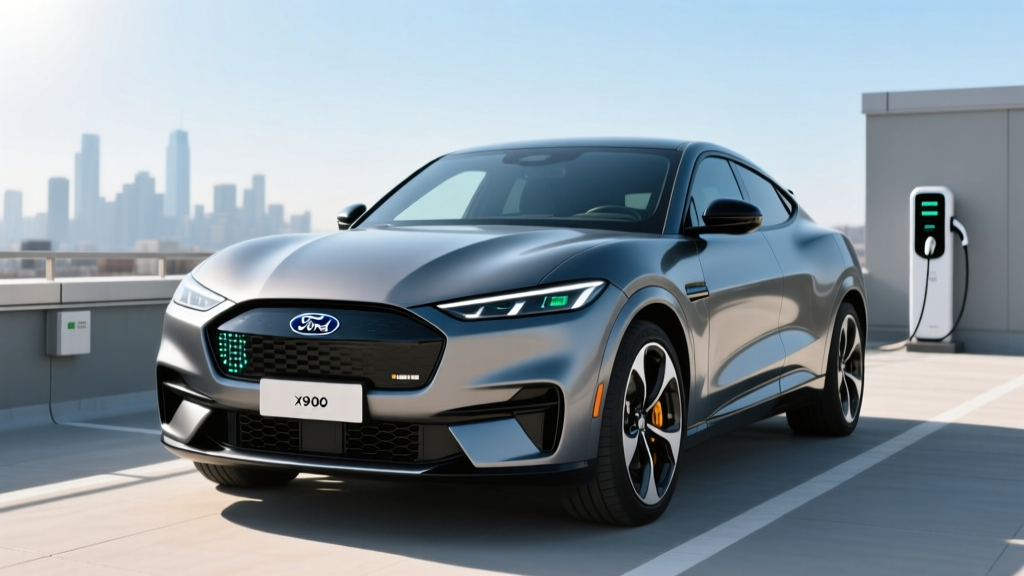
The 2026 Ford Mustang Mach-E continues to evolve with incremental powertrain refinements, and the M9000 motor controller has become a focal point for buyers researching performance and efficiency. This inverter/controller manages power delivery between the battery pack and electric motors, directly influencing acceleration smoothness, regenerative braking behavior, and overall energy efficiency. Below, we break down what the Mach-E delivers in 2026 with exact specs, real-world expectations, and ownership economics.
2026 Mustang Mach-E: Range, Battery, and the M9000 Controller
The M9000 controller is Ford's latest-generation inverter hardware used across the Mach-E lineup. It regulates three-phase AC power to the permanent-magnet synchronous motors and handles regenerative braking energy recovery. For buyers, the practical impact shows up in slightly improved efficiency over prior model years and smoother torque delivery during partial-throttle acceleration.
| Specification | Select (RWD) | Premium (AWD) | GT (AWD) |
|---|---|---|---|
| EPA Range | 250 mi | 320 mi (Ext. Range) | 280 mi |
| Battery (usable) | 72 kWh (LFP) | 91 kWh (NMC) | 91 kWh (NMC) |
| Horsepower | 266 hp | 346 hp | 480 hp |
| 0-60 mph | 6.3 sec | 5.1 sec | 3.5 sec |
| Drivetrain | RWD single motor | AWD dual motor | AWD dual motor |
| MPGe (combined) | 101 MPGe | 98 MPGe | 84 MPGe |
| Base MSRP | $42,995 | $48,995 | $59,995 |
Real-World Range Expectations: The EPA estimates 320 miles for the Premium AWD with Extended Range battery. In real-world highway driving at 70-75 mph, expect approximately 260-280 miles. In cold weather (below 30°F), range drops 20-30%, yielding roughly 200-220 highway miles. City driving with regenerative braking recovers closer to the EPA sticker, often 290-310 miles in mild conditions. (Source: fueleconomy.gov)
The Select trim's LFP (lithium iron phosphate) battery trades energy density for longevity and thermal stability. LFP cells tolerate frequent 100% charging without degradation concerns, making them ideal for daily commuters with home charging. The Extended Range NMC (nickel manganese cobalt) pack in Premium and GT trims offers higher energy density but benefits from staying between 20-80% state of charge for long-term health.
Charging Speed: DC Fast, Level 2, and Home Setup
The M9000 controller's thermal management integration allows sustained DC fast charging without aggressive taper. The Mach-E peaks at 150 kW on DC fast chargers, though this peak is not sustained throughout the session.
| Charging Level | Power (kW) | Charge Time | Range Added |
|---|---|---|---|
| Level 1 (120V household) | 1.4 kW | ~72 hrs (10-80%) | ~3 mi/hr |
| Level 2 (240V, 48A) | 11.5 kW | ~8.5 hrs (10-80%) | ~27 mi/hr |
| DC Fast Charge (peak) | 150 kW | ~45 min (10-80%) | ~150 mi in 20 min |
Charging curve reality: The 150 kW peak occurs between 15-40% state of charge. Above 60%, the rate tapers to approximately 80-100 kW, and above 80% it drops further to 40-50 kW. This is normal battery-protection behavior, but it means the final 20% takes nearly as long as the 10-80% session. For road trips, plan 20-minute stops to reach 80%, then drive on.
Home Level 2 charging at 11.5 kW requires a 60-amp circuit (48A continuous draw). Installation costs typically run $800-$2,200 depending on panel proximity and local permit fees. Homes with 100-amp service may need a panel upgrade ($1,500-$3,000 additional). The Ford Mobile Power Cord ships with the vehicle and handles Level 1 (120V) or Level 2 (240V with NEMA 14-50 adapter).
Performance and Driving Dynamics
The GT trim's 480 hp and 3.5-second 0-60 time position it against the Tesla Model Y Performance and Hyundai Ioniq 5 N. The M9000 controller enables precise torque vectoring between front and rear motors in AWD configurations, improving cornering traction. Regenerative braking offers multiple levels selectable via the dashboard, including a one-pedal driving mode that brings the car to a complete stop without brake pedal input.
Ride quality is firm but compliant. The Mach-E uses a front strut / rear multi-link suspension with passive dampers across all trims. The GT's MagneRide adaptive dampers (optional on some trims) adjust damping force in real-time based on road conditions and drive mode selection.
Pricing, Trims, and Federal Tax Credit Eligibility
The 2026 Mach-E starts at $42,995 for the Select RWD with standard-range LFP battery. The volume-selling Premium AWD Extended Range sits at $48,995, while the GT tops the lineup at $59,995. Destination charges add $1,395.
| Trim | MSRP | §30D Credit | Effective Price |
|---|---|---|---|
| Select RWD | $42,995 | $3,750* | ~$39,245 |
| Premium AWD Ext. | $48,995 | $3,750* | ~$45,245 |
| GT AWD | $59,995 | $3,750* | ~$56,245 |
Federal tax credit details (IRS §30D): The Mach-E qualifies for a partial credit (typically $3,750) because it meets the critical minerals requirement but not the full battery component sourcing threshold. Full $7,500 credit eligibility requires both criteria. Income caps apply: $150,000 single / $300,000 joint modified AGI. The credit can be transferred to the dealer at point of sale as a purchase price reduction. MSRP caps do not affect the Mach-E (SUV cap is $80,000). (Source: IRS.gov)
*Credit amounts are subject to change based on battery sourcing compliance. Verify current eligibility at purchase.
Cargo Space, Interior, and Technology
The Mach-E provides 29.7 cubic feet of cargo space behind the rear seats and 59.7 cu ft with seats folded. The front trunk (frunk) adds 4.7 cu ft of drainable storage, useful for wet gear or charging cables. Rear legroom measures 38.9 inches, adequate for adults on longer trips.
The 15.5-inch vertical touchscreen runs Ford's SYNC 4A system with wireless Apple CarPlay and Android Auto. The interface is responsive, though some climate controls are buried in submenus. A 10.2-inch digital instrument cluster displays speed, range, and driver-assist status.
Ford's BlueCruise hands-free driving system is available on mapped divided highways (over 130,000 miles of coverage). This is SAE Level 2 automation—the driver must remain attentive and eyes on the road. The system uses a driver-facing camera to monitor engagement. BlueCruise costs $2,100 for a three-year subscription or $75/month, though promotional trials are sometimes included.
Pros
- Smooth, linear power delivery from M9000 controller
- LFP battery option for daily-charging longevity
- Competitive DC fast-charge speed (150 kW peak)
- Comfortable ride with adaptive damping available
- Spacious cargo area with useful frunk
Cons
- Real-world highway range falls 40-50 miles short of EPA
- Partial federal tax credit ($3,750 vs full $7,500)
- BlueCruise subscription adds ongoing cost
- Touchscreen-heavy interface lacks physical climate knobs
- Cold-weather range loss significant without heat pump standard on all trims
Who Should Buy the 2026 Mustang Mach-E?
Best for: Daily commuters with home charging who value driving dynamics and need crossover practicality. The Select RWD with LFP battery is ideal for high-mileage users who plan to charge to 100% nightly. The Premium AWD Extended Range suits road-trippers willing to plan 20-minute DC fast-charge stops every 250 miles.
Consider alternatives if: You need maximum range (Tesla Model Y Long Range offers 330+ EPA miles), you want full federal tax credit eligibility, or you frequently tow (the Mach-E is rated for only 1,500 lbs with the factory hitch).
FAQ
What is the real-world range of the 2026 Mustang Mach-E?
The Premium AWD Extended Range achieves 320 miles EPA, but real-world highway driving yields 260-280 miles. Cold weather reduces this to 200-220 miles. City driving with regen braking recovers closer to EPA estimates.
How fast does the Mach-E charge at home and on DC fast chargers?
DC fast charging peaks at 150 kW, reaching 10-80% in approximately 45 minutes. Home Level 2 charging at 11.5 kW takes about 8.5 hours for the same session, adding roughly 27 miles of range per hour.
Does the 2026 Mach-E qualify for the federal EV tax credit?
Yes, but only the partial $3,750 credit due to battery component sourcing rules. Income caps apply ($150K single / $300K joint), and the credit can be transferred to the dealer at point of sale.
Is the Mach-E worth buying versus competitors?
The Mach-E competes well on driving dynamics and interior quality, but the Tesla Model Y offers longer range and a more mature Supercharger network. The Hyundai Ioniq 5 charges faster (up to 350 kW on 800V architecture). Choose the Mach-E if you prioritize ride comfort and prefer Ford's dealer network.
What are the biggest drawbacks?
Real-world range falls short of EPA estimates, the federal tax credit is partial, and cold-weather efficiency suffers. The touchscreen-centric interface frustrates some users, and BlueCruise adds subscription costs after the trial period.
What warranty coverage does the battery have?
Ford covers the high-voltage battery for 8 years or 100,000 miles against defects and capacity loss below 70% of original capacity. The powertrain (motors, controller, reduction gear) carries the same 8-year/100,000-mile coverage.