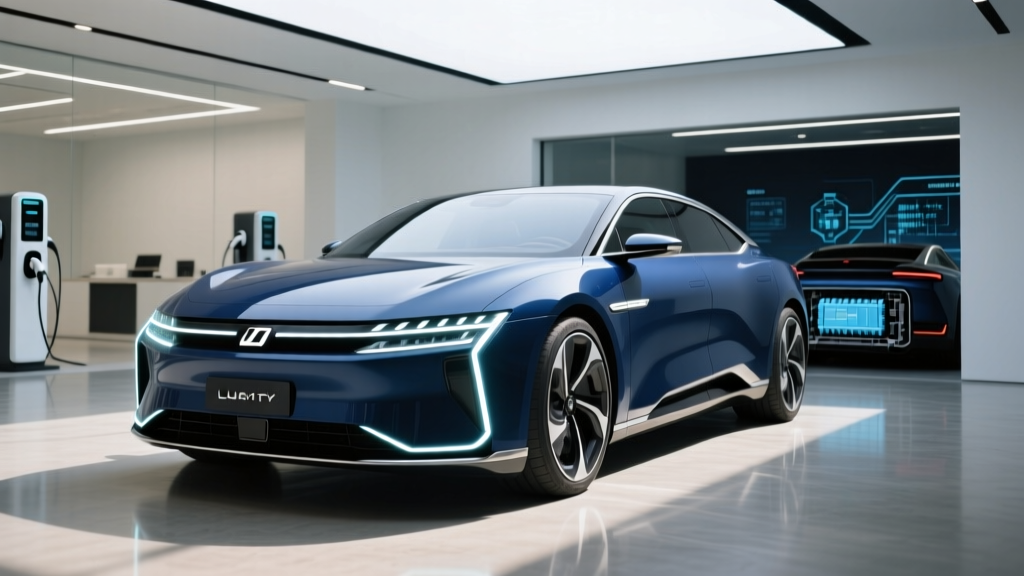
Lucid Motors has spent most of its existence as a low-volume luxury automaker, hand-building Air sedans in Casa Grande, Arizona. That changes in late 2026. The company's announced Lucid Q4 production surge is tied to the ramp-up of its second vehicle, the Gravity three-row SUV, alongside continued Air sedan manufacturing. For prospective buyers, the question isn't just whether Lucid can scale — it's whether the Gravity is the right luxury electric SUV for your driveway, your road trips, and your budget.
This review dissects the 2026 Lucid Gravity with the numbers that matter: EPA range, real-world highway expectations, DC fast-charging curves, battery chemistry, cabin space, and the federal tax credit picture under current IRS §30D rules. If the Q4 production surge means shorter wait times and better dealer availability, now is the moment to evaluate this SUV on its merits.
2026 Lucid Gravity: Core Specifications at a Glance
| Specification | Gravity Grand Touring | Gravity Touring |
|---|---|---|
| EPA Est. Range | 440 miles | ~380 miles (est.) |
| Battery (Usable) | ~118 kWh (NMC) | ~100 kWh (NMC) |
| Drivetrain | Dual-Motor AWD | Dual-Motor AWD |
| Horsepower | 828 hp | ~600 hp (est.) |
| 0–60 mph | 3.5 seconds | ~4.5 seconds (est.) |
| Max DC Fast Charge | ~300 kW (peak) | ~250 kW (peak) |
| 10–80% DC Charge Time | ~22 minutes | ~25 minutes |
| Level 2 Home Charge | 19.2 kW (~70 mi/hr) | 19.2 kW (~70 mi/hr) |
| Efficiency | ~120 MPGe / 28 kWh/100mi | ~115 MPGe / 29 kWh/100mi |
| Cargo (Behind 3rd Row) | ~30 cu ft | ~30 cu ft |
| Cargo (Max, Seats Folded) | ~110 cu ft | ~110 cu ft |
| Base MSRP | $94,900 | $79,900 |
| Battery/Powertrain Warranty | 8 yr / 100,000 mi | 8 yr / 100,000 mi |
Note: Touring trim figures marked (est.) are based on Lucid's preliminary announcements as of late 2025. Final EPA certification for the Touring trim is expected closer to volume delivery. Always verify at fueleconomy.gov before purchasing.
Real-World Range: Beyond the 440-Mile EPA Sticker
EPA Estimated: 440 miles
Real-World Highway (70–80 mph, mild weather): ~350–380 miles
Real-World Cold Weather (below 32°F, highway): ~280–320 miles
Mixed City/Suburban Commuting: ~390–420 miles
Lucid's engineering team built its reputation on efficiency. The Air sedan achieves some of the best MPGe figures in the EV market, and the Gravity leverages the same 900-volt architecture and low-drag design philosophy. The 440-mile EPA figure for the Grand Touring is legitimate under mixed driving conditions.
However, any three-row SUV pushing 5,500+ pounds will see significant range reduction at sustained highway speeds. Aerodynamic drag increases with the square of velocity, and at 80 mph on an interstate, expect to consume roughly 30–32 kWh per 100 miles compared to the EPA-rated 28. In freezing temperatures, battery chemistry limitations and cabin heating demands can cut range by 25–35%, even with the Gravity's standard heat pump system.
The practical takeaway: plan road trips around a 320-mile usable buffer in fair weather and 260 miles in winter. That still puts the Gravity ahead of nearly every competing electric SUV for distance between charges, but it's not the 440-mile nonstop experience the sticker implies.
Charging Speed and the 900V Architecture Advantage
| Charging Level | Power | Miles Added per Hour | Notes |
|---|---|---|---|
| Level 1 (120V outlet) | ~1.4 kW | ~4–5 mi/hr | Emergency/trickle only |
| Level 2 (240V, 48A) | 11.5 kW | ~40 mi/hr | Standard home setup |
| Level 2 (240V, 80A) | 19.2 kW | ~70 mi/hr | Requires hardwired 100A circuit |
| DC Fast (peak) | ~300 kW | ~1,000+ mi/hr (peak) | Sustained 10–80% in ~22 min |
The Gravity's 900-volt electrical architecture is the same system proven in the Air, and it enables DC fast-charging speeds that rival or exceed anything in the luxury SUV segment. On a 350 kW-capable charger (such as Electrify America's latest stations or Tesla Superchargers with a NACS adapter), the Grand Touring peaks near 300 kW.
But peak kW is not sustained kW — this is the most misunderstood spec in EV charging. The Gravity's charge curve tapers progressively above 60% State of Charge (SoC), dropping below 150 kW past 80% to protect battery longevity. The 10–80% time of approximately 22 minutes reflects this curve. For road-trip planning, budget 25 minutes per stop including plug-in and payment handshake.
At home, the Gravity's onboard charger accepts up to 19.2 kW on Level 2, but that requires an 80-amp hardwired EVSE on a 100-amp dedicated circuit. Most homes will run a 48-amp Level 2 charger (11.5 kW), adding roughly 40 miles of range per hour — sufficient to fully replenish the battery overnight in about 10 hours.
Performance: 828 HP in a Three-Row Family Hauler
The Grand Touring's dual-motor all-wheel-drive powertrain produces 828 horsepower, launching this 5,500-pound SUV to 60 mph in 3.5 seconds. That puts it in supercar territory from a stoplight, though the physics of mass become apparent above 80 mph where acceleration tapers.
Lucid's in-house developed motors are notably compact and efficient — a hallmark of the brand's engineering approach. The low center of gravity from the floor-mounted battery pack keeps body roll controlled through corners, though no three-row SUV is a sports car. The adaptive air suspension (standard on Grand Touring) offers adjustable ride height: lower for highway efficiency, higher for rough roads or light off-pavement use.
The Touring trim, expected at around 600 hp and a 4.5-second 0–60 time, sacrifices some performance for a lower entry price while retaining the dual-motor AWD layout most buyers in snow-belt states will want.
Pricing, Trims, and Federal Tax Credit Eligibility
| Trim | Base MSRP | Federal §30D Credit | Effective Price |
|---|---|---|---|
| Gravity Touring | $79,900 | $0 (exceeds MSRP cap) | $79,900 |
| Gravity Grand Touring | $94,900 | $0 (exceeds MSRP cap) | $94,900 |
Here's the hard truth for Lucid shoppers: the Gravity does not qualify for the $7,500 federal EV tax credit under IRS §30D. The Inflation Reduction Act caps eligible SUVs at an $80,000 MSRP, and both Gravity trims exceed that threshold — even the base Touring at $79,900 is effectively at the ceiling before destination fees and any options push it over.
Additionally, §30D imposes buyer income caps (modified AGI of $150,000 single / $300,000 joint) and critical-mineral/battery-component sourcing requirements that shift annually. Even if a lower-priced Pure trim arrives in the future below $80,000, battery sourcing compliance would need separate verification via IRS guidance.
Buyers should also investigate state-level incentives — some states offer rebates with higher MSRP thresholds or no MSRP cap at all. Check your state's energy office or DMV for current programs.
Interior Space, Technology, and Daily Ownership
The Gravity's three-row cabin is designed for families who need genuine third-row usability, not the occasional child-seat overflow found in smaller crossovers. With approximately 30 cubic feet behind the third row and 110 cubic feet with all rear seats folded, cargo capacity competes with the BMW X7 and Mercedes GLS — but with a frunk adding additional sealed storage up front.
The glass canopy roof floods the cabin with light and creates an airy feel unusual in the SUV segment. Lucid's 34-inch curved glass cockpit display spans the driver's field of view, running the company's proprietary infotainment system. Wireless Apple CarPlay and Android Auto are standard, along with a 21-speaker Surreal Sound audio system on Grand Touring trims.
Driver assistance comes via Lucid's DreamDrive Pro system, which uses a combination of cameras, radar, and lidar sensors. This is an SAE Level 2 system — meaning the driver must remain fully engaged with hands on the wheel and eyes on the road. It offers adaptive cruise control, lane centering, and highway assist, but it is not autonomous driving. Don't confuse it with Waymo-style Level 4 robotaxi capability.
This is a Level 2 driver-assistance system. It does not replace an attentive driver. Expect disengagements in construction zones, heavy rain, faded lane markings, and unmapped highway interchanges. You are legally and operationally responsible for the vehicle at all times.
Gravity vs. the Luxury Electric SUV Competition
The Q4 production surge matters because it positions the Gravity against established rivals at a time when buyers have choices. Here's how it stacks up:
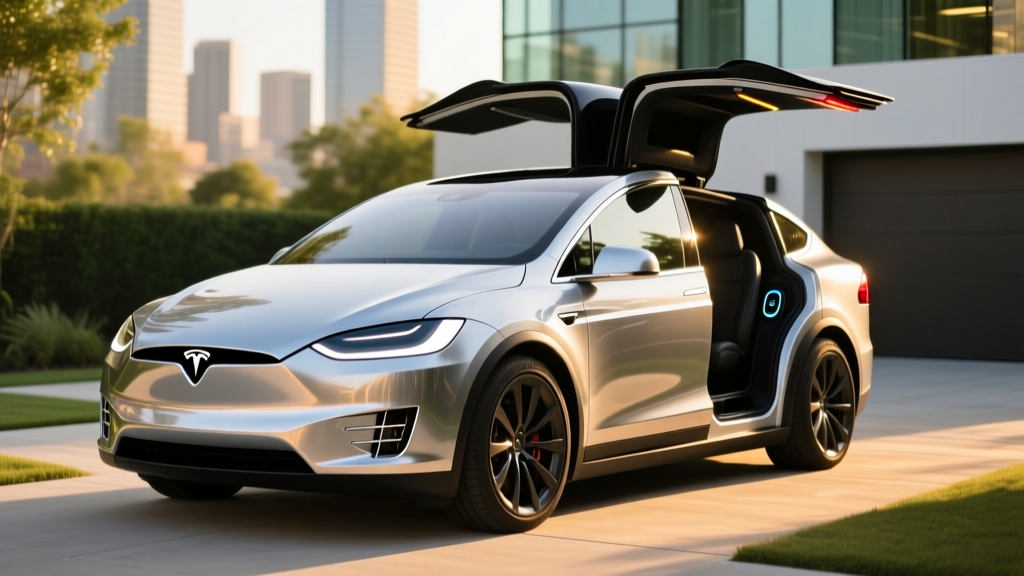
vs. Tesla Model X: The Gravity offers more third-row space, a more premium interior, and comparable range. The Model X wins on Supercharger network access (though Lucid has committed to NACS adapter compatibility) and over-the-air update cadence. The Falcon Wing doors are polarizing; the Gravity's conventional layout is more practical in tight garages.
vs. Rivian R1S: Rivian's three-row SUV is more off-road capable and starts at a lower price point (~$75,000 for Dual-Motor). The Gravity counters with significantly more range (440 vs. ~352 miles EPA for the R1S Max Pack), faster charging, and a more car-like on-road ride. The R1S is the adventure rig; the Gravity is the luxury grand tourer.
vs. BMW iX / Mercedes EQS SUV: Both German offerings seat five, not seven. If you need a third row, the Gravity stands nearly alone in the luxury EV space alongside the Model X and R1S. If you don't, the iX and EQS SUV offer more established dealer networks and stronger residual value track records.
Pros, Cons, and Who Should Buy
Pros
- Class-leading 440-mile EPA range (Grand Touring)
- 300 kW peak DC fast charging with 900V architecture
- Genuine three-row space with 110 cu ft max cargo
- 828 hp performance without sacrificing efficiency
- Heat pump standard for cold-weather range retention
- 8-year/100,000-mile battery & powertrain warranty
Cons
- No federal §30D tax credit (MSRP exceeds $80K cap)
- Limited service center footprint vs. BMW/Mercedes/Tesla
- Brand-new model — no long-term reliability data
- NACS adapter required for Tesla Supercharger access
- High starting price; Touring still ~$80K before options
- Residual values unproven for Lucid SUVs
Best for: Affluent families who need three rows, prioritize range above all else, have reliable home charging, and take regular 200–350-mile road trips. The Gravity Grand Touring is a long-distance cruiser that happens to seat seven.
Look elsewhere if: You need the federal tax credit to make the math work, you live far from a Lucid service center, or you need proven long-term reliability data before committing to a six-figure vehicle.
Frequently Asked Questions
What is the real-world range of the 2026 Lucid Gravity?
The EPA rates the Grand Touring at 440 miles, but real-world highway driving at 70–80 mph yields approximately 350–380 miles in mild weather. In freezing temperatures with cabin heating, expect 280–320 miles. City and suburban driving with regenerative braking recovers energy and can approach the EPA figure.
How fast does the Gravity charge at home and on the road?
On a 350 kW DC fast charger, the Grand Touring peaks near 300 kW and charges from 10–80% in approximately 22 minutes. At home on a 48-amp Level 2 charger (11.5 kW), it adds about 40 miles per hour, fully recharging overnight in roughly 10 hours. A hardwired 80-amp Level 2 station (19.2 kW) cuts that to about 6 hours.
Does the Lucid Gravity qualify for the $7,500 federal EV tax credit?
No. Under current IRS §30D rules, SUVs must have an MSRP at or below $80,000 to qualify. Both Gravity trims exceed this cap. Buyer income limits ($150K single / $300K joint) and battery sourcing requirements add further restrictions even for qualifying vehicles.
Is the Gravity worth buying over the Tesla Model X or Rivian R1S?
If maximum range and luxury ride quality are your priorities, the Gravity Grand Touring leads the segment at 440 miles EPA. The Model X wins on charging infrastructure breadth; the R1S wins on off-road capability and starting price. Test-drive all three — the Gravity's cabin refinement and efficiency are its strongest differentiators.
What is the Lucid Q4 production surge and does it affect delivery times?
Lucid has indicated that late-2026 production at its Casa Grande, Arizona facility will ramp significantly as Gravity volume increases alongside continued Air manufacturing. For buyers, this should translate to shorter build-to-delivery windows compared to the 6–12 month waits common during early Air production. Confirm current lead times directly with Lucid or an authorized studio.
What warranty covers the Gravity's battery?
Lucid provides an 8-year / 100,000-mile battery and powertrain warranty, which covers defects and capacity degradation below a specified threshold (typically 70% retained capacity, though verify exact terms in your purchase agreement). The basic vehicle warranty is 4 years / 50,000 miles.