Lucid's Pickup Play: What We Know So Far
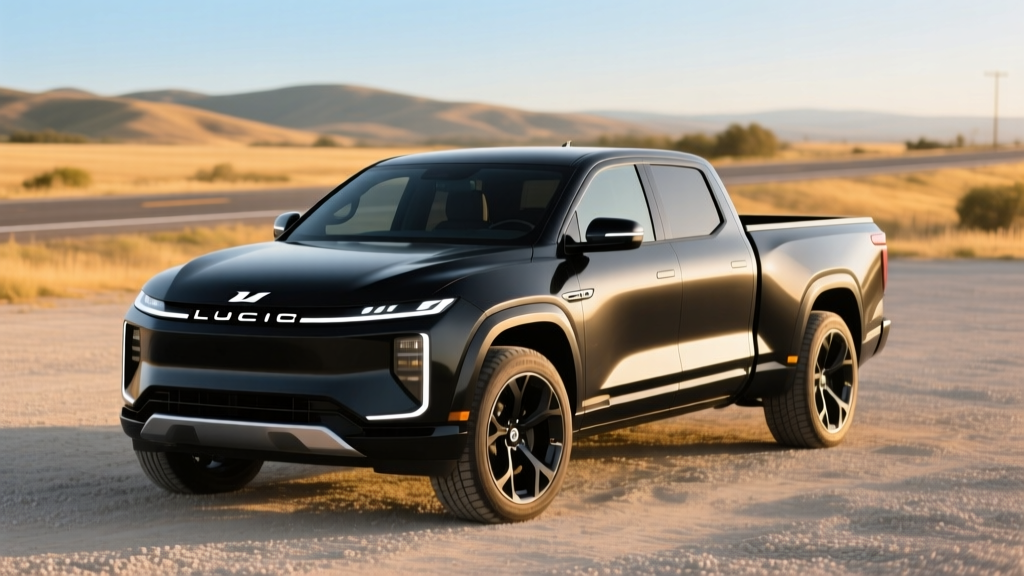
Lucid Motors has built its reputation on hyper-efficient luxury sedans. The Air Grand Touring remains one of the most range-dense EVs ever sold, and the Gravity SUV extended that architecture into three-row territory. Now, the brand is pivoting toward the truck segment with what enthusiasts and industry watchers are calling the Lucid pickup truck — a vehicle that, if it follows Lucid's engineering philosophy, could redefine what efficiency looks like in a full-size electric pickup.
As of early 2026, Lucid has not officially unveiled a production pickup or published finalized specifications. What follows is an analytical breakdown based on Lucid's confirmed platform capabilities, patent filings, executive statements, and the competitive landscape the truck will enter. All specs are projected or estimated until Lucid publishes official figures. We'll update this profile the moment confirmed data drops.
Projected Range and Efficiency
Lucid's core engineering advantage is efficiency — measured in miles per kWh. The Air Grand Touring achieves roughly 4.5 miles per kWh, and the Gravity SUV posts around 3.8 mi/kWh despite its larger mass. A pickup truck, with its higher drag coefficient and greater curb weight, will inevitably sacrifice some of that advantage.
| Attribute | Projected / Estimated |
|---|---|
| EPA Range (est.) | 340–400+ miles (depending on battery pack) |
| Battery Capacity (usable) | ~118–130 kWh (NMC chemistry) |
| Efficiency | ~3.2–3.6 mi/kWh (est. 95–110 MPGe combined) |
| Drivetrain | Dual-motor AWD (tri-motor possible for top trim) |
| Horsepower | 600–1,000+ hp (trim-dependent) |
| 0–60 mph | 3.0–4.5 seconds (est.) |
| Max DC Fast Charge | ~250–300 kW peak (900V+ architecture) |
| 10–80% DCFC Time | ~20–25 minutes (est.) |
| Level 2 Home Charging | ~19.2 kW / ~55–65 mi/hr |
| Towing Capacity | ~10,000–11,000 lbs (est.) |
| Base MSRP (est.) | $75,000–$85,000+ |
| Battery/Powertrain Warranty | 8 years / 100,000 miles (est., matching Lucid precedent) |
If the Lucid pickup achieves an EPA rating near 380 miles, expect ~300–330 miles on sustained highway driving at 70–75 mph. Towing a 7,000-lb trailer could cut range to 170–210 miles. In cold weather (below 32°F), plan for a 20–30% reduction, bringing effective range to roughly 250–290 miles. These figures align with observed performance in the Rivian R1T and Ford F-150 Lightning under similar conditions. Lucid's superior heat pump and motor efficiency may narrow the gap, but physics is physics — a truck-shaped vehicle moving through cold, dense air at highway speed will consume more energy.
Charging Speed and Infrastructure
Lucid's 900V+ electrical architecture is one of the highest-voltage platforms in production, enabling exceptionally fast DC charging. The Air sedan sustains over 200 kW well past 50% state of charge before tapering — a charge curve that outperforms most 800V competitors.
| Charge Level | Power | Rate / Time |
|---|---|---|
| Level 1 (120V household) | ~1.4 kW | ~4–5 mi/hr |
| Level 2 (240V, 48A) | ~11.5 kW | ~35–40 mi/hr |
| Level 2 (240V, 80A) | ~19.2 kW | ~55–65 mi/hr |
| DC Fast Charge (peak) | ~250–300 kW | 10–80% in ~20–25 min |
| DC Fast Charge (sustained avg.) | ~180–220 kW | ~180–200 mi in 15 min |
The key metric isn't peak kW — it's the sustained average across the 10–80% window. Lucid's charge curve historically holds strong through 60–70% SoC before tapering. If the pickup maintains this pattern, a 20-minute stop at a 350 kW Electrify America or Tesla Supercharger stall could add roughly 200 miles of range. For connector compatibility, Lucid has committed to adopting the NACS (Tesla) connector on future models, meaning native Supercharger access is expected — a significant advantage over CCS-only trucks.
At home, an 80-amp Level 2 circuit (requiring a 100-amp breaker) will fully replenish the pack overnight in roughly 6–7 hours. Most buyers will install a 48-amp hardwired unit on a 60-amp circuit for ~$1,200–$2,500 total installed cost, adding enough range overnight for all but the longest daily drives.
Performance, Platform, and Capability
Lucid's miniaturized drive units are among the smallest and lightest in the industry, producing high power from compact packages. This engineering philosophy gives Lucid flexibility: the same platform can deliver a 600-hp dual-motor workhorse or a 1,000+ hp tri-motor performance variant without radical packaging compromises.
Based on the Gravity SUV's powertrain lineup, expect the Lucid pickup truck to offer:
- Dual-motor AWD: ~600–800 hp, 0–60 in ~3.5–4.5 seconds
- Tri-motor AWD (performance trim): 1,000+ hp, 0–60 in under 3.0 seconds
- Regenerative braking: Multiple modes including one-pedal driving capability
- Air suspension: Adjustable ride height for off-road clearance and highway aero efficiency
Towing capacity is projected in the 10,000–11,000 lb range, competitive with the Rivian R1T (11,000 lb max) and exceeding the F-150 Lightning's 10,000 lb rating. Payload capacity should land around 1,800–2,200 lbs. A front trunk (frunk) is expected, though its volume will depend on how Lucid packages the front drive unit and HVAC components.
Technology and Driver Assistance
Lucid's glass canopy display — a curved, multi-panel screen spanning the dashboard — will likely carry over from the Air and Gravity. The Lucid UX infotainment system supports wireless Apple CarPlay and Android Auto, over-the-air updates, and native route planning with charge-stop integration.
On the driver-assistance front, Lucid offers DreamDrive Pro, a Level 2 SAE system combining adaptive cruise control, lane centering, and automated lane changes. It is not a hands-off, self-driving system. The driver must remain attentive with hands on the wheel at all times.
DreamDrive Pro is a SAE Level 2 driver-assistance system. It does NOT make the vehicle autonomous. You must keep your eyes on the road and hands on the steering wheel. It cannot navigate construction zones, respond to all traffic signals, or handle unmapped roads. Confusing Level 2 assist with self-driving capability is dangerous and illegal in most jurisdictions.
Lucid has signaled interest in developing a higher-capability hands-free highway system (akin to GM's Super Cruise or Ford's BlueCruise), but no confirmed timeline exists. Expect LiDAR-equipped variants to be available, given Lucid's existing sensor hardware.
Pricing, Trims, and Federal Tax Credit
Lucid positions itself as a premium brand. The Air starts near $70,000, and the Gravity begins around $80,000. A pickup truck will follow suit, likely slotting into the luxury truck segment alongside the Rivian R1T and GMC Hummer EV.
| Trim (Projected) | Est. Base MSRP | §30D Credit Eligibility |
|---|---|---|
| Pure (base, dual-motor) | ~$75,000–$80,000 | Subject to MSRP cap ($80,000 for trucks) + income + sourcing rules |
| Touring | ~$85,000–$95,000 | Likely exceeds MSRP cap — ineligible |
| Grand Touring / Sapphire | ~$105,000–$140,000+ | Exceeds MSRP cap — ineligible |
Under current IRS §30D rules, the federal clean vehicle credit offers up to $7,500, but eligibility depends on several factors:
- MSRP cap: Trucks (including pickups) must have a base MSRP at or below $80,000
- Buyer income cap: AGI must not exceed $150,000 (single) / $300,000 (joint)
- Battery sourcing: Critical minerals and battery components must meet escalating domestic-sourcing thresholds
- Final assembly: Vehicle must be assembled in North America
- Point-of-sale transfer: Eligible buyers can apply the credit at purchase, reducing out-of-pocket cost
Given Lucid's assembly in Casa Grande, Arizona, the final-assembly requirement is satisfied. However, battery-sourcing compliance is the wildcard — Lucid sources cells from multiple suppliers, and the critical-minerals threshold tightens annually. Only the base trim, if priced under $80,000, would clear the MSRP cap for trucks. Always verify eligibility with a tax professional and the latest fueleconomy.gov data before purchasing.
How It Compares: Lucid Pickup vs. the Competition
The electric pickup segment is maturing rapidly. Here's how the projected Lucid pickup stacks up against established rivals:
| Spec | Lucid Pickup (Proj.) | Rivian R1T (2025) | Tesla Cybertruck AWD | F-150 Lightning Ext. |
|---|---|---|---|---|
| EPA Range | ~380 mi | 342 mi (Max Pack) | 340 mi | 320 mi |
| Battery (usable) | ~125 kWh | 141 kWh | ~123 kWh | 131 kWh |
| Peak DCFC | ~280 kW | 220 kW | 250 kW | 150 kW |
| 0–60 mph | ~3.5s | 3.0s (Tri) | 3.9s | 3.8s |
| Towing | ~11,000 lb | 11,000 lb | 11,000 lb | 10,000 lb |
| Starting Price | ~$75,000 | $69,900 | $79,990 | $67,995 |
Lucid's projected advantage is efficiency and range per kWh. Where Rivian needs a massive 141 kWh pack to hit 342 miles, Lucid could deliver more range from a smaller, lighter battery — reducing cost, weight, and charging time. The trade-off: Lucid will likely charge a premium for that engineering, and its service-center network remains far smaller than Ford's or Tesla's.
Who Should Wait for the Lucid Pickup?
Wait for the Lucid pickup if:
- Range and charging speed are your top priorities for long-distance truck use
- You value sedan-like efficiency in a truck body and rarely tow max loads
- You want a luxury interior that rivals the Air's cabin quality
- You can defer your purchase 12–24 months and absorb potential pricing shifts
Buy a Rivian R1T, Cybertruck, or Lightning now if:
- You need a truck in the next 6 months
- Proven service infrastructure and parts availability matter to you
- You prioritize off-road capability (Rivian) or work-truck utility (Lightning) over range
- You want to lock in current tax-credit eligibility before rules change
Pros and Cons (Projected)
✓ Projected Pros
- Class-leading efficiency and range per kWh
- 900V+ architecture enables ultra-fast DC charging
- Luxury interior quality exceeding typical truck segment
- NACS connector for native Supercharger access
- Compact drive units maximize interior/cargo packaging
- Arizona assembly qualifies for North American final-assembly rule
✗ Projected Cons
- Not yet available — production timeline unconfirmed
- Likely priced above $75K, limiting tax-credit eligibility
- Limited service-center footprint vs. Ford/Tesla
- Towing will drastically reduce range (true for all EV trucks)
- Off-road capability unproven vs. Rivian's established system
- Brand-new model risk: first-year production quality unknown
Frequently Asked Questions
What is the real-world range of the Lucid pickup truck?
Based on Lucid's efficiency track record, an EPA rating of 350–400 miles is plausible. In real-world highway driving at 70+ mph, expect roughly 280–340 miles. Towing a heavy trailer will cut that to 170–220 miles. Cold weather (below freezing) typically reduces EV range by 20–30%, so winter highway range could dip to 240–280 miles. These are projections — Lucid has not published official EPA data for the pickup.
How fast does it charge at home and on the road?
Projected peak DC fast charging is 250–300 kW, with a 10–80% session taking approximately 20–25 minutes. At home on a 48-amp Level 2 charger (240V), you'll add roughly 35–40 miles per hour of charging. An 80-amp circuit pushes that to 55–65 mi/hr, enabling a full overnight charge in about 6–7 hours.
Does the Lucid pickup qualify for the $7,500 federal EV tax credit?
Possibly, but only the base trim — and only if its MSRP stays at or below the $80,000 truck cap under IRS §30D rules. The buyer must also meet income limits ($150K single / $300K joint AGI), and the battery must satisfy critical-mineral and component-sourcing thresholds. Higher trims (Touring, Grand Touring) will almost certainly exceed the MSRP cap. Consult a tax professional before relying on credit eligibility.
Is the Lucid pickup worth waiting for vs. buying a Rivian R1T or Cybertruck?
If maximum range and charging speed are your priorities and you don't need a truck immediately, the Lucid pickup is worth monitoring. Lucid's efficiency engineering could deliver meaningfully more miles per kWh than competitors. However, if you need proven off-road chops, established service infrastructure, or immediate availability, the Rivian R1T and F-150 Lightning are strong, purchasable alternatives today.
When will the Lucid pickup truck be available?
Lucid has not announced a firm production start date. Industry estimates place it in the 2027–2028 timeframe, though this could shift based on Lucid's production capacity at its AMP-1 factory in Arizona and capital allocation priorities. Lucid's CEO has confirmed a pickup is in the product roadmap, but no official unveiling date has been set as of early 2026.
What battery chemistry will it use?
Lucid is expected to use NMC (nickel manganese cobalt) chemistry for the pickup, consistent with its existing vehicles. NMC offers higher energy density than LFP, which is critical for maximizing range in a heavy, high-drag vehicle. LFP could appear in a future base trim for cost reduction, but this is unconfirmed.
This article reflects information available as of early 2026. Specifications are projected and subject to change. Always verify final specs, pricing, and tax-credit eligibility with Lucid Motors, the IRS, and fueleconomy.gov before making a purchase decision.