The Short Answer
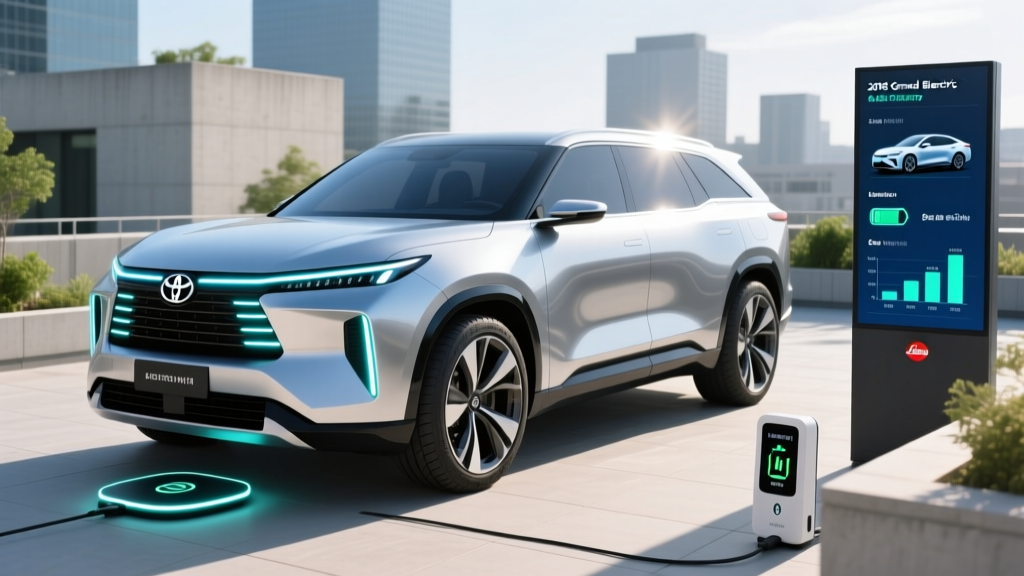
As of the 2026 model year, Toyota does not sell a fully electric Grand Highlander. There is no battery-electric (BEV) version in showrooms, and Toyota has not announced a production timeline for one. What Toyota does offer is the Grand Highlander Hybrid (standard hybrid powertrain, up to 36 MPG combined) and the Grand Highlander Hybrid MAX (performance-tuned hybrid, 362 hp, ~27 MPG combined). If you specifically need a three-row electric SUV today, competitors like the Kia EV9, Hyundai Ioniq 9, and Rivian R1S are the closest alternatives. Below, we break down exactly what Toyota offers, what it costs to own, and how to decide whether to wait, buy hybrid, or cross-shop an EV.
Why There's No Grand Highlander Electric (Yet)
Toyota has been notably cautious about full battery-electric vehicles, prioritizing a multi-pathway strategy that includes hybrids, plug-in hybrids, hydrogen fuel cells, and BEVs. The Grand Highlander, introduced for the 2024 model year, was engineered on Toyota's TNGA-K platform — which supports hybrid and plug-in hybrid layouts but was not designed as a dedicated EV skateboard.
Toyota's first dedicated three-row electric SUV is expected to arrive around the 2027–2028 timeframe, likely built on the company's next-generation battery-electric platform with improved energy density and faster charging. Until then, shoppers searching for a "grand highlander electric" will need to choose between the existing hybrid models or look at competitors.
This isn't necessarily a disadvantage. For many three-row SUV buyers — especially those without reliable home charging access or those who regularly tow or drive long highway routes in cold climates — a hybrid remains the more practical electrified option in 2026.
2026 Grand Highlander Hybrid vs. Hybrid MAX: Specs & Pricing
Toyota offers two hybrid powertrains for the Grand Highlander. Here's how they compare with exact figures:
| Spec | Grand Highlander Hybrid | Grand Highlander Hybrid MAX |
|---|---|---|
| Powertrain | 2.5L 4-cyl + 3 electric motors (AWD) | 2.4L turbo 4-cyl + electric motor (AWD) |
| Total System Horsepower | 245 hp | 362 hp |
| 0–60 mph | ~7.8 seconds | ~5.6 seconds |
| EPA Fuel Economy (Combined) | 36 MPG | 27 MPG |
| EPA City / Highway | 37 / 34 MPG | 26 / 27 MPG |
| Drivetrain | Electronic AWD (eAWD) | Direct AWD |
| Towing Capacity | 3,500 lbs | 5,000 lbs |
| Seating | 7 or 8 passengers | 7 passengers |
| Cargo (Behind 3rd Row) | 20.6 cu ft | 20.6 cu ft |
| Starting MSRP (2026) | ~$46,000 | ~$55,000 |
| Federal Tax Credit (§30D) | Not eligible (not a BEV or PHEV) | Not eligible |
| Warranty (Powertrain) | 5 years / 60,000 miles | 5 years / 60,000 miles |
| Hybrid Battery Warranty | 10 years / 150,000 miles | 10 years / 150,000 miles |
Key takeaway: The standard Hybrid is the efficiency play — 36 MPG combined in a three-row SUV is exceptional. The Hybrid MAX trades fuel economy for acceleration and towing, targeting buyers who want near-V6 power without a traditional V6.
Source: fueleconomy.gov (EPA estimates) and Toyota.com manufacturer specifications.
Grand Highlander Hybrid vs. Three-Row Electric SUVs: The Real Comparison
If you're cross-shopping a Grand Highlander against electric three-row SUVs, you're likely considering the Kia EV9, Hyundai Ioniq 9, or Rivian R1S. Here's how the numbers stack up:
| Metric | Grand Highlander Hybrid | Kia EV9 (AWD LR) | Rivian R1S (Dual Motor) |
|---|---|---|---|
| Powertrain Type | Hybrid (HEV) | BEV | BEV |
| EPA Range / Fuel Economy | 36 MPG (~580 mi range on 16 gal) | 280 miles | 352 miles (Standard+) |
| Energy/Fuel Cost per Mile | ~$0.10/mi (gas at $3.50/gal) | ~$0.04/mi (home charging at $0.13/kWh) | ~$0.04/mi |
| Starting MSRP | ~$46,000 | ~$55,000 | ~$75,900 |
| Federal Tax Credit (§30D) | $0 | Up to $7,500 (verify eligibility) | Up to $7,500 (verify eligibility) |
| Home Charging Required? | No (gas station) | Strongly recommended | Strongly recommended |
| DC Fast Charge (10–80%) | N/A | ~24 min (peak 236 kW) | ~21 min (peak 220 kW) |
| Towing Capacity | 3,500 lbs | 5,000 lbs | 7,700 lbs |
| Third-Row Usability | Excellent | Good | Tight |
The real-world trade-off is clear: Electric SUVs offer lower per-mile fuel costs, instant torque, and eligibility for the federal tax credit. But the Grand Highlander Hybrid doesn't require any charging infrastructure, has a total range exceeding 550 miles, costs $9,000–$30,000 less upfront, and has a third row that actually accommodates adults on long trips.
Total Ownership Cost: Hybrid vs. Electric vs. Gas
Let's run a realistic 5-year / 75,000-mile ownership cost comparison. We're comparing the Grand Highlander Hybrid against the Kia EV9 and a conventional gas-only three-row SUV (Toyota Highlander V6 gas, ~24 MPG combined, ~$42,000 MSRP).
| Cost Category (5 yr / 75k mi) | Grand Highlander Hybrid | Kia EV9 AWD LR | Gas 3-Row SUV (~24 MPG) |
|---|---|---|---|
| Purchase Price (MSRP) | $46,000 | $55,000 | $42,000 |
| Federal Tax Credit | $0 | –$7,500* | $0 |
| Net Purchase | $46,000 | $47,500 | $42,000 |
| Fuel/Energy Cost | $7,290 (gas) | $3,120 (electricity) | $10,938 (gas) |
| Maintenance | ~$2,800 | ~$1,400 | ~$3,500 |
| Insurance (avg) | ~$9,500 | ~$11,200 | ~$9,000 |
| Estimated Depreciation | ~$18,400 | ~$22,500 | ~$18,900 |
| 5-Year Total Cost | ~$83,990 | ~$85,720 | ~$84,338 |
*Federal tax credit eligibility under IRS §30D depends on buyer income caps ($150k single / $300k joint), vehicle MSRP caps ($80k for SUVs), and battery critical-mineral/component sourcing requirements. Verify current-year rules at irs.gov. Credit can be transferred to the dealer at point of sale as of 2024+.
The hybrid and gas options are neck-and-neck on total cost, while the EV9 edges slightly higher due to steeper depreciation and insurance premiums — though its fuel savings are substantial. Over 7–10 years, the EV's lower operating costs would likely tip the scales in its favor, assuming you have home charging access.
Real-World Ownership: What First-Time Buyers Must Know
Whether you go hybrid or cross-shop an electric three-row SUV, these factors will determine your satisfaction far more than any spec sheet:
Home Charging Access
If you're considering an EV like the Kia EV9 or Rivian R1S, Level 2 home charging is nearly mandatory for practical daily use. A Level 2 charger (240V, 32–48 amps) adds 20–30 miles of range per hour and fully replenishes a large battery pack overnight. Expect $800–$2,500 for a quality Level 2 unit plus professional installation, and potentially $2,000–$5,000 more if your home needs a panel upgrade from 100A to 200A service. Public DC fast charging works for road trips but is too expensive ($0.30–$0.60/kWh) and time-consuming for daily use.
The Grand Highlander Hybrid? Fill up at any gas station in 5 minutes. No charging infrastructure required.
Climate and Range Reality
Electric SUVs lose 20–35% of their EPA-rated range in sustained sub-freezing temperatures due to battery chemistry limitations and cabin heating demands. A 280-mile EV9 might deliver 190–210 miles on a cold winter highway run. The Grand Highlander Hybrid's fuel economy drops modestly in cold weather (expect ~32–33 MPG instead of 36) but never faces range cliff anxiety.
Driving Patterns
If 90% of your driving is under 50 miles per day with home charging, an EV excels. If you regularly drive 300+ mile highway routes, tow a trailer, or live in a rural area with sparse charging infrastructure, the hybrid's flexibility is a genuine advantage.
Common Misconceptions About the Grand Highlander and Electrification
| Myth | Fact |
|---|---|
| "The Grand Highlander Hybrid needs to be plugged in." | No. It's a conventional hybrid (HEV), not a plug-in. It charges its small battery through regenerative braking and the gas engine. You never plug it in. |
| "Hybrid batteries need expensive replacement." | Toyota covers the hybrid battery for 10 years / 150,000 miles. Real-world data shows Toyota hybrid batteries lasting 200,000+ miles with minimal degradation. Replacement, if needed out of warranty, runs $3,000–$5,000 — not the $15,000+ figure often cited for EV packs. |
| "The Hybrid MAX is a plug-in hybrid." | No. Hybrid MAX is a performance-oriented conventional hybrid. It cannot drive on electric-only power for meaningful distances and does not plug in. |
| "A Grand Highlander EV is coming in 2026." | Toyota has not announced a BEV Grand Highlander. The company's next dedicated electric SUV platform is expected around 2027–2028, but no specific Grand Highlander EV has been confirmed. |
| "EVs always cost less to own than hybrids." | Not necessarily. Higher purchase prices, insurance premiums, and faster depreciation can offset fuel savings — especially over shorter ownership periods (3–5 years). The math depends on your mileage, electricity rate, and how long you keep the vehicle. |
Decision Framework: Should You Buy, Cross-Shop, or Wait?
Choose the Grand Highlander Hybrid If:
- You don't have access to home Level 2 charging (apartment, street parking, no garage)
- You regularly tow (the Hybrid MAX handles 5,000 lbs)
- You drive 300+ mile highway routes where charging infrastructure is sparse
- You live in a cold climate where EV range loss is a real concern
- You want a usable adult-sized third row without spending $55,000+
- You plan to own the vehicle 7+ years and want proven Toyota hybrid reliability
Choose a Three-Row EV (Kia EV9, Ioniq 9, Rivian R1S) If:
- You have (or can install) Level 2 home charging
- Your daily driving is under 100 miles round-trip
- You want the lowest per-mile fuel cost (~$0.04/mi vs. ~$0.10/mi for hybrid)
- You qualify for the federal §30D tax credit (check income, MSRP, and sourcing rules)
- You want instant torque and a quieter, vibration-free driving experience
- You have a solar panel system that effectively reduces your charging cost to near zero
Wait for a Grand Highlander Electric If:
- You're committed to the Toyota brand and want a BEV specifically from them
- Your current vehicle is functional and you can wait until 2027–2028
- You want Toyota's hybrid reliability reputation paired with a dedicated EV platform
- You're comfortable that specs, pricing, and tax-credit rules may differ significantly from today's market
Federal Tax Credit Note: Hybrids Don't Qualify
Under the current IRS §30D clean vehicle credit, conventional hybrids (HEVs) like the Grand Highlander Hybrid and Hybrid MAX do not qualify for any federal tax credit. Only battery-electric vehicles (BEVs) and plug-in hybrids (PHEVs) with sufficient battery capacity are eligible — and even then, eligibility depends on:
- Buyer income caps: $150,000 (single), $225,000 (head of household), $300,000 (joint filing)
- MSRP caps: $80,000 for SUVs, $55,000 for sedans
- Battery sourcing: Critical minerals and battery components must meet increasing domestic/free-trade-partner sourcing thresholds each year
- Point-of-sale transfer: As of 2024, eligible buyers can transfer the credit to the dealer for an upfront price reduction
Always verify current eligibility at fueleconomy.gov and consult a tax professional before making a purchase decision based on credit assumptions.
Frequently Asked Questions
Will Toyota make a fully electric Grand Highlander?
Toyota has not officially announced a battery-electric Grand Highlander. The company is developing next-generation EV platforms expected around 2027–2028, and a three-row electric SUV is widely anticipated, but no specific Grand Highlander EV model has been confirmed as of early 2026.
Does the Grand Highlander Hybrid plug in?
No. Both the standard Hybrid and Hybrid MAX are conventional hybrids (HEVs). They charge their small battery packs through regenerative braking and the gasoline engine. You never plug them in. Toyota does not currently offer a plug-in hybrid (PHEV) Grand Highlander.
How many miles can the Grand Highlander Hybrid go on a full tank?
With its 16.0-gallon fuel tank and 36 MPG combined EPA rating, the standard Grand Highlander Hybrid can travel approximately 576 miles per tank under mixed driving. Real-world highway driving at 75+ mph will yield closer to 34 MPG and ~544 miles. Cold weather and heavy cargo reduce this further.
Is the Grand Highlander Hybrid good for towing?
The standard Hybrid is rated for 3,500 lbs — adequate for a small utility trailer or a pair of jet skis. The Hybrid MAX bumps that to 5,000 lbs, which covers most boat trailers and small campers. Neither matches the towing capacity of body-on-frame SUVs or electric rivals like the Rivian R1S (7,700 lbs).
What's the best three-row electric SUV if I don't want to wait for Toyota?
The Kia EV9 (280-mile range, ~$55,000 starting, eligible for tax credit) offers the best combination of interior space, charging speed, and value in 2026. The Hyundai Ioniq 9 is a close sibling with similar specs. For premium buyers, the Rivian R1S delivers superior range and towing but starts above $75,000.
How reliable is the Toyota hybrid system?
Toyota's hybrid Synergy Drive system has over 25 years of real-world data behind it (since the 1997 Prius). The hybrid battery is warranted for 10 years / 150,000 miles, and widespread owner reports show these batteries lasting well beyond 200,000 miles. The system has fewer wear items than a conventional gas powertrain — no starter motor, no alternator, no traditional transmission, and regenerative braking extends pad life significantly.