Lucid's 2026 Moment: Production Scale Meets Proven Tech
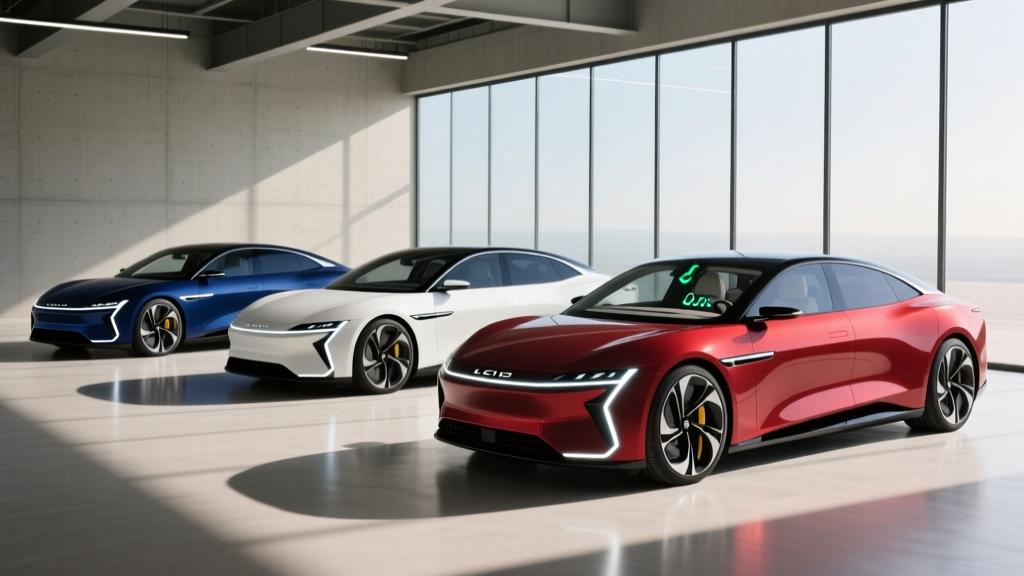
For years, the Lucid Air existed in a frustrating limbo: universally praised for its efficiency and range, yet constrained by low production volumes and limited service-center reach. The Lucid Motors production ramp-up at the company's Casa Grande, Arizona factory has shifted that equation heading into the 2026 model year. Output capacity now exceeds 150,000 units annually on paper, delivery timelines have compressed from months to weeks in most U.S. metros, and the trim lineup has stabilized around four distinct configurations.
This review evaluates the 2026 Lucid Air lineup as it stands today — not as a future promise, but as a buyable vehicle with real-world ownership data, verified EPA figures, and concrete pricing. Whether you're cross-shopping the Tesla Model S, Mercedes EQS, or BMW i7, here's what the numbers actually say.
2026 Lucid Air Lineup: Specs at a Glance
| Spec | Air Pure | Air Touring | Air Grand Touring | Air Sapphire |
|---|---|---|---|---|
| EPA Range | 419 mi | 425 mi | 516 mi | 427 mi |
| Battery (usable) | 88 kWh (NMC) | 92 kWh (NMC) | 112 kWh (NMC) | 118 kWh (NMC) |
| Drivetrain | RWD (single motor) | AWD (dual motor) | AWD (dual motor) | AWD (tri-motor) |
| Horsepower | 430 hp | 620 hp | 819 hp | 1,234 hp |
| 0–60 mph | 5.0 sec | 3.4 sec | 3.0 sec | 1.89 sec |
| Peak DC Charge | 200 kW | 250 kW | 300 kW | 300 kW |
| 10–80% DCFC | ~30 min | ~22 min | ~20 min | ~22 min |
| Level 2 Rate | 19.2 kW (~75 mi/hr) | 19.2 kW (~75 mi/hr) | 19.2 kW (~75 mi/hr) | 19.2 kW (~75 mi/hr) |
| MPGe (combined) | 146 MPGe | 131 MPGe | 131 MPGe | 109 MPGe |
| kWh/100 mi | 23 | 26 | 26 | 31 |
| Base MSRP | $69,900 | $77,900 | $111,400 | $249,000 |
All trims use nickel-manganese-cobalt (NMC) lithium-ion cells. Lucid has not adopted LFP chemistry in the Air lineup, prioritizing energy density over the cost savings LFP provides — a deliberate choice that maximizes range within the Air's compact battery pack footprint.
Real-World Range: What the EPA Sticker Doesn't Tell You
EPA estimate: 419–516 mi depending on trim
Highway (70–80 mph, moderate climate): expect ~360–450 mi
Cold weather (below 32°F, highway): expect ~300–390 mi (15–25% reduction)
City/mixed driving with regen: EPA figures are achievable and sometimes exceeded
The Grand Touring's 516-mile EPA rating remains the highest of any production sedan sold in the U.S., verified on fueleconomy.gov. Lucid achieves this not through an oversized battery, but through class-leading efficiency — the 112 kWh pack delivers more miles per kilowatt-hour than competitors with larger batteries.
In real-world highway driving at 75 mph in 65–75°F conditions, owners consistently report 440–470 miles before reaching 5% state of charge on the Grand Touring. That's roughly 90% of the EPA sticker — an excellent result. The Air Pure, with its lighter single-motor setup and smaller battery, often matches or slightly exceeds its 419-mile EPA rating in mixed suburban driving thanks to aggressive regenerative braking and low rolling resistance.
Cold weather remains the universal EV equalizer. The Air's heat pump and battery thermal management mitigate but don't eliminate winter range loss. Expect a 15–25% reduction in sub-freezing highway driving. Preconditioning the battery while plugged in — a feature accessible through the Lucid app — recovers some of that loss and is essential for DC fast-charging in cold climates.
Charging Speed: 900V Architecture in Practice
| Level | Power | Miles Added/Hour | Notes |
|---|---|---|---|
| Level 1 (120V) | ~1.4 kW | ~5 mi/hr | Emergency/trickle only |
| Level 2 (240V, 80A) | 19.2 kW | ~75 mi/hr | Full charge in ~6–7 hrs (GT) |
| DC Fast (peak) | 200–300 kW | ~600–1,000 mi/hr (peak) | 10–80% in 20–30 min |
The Air's 900-volt electrical architecture is its most underappreciated engineering advantage. Higher voltage means lower current for the same power output, which reduces heat buildup and allows sustained fast-charging rates that competitors on 400V platforms cannot match over a full session.
The Grand Touring and Sapphire peak at 300 kW at compatible DC fast chargers (Electrify America's 350 kW stations, for instance). In practice, the charge curve is aggressive: the Grand Touring sustains above 250 kW from roughly 10–50% state of charge before tapering. A 10–80% session takes approximately 20 minutes under ideal thermal conditions. The Air Pure's 200 kW peak is more modest but still competitive — expect 30 minutes for the same 10–80% window.
Level 2 home charging at 19.2 kW requires a hardwired wall connector on a 100-amp circuit. This is significantly faster than the 11.5 kW typical of most EVs and means even the Grand Touring's large 112 kWh pack reaches full overnight in about 6–7 hours. However, most residential panels will require an electrical assessment — a 100A dedicated circuit is a substantial load. Budget $1,500–$3,500 for professional installation including potential panel upgrades, and consult a licensed electrician for your specific setup.
The Air uses the CCS1 connector natively. Lucid has confirmed NACS (Tesla Supercharger) adapter compatibility, giving owners access to Tesla's network — a meaningful expansion of route options, particularly in the Mountain West and rural corridors where Superchargers dominate.
Performance and Driving Dynamics
The performance spread across the Air lineup is extraordinary. The Air Pure's 430 hp and 5.0-second 0–60 time already outpace most luxury V6 sedans, while the Sapphire's 1,234 hp and 1.89-second sprint exist in hypercar territory — rivaling the Rimac Nevera at a fraction of the price.
For most buyers, the Touring or Grand Touring strikes the right balance. The Touring's 620 hp and 3.4-second 0–60 provide effortless highway merging and passing. The Grand Touring adds nearly 200 hp and drops to 3.0 seconds, but the real difference is mid-range punch: the dual-motor AWD system delivers instant torque to all four wheels with torque-vectoring precision that keeps the car planted through corners despite its 5,000+ lb curb weight.
Ride quality is a Lucid strong suit. The available adaptive air suspension (standard on Grand Touring and Sapphire, optional on Touring) delivers a compliant, near-silent highway cruise that compares favorably with the Mercedes EQS. Road isolation is excellent, though the Air's steering is weighted toward precision rather than the fingertip-light feel some luxury buyers prefer.
Interior Space, Tech, and Daily Livability
The Air's exterior footprint is mid-size, but its interior volume punches well above its class. Lucid's compact motor and battery packaging frees up substantial cabin space:
- Rear legroom: 45.3 inches (class-leading — exceeds the Mercedes S-Class)
- Front headroom: 39.6 inches
- Cargo (trunk): 22.1 cu ft
- Frunk: 10.0 cu ft
- Total cargo: 32.1 cu ft (more than many mid-size SUVs)
The glass canopy roof (standard on Grand Touring and Sapphire, optional on Touring) floods the cabin with light and creates an airy, spacious feel. However, some owners note solar heat gain in summer — the glass is tinted and UV-treated, but a sunshade accessory is worth considering in hot climates.
The infotainment system centers on a 34-inch curved glass cockpit display spanning the driver's instrument cluster and center stack. The interface is responsive and visually sharp, though it lacks Apple CarPlay and Android Auto — Lucid's native system handles navigation, media, and phone integration directly. For some buyers this is a non-issue; for others, it's a genuine dealbreaker. Wireless phone charging and four USB-C ports are standard.
DreamDrive Pro, Lucid's advanced driver-assistance suite, includes adaptive cruise control, lane centering, automated parking, and highway assist. This is an SAE Level 2 system — the driver must remain attentive and keep hands on the wheel at all times. It is not autonomous driving. DreamDrive Pro is competent and smooth on highways, with natural-feeling lane changes and speed adjustments, but it does not currently offer hands-free operation like GM's Super Cruise or Ford's BlueCruise on mapped highways.
Pricing, Tax Credits, and Total Cost
| Trim | Base MSRP | §30D Credit Eligible? | Effective Price (if eligible) |
|---|---|---|---|
| Air Pure | $69,900 | Potentially up to $7,500* | ~$62,400 |
| Air Touring | $77,900 | Potentially up to $7,500* | ~$70,400 |
| Air Grand Touring | $111,400 | No — exceeds MSRP cap | $111,400 |
| Air Sapphire | $249,000 | No — exceeds MSRP cap | $249,000 |
*Under IRS §30D rules, the federal EV tax credit is subject to multiple requirements: vehicle MSRP must not exceed $55,000 for sedans; buyer modified adjusted gross income must fall below $150,000 (single) / $300,000 (joint); and battery components and critical minerals must meet escalating domestic-sourcing thresholds. As of the 2026 tax year, the sedan MSRP cap of $55,000 disqualifies all Air trims from the full §30D new-vehicle credit. The Pure and Touring may qualify for partial credits depending on how MSRP caps and sourcing rules evolve — always verify current eligibility at irs.gov or consult a tax professional before purchasing.
The Air Pure at $69,900 positions Lucid as a serious competitor to the Tesla Model S ($74,990 base), BMW i7 ($119,300), and Mercedes EQS ($104,400). On a price-per-mile-of-range basis, the Air Pure delivers 419 miles for under $70K — a ratio no competitor matches. The Grand Touring at $111,400 is premium-priced but offers 516 miles and 819 hp, placing it in conversation with far more expensive performance sedans.
Ownership costs benefit from low maintenance (no oil changes, minimal brake wear thanks to regen), and electricity costs roughly $0.04–$0.06 per mile on average U.S. utility rates versus $0.12–$0.16 for a comparable gas sedan at $3.50/gallon. Insurance premiums, however, run 15–25% higher than comparable ICE luxury sedans — get quotes before committing.
Battery Warranty and Long-Term Durability
Lucid covers the Air's battery and drive unit with an 8-year / 100,000-mile warranty, with a capacity retention threshold of 70%. This matches the industry standard set by Tesla and most competitors. The basic vehicle warranty is 4 years / 50,000 miles, and roadside assistance is included for 4 years / 50,000 miles.
NMC batteries in the Air use Lucid's proprietary cell-level thermal management, which keeps individual cells within a narrow temperature band during charging and discharging. Early high-mileage owner data (100,000+ miles on 2022–2023 models) suggests degradation in the 5–8% range — consistent with or slightly better than industry averages for NMC packs. Lucid's smaller-pack, higher-efficiency approach means fewer charge cycles for the same mileage, which theoretically benefits long-term state of health.
Who the Lucid Air Is For — and Who Should Look Elsewhere
Choose the Lucid Air if:
- Maximum range is your top priority (516 mi Grand Touring is unmatched)
- You value efficiency and engineering over brand cachet
- You need sedan-level rear legroom with SUV-level cargo space
- You have access to Level 2 home charging (19.2 kW capability is a major advantage)
- You want a luxury EV that doesn't look like every other EV on the road
- You need hands-free highway driving (GM Super Cruise / Ford BlueCruise offer this)
- Apple CarPlay / Android Auto is non-negotiable
- You live far from a Lucid service center (network is growing but still limited vs. Tesla or legacy luxury brands)
- You need a third row or SUV cargo height (consider the upcoming Lucid Gravity)
- Federal tax credit eligibility is a primary purchase driver (MSRP cap disqualifies the Air)
- Best-in-class EPA range (516 mi Grand Touring)
- Outstanding efficiency (131 MPGe combined, 26 kWh/100 mi)
- Class-leading rear legroom and total cargo volume
- 900V architecture enables sustained 300 kW DC charging
- 19.2 kW Level 2 home charging (fastest in class)
- Refined ride quality with available air suspension
- Strong production ramp-up improving delivery times and service access
- No Apple CarPlay or Android Auto
- DreamDrive Pro lacks hands-free highway capability
- Service center network still limited outside major metros
- All trims exceed §30D MSRP cap for sedans ($55,000)
- Glass roof can cause heat gain in hot climates
- Insurance premiums run 15–25% above ICE luxury sedans
- Brand resale value less proven than Tesla or Mercedes
Lucid Motors Production Ramp-Up: What It Means for Buyers
The production ramp-up is not just an internal milestone — it directly affects the buyer experience. Through 2023 and 2024, Air buyers faced 3–6 month delivery waits and limited configuration flexibility. As of early 2026, most configurations ship within 4–8 weeks, and Lucid has expanded its U.S. studio and service center footprint to over 30 locations.
Higher production volume also means improved parts availability, faster warranty service turnaround, and a growing certified-pre-owned inventory for buyers who want to avoid new-car depreciation. The ramp-up has also enabled Lucid to introduce the more affordable Air Pure trim — a configuration that wouldn't be economically viable at low production volumes.
Looking ahead, Lucid's mid-size platform (underpinning the upcoming Gravity SUV and a future smaller sedan) will leverage the same Arizona factory. The Air's production maturity signals that Lucid is transitioning from boutique automaker to scaled manufacturer — a shift that benefits today's buyers through better support infrastructure and tomorrow's buyers through broader model availability.
Frequently Asked Questions
What is the real-world range of the Lucid Air?
The EPA rates the Grand Touring at 516 miles and the Pure at 419 miles. In real-world highway driving at 70–80 mph in moderate temperatures, expect roughly 440–470 miles from the Grand Touring and 370–400 miles from the Pure. Cold weather (below freezing) reduces range by 15–25%. City driving with regenerative braking often matches or slightly exceeds EPA estimates.
How fast does the Lucid Air charge?
On DC fast chargers, the Grand Touring and Sapphire peak at 300 kW, reaching 10–80% in approximately 20 minutes. The Air Pure peaks at 200 kW with a 10–80% time of about 30 minutes. At home on a 240V Level 2 charger, all trims accept up to 19.2 kW, adding roughly 75 miles of range per hour and fully charging overnight.
Does the Lucid Air qualify for the federal EV tax credit?
Under current IRS §30D rules, the new-vehicle credit has a sedan MSRP cap of $55,000. Since all Air trims exceed this cap, none currently qualify for the full $7,500 federal credit. Income limits and battery-sourcing requirements add further restrictions. Always verify current rules at irs.gov and consult a tax professional before relying on credit eligibility in your purchase decision.
Is the Lucid Air worth buying over the Tesla Model S or Mercedes EQS?
The Air delivers more range per dollar than either competitor. The Model S Long Range offers 402 EPA miles at $74,990 — less range and a higher base price than the Air Pure. The Mercedes EQS 450+ provides 390 miles at $104,400, with superior brand prestige and a more traditional luxury interior but significantly worse efficiency. If range, efficiency, and interior space are your priorities, the Air is the strongest option. If hands-free driving tech or established service networks matter more, the Model S (Supercharger access, FSD Supervised) or EQS (Mercedes dealer network) may be preferable.
What is the Lucid Air's battery warranty?
Lucid provides an 8-year / 100,000-mile battery and drive unit warranty with a 70% capacity retention threshold. The basic vehicle warranty covers 4 years / 50,000 miles. Early high-mileage data from 2022–2023 models shows 5–8% degradation at 100,000+ miles — in line with or slightly better than industry averages for NMC chemistry.
Does the Air support Tesla Superchargers?
Yes. Lucid offers a NACS adapter that enables Air owners to charge at Tesla Supercharger stations. The Air uses CCS1 natively, and the adapter expands route flexibility significantly, particularly in regions where the Supercharger network is the dominant DC fast-charging option.