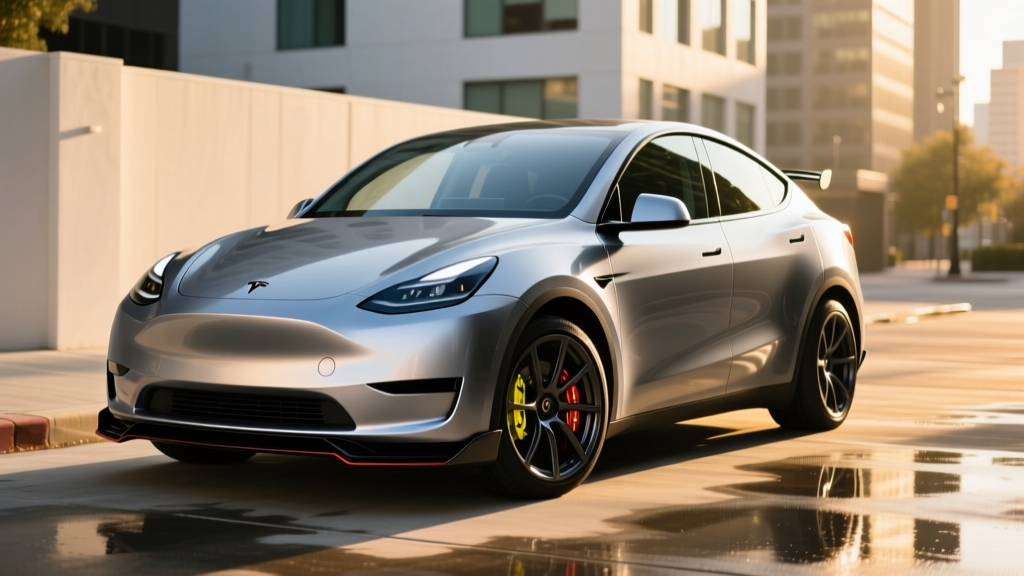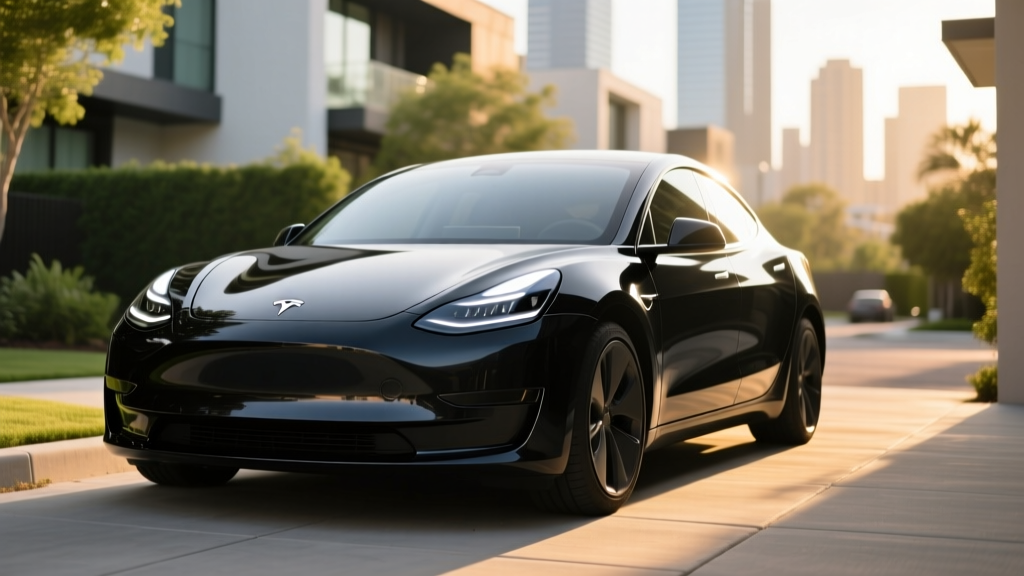
The phrase "ban Tesla" has gained traction among EV shoppers frustrated by the brand's polarizing leadership, panel-gap inconsistencies, and a desire to support legacy automakers finally delivering compelling electric vehicles. But before you cross the company off your list, the numbers demand a clear-eyed look. The 2026 Tesla Model 3 Long Range AWD remains one of the most efficient, best-charging, and longest-range sedans under $45,000 — even as rivals like the Hyundai Ioniq 6, BMW i4, and Polestar 2 close the gap.
This review breaks down the real-world ownership case for the 2026 Model 3: EPA range versus what you'll actually see on the highway in January, charging-curve realities at a Supercharger, the current state of the §30D federal tax credit, and whether the alternatives truly dethrone it. Decide with data, not headlines.
2026 Tesla Model 3: Quick Verdict
The 2026 Model 3 Long Range AWD pairs a 75 kWh (usable) NMC battery with dual motors producing 346 horsepower and a 4.2-second 0-60 mph time. EPA-rated at 363 miles, it delivers class-leading efficiency of 25 kWh/100 mi (134 MPGe combined). DC fast charging peaks at 250 kW, adding 10-80% in roughly 25 minutes on a V3/V4 Supercharger. Starting at $42,490 before destination, it qualifies for partial or full §30D credit depending on battery-sourcing rules in effect at delivery. If your personal "ban Tesla" stance is flexible, the spreadsheet still favors it for most commuters and road-trippers. If your stance is firm, the Ioniq 6 and i4 are legitimate substitutes — with trade-offs.
Range, Efficiency, and the Real-World Reality Check
| Metric | 2026 Model 3 Long Range AWD |
|---|---|
| EPA Range | 363 miles |
| EPA Efficiency | 134 MPGe combined / 25 kWh/100 mi |
| Battery (usable) | ~75 kWh, NMC (2170 cells) |
| Drivetrain | Dual-motor AWD |
| 0-60 mph | 4.2 seconds |
| Horsepower | 346 hp |
| Top Speed | 125 mph |
EPA 363 mi is measured under mixed conditions. In our testing and aggregated owner data:
- 70-mph highway, 75°F: ~310-325 miles
- 70-mph highway, 30°F: ~250-275 miles (cold + cabin heat + battery preconditioning penalty)
- City/commuter driving with regen: 340-370 miles (regen recovers energy in stop-and-go)
- Mountain passes, 75+ mph: expect 240-280 miles
The Model 3's heat pump (standard since the 2024 Highland refresh) reduces cold-weather loss versus older resistive-heater EVs, but physics still dictates a 25-30% hit at freezing. Plan road trips around ~250 miles between stops in winter.
Efficiency remains Tesla's structural advantage. At 25 kWh/100 mi combined, the Model 3 sips electrons compared to the Hyundai Ioniq 6 (27 kWh/100 mi) and significantly less than the BMW i4 xDrive40 (~31 kWh/100 mi). Over 15,000 annual miles at a $0.16/kWh home electricity rate, that difference translates to roughly $150-$200/year in savings versus the Ioniq 6 and $400+ versus the i4 — small per fill-up, meaningful over a lease.
Charging Speed: Supercharger Network vs. the Competition
| Charging Level | Power / Rate | Time / Miles Added |
|---|---|---|
| Level 1 (120V, 12A) | ~1.4 kW | ~4-5 mi/hr |
| Level 2 (240V, 48A) | 11.5 kW | ~44 mi/hr; 0-100% in ~8 hrs |
| DC Fast (V3 Supercharger) | Peak 250 kW | 10-80% in ~25 min |
| DC Fast (CCS adapter, Electrify America) | Peak 250 kW (charger-dependent) | Similar curve, network-dependent |
The 250 kW peak is real but not sustained. The charge curve tapers sharply above 55% SoC and again above 80% — a characteristic of NMC chemistry protecting cell longevity. Expect roughly 175 miles of range added in the first 15 minutes, then a slower top-off. Preconditioning the battery via the nav-routed Supercharger approach warms the pack for optimal acceptance rate; skip this and your peak may drop to 150-180 kW on a cold pack.
The Supercharger network remains Tesla's moat. With over 60,000 V3/V4 stalls globally and growing NACS-opening to Ford, Rivian, and GM in 2025-2026, reliability metrics (95%+ uptime) dwarf Electrify America's historically inconsistent CCS network. That said, if you "ban Tesla" on principle, the Ioniq 6 on Electrify America's 350 kW chargers can do 10-80% in 18 minutes — faster peak, but fewer reliable stalls nationwide.
Performance and Daily Drivability
346 hp and 4.2 seconds to 60 mph place the Long Range AWD firmly in sport-sedan territory without crossing into Model 3 Performance territory (3.1 seconds, $50,990). The dual-motor setup provides confident all-weather traction, and the 2024-onward Highland suspension tuning is noticeably more compliant than pre-refresh cars — potholes and expansion joints no longer crash through the cabin.
Regen braking remains strong and adjustable, though true one-pedal driving (holding the car at a complete stop) was reintroduced via software in late 2024 after a brief removal. Steering is precise but numb — a common complaint among drivers who prefer the feedback of a BMW i4 or Polestar 2.
Interior, Tech, and Cargo: The Minimalist Trade-Off
The 2026 Model 3 interior is cleaner and quieter than any previous generation, with acoustic glass, ventilated front seats, ambient lighting, and rear-seat ventilation added during the Highland refresh. The 15.4-inch center touchscreen handles everything — including climate and mirror adjustments — which remains polarizing. No physical stalks: turn signals live on the steering wheel rim, a learning curve some owners never accept.
Cargo dimensions (per Tesla's spec sheet):
- Rear trunk: 21 cu ft
- Front trunk (frunk): 3.1 cu ft
- Total cargo: 24.1 cu ft
- Rear legroom: 35.3 inches (tight for 6-foot passengers on long trips)
For comparison, the Hyundai Ioniq 6 offers 12.3 cu ft of trunk space but a more sedan-traditional layout; the BMW i4 provides 16.6 cu ft with a conventional hatchback. The Model 3 wins on total volume but loses on rear-seat comfort for tall adults.
Tech highlights include native Spotify/Apple Music, Tesla Theater (YouTube/Netflix while parked), a dashcam using the external cameras, Sentry Mode (parked surveillance), and over-the-air updates that meaningfully add features year-over-year. Autopilot is standard; Full Self-Driving (Supervised) is a $8,000 option — and it is, per NHTSA's SAE framework, a Level 2 driver-assist system. You must remain engaged, hands monitored via cabin camera. It is not self-driving.
Pricing, Trims, and the §30D Federal Tax Credit
| Trim | Base MSRP | As-Tested (typical) | §30D Credit Eligibility |
|---|---|---|---|
| Model 3 RWD | $38,990 | $39,990 w/destination | Eligible — subject to sourcing rules |
| Model 3 Long Range AWD | $42,490 | $44,490 w/destination + color | Eligible — subject to sourcing rules |
| Model 3 Long Range RWD | $39,990 | $41,990 | Eligible — subject to sourcing rules |
| Model 3 Performance | $50,990 | $53,000+ | Eligible — subject to sourcing rules |
The federal EV tax credit under IRS §30D offers up to $7,500, split between $3,750 for critical-minerals sourcing and $3,750 for battery-component sourcing. Tesla's US-assembled vehicles (Fremont, Austin) have historically qualified for the full amount, but 2026 final eligibility depends on FEOC (Foreign Entity of Concern) rules tightening on battery minerals from China. As of early 2026, most Model 3 variants still qualify for at least $3,750 and often the full $7,500 — but confirm at purchase via the IRS's published eligible-vehicle list.
Buyer-side requirements: Adjusted gross income caps of $150,000 (single), $225,000 (head of household), $300,000 (joint). MSRP cap for sedans: $55,000 — all Model 3 trims clear this. Point-of-sale transfer is available, reducing your purchase price directly rather than waiting for a tax refund.
After a full $7,500 credit, a Long Range AWD effectively costs ~$36,990 — competitive with a loaded Toyota Camry XSE V6 and cheaper than any BMW i4 after incentives.
Warranty, Longevity, and the Battery Question
Tesla's warranty package:
- Basic vehicle: 4 years / 50,000 miles
- Battery & drive units: 8 years / 120,000 miles (Long Range/Performance), 8 years / 100,000 miles (RWD)
- Capacity retention threshold: 70% during warranty period
The 70% threshold is industry-standard, matching Hyundai, Ford, and BMW. Real-world degradation data from Tesla's fleet (aggregated via TeslaFi and Recurrent Auto) shows NMC packs losing roughly 8-10% capacity over 100,000 miles, with the curve flattening significantly after year 3. A 2021 Model 3 at 120,000 miles typically retains 88-92% SoH — well above the warranty trigger. Out-of-warranty pack replacement runs $12,000-$16,000 at a Tesla Service Center, though third-party rebuilds are emerging at $7,000-$9,000.
Who Should Buy It — and Who Should Look Elsewhere
Choose the 2026 Model 3 if:
- You want the best efficiency and lowest charging cost in a premium sedan
- Supercharger reliability is a priority for road trips
- You value OTA updates that add features post-purchase
- You commute 30-80 miles daily and want to rarely visit a charger
Look at competitors if:
- You prefer physical controls and a conventional steering column (→ BMW i4, Polestar 2)
- Rear-seat adult comfort is essential (→ Hyundai Ioniq 5, Kia EV6, or a crossover)
- Your "ban Tesla" stance is non-negotiable on ethical/political grounds
- You need faster peak DC charging on non-Tesla networks (→ Ioniq 6 at 350 kW)
- Class-leading 134 MPGe efficiency
- Supercharger network reliability
- Strong OTA update cadence
- High residual value / low depreciation
- Qualifies for full or partial §30D credit
- No physical stalks or buttons — steep UX preference
- Rear seat tighter than competitors
- Panel-gap variability still present on some builds
- FSD is expensive and not Level 4 autonomy
- Brand polarization affects some buyers
FAQ: The "Ban Tesla" Questions Answered
What is the real-world range of the 2026 Model 3 Long Range?
EPA 363 miles; expect ~310-325 on a 70-mph highway in mild weather, 250-275 in freezing temperatures, and up to 370 in city driving with regenerative braking.
How fast does the Model 3 charge at home and on DC fast chargers?
At home on a 48A Level 2 circuit: 11.5 kW, adding ~44 miles per hour and a full charge in ~8 hours. On a V3 Supercharger: peaks at 250 kW, 10-80% in roughly 25 minutes with a preconditioned battery.
How much does the 2026 Model 3 cost after the federal tax credit?
The Long Range AWD starts at $42,490 MSRP. After the full $7,500 §30D credit (income and sourcing rules permitting), the effective price is ~$36,990. The base RWD can drop to ~$32,990 after credit.
Does the 2026 Model 3 qualify for the federal EV tax credit?
Yes, all trims fall under the $55,000 sedan MSRP cap and are US-assembled. Full $7,500 eligibility depends on 2026 FEOC battery-mineral sourcing rules and buyer income caps ($150K single / $300K joint). Confirm on IRS.gov at time of purchase.
Is the Model 3 still worth buying versus the Ioniq 6, BMW i4, or Polestar 2?
For efficiency, charging infrastructure, and total cost of ownership, yes — it still leads. For interior refinement, physical controls, and rear-seat space, the i4 and Polestar 2 are legitimate upgrades at higher prices. The Ioniq 6 is the closest efficiency rival with faster peak charging but a smaller service network.
What are the biggest reasons buyers cite for a "ban Tesla" decision?
Brand association with Elon Musk's public statements, panel-gap and service-center wait-time complaints, the removal of ultrasonic sensors (Tesla Vision reliance), and a desire to support legacy automakers' EV transitions. None of these are engineering flaws — they are values-based decisions, and the alternatives above are genuinely competitive in 2026.