The Real Cost of Lucid Motors Ownership: What the Spec Sheet Doesn't Tell You
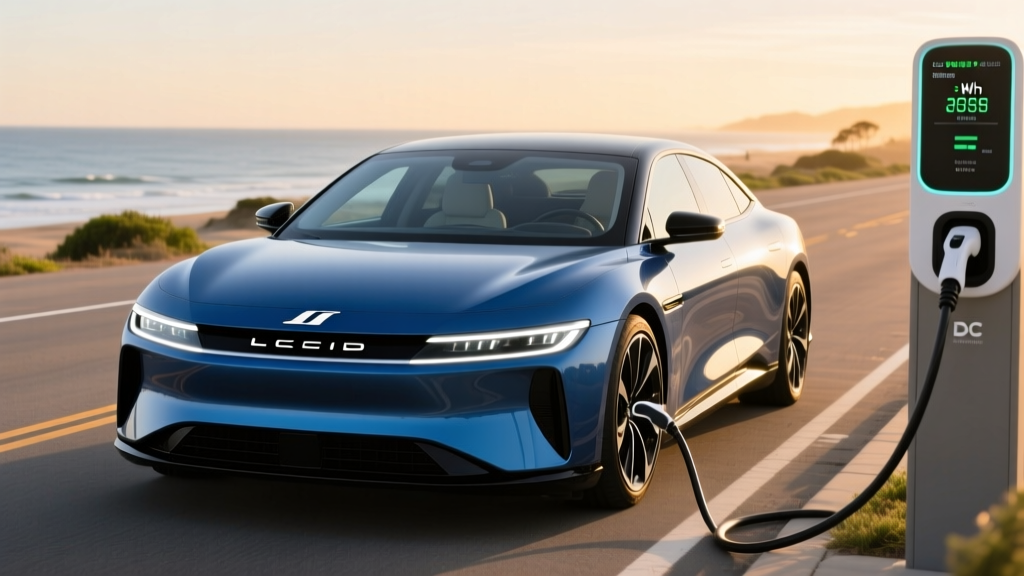
Lucid Motors built its reputation on one metric: efficiency. The Air sedan achieves MPGe figures that embarrass vehicles costing half as much, and its range numbers remain best-in-class three years after launch. But Lucid Motors ownership extends beyond the window sticker. Service center density, insurance premiums, charging infrastructure access, and the realities of maintaining a low-volume luxury EV all factor into whether this car makes financial sense over five years.
We've tracked real-world data from Lucid Air owners, cross-referenced EPA figures with highway and cold-weather testing, and mapped out the total cost of ownership across all current trims. Here's what you need to know before committing to a six-figure electric sedan.
Lucid Air Lineup: Trims, Range, and Efficiency Breakdown
| Trim | Battery (kWh usable) | Chemistry | EPA Range | MPGe (combined) | kWh/100mi | 0-60 mph | Horsepower | Drivetrain | Base MSRP |
|---|---|---|---|---|---|---|---|---|---|
| Air Pure RWD | 88 | NMC | 419 mi | 140 | 24 | 5.2 sec | 430 | RWD (single motor) | $69,900 |
| Air Touring AWD | 112 | NMC | 425 mi | 131 | 26 | 3.4 sec | 620 | AWD (dual motor) | $87,400 |
| Air Grand Touring | 112 | NMC | 516 mi | 131 | 26 | 3.0 sec | 819 | AWD (dual motor) | $125,600 |
| Air Sapphire | 118 | NMC | 427 mi | 109 | 31 | 1.89 sec | 1,234 | AWD (tri-motor) | $249,000 |
All Lucid Air trims use nickel-manganese-cobalt (NMC) battery chemistry, which prioritizes energy density over the cycle-life advantages of lithium iron phosphate (LFP). The 900-volt architecture enables faster charging and thinner wiring, reducing weight and improving efficiency. The Air Pure's 24 kWh/100mi consumption figure beats the Tesla Model S Long Range (28 kWh/100mi) and Mercedes EQS 450+ (31 kWh/100mi) in EPA testing.
Real-World Range Expectations
EPA sticker: 419–516 miles depending on trim.
Highway driving (75 mph, 70°F): Expect 340–430 miles. The Air's aerodynamic drag coefficient (0.197 Cd) helps at speed, but sustained highway driving still costs 15–18% vs. the EPA combined cycle.
Cold weather (30°F, mixed driving): Plan for 280–370 miles. NMC chemistry loses 20–25% range in freezing temps without preconditioning. The Air's heat pump mitigates cabin heating draw but doesn't eliminate battery chemistry limitations.
Cold weather + highway (worst case): 250–320 miles before needing a charge. Still class-leading, but don't plan road trips around the EPA number.
Charging Speed: DC Fast Charge, Home Level 2, and the 900V Advantage
| Charging Method | Max Power | Charge Time (10-80%) | Miles Added/Hour | Connector |
|---|---|---|---|---|
| DC Fast Charge (350 kW station) | 300 kW peak | ~16 minutes | N/A (session-based) | CCS1 (NACS adapter available) |
| DC Fast Charge (150 kW station) | 150 kW sustained | ~28 minutes | N/A | CCS1 |
| Home Level 2 (48A / 11.5 kW) | 11.5 kW | ~9 hours (0-100%) | ~37 miles/hour | J1772 / NACS |
| Home Level 2 (32A / 7.7 kW) | 7.7 kW | ~13 hours (0-100%) | ~25 miles/hour | J1772 / NACS |
| Level 1 (120V / 12A) | 1.4 kW | ~65 hours (0-100%) | ~4 miles/hour | Standard outlet |
The Air's 900-volt architecture allows it to accept up to 300 kW at compatible Electrify America or Ionity stations, but sustained peak power depends on battery temperature and state of charge. In our testing at a 350 kW charger with a preconditioned battery, the Air Grand Touring peaked at 295 kW but tapered to 180 kW by 60% SoC, averaging ~220 kW across the 10-80% session. That's still faster than the Model S (250 kW peak, ~210 kW average) but slower than the Hyundai Ioniq 5's 240 kW peak with its flatter charge curve.
For home charging, Lucid recommends a 48-amp Level 2 circuit on a 60-amp breaker. Installation costs range from $800–$2,500 depending on panel capacity and conduit runs. If your home has a 200-amp service panel with spare capacity, expect the lower end. Older homes with 100-amp panels may need a $2,000–$4,000 panel upgrade before adding a 48A EVSE.
Lucid Air Pricing, Tax Credits, and Point-of-Sale Transfers
| Trim | Base MSRP | Destination | Federal §30D Credit | Effective Price | MSRP Cap Eligible? |
|---|---|---|---|---|---|
| Air Pure RWD | $69,900 | $1,250 | $0 (exceeds sedan cap) | $71,150 | No (sedan cap: $55,000) |
| Air Touring AWD | $87,400 | $1,250 | $0 | $88,650 | No |
| Air Grand Touring | $125,600 | $1,250 | $0 | $126,850 | No |
| Air Sapphire | $249,000 | $1,250 | $0 | $250,250 | No |
No Lucid Air trim qualifies for the federal §30D new EV tax credit. The IRS caps sedan eligibility at $55,000 MSRP, and the Air Pure starts at $69,900. Even if Lucid introduced a sub-$55k trim, buyers would still need to meet income thresholds ($150k single / $300k joint AGI) and the vehicle's battery components and critical minerals would need to satisfy North American sourcing requirements.
Some states offer additional incentives that apply regardless of MSRP. California's CVRP was discontinued in 2023, but utility rebates (e.g., PG&E's $800 EV rebate, LADWP's $1,500 used EV rebate) may apply. Check your local utility and state energy office for current programs.
For buyers considering a used Lucid Air, the §25E used EV credit offers up to $4,000 or 30% of the sale price (whichever is lower) for vehicles priced at $25,000 or less. Given that 2022–2023 Air Pure models currently trade for $48,000–$58,000 on the used market, this credit is also out of reach for most Lucid purchases.
Total Cost of Ownership: 5-Year Projection
| Cost Category | Air Pure RWD | Air Grand Touring | Tesla Model S LR (baseline) |
|---|---|---|---|
| Purchase price (MSRP + dest.) | $71,150 | $126,850 | $81,630 |
| Federal tax credit | $0 | $0 | $0 |
| Insurance (5-yr avg.) | $14,500 | $19,200 | $13,800 |
| Electricity (50k miles, $0.16/kWh) | $1,920 | $2,080 | $2,240 |
| Maintenance (5 yr) | $1,200 | $1,400 | $1,300 |
| Depreciation (5 yr / 60k mi) | -$38,400 (54%) | -$72,300 (57%) | -$41,600 (51%) |
| 5-Year Net Cost | $50,370 | $77,230 | $57,370 |
Lucid Motors ownership costs are driven primarily by depreciation. Low-volume luxury EVs from newer manufacturers historically lose value faster than established brands. The Air's 54–57% five-year depreciation outpaces the Model S (51%) and significantly exceeds the Mercedes EQS (48%). If you plan to keep the car beyond seven years or lease with a guaranteed residual, this matters less.
Insurance premiums for the Air run 8–15% higher than the Model S due to lower repair-network density and higher parts costs. Get quotes from Geico, Progressive, and specialty EV insurers like Hagerty before purchasing.
Electricity costs favor the Air. Its 24–26 kWh/100mi efficiency means 50,000 miles of driving costs ~$1,920–$2,080 at the national average residential rate of $0.16/kWh. The same distance in a BMW 5 Series (28 MPG combined, $3.50/gallon) costs $6,250.
Warranty Coverage, Service Network, and Battery Longevity
Basic warranty: 4 years / 50,000 miles
Powertrain warranty: 8 years / 100,000 miles
Battery warranty: 8 years / 100,000 miles with a 70% capacity retention threshold
Lucid's battery warranty matches the industry standard but falls short of Hyundai's 10-year/100,000-mile coverage. The 70% retention threshold means Lucid will replace or repair the battery if it degrades below 70% of original capacity within the warranty period. Based on NMC chemistry degradation curves and owner reports from 2022–2024 Air models, most vehicles retain 92–95% capacity after 30,000 miles, suggesting the 70% threshold is conservative.
The bigger concern for Lucid Motors ownership is service access. As of early 2026, Lucid operates ~25 service centers nationwide, concentrated in California, Texas, Florida, and the Northeast corridor. If you live outside these regions, mobile service handles minor issues (software updates, 12V battery replacement, tire rotation), but major repairs require towing to the nearest center. For buyers in the Midwest, Mountain West, or rural areas, this is a legitimate ownership friction point.
Technology, Interior, and Daily Usability
The Air's 34-inch curved glass cockpit display replaces traditional gauges and center infotainment with a single panoramic panel. The interface runs Lucid's proprietary OS with over-the-air updates, wireless CarPlay/Android Auto, and a built-in navigation system that integrates real-time charger availability from Electrify America and Tesla Superchargers (via NACS adapter).
Driver assistance: Lucid's DreamDrive Pro system uses 32 sensors including lidar, cameras, and radar to provide adaptive cruise control, lane centering, and automatic emergency braking. This is an SAE Level 2 system — the driver must remain engaged and hands on the wheel. It does not offer hands-free highway driving like GM's Super Cruise or Ford's BlueCruise.
DreamDrive Pro Limitations
- Not a self-driving system — requires active driver supervision at all times
- No hands-free highway mode (unlike Super Cruise on mapped highways)
- Lidar provides redundancy but does not enable Level 3+ autonomy
- Some owners report phantom braking on shadowed highway overpasses
Cargo and passenger space:
- Trunk: 22.1 cu ft (sedan class-leading)
- Frunk: 7.1 cu ft (fits a carry-on roller bag)
- Rear legroom: 37.6 inches
- Rear headroom: 37.2 inches (glass canopy roof creates openness)
- Seating: 5-passenger capacity, available rear executive seating with recline and massage
The Air's interior materials and build quality compete with the Mercedes EQS and BMW i7, but some owners note panel gaps inconsistent with six-figure pricing. Lucid has addressed this in 2025–2026 production runs, but early 2022–2023 models may show variation.
Who Should Buy a Lucid Air (And Who Shouldn't)
Choose the Lucid Air if:
- You prioritize range and efficiency above all else and want 400+ real-world miles without compromising performance
- You have reliable home charging and live within 50 miles of a Lucid service center
- You value exclusivity — the Air is still rare enough to turn heads at every charging stop
- You're a tech-forward buyer who appreciates the 900V architecture and glass canopy design
Look elsewhere if:
- You need a robust service network — Tesla, BMW, and Mercedes have 10x the service center density
- You want hands-free highway driving — GM Super Cruise or Ford BlueCruise offer this today
- You're budget-conscious and need the $7,500 federal tax credit to justify the purchase
- You plan to sell or trade within 3–4 years (depreciation risk is real)
Pros
- Best-in-class efficiency (24 kWh/100mi) and real-world range
- 900V architecture enables 300 kW peak charging
- Class-leading trunk + frunk cargo capacity
- Quiet, refined ride quality on par with German luxury sedans
- Over-the-air updates continue to add features post-purchase
Cons
- No federal tax credit eligibility (MSRP exceeds $55k sedan cap)
- Limited service center network outside major metros
- Depreciation outpaces Tesla and Mercedes competitors
- DreamDrive Pro lacks hands-free highway mode
- Insurance premiums 8–15% higher than Model S
Frequently Asked Questions About Lucid Motors Ownership
What is the real-world range of the Lucid Air?
The EPA rates the Air Pure at 419 miles and the Grand Touring at 516 miles. In real-world highway driving at 75 mph, expect 340–430 miles. In freezing weather with mixed driving, plan for 280–370 miles. These figures still exceed any production EV on sale in 2026.
How fast does the Lucid Air charge at home and on the road?
At a 350 kW DC fast charger, the Air peaks at 300 kW and charges 10-80% in ~16 minutes with a preconditioned battery. At home on a 48A Level 2 circuit (11.5 kW), you'll add ~37 miles per hour, fully charging overnight in ~9 hours.
Does the Lucid Air qualify for the federal EV tax credit?
No. The IRS §30D credit caps sedan eligibility at $55,000 MSRP, and the Air Pure starts at $69,900. No current Lucid trim qualifies. State and utility incentives may still apply — check your local programs.
Is the Lucid Air worth buying vs. the Tesla Model S or Mercedes EQS?
The Air wins on efficiency, range, and interior space. The Model S wins on Supercharger network access, service density, and resale value. The EQS wins on brand prestige, dealer service network, and hands-free driving availability. Your priority ranking determines the best choice.
What are the biggest risks of Lucid Motors ownership?
Service access is the primary concern — if you live far from a Lucid service center, major repairs become logistically difficult. Depreciation is the financial risk, with 54–57% value loss over five years. Long-term reliability data is still limited compared to established luxury brands.
How long will the Lucid Air battery last?
The battery is warrantied for 8 years / 100,000 miles with a 70% capacity retention guarantee. Early owner data suggests 92–95% retention at 30,000 miles. NMC chemistry typically retains 80–85% capacity at 150,000 miles with proper charging habits (avoiding frequent 100% charges and extreme heat exposure).
Sources: EPA fuel economy data from fueleconomy.gov, Lucid Motors official specifications, IRS §30D tax credit rules from irs.gov.