What Is the Lucid Gravity X Concept?
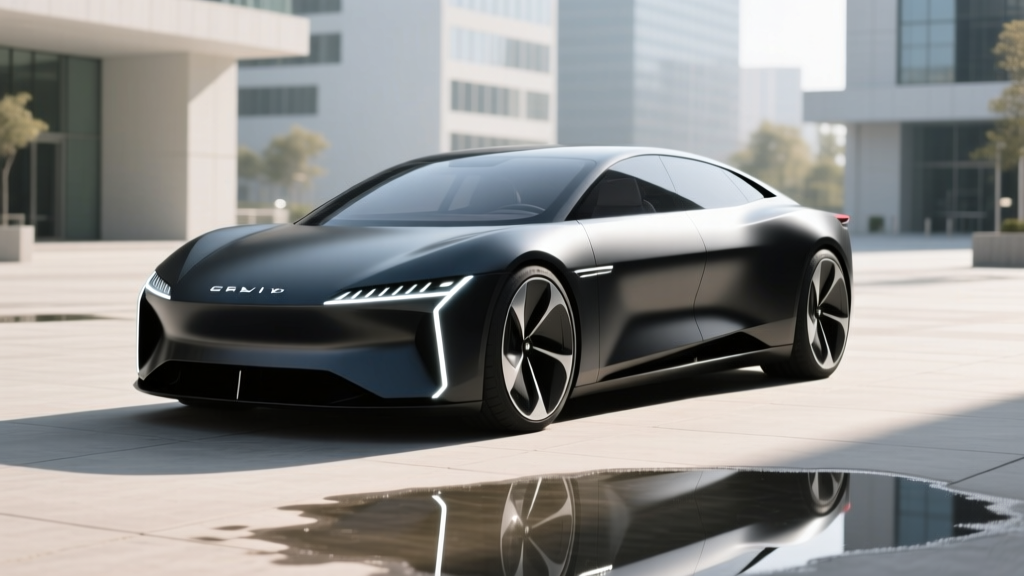
The Lucid Gravity X concept represents the next evolution of Lucid Motors' luxury electric SUV lineup, building on the production Lucid Gravity that began deliveries in late 2024. First teased at industry events and expanded upon through 2025, the Gravity X variant signals a more rugged, adventure-oriented interpretation of the three-row electric SUV — one designed to compete directly with the Rivian R1S, Tesla Model X, and upcoming electric offerings from legacy automakers.
As of early 2026, the Lucid Gravity X remains in concept and pre-production status. Lucid has confirmed that production-intent details will be finalized later in the year, with customer deliveries anticipated for late 2026 or early 2027. All specifications below are drawn from Lucid's official announcements, concept-stage disclosures, and extrapolations from the production Gravity platform. Treat every figure as preliminary and subject to change.
Preliminary Specifications at a Glance
| Specification | Lucid Gravity X (Estimated) |
|---|---|
| EPA Range (est.) | 400–440 miles (Grand Touring AWD) |
| Battery Capacity | ~112 kWh usable (NMC chemistry) |
| Drivetrain | Dual-motor AWD |
| Horsepower | ~800+ hp (Grand Touring) |
| 0–60 mph | ~3.5 seconds (est.) |
| Max DC Fast Charge | 300+ kW (900V architecture) |
| 10–80% DC Charge | ~20 minutes (est.) |
| Level 2 Home Charge | 19.2 kW / ~70 mi/hr |
| Efficiency (est.) | ~110 MPGe / ~30 kWh/100 mi |
| Seating | 6 or 7 passengers (configurable) |
| Cargo Volume (est.) | ~42 cu ft (behind 3rd row) / ~110 cu ft (max) |
| Base MSRP (est.) | $85,000–$95,000 (Grand Touring) |
| Battery Warranty | 8 years / 100,000 miles (expected) |
Range and Efficiency: What to Expect in the Real World
Lucid has built its reputation on class-leading efficiency — the Air sedan consistently posts some of the highest MPGe figures in the EV market, and the production Gravity is expected to follow suit. For the Gravity X concept, Lucid targets an EPA-estimated range of 400 to 440 miles for the Grand Touring AWD configuration, depending on wheel size and equipment choices.
EPA Estimate: 400–440 miles (preliminary)
Real-World Highway (70–80 mph): Expect approximately 320–360 miles. The Gravity X's taller, boxier profile and all-terrain tires (if equipped) increase aerodynamic drag versus the Air sedan.
Cold Weather (below 32°F): Plan for 280–330 miles. NMC chemistry loses roughly 20–30% range in sustained freezing temperatures without consistent preconditioning.
Towing (est. 6,000+ lb capacity): Range could drop to 180–220 miles under heavy towing loads at highway speeds.
Lucid's 900-volt electrical architecture is central to this efficiency story. Higher voltage means lower current for the same power output, which reduces resistive losses in the wiring and motors. The result is an SUV that sips electricity more frugally than competitors with similar mass — a critical advantage when you're hauling a family of seven plus cargo across state lines.
Efficiency is projected at approximately 110 MPGe combined, or roughly 30 kWh per 100 miles. For context, the Rivian R1S (Dual-Motor) sits at about 73 MPGe combined and 43 kWh/100 mi. That gap translates directly into charging time and cost: the Gravity X should require fewer stops and less money per mile on road trips.
Charging Speed: DC Fast and Home Level 2
Charging speed is where Lucid's 900V platform truly pays dividends. The Gravity X concept inherits the architecture that allows the Air to accept some of the fastest DC charge rates available from a production vehicle.
| Charge Level | Power / Rate | Miles Added | Notes |
|---|---|---|---|
| Level 1 (120V) | 1.4 kW | ~4 mi/hr | Emergency trickle only |
| Level 2 (240V, 48A) | 11.5 kW | ~42 mi/hr | Standard home wall connector |
| Level 2 (240V, 80A) | 19.2 kW | ~70 mi/hr | Requires 100A circuit; full overnight refill in ~6 hrs |
| DC Fast (peak) | 300+ kW | ~200 mi in 10 min | Requires 350 kW+ station (e.g., Electrify America, IONNA) |
| DC 10–80% | — | — | ~20 minutes (est. with preconditioning) |
Understanding the charge curve: Peak rates of 300+ kW are not sustained for the entire session. Like all EVs, the Gravity X will taper charge speed as the battery fills — typically dropping significantly above 55–60% State of Charge (SoC). The 10–80% time of approximately 20 minutes assumes you arrive at the charger with a preconditioned battery (the navigation system warms the pack en route) and use a station capable of delivering at least 350 kW.
On a typical 150 kW DC fast charger — still common across much of the U.S. — expect 10–80% in roughly 35–40 minutes. Always precondition the battery by navigating to the charger through the vehicle's built-in navigation; skipping this step can add 10–15 minutes to your session in cold weather.
The Gravity X is expected to ship with a NACS (North American Charging Standard) port, granting native access to Tesla's Supercharger network — now the largest and most reliable DC fast-charging network in North America. CCS adapter compatibility will likely be included for Electrify America, EVgo, and other networks.
Performance and Drivetrain
The Lucid Gravity X concept is positioned as the performance-adventure variant of the Gravity lineup. Dual-motor all-wheel drive is standard, with the Grand Touring trim expected to produce over 800 horsepower. Lucid's compact, high-output electric motors (the same family used in the Air Sapphire) deliver instantaneous torque without the lag of a turbocharged engine.
The estimated 0–60 mph time of approximately 3.5 seconds places the Gravity X firmly in sports-sedan territory despite its three-row SUV form factor. For comparison, the Rivian R1S Quad-Motor hits 60 mph in about 3.0 seconds but carries a heavier battery pack and lower efficiency. The Tesla Model X Plaid, at 2.5 seconds, remains the quickest in the segment but offers less cargo versatility and a controversial yoke steering option.
The Gravity X concept also hints at increased ground clearance and available all-terrain tires, suggesting Lucid is targeting light off-road capability — think forest service roads, ski resort access, and campground trails rather than serious rock crawling. An adaptive air suspension system is expected to offer adjustable ride height, lowering for highway efficiency and raising for rough terrain or steep driveways.
Interior Space, Cargo, and Technology
The production Gravity offers seating for up to seven passengers in a configurable layout (bench or captain's chairs in the second row). The Gravity X concept retains this flexibility while emphasizing durability — think water-resistant seat materials, reinforced cargo flooring, and integrated tie-down points for gear.
Cargo volume is estimated at approximately 42 cubic feet behind the third row and up to 110 cubic feet with both rear rows folded. A front trunk (frunk) adds roughly 8–10 cubic feet of enclosed storage — useful for charging cables, groceries, or a small cooler.
Lucid's glass canopy roof, a signature design element, is expected to carry over to the Gravity X, flooding the cabin with natural light. The infotainment system centers on a 34-inch curved glass cockpit display spanning the driver's field of view, supplemented by a lower touchscreen for climate and vehicle controls. The system runs Lucid's proprietary software with wireless Apple CarPlay and Android Auto, over-the-air updates, and integrated route planning with charge-stop optimization.
Driver assistance will include Lucid's DreamDrive Pro suite — a Level 2 (SAE) system offering adaptive cruise control, lane-centering, automated lane changes, and hands-on-wheel highway assist. This is not self-driving; the driver must remain attentive and engaged at all times. Lucid has not announced plans for a Level 3 or Level 4 system in the Gravity X timeline.
Pricing, Trims, and Federal Tax Credit Eligibility
Lucid has not published official pricing for the Gravity X, but based on the production Gravity's pricing structure and the X variant's added equipment, here is a projected breakdown:
| Trim | Est. MSRP | §30D Credit Eligible? | Est. After Credit |
|---|---|---|---|
| Gravity X Pure (AWD) | ~$85,000 | Possible (below SUV cap) | ~$77,500 (if eligible) |
| Gravity X Grand Touring | ~$95,000 | Possible (below SUV cap) | ~$87,500 (if eligible) |
| Gravity X Sapphire (if offered) | ~$120,000+ | Unlikely (near/above cap) | $120,000+ |
Federal tax credit rules (IRS §30D) for 2026: The credit offers up to $7,500 for qualifying new EVs, but eligibility depends on multiple factors that must all be satisfied simultaneously:
- MSRP Cap: SUVs/vans/pickups must have an MSRP at or below $80,000. The base Pure trim may qualify; Grand Touring and Sapphire trims likely exceed the cap.
- Buyer Income Limits: Modified adjusted gross income must not exceed $300,000 (joint), $225,000 (head of household), or $150,000 (single).
- Battery Sourcing: Critical minerals and battery components must meet phased-in domestic/free-trade-agreement sourcing thresholds. Lucid's supply chain details for the Gravity X are not yet fully disclosed.
- Point-of-Sale Transfer: Eligible buyers can transfer the credit to the dealer at purchase, reducing the out-of-pocket price immediately rather than waiting for a tax refund.
Because these rules are complex and subject to legislative changes, we strongly recommend consulting the IRS clean vehicle credit page and a qualified tax professional before making a purchase decision based on credit eligibility.
Warranty and Long-Term Ownership
Lucid's warranty coverage for the production Gravity is expected to carry over to the Gravity X:
- Battery & Powertrain: 8 years / 100,000 miles (minimum 70% capacity retention)
- Basic Vehicle: 4 years / 50,000 miles
- Roadside Assistance: 4 years / 50,000 miles
The battery uses NMC (nickel-manganese-cobalt) chemistry, which offers higher energy density than LFP (lithium iron phosphate) — critical for achieving 400+ miles in a large SUV. The trade-off is that NMC batteries are more sensitive to sustained high-State-of-Charge storage and extreme heat. Best practices for longevity include charging to 80–90% for daily use (reserving 100% for road trips) and avoiding prolonged exposure to temperatures above 100°F at full charge.
Based on industry data and Lucid's thermal management system (liquid-cooled with active heating), NMC packs in this class typically show 8–12% degradation over 100,000 miles — well within the warranty threshold. A full battery replacement outside warranty, if ever needed, is estimated at $15,000–$25,000 based on current pricing for large NMC packs, though costs are declining annually.
How the Gravity X Stacks Up Against Competitors
| Spec | Lucid Gravity X (Est.) | Rivian R1S (Dual-Motor) | Tesla Model X (LR) |
|---|---|---|---|
| EPA Range | 400–440 mi | ~340 mi | ~335 mi |
| Efficiency (kWh/100mi) | ~30 | ~43 | ~36 |
| Max DC Charge | 300+ kW | ~200 kW | ~250 kW |
| 0–60 mph | ~3.5 sec | ~4.5 sec | ~3.8 sec |
| Seating | 6–7 | 7 | 5–7 |
| Starting Price | ~$85,000 | ~$79,900 | ~$81,630 |
| Off-Road Capability | Moderate (concept) | Strong (proven) | Minimal |
The Gravity X's projected advantage is clear: significantly more range and better efficiency than either the R1S or Model X, thanks to Lucid's superior powertrain efficiency. Where Rivian wins is proven off-road capability and a more established service network. Tesla's edge remains the Supercharger network (though NACS adoption is closing that gap for all automakers) and aggressive pricing.
- Choose the Gravity X if: You prioritize maximum range and efficiency in a luxury three-row SUV, want the fastest DC charging available, and are comfortable with a newer brand with a smaller service footprint.
- Choose the Rivian R1S if: You need proven off-road capability, a mature service network, and want a vehicle available for purchase today with extensive owner data.
- Choose the Tesla Model X if: You want the lowest starting price in this segment, seamless Supercharger integration (though this is becoming universal), and the fastest acceleration available (Plaid trim).
Pros and Cons
- Class-leading 400+ mile EPA range
- 300+ kW DC fast charging (900V)
- Outstanding efficiency (~30 kWh/100 mi)
- Spacious three-row cabin with frunk
- NACS native — full Supercharger access
- 800+ hp with sub-3.5-sec 0–60
- Adaptive air suspension
- Still a concept — not available to buy
- Limited service center network vs. Tesla/Rivian
- High starting price ($85K+)
- Tax credit eligibility uncertain (MSRP cap)
- Off-road capability unproven vs. R1S
- NMC battery requires charge-habit discipline
- Brand new model — limited long-term reliability data
Frequently Asked Questions
What is the real-world range of the Lucid Gravity X?
The preliminary EPA estimate is 400–440 miles. In real-world highway driving at 70–80 mph, expect approximately 320–360 miles. In cold weather (below freezing), plan for 280–330 miles. Towing will reduce range further, potentially to 180–220 miles depending on trailer weight and speed.
How fast does the Lucid Gravity X charge?
On a 350 kW DC fast charger with a preconditioned battery, the Gravity X is expected to peak above 300 kW and charge from 10–80% in approximately 20 minutes. At home on a 19.2 kW Level 2 charger, a full charge takes roughly 6 hours. On a standard 11.5 kW home charger, expect a full charge in about 10 hours.
How much does the Lucid Gravity X cost after tax credits?
The base Pure trim is estimated at ~$85,000. If it qualifies for the full $7,500 federal credit under IRS §30D (subject to MSRP, income, and battery-sourcing rules), the effective price drops to ~$77,500. Higher trims likely exceed the $80,000 SUV MSRP cap and would not qualify. Always verify current eligibility on irs.gov.
Does the Lucid Gravity X qualify for the federal EV tax credit?
Possibly, but only the base trim. Under current IRS §30D rules, SUVs must have an MSRP at or below $80,000 to qualify. The buyer must also meet income limits ($300K joint / $150K single), and the battery must satisfy critical-mineral and component sourcing requirements. Lucid has not published full sourcing data for the Gravity X battery. Consult a tax professional for your specific situation.
Is the Lucid Gravity X worth buying vs. the Rivian R1S or Tesla Model X?
If maximum range and charging speed are your top priorities, the Gravity X's projected specs are unmatched in the segment. However, it is not yet available for purchase, Lucid's service network is smaller, and off-road capability is unproven. The R1S is the safer choice for adventure-oriented buyers who need a vehicle now. The Model X wins on price and acceleration (Plaid) but trails on range and interior quality.
When will the Lucid Gravity X be available?
Lucid has indicated that production-intent details will be finalized in 2026, with deliveries anticipated for late 2026 or early 2027. Reservation holders and Lucid newsletter subscribers will likely get priority access. No firm on-sale date has been confirmed as of this writing.
What battery chemistry does the Gravity X use?
The Gravity X is expected to use NMC (nickel-manganese-cobalt) chemistry, which provides the high energy density needed for 400+ mile range in a large SUV. NMC batteries benefit from daily charge limits of 80–90% and should not be stored at 100% for extended periods. The battery warranty is projected at 8 years / 100,000 miles with a minimum 70% capacity retention guarantee.
Sources: Lucid Motors official Gravity page, EPA Fuel Economy, IRS Clean Vehicle Credits. All Gravity X specifications are preliminary estimates based on concept disclosures and production Gravity platform data. Final specs may differ. This article will be updated as Lucid releases confirmed information.