The Heavyweight Contender: Understanding Lucid Gravity Weight and Capability
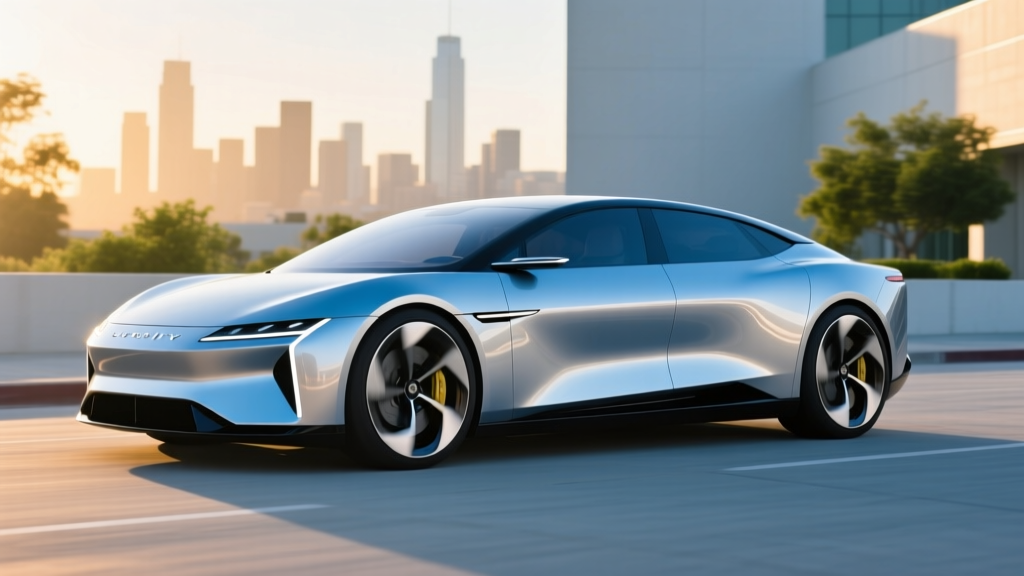
When Lucid Motors announced the Gravity, the automotive world knew it was getting a high-performance luxury SUV. But for buyers evaluating real-world practicality, the Lucid Gravity weight is a critical data point that influences everything from efficiency and range to tire wear and handling dynamics. Tipping the scales at an estimated 6,200 to 6,400 pounds depending on trim and configuration, the Gravity is undeniably a heavyweight — even among full-size electric SUVs. Yet Lucid claims this mass hasn't compromised the efficiency and performance the brand is known for. Let's examine whether the engineering backs up the marketing.
| Specification | Gravity Pure (RWD) | Gravity Touring (AWD) | Gravity Grand Touring (AWD) |
|---|---|---|---|
| EPA Range | ~440 miles (est.) | ~400 miles (est.) | ~440+ miles (target) |
| Battery Capacity | ~112 kWh usable (NMC) | ~112 kWh usable (NMC) | ~112 kWh usable (NMC) |
| Estimated Curb Weight | ~6,000 lbs | ~6,250 lbs | ~6,400 lbs |
| Horsepower | ~480 hp | ~620 hp | ~800+ hp |
| 0-60 mph | ~5.5 sec | ~3.8 sec | ~3.5 sec (est.) |
| Drivetrain | Rear-Wheel Drive | Dual-Motor AWD | Dual-Motor AWD |
| Base MSRP | ~$79,900 | ~$94,900 | ~$119,900 |
Note: Lucid Gravity began deliveries in late 2024/early 2025. Some specs above reflect announced targets or early-production figures. Always confirm with Lucid Motors for the latest model-year data.
Real-World Range: Does the Mass Matter?
The Lucid Gravity's estimated curb weight of 6,000 to 6,400 pounds is substantial. For context, the Tesla Model X weighs approximately 5,100 to 5,400 pounds, and the Rivian R1S sits around 6,800 to 7,100 pounds. Physics dictates that heavier vehicles require more energy to accelerate and maintain speed, which directly impacts range — especially in stop-and-go city driving or on steep inclines.
EPA Sticker vs. Reality
EPA Estimated Range: Up to ~440 miles (Grand Touring AWD with largest battery pack)
Real-World Expectation: Expect 350-390 miles in mixed driving conditions. Highway-only trips at 75+ mph may yield 320-360 miles. Cold-weather operation (below 32°F) can reduce range by 20-30%, dropping usable range to 280-330 miles without preconditioning.
Why the gap? The EPA test cycle includes generous city driving where regenerative braking recaptures energy. Sustained highway speeds, cold temperatures (battery chemistry slows, cabin heating draws power), and aggressive acceleration all consume more kilowatt-hours per mile than the sticker suggests.
Lucid's efficiency advantage comes from its 900-volt electrical architecture and industry-leading drivetrain efficiency (the Air sedan achieves over 5 miles per kWh in some trims). The Gravity, despite its weight, is expected to deliver 3.5 to 4.0 miles per kWh in mixed driving — translating to roughly 110-120 MPGe combined. That's impressive for a three-row SUV, but buyers should budget for the real-world reduction, especially on road trips through mountain passes or winter commutes.
Charging Speed: Can a Heavy Battery Pack Charge Fast?
One of the Gravity's standout features is its 900V+ architecture, which enables ultra-fast DC charging — assuming you can find a compatible high-power station. Lucid claims the Gravity can accept peak charge rates exceeding 300 kW, rivaling the fastest-charging EVs on the market.
| Charging Method | Power/Rate | Time to Charge | Notes |
|---|---|---|---|
| DC Fast Charging (Peak) | ~300+ kW (900V architecture) | 10-80% in ~15-20 minutes (est.) | Requires 350 kW+ CCS/NACS station. Charge curve tapers significantly above 80% SoC. |
| DC Fast Charging (Sustained) | ~200-250 kW average | 10-80% in ~22-25 minutes | Real-world sustained rate accounts for thermal management and taper. |
| Level 2 Home Charging (240V, 48A) | ~11.5 kW | ~35-40 miles per hour of charging | Full charge from 10-100% in ~10-12 hours. |
| Level 2 Home Charging (240V, 80A) | ~19.2 kW | ~55-65 miles per hour of charging | Requires high-amperage wall connector and 100A circuit. Full charge in ~6-7 hours. |
| Level 1 (120V, 12A) | ~1.4 kW | ~3-4 miles per hour | Emergency/trickle charging only. Not practical for daily use. |
Charging curve reality check: The advertised 300+ kW peak rate is only achievable under ideal conditions — battery preconditioned to optimal temperature, state of charge between 10-40%, and a compatible 350 kW+ station (like Electrify America's newest stalls or Tesla Supercharger V4 with CCS adapter). Most public DC fast chargers in 2025/2026 max out at 150-250 kW, meaning you'll see sustained rates closer to 180-220 kW. Above 80% SoC, the charge rate drops sharply to protect battery longevity, so plan to charge to 80% on road trips and top off at home.
For home charging, a Level 2 wall connector is essential. At 11.5 kW (48 amps), you'll add roughly 35-40 miles of range per hour — enough to fully replenish overnight. If your electrical panel supports it, an 80-amp circuit with a 19.2 kW charger cuts that time nearly in half, but expect $2,000-$4,000 in electrician costs for the panel upgrade and hardwired installation.
Performance: Defying the Weight Penalty
Here's where the Lucid Gravity's engineering shines. Despite its 6,000+ pound curb weight, the dual-motor AWD variants deliver sports-car acceleration. The Grand Touring AWD is targeting an 800+ horsepower output and a 0-60 mph time of approximately 3.5 seconds — numbers that rival the Tesla Model X Plaid and demolish conventional luxury SUVs like the BMW X5 M or Mercedes-AMG GLE.
How does Lucid achieve this? The answer lies in instant electric torque delivery and sophisticated torque vectoring. Electric motors don't need to build RPM like internal combustion engines, so the Gravity launches with immediate, relentless acceleration. The dual-motor setup also allows precise power distribution between front and rear axles, maximizing traction even in wet or snowy conditions.
That said, weight still matters for handling. The Gravity's air suspension and adaptive dampers work hard to control body roll and maintain composure through corners, but this is a luxury cruiser, not a track car. Expect competent, confident handling with some lean in aggressive cornering — similar to the Porsche Cayenne or Range Sport, but not as razor-sharp as a lighter performance SUV.
Pricing, Tax Credits, and Total Cost
The Lucid Gravity positions itself in the ultra-premium electric SUV segment, competing directly with the Tesla Model X, Rivian R1S, and upcoming offerings from Porsche and Mercedes. Pricing starts around $79,900 for the base Pure RWD trim and climbs to $119,900+ for the fully loaded Grand Touring AWD.
| Trim Level | Base MSRP | Federal Tax Credit (§30D) | Effective Price (After Credit) | Credit Eligibility Notes |
|---|---|---|---|---|
| Gravity Pure (RWD) | ~$79,900 | $0 (exceeds MSRP cap) | ~$79,900 | SUVs must be under $80,000 MSRP to qualify. Pure RWD is borderline — confirm final pricing. |
| Gravity Touring (AWD) | ~$94,900 | $0 | ~$94,900 | Exceeds $80,000 SUV MSRP cap. No federal credit. |
| Gravity Grand Touring (AWD) | ~$119,900 | $0 | ~$119,900 | Exceeds $80,000 SUV MSRP cap. No federal credit. |
Source: IRS §30D Clean Vehicle Credit. The federal tax credit has strict MSRP caps ($80,000 for SUVs, vans, and pickups; $55,000 for sedans), buyer income limits ($300k joint / $225k head of household / $150k single), and battery component/critical mineral sourcing requirements. Always verify eligibility with a tax professional before purchase.
The tax credit reality: Unfortunately for most Gravity buyers, the SUV's MSRP exceeds the $80,000 cap for the §30D federal tax credit. Only the base Pure RWD trim, if priced at or below $79,900, might qualify — and even then, battery sourcing rules and buyer income limits apply. State-level incentives (like California's CVRP or Colorado's innovative truck credit) may offer partial relief, but don't count on the full $7,500 federal credit.
Total cost of ownership considerations: Beyond the purchase price, factor in insurance (expect $3,500-$5,000 annually for a luxury EV), home charging installation ($1,500-$4,000 depending on panel upgrades), and tire replacement (heavy EVs wear tires 20-30% faster than gas cars). On the savings side, electricity costs roughly $0.12-$0.18 per kWh nationally, translating to $0.04-$0.06 per mile — about 40-50% less than a comparable gas SUV at $3.50/gallon.
Interior Space, Technology, and Practicality
The Gravity is a true three-row SUV, seating up to seven passengers with generous cargo space. Lucid claims over 100 cubic feet of total cargo volume with the second and third rows folded — competitive with the Tesla Model X and Rivian R1S. Second-row legroom is adult-friendly, though the third row is best suited for children or short trips, as is typical in this segment.
Standout tech features:
- 34-inch curved glass cockpit display: A massive, high-resolution screen spanning the dashboard, replacing traditional gauges and central infotainment.
- Clearview SUV camera system: Multiple exterior cameras provide a "see-through" view of the vehicle's surroundings, enhancing visibility in tight spaces.
- DreamDrive Pro ADAS: Lucid's advanced driver-assistance suite includes adaptive cruise, lane-centering, automatic emergency braking, and blind-spot monitoring. Note: This is SAE Level 2 — the driver must remain engaged and hands on the wheel. It is not self-driving.
- Over-the-air updates: Like Tesla and Rivian, Lucid pushes software updates remotely, adding features and improving performance post-purchase.
- NACS charging port: The Gravity uses the Tesla North American Charging Standard (NACS), granting access to Tesla's Supercharger network — a major advantage for road trips.
Notable drawbacks:
- Third-row space: While usable, it's tighter than full-size SUVs like the Chevrolet Tahoe or Ford Expedition.
- Service center availability: Lucid's service network is expanding but still limited compared to legacy brands. Rural buyers may face long drives for warranty repairs.
- Software maturity: Early Lucid Air owners reported infotainment bugs and ADAS quirks. The Gravity benefits from iterative improvements, but expect some rough edges in the first model year.
- Weight-related tire wear: At 6,000+ pounds, expect to replace tires every 25,000-35,000 miles — sooner than a lighter vehicle.
Who Should Buy the Lucid Gravity?
The Lucid Gravity is engineered for buyers who want luxury, space, and cutting-edge EV technology — and who can absorb the premium price and weight-related trade-offs.
Pros
- Class-leading range (440+ miles EPA target)
- Ultra-fast 900V charging architecture
- Supercar-level acceleration in AWD trims
- Spacious three-row interior with premium materials
- Access to Tesla Supercharger network (NACS)
- Advanced tech and over-the-air updates
Cons
- Heavy curb weight impacts efficiency and tire wear
- Exceeds federal tax credit MSRP cap (most trims)
- Limited service center network
- Third row is tight for adults
- High insurance and maintenance costs
- Real-world range falls short of EPA sticker
Ideal buyer profile:
- Luxury EV upgrader: You're coming from a Tesla Model X, Porsche Cayenne E-Hybrid, or BMW iX and want more range and refinement.
- Family road-tripper: You need three rows, 400+ miles of range, and fast charging for cross-country drives.
- Tech-forward commuter: You value cutting-edge infotainment, ADAS, and over-the-air updates.
- Home charger owner: You have (or can install) a Level 2 home charger to maximize convenience and minimize public charging.
Look elsewhere if:
- You need the full $7,500 federal tax credit (consider the Tesla Model Y, Ford Mustang Mach-E, or Hyundai Ioniq 5).
- You frequently drive in extreme cold without garage parking (range loss is significant).
- You live far from a Lucid service center and can't tolerate mobile service delays.
- You prioritize off-road capability (the Rivian R1S is more rugged).
Lucid Gravity vs. Key Competitors
| Feature | Lucid Gravity (Grand Touring AWD) | Tesla Model X Plaid | Rivian R1S (Dual-Motor Max Pack) |
|---|---|---|---|
| EPA Range | ~440 miles | ~333 miles | ~400 miles |
| Curb Weight | ~6,400 lbs | ~5,400 lbs | ~6,900 lbs |
| 0-60 mph | ~3.5 sec | ~2.5 sec | ~3.5 sec |
| Peak DC Charge Rate | ~300+ kW | ~250 kW | ~220 kW |
| Starting MSRP | ~$119,900 | ~$94,990 | ~$99,900 |
| Federal Tax Credit | No (MSRP cap) | No (MSRP cap) | No (MSRP cap) |
| Third-Row Space | Tight for adults | Tight for adults | Tight for adults |
| Charging Network | NACS (Tesla Supercharger access) | NACS (Tesla Supercharger) | CCS + NACS adapter available |
The verdict: The Gravity wins on range and charging speed, but the Model X Plaid is quicker and the Rivian R1S offers superior off-road capability. All three exceed the federal tax credit MSRP cap, so the decision hinges on your priorities: maximum range (Gravity), acceleration and Supercharger convenience (Model X), or adventure-ready versatility (R1S).
FAQ: Lucid Gravity Weight, Range, and Ownership
What is the real-world range of the Lucid Gravity?
While Lucid targets 440+ miles EPA for the Grand Touring AWD, expect 350-390 miles in mixed real-world driving. Highway-only trips at 75+ mph may yield 320-360 miles, and cold weather (below 32°F) can reduce range by 20-30% without battery preconditioning.
How fast does the Lucid Gravity charge?
With its 900V architecture, the Gravity can accept peak DC fast-charge rates exceeding 300 kW, achieving a 10-80% charge in approximately 15-20 minutes at a compatible 350 kW+ station. At home, a Level 2 charger (11.5 kW) adds 35-40 miles per hour, fully replenishing the battery in 10-12 hours.
Does the Lucid Gravity qualify for the federal EV tax credit?
Most trims do not. The §30D federal tax credit has an $80,000 MSRP cap for SUVs, and the Gravity's starting price of ~$79,900 (Pure RWD) is borderline. The Touring and Grand Touring trims exceed the cap. Even the base trim must meet battery sourcing and buyer income requirements. Consult IRS guidelines and a tax professional before assuming eligibility.
How much does the Lucid Gravity weigh, and does it affect efficiency?
The Gravity's estimated curb weight ranges from ~6,000 lbs (Pure RWD) to ~6,400 lbs (Grand Touring AWD). This mass does impact efficiency, especially in stop-and-go driving and on inclines, but Lucid's 900V architecture and high-efficiency drivetrain help mitigate the penalty. Expect 3.5-4.0 miles per kWh in mixed driving.
Is the Lucid Gravity worth buying vs. the Tesla Model X or Rivian R1S?
It depends on your priorities. Choose the Gravity for maximum range and ultra-fast charging. Choose the Model X Plaid for quicker acceleration and seamless Supercharger integration. Choose the Rivian R1S for off-road capability and a more rugged, adventure-focused design. All three are excellent luxury electric SUVs, but none qualify for the federal tax credit due to MSRP caps.
What is the Lucid Gravity's warranty coverage?
Lucid offers a 8-year/100,000-mile battery and powertrain warranty, with coverage for capacity loss below 70% of original capacity. The basic vehicle warranty is 4 years/50,000 miles. This is competitive with Tesla and Rivian, though real-world battery degradation data for Lucid is still limited given the brand's youth.
Can the Lucid Gravity tow?
Yes, the Gravity is expected to offer a towing capacity of up to 6,000+ pounds when properly equipped — sufficient for small boats, campers, or utility trailers. However, towing significantly reduces range (expect a 30-50% reduction depending on trailer weight and aerodynamics).
Final Verdict: A Heavyweight with Lightweight Ambitions
The Lucid Gravity is an engineering marvel that defies its own mass. With class-leading range, blistering acceleration, and ultra-fast charging, it sets a new benchmark for luxury electric SUVs. But the 6,000+ pound curb weight is a real factor — impacting efficiency, tire wear, and real-world range. Buyers who prioritize maximum range and cutting-edge tech will find the Gravity compelling, especially if they have home charging and live near a Lucid service center. Those seeking tax credits, off-road capability, or a lighter, more agile driving experience should consider the Tesla Model Y, Rivian R1S, or BMW iX instead.
For the latest EPA ratings, pricing, and availability, visit fueleconomy.gov and Lucid Motors' official Gravity page. Always confirm specs and tax credit eligibility before purchase.