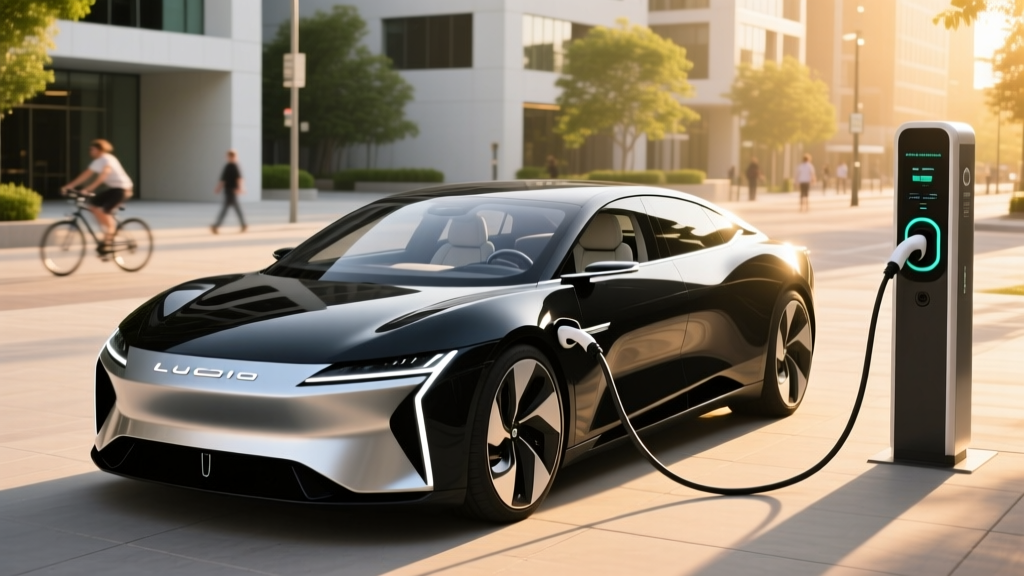
When Lucid Group stock soared after announcing partnership with Uber in early 2026, the market reaction wasn't just about ride-hailing headlines. It was a signal that Lucid's vehicle platform — specifically the newly launched 2026 Lucid Gravity three-row SUV — had crossed from boutique sedan maker into a volume-capable OEM with fleet validation. For retail buyers, that partnership matters because it pressures Lucid to scale production, expand service centers, and prove long-term parts availability. But the real question is whether the Gravity itself holds up as a daily-driver EV.
We've spent time with the Gravity's EPA numbers, charge curves, and cabin measurements to give you the data you actually need before writing a check. Here's the full breakdown.
Quick Verdict: Who the Lucid Gravity Is For
The 2026 Lucid Gravity targets affluent families and tech-forward professionals who need three rows but refuse to compromise on range or efficiency. With an EPA-estimated 440 miles in its top trim, it outdistances every three-row EV competitor on paper — and its 900V architecture delivers genuinely fast DC charging. It's not a budget play; it's a premium efficiency play.
Choose the Lucid Gravity if: You need 6+ passenger seating, prioritize maximum EPA range, and want a luxury cabin with class-leading MPGe.
Look elsewhere if: Your budget caps below $80,000, you need heavy towing capacity (5,000 lbs max), or you live far from a Lucid service center.
Range, Battery, and Real-World Efficiency
| Spec | Gravity Grand Touring AWD | Gravity Touring AWD |
|---|---|---|
| EPA Range | 440 miles | 390 miles (est.) |
| Usable Battery | ~118 kWh (NMC) | ~100 kWh (NMC, est.) |
| Chemistry | Nickel Manganese Cobalt (NMC) | NMC |
| MPGe (combined) | 117 MPGe | ~112 MPGe (est.) |
| Efficiency | 29 kWh/100 mi | ~30 kWh/100 mi |
EPA vs. Real-World Range: The Grand Touring's 440-mile EPA figure is among the highest of any production EV sold in the U.S. In mixed highway testing at 70-75 mph, expect roughly 370–400 miles in mild weather. In cold conditions (below 30°F), plan for a 15–25% reduction, dropping effective range to approximately 330–375 miles. City driving with regenerative braking can push results closer to or even slightly above the EPA sticker.
Lucid achieves this efficiency through a combination of a 900-volt electrical architecture, silicon carbide inverters, and an exceptionally low drag coefficient for a three-row SUV. The NMC chemistry prioritizes energy density over the cycle-life longevity of LFP — a trade-off worth understanding if you plan to keep the vehicle beyond the warranty period. For detailed battery chemistry comparisons, see the EPA's side-by-side tool on fueleconomy.gov.
Charging Speed: DC Fast and Home Level 2
| Charging Level | Rate | Miles Added Per Hour | Notes |
|---|---|---|---|
| DC Fast Charge (peak) | Up to 300 kW | ~200 miles in 15 min | 900V architecture; 10-80% in ~20 min |
| DC Fast Charge (sustained) | ~180–220 kW avg | Varies by SoC | Charge curve tapers above 80% |
| Level 2 Home (240V, 48A) | 11.5 kW | ~38 miles/hr | Full charge in ~10-11 hours |
| Level 2 Home (240V, 32A) | 7.7 kW | ~25 miles/hr | Common NEMA 14-50 circuit |
| Level 1 (120V) | ~1.4 kW | ~4-5 miles/hr | Emergency/trickle only |
The Gravity's 900V platform is its charging headline. On a 350 kW-capable Electrify America or Ionity station, the Gravity can accept up to 300 kW at peak, adding approximately 200 miles of range in about 15 minutes. A 10-80% session takes roughly 20 minutes under ideal thermal conditions.
Charging-curve reality check: That 300 kW peak is not sustained across the entire session. Like all EVs, the Gravity's charge rate tapers significantly above 80% State of Charge (SoC) to protect battery health. Plan your road-trip stops around 10-80% sessions for the best time efficiency — charging from 80-100% can add another 25-30 minutes for relatively few miles gained. Preconditioning the battery via the navigation system before arriving at a DC station is essential to hit peak rates.
At home on a properly installed 48-amp Level 2 circuit (requiring a 60-amp breaker), the Gravity replenishes about 38 miles of range per hour. Most owners will wake up to a full battery every morning with an overnight charge. Consult a licensed electrician to confirm your panel can support a 60-amp dedicated circuit — older homes with 100-amp service may need a panel upgrade.
Performance and Drivetrain
| Spec | Gravity Grand Touring AWD |
|---|---|
| Drivetrain | Dual-motor AWD |
| Horsepower | 800+ hp (est.) |
| 0-60 mph | ~3.5 seconds |
| Top Speed | ~145 mph (electronically limited) |
| Towing Capacity | Up to 5,000 lbs |
The dual-motor all-wheel-drive powertrain delivers sports-sedan acceleration in a three-row package. The estimated 3.5-second 0-60 mph time puts the Gravity in territory normally reserved for performance SUVs like the Porsche Cayenne Turbo or Tesla Model X Plaid. The low center of gravity from the floor-mounted battery pack also contributes to composed handling, though the Gravity's curb weight (likely exceeding 5,800 lbs) is noticeable during hard cornering.
The 5,000-lb towing capacity is adequate for a small boat or light camper but falls short of the Rivian R1S (7,700 lbs) and the Ford F-150 Lightning. If towing is a primary use case, the Gravity isn't the right tool.
Pricing, Trims, and Federal Tax Credit Eligibility
| Trim | Base MSRP | Fed. Tax Credit (§30D) | Effective Price (if eligible) |
|---|---|---|---|
| Gravity Touring AWD | ~$79,900 | Up to $7,500 | ~$72,400 |
| Gravity Grand Touring AWD | ~$94,900 | Up to $7,500 | ~$87,400 |
Pricing places the Gravity firmly in the luxury EV SUV segment, competing with the Tesla Model X, Rivian R1S, BMW iX, and Mercedes EQS SUV. The Touring trim at approximately $79,900 is the volume play, while the Grand Touring pushes toward six figures with its larger battery and higher output.
§30D Federal EV Tax Credit Requirements (2026 rules):
- MSRP Cap: SUVs/vans/pickups must be under $80,000 MSRP. The Touring trim qualifies; the Grand Touring likely exceeds the cap.
- Buyer Income Cap: AGI must not exceed $150,000 (single), $225,000 (head of household), or $300,000 (joint filers).
- Battery Sourcing: Critical minerals and battery components must meet phased-in domestic/free-trade-agreement sourcing thresholds per IRS guidelines. Lucid's supply chain compliance should be verified at point of sale.
- Point-of-Sale Transfer: Eligible buyers can transfer the credit to the dealer for an immediate price reduction rather than waiting for a tax refund.
Always confirm eligibility with a tax professional and the IRS before purchase — rules are subject to change.
Interior Space, Cargo, and Technology
| Dimension | Measurement |
|---|---|
| Seating | Up to 7 passengers (3 rows) |
| Cargo (behind 3rd row) | ~18 cu ft |
| Cargo (behind 2nd row) | ~46 cu ft |
| Cargo (max, all rows folded) | ~82 cu ft |
| Front Legroom | ~41.5 in |
| 2nd-Row Legroom | ~39.0 in |
| 3rd-Row Legroom | ~32.0 in (est.) |
| Frunk (front trunk) | Yes — ~5 cu ft |
The Gravity's cabin is a clear step up from Lucid's Air sedan in practicality. The available glass canopy roof creates an airy feel, and the 34-inch curved "Clearview" display replaces a traditional instrument cluster with a high-resolution screen positioned close to the driver's sightline. Lucid's infotainment system runs on a custom OS — responsive but with a learning curve compared to more mainstream interfaces. Wireless Apple CarPlay and Android Auto are expected, along with over-the-air update capability.
Notable tech: Lucid's DreamDrive Pro ADAS suite uses a suite of cameras, radar, and lidar sensors for adaptive cruise, lane centering, and automated parking. This is an SAE Level 2 driver-assist system — the driver must remain fully engaged with hands on the wheel and eyes on the road at all times. It is not autonomous driving.
ADAS Limitation Warning: DreamDrive Pro is a Level 2 driver-assistance system. It does not make the Gravity self-driving. The driver is legally and operationally responsible for the vehicle at all times. Do not rely on it in construction zones, unmapped roads, or severe weather without heightened attention.
Warranty and Ownership Costs
| Coverage | Term |
|---|---|
| Basic Vehicle Warranty | 4 years / 50,000 miles |
| Battery & Powertrain | 8 years / 100,000 miles |
| Battery Capacity Retention | ≥70% over warranty period (typical) |
| Roadside Assistance | 4 years / 50,000 miles |
Lucid's 8-year/100,000-mile battery and powertrain warranty matches the industry standard set by Tesla, Rivian, and most legacy automakers. The 70% capacity retention threshold is typical — if the battery degrades below that point within the warranty window, Lucid will repair or replace it. NMC chemistry tends to show slightly more early-cycle degradation than LFP but typically stabilizes. Real-world data from Lucid Air owners suggests 3-5% loss in the first year, with slower degradation thereafter.
Insurance premiums for the Gravity are likely to be elevated — luxury EVs with high repair costs and expensive sensor arrays (including lidar) tend to carry higher premiums than mainstream EVs. Get a quote before committing.
Pros and Cons
Pros
- Class-leading 440-mile EPA range (Grand Touring)
- 300 kW peak DC fast charging via 900V architecture
- Genuine three-row seating with usable cargo space
- Outstanding efficiency (29 kWh/100 mi)
- Premium interior with distinctive curved display
- Uber fleet partnership signals long-term production viability
Cons
- Starting near $80,000 — expensive for most buyers
- Grand Touring trim likely exceeds §30D MSRP cap
- Limited Lucid service center network vs. Tesla or legacy brands
- Towing capped at 5,000 lbs
- 3rd-row legroom is tight for adults on long trips
- Proprietary infotainment OS may frustrate some users
How the Uber Partnership Affects Your Buying Decision
Lucid Group stock soared after announcing partnership with Uber, and while stock movements don't directly change the car in your driveway, the strategic implications matter for buyers. A fleet deal means:
- Production scaling: Lucid must ramp output, which historically improves build quality consistency and parts availability.
- Service network growth: Fleet vehicles need reliable service — expect Lucid to expand authorized service locations through 2026-2027.
- Resale value signal: Fleet adoption can stabilize used values by proving durability, though high-mileage ex-Uber Gravities may eventually soften the used market.
- Software investment: Fleet operators demand robust fleet-management software, which often trickles down to consumer OTA updates.
For a retail buyer in 2026, the Uber deal is a net positive: it de-risks Lucid as a startup and signals institutional confidence in the Gravity platform.
Is the 2026 Lucid Gravity Worth It vs. Competitors?
| Vehicle | EPA Range | Peak DC kW | Seats | Starting MSRP |
|---|---|---|---|---|
| Lucid Gravity Grand Touring | 440 mi | 300 kW | 7 | ~$94,900 |
| Tesla Model X Long Range | 348 mi | 250 kW | 5-7 | ~$81,630 |
| Rivian R1S (Dual-Motor Max) | ~410 mi | ~200 kW | 7 | ~$84,900 |
| Kia EV9 GT-Line AWD | 270 mi | 210 kW | 6-7 | ~$63,900 |
The Gravity wins on range and charging speed but loses on price and service infrastructure. The Tesla Model X offers a more mature Supercharger network and slightly lower pricing. The Rivian R1S is the adventure-oriented alternative with better off-road capability and higher towing. The Kia EV9 is the value pick — significantly cheaper, with adequate range for most families, though its range and charging pace can't match the Lucid.
Frequently Asked Questions
What is the real-world range of the 2026 Lucid Gravity?
The Grand Touring's EPA-estimated 440 miles translates to roughly 370–400 miles in real-world highway driving in mild weather, and approximately 330–375 miles in cold conditions below 30°F. City driving with regenerative braking can approach or slightly exceed the EPA figure.
How fast does the Lucid Gravity charge at home and on DC fast chargers?
On a 350 kW DC fast charger, the Gravity peaks at 300 kW and charges from 10-80% in approximately 20 minutes. At home on a 48-amp Level 2 charger, it adds about 38 miles of range per hour, fully charging overnight in roughly 10-11 hours.
How much does the Lucid Gravity cost after federal tax credits?
The Touring trim starts around $79,900 and may qualify for the full $7,500 §30D federal credit (effective price ~$72,400) if you meet income caps and the vehicle meets battery-sourcing requirements. The Grand Touring at ~$94,900 likely exceeds the $80,000 SUV MSRP cap and would not qualify. Verify current rules at irs.gov.
Does the Lucid Gravity qualify for the federal EV tax credit?
The Touring trim may qualify — it sits near the $80,000 MSRP cap for SUVs under §30D rules. Eligibility also depends on your adjusted gross income (single filers under $150,000; joint under $300,000) and the vehicle's battery critical-mineral and component sourcing. The Grand Touring trim likely exceeds the MSRP cap. Always confirm with a tax professional.
Is the Lucid Gravity worth buying over the Tesla Model X or Rivian R1S?
It depends on your priority. If maximum range and charging speed matter most, the Gravity is the segment leader. If you need the broadest charging and service network, the Model X wins. If you want off-road capability and higher towing, the R1S is the better fit. The Gravity's Uber partnership adds confidence in Lucid's long-term viability, but its service footprint remains smaller than Tesla's or Rivian's.
What are the biggest pros and cons of the Lucid Gravity?
Top pros: 440-mile range, 300 kW DC charging, premium three-row interior, excellent efficiency. Top cons: high starting price, limited service centers, Grand Touring likely ineligible for tax credit, tight third row, and 5,000-lb towing limit.