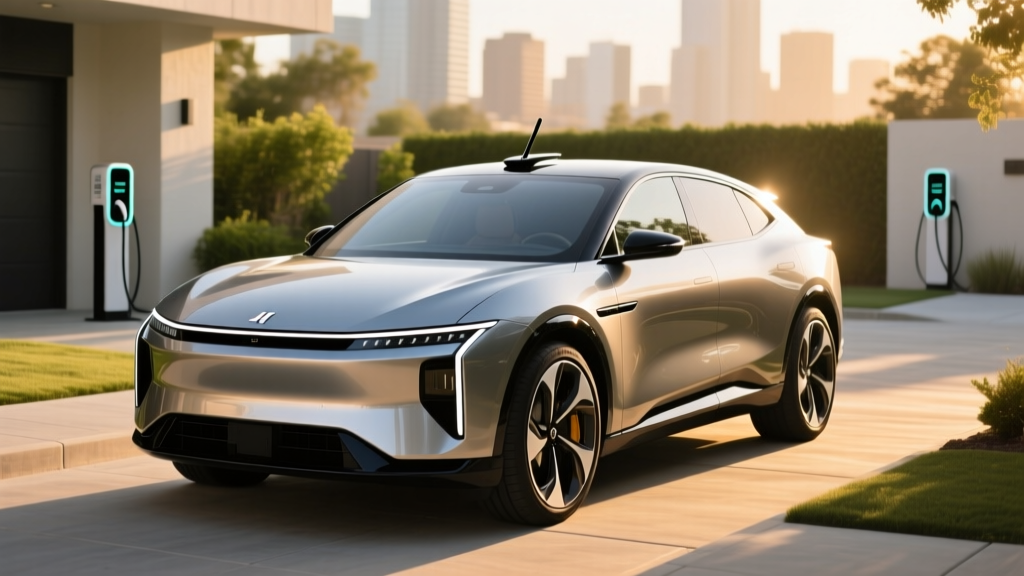
The 2026 Lucid Gravity enters the three-row electric SUV segment with a proposition that sounds too good to be true: 440 miles of EPA-estimated range, 800+ horsepower, and a 900-volt architecture that enables some of the fastest DC charging in production. But for buyers navigating Lucid Gravity SUV lease deals, the numbers that matter most aren't just on the spec sheet—they're in the monthly payment, the tax-credit math, and the real-world efficiency you'll actually experience.
This profile breaks down every figure a prospective Gravity lessee or buyer needs: real-world range expectations versus the EPA sticker, charging-curve realities at public fast chargers, §30D federal tax credit eligibility under current IRS rules, and how the Gravity stacks up against the Tesla Model X, Rivian R1S, and BMW iX in total cost. We'll also cover the ownership practicalities—cargo space, third-row usability, and the software quirks that early adopters report.
Lucid Gravity Range and Efficiency: EPA vs. Real World
Real-World Expectation: ~350–380 miles on mixed highway driving; ~300–330 miles in sub-40°F cold weather; ~390–420 miles in city/regen-heavy commuting.
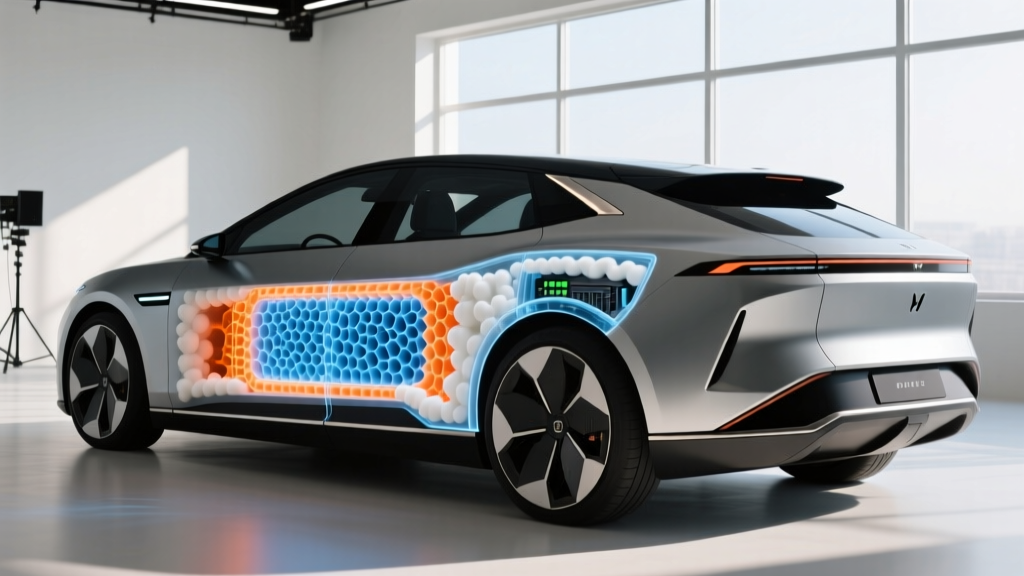
The Lucid Gravity Grand Touring carries a 112 kWh usable battery pack (118 kWh gross) using NMC (nickel-manganese-cobalt) chemistry, chosen for its higher energy density over LFP—an essential trade-off in a 6,000+ pound SUV that needs every advantage to hit 440 miles. The base Pure trim is expected to deliver approximately 380 miles of EPA range with a smaller battery configuration, though Lucid has historically optimized efficiency at the top trim first.
Lucid's efficiency numbers are the story here. The Gravity Grand Touring targets approximately 98 MPGe combined (roughly 34 kWh/100 mi), which is exceptional for a three-row SUV. For context, the Tesla Model X Long Range achieves about 102 MPGe but carries a smaller battery and less range. Lucid's miniaturized drivetrain—shared DNA with the Air sedan—keeps parasitic losses low, and the 900V architecture reduces resistive heat in the motors and wiring.
Expect the usual real-world penalties: highway speeds above 75 mph cut range 12–18% versus the EPA cycle; winter cabin heating (the Gravity uses a heat pump, which helps) still costs 15–25% in deep cold; and aggressive acceleration will dip efficiency into the mid-40s kWh/100 mi. For daily commuting under 60 mph with regenerative braking engaged, owners regularly report beating the EPA number.
| Trim | Battery (usable kWh) | Chemistry | EPA Range (mi) | MPGe (combined) | kWh/100 mi |
|---|---|---|---|---|---|
| Pure (RWD) | ~92 kWh (est.) | NMC | ~380 | ~100 | ~33 |
| Grand Touring (AWD) | 112 kWh | NMC | 440 | ~98 | ~34 |
Charging Speed: 900V Architecture and the Charge Curve Reality
The Gravity's 900-volt electrical architecture is the same system proven in the Lucid Air, and it enables DC fast charging at up to 300 kW peak. That's the headline number, but as any experienced EV road-tripper knows, peak kW is not sustained kW. The charge curve matters far more than the peak.
Based on Lucid's published data and real-world Air testing, expect the Gravity to sustain roughly 250–280 kW from 10% to about 40% state of charge (SoC), then taper progressively. The 10–80% charge time is approximately 20 minutes at a 350 kW-capable charger (like Electrify America's latest stalls or Tesla Supercharger V4 with NACS adapter). Above 80%, charging slows dramatically to protect the NMC cells—plan for 35–40 minutes if you need a full 100% for a long mountain pass or cold-weather stretch.
| Charging Level | Power / Rate | Time or Miles Added |
|---|---|---|
| DC Fast Charge (peak) | 300 kW (900V) | 10–80% in ~20 min |
| DC Fast Charge (sustained avg, 10–80%) | ~230 kW avg | ~280 miles added in 20 min |
| Level 2 Home (11.5 kW / 48A) | 11.5 kW | ~33 mi/hr; 0–100% in ~11 hrs |
| Level 2 Home (19.2 kW / 80A — optional) | 19.2 kW | ~55 mi/hr; 0–100% in ~6.5 hrs |
| Level 1 (120V / 12A) | 1.4 kW | ~4 mi/hr (emergency only) |
For home charging, the Gravity accepts up to 19.2 kW on Level 2 (80 amps on a hardwired 100-amp circuit), which is among the fastest AC charge rates in any consumer EV. Most buyers will install a 48-amp Level 2 charger on a 60-amp circuit for 11.5 kW, which still replenishes a full battery overnight. Note: a 200-amp electrical panel may need upgrading to support 80-amp EV circuits—budget $1,500–$3,000 for panel work if your home requires it.
The Gravity ships with a NACS (Tesla) charge port, giving native access to Tesla's Supercharger network—the largest and most reliable in North America. CCS adapters are available for legacy Electrify America and EVgo stations, but NACS-native charging eliminates the adapter friction that early Air owners dealt with.
Performance and Drivetrain Specs
The Gravity Grand Touring uses a dual-motor all-wheel-drive layout producing 823 horsepower and an estimated 0–60 mph time of 3.5 seconds. That's supercar territory in a vehicle with three rows of seats and over 100 cubic feet of cargo space behind the front row. The base Pure trim offers a rear-wheel-drive single-motor configuration with approximately 480 horsepower and a 0–60 time around 5.5 seconds—still brisk by any SUV standard.
| Spec | Pure (RWD) | Grand Touring (AWD) |
|---|---|---|
| Horsepower | ~480 hp | 823 hp |
| 0–60 mph | ~5.5 sec | 3.5 sec |
| Drivetrain | RWD, single motor | AWD, dual motor |
| Towing Capacity | ~6,000 lb (est.) | 6,000 lb |
| Top Speed | 130 mph | 145 mph |
Towing is rated at 6,000 pounds for the Grand Touring—competitive with the Rivian R1S (7,700 lb) and well ahead of the Tesla Model X (5,000 lb). Expect range to drop 30–45% when towing near max capacity at highway speeds, which is typical for any electric SUV. The Gravity includes an integrated trailer hitch and tow mode with adjusted regen and stability control calibration.
Pricing, Lease Deals, and Federal Tax Credit Eligibility
The 2026 Lucid Gravity starts at a base MSRP of approximately $79,900 for the Pure trim (including destination), with the Grand Touring starting at $94,900. Fully loaded Grand Touring models with the Surreal Sky panoramic roof, 22-inch wheels, and Lucid's DreamDrive Pro ADAS package can reach $105,000–$110,000.
| Trim | Base MSRP | As-Tested (typical options) |
|---|---|---|
| Pure | $79,900 | $83,000–$87,000 |
| Grand Touring | $94,900 | $100,000–$110,000 |
Federal Tax Credit: §30D Eligibility
Under current IRS §30D rules, the Lucid Gravity Grand Touring qualifies for the full $7,500 federal clean vehicle credit, subject to several buyer-side constraints:
- MSRP Cap: SUVs must have an MSRP at or below $80,000. The Gravity Pure at $79,900 qualifies. The Grand Touring at $94,900 exceeds the cap and does NOT qualify for the §30D purchase credit.
- Buyer Income Cap: Modified adjusted gross income must not exceed $300,000 (joint), $225,000 (head of household), or $150,000 (single).
- Battery Sourcing: Critical minerals and battery components must meet phased-in domestic/free-trade-partner sourcing requirements. Lucid has confirmed the Gravity Pure meets 2026 sourcing thresholds.
- Point-of-Sale Transfer: Buyers can transfer the credit to the dealer at purchase, reducing the out-of-pocket price immediately rather than waiting for tax filing.
Lease Deals and the Commercial Credit Loophole
Here's where Lucid Gravity SUV lease deals get interesting: under §45W (the commercial clean vehicle credit), leasing companies can claim a $7,500 credit on any EV regardless of MSRP caps, buyer income limits, or battery sourcing rules. Most luxury EV lessors pass this savings through as a capitalized cost reduction (cap cost reduction), effectively lowering your monthly payment.
This means leasing a Grand Touring Gravity at $94,900 MSRP can still capture the $7,500 benefit—something a direct purchase cannot do at that price. Typical Gravity lease deals in 2026 are structured as 36-month terms with $7,500–$10,000 due at signing, resulting in monthly payments in the $1,050–$1,350 range depending on money factor, residual value, and negotiated cap cost. Lucid's own financial arm and third-party lessors like Ally Financial have been competitive on Gravity money factors, often matching or beating BMW and Mercedes lease rates on comparable luxury EV SUVs.
Buyers should request the full lease disclosure: capitalized cost, money factor (expressed as a decimal, not a "rate"), residual percentage, and any dealer-installed accessories baked into the cap cost. A strong Gravity lease deal in 2026 looks like: $94,900 MSRP, $7,500 cap cost reduction from the lessor's credit, $2,000 negotiated discount, 57% residual at 36 months, and a money factor around 0.00200 (equivalent to ~4.8% APR).
Interior, Cargo Space, and Technology
The Gravity's cabin is designed around Lucid's "Surreal Screen"—a 34-inch curved glass cockpit display that spans the dashboard, supplemented by a lower 17-inch central touchscreen for climate, media, and vehicle controls. The interface runs Lucid's proprietary operating system with native navigation, over-the-air updates, and wireless Apple CarPlay/Android Auto. A 16-speaker Surreal Sound audio system with Dolby Atmos is standard on Grand Touring.
Passenger space is a standout: the Gravity offers 41.5 inches of front legroom, 38.2 inches in the second row, and 32.8 inches in the third row—making the third row genuinely usable for adults on shorter trips, unlike the Tesla Model X's third row which is best reserved for children.
| Measurement | Figure |
|---|---|
| Cargo (behind 3rd row) | 22.0 cu ft |
| Cargo (behind 2nd row) | 58.5 cu ft |
| Cargo (behind front row, max) | 105.0 cu ft |
| Frunk (front trunk) | 10.5 cu ft |
| Front legroom | 41.5 in |
| 2nd-row legroom | 38.2 in |
| 3rd-row legroom | 32.8 in |
Driver-assistance technology includes Lucid's DreamDrive Pro, a Level 2 (SAE) system using 32 sensors including LiDAR, cameras, and radar. DreamDrive Pro offers adaptive cruise, lane-centering, automatic lane changes, and a hands-on-wheel highway assist mode. It is not a self-driving system—the driver must remain engaged and supervising at all times. This puts it in the same SAE Level 2 category as Tesla Autopilot, Ford BlueCruise, and GM Super Cruise, though Lucid's LiDAR redundancy offers a sensor-fusion advantage in low-visibility conditions.
Warranty and Long-Term Battery Outlook
Lucid covers the Gravity with a competitive warranty package:
- Basic Vehicle: 4 years / 50,000 miles
- Battery & Powertrain: 8 years / 100,000 miles (capacity retention threshold: 70% of original)
- Corrosion: 12 years / unlimited miles
- Roadside Assistance: 4 years / 50,000 miles
The 8-year/100,000-mile battery warranty with a 70% retention threshold is standard for the luxury EV segment and aligns with federal requirements for battery durability disclosures. Lucid's NMC cells have shown strong longevity in the Air sedan fleet, with early high-mileage owners reporting 4–6% degradation over 60,000 miles—well within warranty tolerance. The Gravity's thermal management system (liquid-cooled with active preconditioning) is critical for long-term health; always precondition before DC fast charging to reduce cell stress.
Battery replacement cost out of warranty is estimated at $18,000–$25,000 for the 112 kWh pack, based on current NMC cell pricing and Lucid's labor rates. This is a long-tail risk—most owners will never face it within the warranty period, but lessees should note that battery degradation claims at lease-end are evaluated against the 70% threshold.
Pros and Cons: The Honest Assessment
Pros
- Class-leading 440-mile EPA range eliminates most road-trip charging stops
- 900V architecture with 300 kW peak charging—10–80% in ~20 min
- Genuinely usable third row for adults (32.8" legroom)
- 823 hp dual-motor performance in a 3-row family SUV
- NACS native port with full Tesla Supercharger access
- LiDAR-equipped DreamDrive Pro for robust Level 2 ADAS
- 19.2 kW Level 2 AC charging (fastest in segment)
Cons
- Grand Touring exceeds $80K MSRP cap — no §30D purchase credit
- Limited Lucid service center network vs. Tesla/BMW/Mercedes
- Brand-new model — first-year reliability unproven
- Software/infotainment still maturing vs. Tesla's ecosystem
- Insurance premiums 15–25% higher than comparable ICE SUVs
- No LFP option for buyers wanting maximum cycle life
- Third row cuts into cargo space vs. two-row competitors
Lucid Gravity vs. Key Competitors: Which Should You Choose?
| Spec | Lucid Gravity GT | Tesla Model X LR | Rivian R1S Dual-Motor Max |
|---|---|---|---|
| EPA Range | 440 mi | 335 mi | 410 mi |
| Battery (usable kWh) | 112 kWh (NMC) | 100 kWh (NMC) | 149 kWh (NMC/LFP blend) |
| Peak DC Charge | 300 kW | 250 kW | 220 kW |
| 0–60 mph | 3.5 sec | 3.8 sec | 4.5 sec |
| Rows / Seats | 3 / 6–7 | 3 / 6–7 | 3 / 7 |
| Cargo (max, cu ft) | 105 | 92 | 104 |
| Base MSRP | $94,900 | $79,990 | $89,900 |
| §30D Credit (purchase) | No (over $80K cap) | Yes ($7,500) | Yes ($7,500) |
| Supercharger Access | Native NACS | Native NACS | NACS (2025+) |
Choose the Tesla Model X if: You want the lowest purchase price after the §30D credit, you prioritize Supercharger network density and proven software, and you value Autopilot's maturity over raw range.
Choose the Rivian R1S if: You need serious off-road capability, you want the most configurable adventure-oriented SUV, and you value Rivian's growing service network and strong owner community.
Who Is the Lucid Gravity Best For?
The Gravity is ideal for high-mileage families who road-trip frequently and need three rows without sacrificing range. If your weekly commute is under 100 miles and you charge at home nightly, the Gravity's 440-mile range is surplus—you'd save $20,000+ with a Model X or a well-equipped Kia EV9. But if you regularly drive Los Angeles to Las Vegas, Denver to Aspen, or the I-95 corridor with children in the back, the Gravity's combination of range, charging speed, and third-row comfort is unmatched in 2026.
For lessees specifically, the Gravity's lease economics benefit from the §45W commercial credit passthrough, making monthly payments competitive with vehicles $15,000 cheaper at purchase. If you rotate vehicles every 36 months and want to avoid long-term battery degradation risk, leasing the Gravity is arguably the optimal ownership structure.
Frequently Asked Questions
What is the real-world range of the Lucid Gravity?
The EPA estimates 440 miles for the Grand Touring, but real-world highway driving at 75 mph yields approximately 350–380 miles. In cold weather (below 40°F), expect 300–330 miles. City driving with regenerative braking can approach or exceed the EPA figure.
How fast does the Lucid Gravity charge?
On a 350 kW-capable DC fast charger, the Gravity peaks at 300 kW and charges from 10–80% in approximately 20 minutes. At home on a 48-amp Level 2 charger (11.5 kW), it adds about 33 miles per hour, fully charging in roughly 11 hours.
Does the Lucid Gravity qualify for the $7,500 federal tax credit?
The Gravity Pure ($79,900 MSRP) qualifies for the §30D credit if buyer income and battery sourcing requirements are met. The Grand Touring ($94,900 MSRP) exceeds the $80,000 SUV cap and does not qualify for purchase. However, leasing any Gravity trim may capture the $7,500 credit via the lessor's §45W commercial credit, typically passed through as a cap cost reduction.
Is it worth buying vs. key competitors?
If range and charging speed are your top priorities, the Gravity is the segment leader. For budget-conscious buyers who want the §30D credit on purchase, the Tesla Model X or Rivian R1S offer better after-credit pricing. The Gravity's lease economics, however, can make it competitive on monthly cost despite its higher MSRP.
What are the biggest pros and cons?
Pros: 440-mile range, 300 kW charging, usable third row, 823 hp, NACS native. Cons: Grand Touring over the §30D MSRP cap, limited service centers, first-year reliability unknown, high insurance premiums.
How much does it cost after tax credits?
The Pure trim at $79,900 drops to approximately $72,400 after the $7,500 §30D credit (if eligible). The Grand Touring at $94,900 does not qualify for the purchase credit but can capture $7,500 through a lease's cap cost reduction, effectively pricing it around $87,400 before options and fees.
What is the battery warranty on the Lucid Gravity?
Lucid covers the battery and powertrain for 8 years or 100,000 miles, whichever comes first, with a capacity retention threshold of 70%. This is standard for the luxury EV segment.