The Short Answer
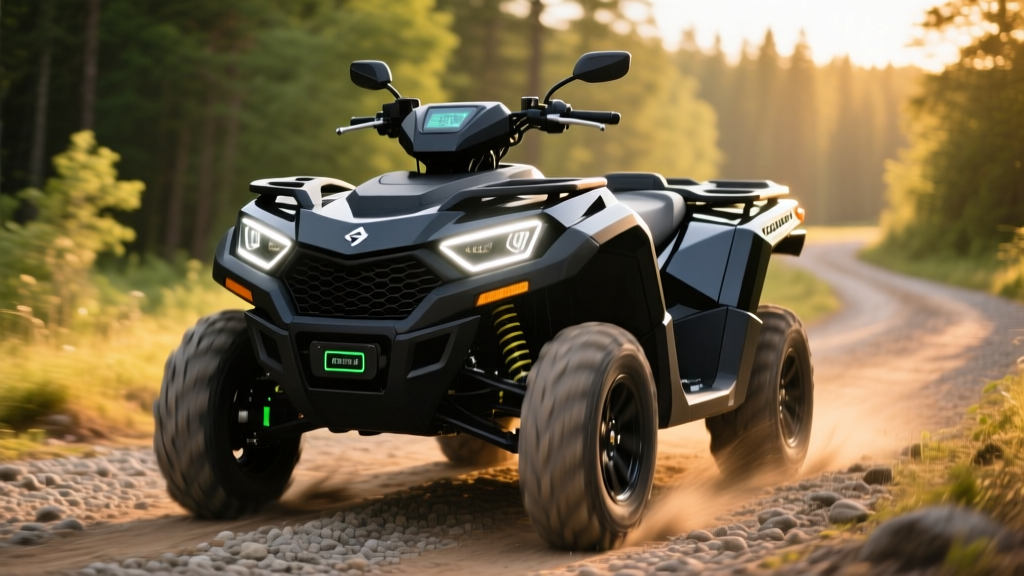
As of early 2026, BRP (Bombardier Recreational Products) has not released a production version of an electric Can-Am Outlander ATV. The company has announced its intent to electrify its product lineup — including off-road vehicles — by the end of the decade, and has shown electric concept vehicles, but no official specs, pricing, EPA-equivalent range, or sale date have been published for an electric Outlander. If you're researching a purchase, treat any detailed specifications you find online as speculative or concept-stage figures until BRP issues an official press release.
The search for a "2026 Can-Am Outlander electric" reflects genuine enthusiasm from the off-road community about electrification reaching the ATV/UTV segment. BRP's CEO José Boisjoli has publicly committed the company to offering electric models across all product lines by 2026–2035, and the Can-Am brand — known for its Maverick and Outlander platforms — is central to that plan. But commitment is not the same as a production vehicle on a dealer floor.
Here's what buyers, fleet operators, and trail riders actually need to know about where this vehicle stands, what an electric ATV must deliver to compete with gas, and what ownership would realistically look like.
BRP's Electrification Timeline: Announced Goals vs. Production Reality
BRP laid out its electrification roadmap at its 2022 Capital Markets Day and has reiterated it in subsequent earnings calls. The key public milestones:
- 2023–2024: BRP introduced the Can-Am Origin electric motorcycle concept and the Can-Am Pulse electric street motorcycle concept.
- 2024–2025: The Pulse and Origin entered limited pre-order phases for select markets, marking BRP's first production electric vehicles (two-wheel, not ATV).
- 2026 and beyond: BRP has stated it will expand electrification into additional segments, including side-by-sides and ATVs, but has not confirmed a specific model year for an electric Outlander.
The Can-Am Pulse motorcycle targets approximately 100 miles of city range with a ~20 kWh battery pack. That figure gives us a baseline for BRP's current battery packaging philosophy, but an ATV like the Outlander — which needs to haul, tow, and traverse technical terrain — requires fundamentally different engineering than a street motorcycle.
If and when BRP announces an electric Outlander, expect preliminary specs to be labeled as such, with production delivery likely 12–18 months after the reveal.
What an Electric Outlander Would Need to Compete With Gas
The current gas-powered Can-Am Outlander lineup sets specific benchmarks that any electric successor must meet or exceed for serious buyers to consider switching. Here's what the gas models deliver today:
| Spec | Outlander 500 | Outlander 700 | Outlander 1000R |
|---|---|---|---|
| Engine | 427cc single | 650cc twin | 999cc V-twin |
| Horsepower | ~40 HP | ~50 HP | ~101 HP |
| Towing Capacity | 1,300 lbs | 1,830 lbs | 1,830 lbs |
| Fuel Capacity | 5.3 gal | 5.3 gal | 5.3 gal |
| Curb Weight | ~749 lbs | ~814 lbs | ~900 lbs |
| MSRP (base) | ~$7,399 | ~$9,349 | ~$14,499 |
Any electric Outlander must match these towing numbers, deliver adequate range for all-day trail riding (likely 60–100+ miles in mixed terrain), and manage the thermal demands of low-speed, high-torque off-road use — all while keeping weight competitive. Battery mass is the central engineering challenge: a pack large enough for 80+ miles of trail riding could easily add 200–400 lbs over the gas equivalent.
Electric ATV Ownership: Real-World Considerations
Buying an electric ATV is not the same proposition as buying an electric car. The infrastructure and usage patterns differ in ways that matter enormously for satisfaction.
Charging Access Is the Deciding Factor
Unlike EVs, which can leverage the growing public DC fast-charging network, ATVs are typically trailered to remote riding areas — trailheads, state forests, private land — where no charging infrastructure exists. This means:
- Home charging is mandatory. You'll need access to at least a standard 120V outlet (Level 1, ~1–2 kW) in your garage or shop. A 240V Level 2 circuit (6–10 kW) would be far more practical for overnight replenishment of a 15–30 kWh ATV battery.
- Trail-side charging is unlikely. Unless you ride exclusively on private property with electrical access or bring a portable generator, mid-ride recharging won't be an option.
- Range must cover your full ride day. Most recreational ATV riders cover 30–60 miles in a full day of trail riding. Work/utility use (ranch, farm) may involve shorter distances but sustained load. An electric Outlander would need to clear 60+ miles of real-world mixed-terrain range to be practical for most buyers.
Cold Weather and Battery Performance
Off-road riding happens year-round, often in cold conditions. Lithium-ion batteries lose 15–30% of their usable capacity in sub-freezing temperatures, and regenerative braking effectiveness drops. BRP's Canadian roots suggest they'll engineer for cold, but physics is physics — a battery rated for 80 miles at 70°F may deliver 55–65 miles at 20°F under load.
Maintenance: The Electric Advantage
Where electric ATVs win decisively is maintenance. No oil changes, no air filter cleaning, no carburetor jetting, no exhaust repacking, no transmission fluid. Electric motors have a single moving part. For fleet operators, rental outfitters, and riders who wrench reluctantly, this is a meaningful total-cost-of-ownership advantage.
Projected Cost Comparison: Electric vs. Gas ATV
While we don't have confirmed pricing for an electric Outlander, we can model likely costs based on BRP's current electric motorcycle pricing strategy and comparable electric off-road vehicles already on the market (like the Instant Sport A-SE and the Polaris electric concepts).
| Cost Category | Gas Outlander 700 | Est. Electric Outlander |
|---|---|---|
| Purchase Price (MSRP) | $9,349 | $12,000–$15,000 (est.) |
| Fuel/Energy (5 yrs, 2,500 mi) | ~$1,250 (gasoline) | ~$200–$350 (electricity) |
| Maintenance (5 yrs) | ~$1,500–$2,000 | ~$300–$500 |
| Insurance (5 yrs avg) | ~$2,500 | ~$2,500–$3,000 |
| 5-Year Total | ~$14,600–$15,100 | ~$15,000–$18,850 |
Key takeaway: The higher upfront cost of an electric ATV is unlikely to be fully offset by fuel and maintenance savings within 5 years for most recreational riders. The break-even point depends heavily on annual mileage, local electricity rates, and how much you value reduced maintenance hassle. For high-use commercial and fleet applications, the math tilts faster toward electric.
Note: Federal EV tax credits under IRS §30D apply to on-road vehicles meeting specific MSRP, income, and battery-sourcing requirements. Off-road ATVs generally do not qualify for the federal clean vehicle credit. Always consult a tax professional for your specific situation.
Common Misconceptions About Electric ATVs
| Myth | Fact |
|---|---|
| "Electric ATVs have no power for towing or hills." | Electric motors deliver peak torque at 0 RPM. Instant torque delivery often exceeds gas engines of similar rated horsepower in low-speed, high-load scenarios like towing and climbing. |
| "You can't ride an electric ATV all day." | Range depends on battery size (kWh) and riding style. A 25–35 kWh pack could realistically deliver 50–80 miles of mixed trail riding. Most recreational riders cover 30–50 miles per day. |
| "Electric ATVs will be cheaper than gas models." | Battery packs remain the most expensive component. Expect a 30–60% price premium over comparable gas ATVs at launch, consistent with BRP's electric motorcycle pricing. |
| "Electric ATVs are silent, which is bad for trail awareness." | Low noise is actually a major advantage: less rider fatigue, less noise pollution on shared trails, and access to noise-restricted riding areas that ban gas OHVs. |
| "The battery will need expensive replacement in a few years." | Modern LFP or NMC packs designed for off-road use typically carry 3–5 year warranties with 70–80% capacity retention thresholds. With proper care, packs should last 8–12+ years before significant degradation. |
Decision Framework: Should You Wait or Buy Gas Now?
Choose Your Path
Buy a gas Outlander now if:
- You need an ATV for work or riding this season and can't wait for an unannounced product
- You ride in remote areas with no charging access and regularly cover 60+ miles per ride
- You need maximum towing capacity (1,830 lbs) with proven reliability
- Your budget is under $10,000
- You ride in extreme cold (below 10°F) frequently
Wait for an electric Outlander (or competitor) if:
- You ride primarily on private property or short trails (under 40 miles) with garage charging access
- Noise restrictions affect your riding area access
- You're a fleet or rental operator where reduced maintenance and fuel cost compound across multiple vehicles
- You want instant torque for technical terrain and don't need extended range
- You're comfortable paying a 30–60% premium for early-adopter electric technology
Consider an existing electric UTV/ATV now if:
- You can't wait but want electric — brands like Instant Sport, Hisun Motors (electric variants), and Polaris (Ranger EV successor concepts) offer limited electric off-road options today, though none match the Outlander's full-size capability and dealer network
What to Watch For: Signs the Electric Outlander Is Coming
BRP will likely signal the electric Outlander's approach through several observable steps:
- Patent filings — BRP has filed multiple patents related to electric ATV chassis and battery packaging. Watch USPTO and international patent databases.
- Concept reveals at trade showsn— AIMExpo, AIMExpo Canada, and CES are BRP's typical venues for concept debuts.
- Dealer communications — BRP's dealer network will receive advance product briefings 6–12 months before retail availability.
- Manufacturing investments — BRP's Valcourt, Quebec facility and its new battery assembly lines signal production readiness.
- Regulatory filings — EPA and CARB certifications for off-road electric vehicles would precede a US launch.
Frequently Asked Questions
Is there a 2026 Can-Am Outlander electric ATV available to buy?
No. As of 2026, BRP has not released a production electric Can-Am Outlander ATV for sale. The company has announced electrification plans for its full lineup, and the Can-Am Pulse and Origin electric motorcycles are its first production EVs. An electric Outlander remains in the development pipeline without a confirmed model year or sale date.
How much would an electric Can-Am Outlander cost?
No official pricing exists. Based on BRP's electric motorcycle pricing (the Can-Am Pulse starts around $13,999) and the cost premium of battery packs over internal combustion engines in the ATV segment, a reasonable estimate for an electric Outlander would be $12,000–$18,000 depending on battery size and trim, compared to $7,399–$14,499 for current gas Outlander models.
What range would an electric Outlander need to be practical?
Most recreational ATV riders cover 30–60 miles in a full ride day. A usable battery capacity of 20–35 kWh would likely be needed to deliver 50–80 miles of mixed-terrain range. This is an estimate — BRP has not published any range figures for an electric ATV.
Can I charge an electric ATV at a public EV charging station?
Likely not directly. Public DC fast chargers use automotive connectors (NACS, CCS) designed for cars and trucks. An electric ATV would almost certainly use a smaller, proprietary or J1772-compatible connector for Level 2 AC charging, meaning you'd primarily charge at home or at your trailhead if electrical outlets are available.
Does the federal EV tax credit apply to off-road ATVs?
Generally, no. The IRS §30D clean vehicle credit is structured for on-road vehicles meeting specific MSRP caps, buyer income limits, and battery component/critical mineral sourcing requirements. Off-highway vehicles like ATVs typically fall outside these definitions. Always verify with a qualified tax professional.
What existing electric ATVs or UTVs can I buy in 2026?
Options remain limited. The Hisun Sector E1 and similar small electric UTVs are available but are compact, lower-power models suited for property maintenance rather than trail riding. Full-size electric ATVs from major OEMs like BRP, Polaris, and Honda have not yet reached production. The segment is in early development.
Sources: BRP investor relations and press releases, Can-Am official product pages, IRS.gov §30D guidance. All projected specifications are estimates based on available BRP electrification announcements and comparable segment data. This article will be updated when BRP publishes official electric Outlander specifications.