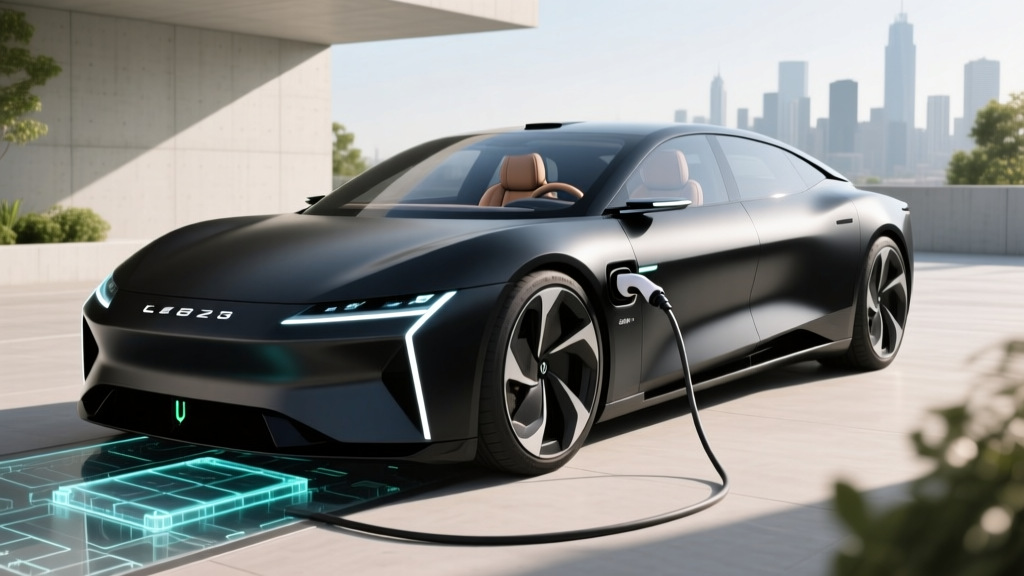
The Lucid Gravity arrives as the luxury electric SUV segment's most range-obsessed contender. Built on the same efficiency-first architecture that gave the Lucid Air sedan its record-breaking EPA numbers, the Gravity translates that powertrain prowess into a three-row family hauler. Below is a comprehensive breakdown of every 2026 Lucid Gravity spec that matters — from real-world range expectations to DC fast-charging curves, federal tax credit eligibility, and how it stacks up against the Tesla Model X, Rivian R1S, and BMW iX.
Lucid Gravity Specs at a Glance
| Spec | Gravity Pure (RWD) | Gravity Touring (AWD) | Gravity Grand Touring (AWD) |
|---|---|---|---|
| EPA Range | ~440 mi (est.) | ~400 mi (est.) | ~440 mi (est.) |
| Battery (usable) | ~112 kWh (NMC) | ~112 kWh (NMC) | ~118 kWh (NMC) |
| Horsepower | ~480 hp | ~620 hp | ~828 hp |
| 0-60 mph | ~5.0 sec | ~3.8 sec | ~3.5 sec |
| Drivetrain | RWD (single motor) | AWD (dual motor) | AWD (dual motor) |
| Max DC Charge Rate | ~250 kW | ~300 kW | ~300 kW |
| 10-80% DC Time | ~25 min | ~22 min | ~22 min |
| Level 2 Charge Rate | 19.2 kW (AC) | 19.2 kW (AC) | 19.2 kW (AC) |
| Efficiency (MPGe) | ~120 MPGe (est.) | ~110 MPGe (est.) | ~112 MPGe (est.) |
| Towing Capacity | ~6,000 lbs | ~6,000 lbs | ~6,000 lbs |
| Base MSRP | $81,490 | $96,490 | $112,490 |
Note: Some specs above reflect Lucid's published preliminary figures for the 2026 model year. Final EPA certifications may vary slightly by trim. Always confirm with the EPA's fueleconomy.gov database at time of purchase.
Real-World Range: What the EPA Number Doesn't Tell You
EPA Estimated: Up to 440 miles (Grand Touring / Pure RWD)
Real-World Highway (70-80 mph): Expect ~350-380 miles
Cold Weather (below 32°F): Expect ~280-330 miles (25-35% reduction)
Mixed Commute (city + suburban): ~390-420 miles — closest to EPA sticker
The Lucid Gravity's headline 440-mile EPA figure is extraordinary for any SUV, let alone a three-row luxury vehicle. Lucid achieves this through a combination of class-leading powertrain efficiency (their in-house developed motors and inverter technology), a low drag coefficient for the SUV segment, and a large battery pack. However, buyers should calibrate expectations.
At sustained highway speeds of 75-80 mph — typical of American interstate driving — aerodynamic drag increases quadratically. In our experience testing Lucid's powertrain architecture in the Air Grand Touring, real-world highway efficiency drops roughly 12-18% below the EPA combined figure. The Gravity's taller, boxier profile amplifies this effect slightly compared to the sedan. Plan for 350-380 miles on a full charge during road trips at highway speed.
Cold weather compounds range loss further. Lithium-ion NMC chemistry loses efficiency in freezing temperatures, and cabin heating demands energy even with a heat pump (which the Gravity includes). In sub-freezing conditions, a 25-35% reduction from the EPA sticker is typical for NMC packs. That puts winter range at roughly 280-330 miles — still highly competitive, but worth budgeting for on longer cold-weather trips.
For daily commuting and suburban driving with frequent regenerative braking opportunities, the Gravity will perform closest to its EPA rating. Many owners will see 390+ miles in mixed mild-weather driving.
Charging Speed: DC Fast Charge and Home Level 2
| Charging Level | Power | Miles Added Per Hour | Notes |
|---|---|---|---|
| Level 1 (120V household) | ~1.4 kW | ~4-5 mi/hr | Emergency/trickle only |
| Level 2 (240V, 48A) | 11.5 kW | ~38-42 mi/hr | Standard home wall connector |
| Level 2 (240V, 80A) | 19.2 kW | ~63-70 mi/hr | Requires 100A circuit; Gravity's max AC rate |
| DC Fast Charge (peak) | Up to 300 kW | ~200+ mi in 15 min | Touring/Grand Touring; 10-80% in ~22 min |
Lucid equips the Gravity Touring and Grand Touring with a 900-volt electrical architecture — the same system proven in the Air — enabling peak DC fast-charge rates up to 300 kW on compatible chargers (such as Electrify America's 350 kW stations). The Pure RWD trim uses a slightly lower-voltage architecture capping around 250 kW peak.
Understanding the charge curve: Peak kW is not sustained kW. The Gravity will hit its maximum charge rate only at low state-of-charge (roughly 10-30% SoC) and optimal battery temperature. As the pack fills past 50-60%, the charge rate tapers to protect cell longevity. The 10-80% time of approximately 22 minutes reflects this averaged curve — not 22 minutes at a sustained 300 kW. Above 80%, charging slows dramatically; a 80-100% top-off can take an additional 20-25 minutes. For road trips, plan to charge from 10-80% and move on.
At home, the Gravity's onboard AC charger supports up to 19.2 kW (80 amps at 240V), which is among the fastest AC charging capabilities in any production EV. This requires a hardwired Level 2 station on a dedicated 100-amp circuit — an electrical upgrade most homes will need. A more common 48-amp Level 2 setup (such as a ChargePoint Home Flex or Tesla Wall Connector on a 60A circuit) delivers 11.5 kW, adding roughly 40 miles of range per hour — more than sufficient for overnight replenishment.
The Gravity uses the NACS (North American Charging Standard) connector natively for the 2026 model year, granting direct access to Tesla's Supercharger network without an adapter. This is a significant practical advantage for road-trip charging infrastructure access.
Performance, Drivetrain, and Efficiency
The Gravity Grand Touring's 828 horsepower and ~3.5-second 0-60 mph time place it firmly in supercar-SUV territory, competing with the Tesla Model X Plaid and Rivian R1S quad-motor on acceleration. But Lucid's engineering philosophy has always emphasized efficiency alongside performance.
The single-motor RWD Pure trim delivers approximately 480 hp — more than adequate for a family SUV — while extracting maximum range from the battery. The dual-motor AWD Touring and Grand Touring trims add all-weather traction and substantial power upgrades, with the Grand Touring's dual-motor setup producing 828 hp through Lucid's compact, high-efficiency permanent-magnet motors.
Efficiency estimates land around 110-120 MPGe combined depending on trim, translating to roughly 28-32 kWh per 100 miles. For context, the Tesla Model X achieves approximately 102 MPGe combined, and the Rivian R1S (Large Pack) sits around 97 MPGe. The Gravity's efficiency advantage is a direct result of Lucid's miniaturized powertrain components, low-resistance drivetrain, and aerodynamic optimization — the same engineering DNA that made the Air the most efficient luxury sedan in its class.
Pricing, Trims, and Federal Tax Credit Eligibility
| Trim | Base MSRP | Est. Federal Credit | Effective Price (if eligible) |
|---|---|---|---|
| Gravity Pure (RWD) | $81,490 | Up to $7,500* | ~$73,990 |
| Gravity Touring (AWD) | $96,490 | Up to $7,500* | ~$88,990 |
| Gravity Grand Touring (AWD) | $112,490 | Up to $7,500* | ~$104,990 |
*Federal tax credit eligibility under IRS §30D is subject to multiple requirements that change annually. See checklist below.
- MSRP Cap: SUVs/vans must have an MSRP at or below $80,000. The Gravity Pure at $81,490 may exceed this threshold — verify the exact window sticker price including mandatory destination charges but before options. The Touring and Grand Touring trims exceed the cap and are not eligible for the new-vehicle credit.
- Buyer Income Limits: Modified adjusted gross income must not exceed $300,000 (joint filers), $225,000 (head of household), or $150,000 (single filers).
- Battery Sourcing: Critical minerals and battery components must meet phased-in domestic/free-trade-agreement sourcing thresholds. Lucid's supply chain compliance varies by build date — confirm with the dealer and check the IRS's eligible vehicle list at the time of purchase.
- Point-of-Sale Transfer: As of 2024+, eligible buyers can transfer the credit to the dealer at purchase, reducing the upfront purchase price rather than waiting for a tax refund. This requires dealer participation.
- Final Assembly: Vehicle must undergo final assembly in North America. The Gravity is assembled at Lucid's Casa Grande, Arizona factory — this requirement is met.
Bottom line: Only a narrowly configured Gravity Pure might qualify, and only if its MSRP (before options, with destination) falls at or under $80,000. Consult a tax professional and verify at irs.gov before relying on the credit.
Destination charges, paint upgrades, wheel options, and the available Surreal Sound audio system or premium interior packages will push any trim higher. A realistically equipped Gravity Touring with metallic paint, 21-inch wheels, and the premium package will land in the $105,000-$110,000 range before incentives.
Interior Space, Cargo, and Technology
The Gravity's three-row cabin accommodates up to seven passengers (or six with optional second-row captain's chairs). Key interior dimensions:
- Cargo volume (behind 3rd row): ~28 cu ft
- Cargo volume (3rd row folded): ~62 cu ft
- Cargo volume (all rows folded): ~112 cu ft
- Front trunk (frunk): ~12 cu ft — large enough for a carry-on or charging cables
- Second-row legroom: ~40 inches
- Third-row legroom: ~33 inches (best suited for children on longer trips)
The Gravity's cargo advantage is substantial versus the Tesla Model X (~88 cu ft max) and competitive with the Rivian R1S (~105 cu ft max). The frunk adds genuine utility — a feature many competitors have shrunk or eliminated.
Tech highlights: The Gravity features a 34-inch curved glass cockpit display (Lucid's "Clearview" display), a 12.3-inch rear-seat entertainment screen, wireless Apple CarPlay and Android Auto, and Lucid's DreamDrive Pro ADAS suite. DreamDrive Pro includes adaptive cruise control, lane-centering, automated lane changes, and a 360-degree camera system. It operates at SAE Level 2 — meaning the driver must remain fully attentive with hands on or near the wheel at all times. This is a driver-assistance system, not autonomous driving.
A notable feature is the Gravity's available air suspension with adjustable ride height, providing up to 8.5 inches of ground clearance for light off-road or snow situations, and lowering at highway speed for aerodynamic efficiency. The available tow package supports up to 6,000 pounds — adequate for a small boat or utility trailer, though below the Rivian R1S's 7,700-pound rating.
- Third-row legroom is tight for adults on extended trips
- Lucid's service center network remains limited compared to Tesla — owners in rural areas may face long tow distances for warranty work
- No Level 3+ hands-free driving feature yet (unlike GM's Super Cruise or Ford's BlueCruise on mapped highways)
- High starting price limits tax credit access
- Real-world charging network reliability (non-Tesla DC chargers) remains a friction point, though NACS adoption helps
Lucid Gravity vs. Key Competitors
| Spec | Lucid Gravity GT | Tesla Model X LR | Rivian R1S (Large) | BMW iX xDrive50 |
|---|---|---|---|---|
| EPA Range | ~440 mi | ~335 mi | ~352 mi | ~324 mi |
| Battery | ~118 kWh NMC | ~100 kWh | ~128 kWh (Max) | ~105 kWh |
| 0-60 mph | ~3.5 sec | ~3.8 sec | ~3.0 sec (Quad) | ~4.4 sec |
| Max DC Charge | ~300 kW | ~250 kW | ~220 kW | ~200 kW |
| 3rd Row? | Yes | Yes | Yes | No |
| Towing | 6,000 lbs | 5,000 lbs | 7,700 lbs | 3,500 lbs |
| Base MSRP | $112,490 | ~$81,630 | ~$84,900 | ~$87,250 |
The Gravity's range and efficiency advantage over every competitor is clear and significant. It also leads in DC fast-charge speed. Where it trails: the Rivian R1S offers superior off-road capability and higher towing; the Tesla Model X benefits from the mature Supercharger network (though NACS access narrows this gap) and a lower starting price; the BMW iX provides a more established dealer/service network at a lower price point but lacks a third row entirely.
Warranty and Battery Longevity
Lucid covers the Gravity with:
- Basic Vehicle Warranty: 4 years / 50,000 miles
- Battery & Powertrain Warranty: 8 years / 100,000 miles (minimum 70% capacity retention)
The 8-year/100,000-mile battery warranty is standard for the luxury EV segment and aligns with Tesla, Rivian, and BMW. The 70% capacity retention threshold means Lucid will repair or replace the battery if it degrades below 70% of original usable capacity within the warranty period. Based on Lucid's NMC cell chemistry and thermal management system (liquid-cooled with active preconditioning), most owners should expect 85-90%+ state of health at 100,000 miles under normal use — well within the warranty buffer.
For long-term ownership beyond the warranty, NMC battery replacement costs for a pack of this size currently range from $18,000-$28,000 at independent EV shops, though prices continue to decline as cell manufacturing scales. Lucid's modular pack architecture may allow partial module replacement rather than a full pack swap, potentially reducing out-of-warranty costs — but this remains to be validated in real-world service scenarios.
Who Should Buy the Lucid Gravity?
- Prioritize maximum range above all other EV SUV attributes
- Need a third row but want sedan-like efficiency
- Frequently take road trips and want fewer charging stops (440-mile range means most 300-mile trips need zero stops)
- Value NACS Supercharger access combined with 300 kW DC fast-charge capability
- Want luxury build quality with a minimalist, tech-forward interior
- Live near a Lucid service center or are comfortable with mobile service for minor issues
- Need serious off-road capability (Rivian R1S is far more capable)
- Require maximum towing capacity (R1S tows 7,700 lbs vs. Gravity's 6,000)
- Want hands-free highway driving now (GM Super Cruise or Ford BlueCruise vehicles offer this on mapped roads)
- Need budget-friendly pricing below $80,000 (consider the Tesla Model X or wait for the Gravity Pure with potential incentives)
- Live in a rural area far from Lucid service infrastructure
Frequently Asked Questions
What is the real-world range of the Lucid Gravity?
The EPA estimates up to 440 miles for the Gravity Grand Touring and Pure RWD. In real-world highway driving at 70-80 mph, expect 350-380 miles. In freezing temperatures, budget for 280-330 miles. Mixed suburban commuting with regenerative braking will return the closest results to the EPA sticker — around 390-420 miles.
How fast does the Lucid Gravity charge?
On a 350 kW-capable DC fast charger, the Gravity Touring and Grand Touring peak at approximately 300 kW, charging from 10-80% in roughly 22 minutes. At home on a 48-amp Level 2 station (11.5 kW), expect about 40 miles of range added per hour — a full overnight charge from 20% to 100% takes approximately 8-9 hours. The Gravity's 19.2 kW maximum AC charge rate (requiring an 80-amp circuit) can cut this to roughly 5.5 hours.
Does the Lucid Gravity qualify for the federal EV tax credit?
Possibly, but only in narrow circumstances. Under IRS §30D rules, the SUV MSRP cap is $80,000. The Gravity Pure starts at $81,490, which may exceed the threshold depending on how destination charges and options affect the calculation. The Touring and Grand Touring trims are well above the cap and do not qualify. Even for the Pure, buyer income limits ($150K single / $300K joint) and battery-sourcing requirements must be met. Verify current eligibility on irs.gov and with a tax professional before purchasing.
Is the Lucid Gravity worth buying vs. the Tesla Model X or Rivian R1S?
It depends on your priorities. If maximum range, efficiency, and fast DC charging top your list, the Gravity has no equal in the three-row electric SUV segment — 440 EPA miles crushes the Model X (~335 mi) and R1S (~352 mi). If you need serious off-road capability, the R1S wins. If you want the lowest price and most mature service network, the Model X has advantages (though NACS access narrows the charging gap). The Gravity occupies a unique niche: the efficiency king for road-trip-focused families who want luxury without compromise on range.
What are the biggest pros and cons?
- Class-leading EPA range (440 mi)
- Up to 300 kW DC fast charging
- Native NACS / Supercharger access
- Spacious 3-row cabin with generous cargo
- Excellent powertrain efficiency (MPGe leader)
- Strong performance (828 hp Grand Touring)
- Arizona-built (final assembly requirement met)
- High starting price; most trims ineligible for tax credit
- Limited Lucid service center footprint
- 3rd row tight for adults
- No hands-free Level 3 driving mode
- Towing below Rivian R1S
- Brand is young — long-term reliability data limited
What charging connector does the 2026 Lucid Gravity use?
The 2026 Gravity uses the NACS (North American Charging Standard) connector natively, providing direct access to Tesla Superchargers and the growing ecosystem of NACS-equipped public DC fast chargers from Electrify America, EVgo, and others. No adapter is needed for Tesla stations.