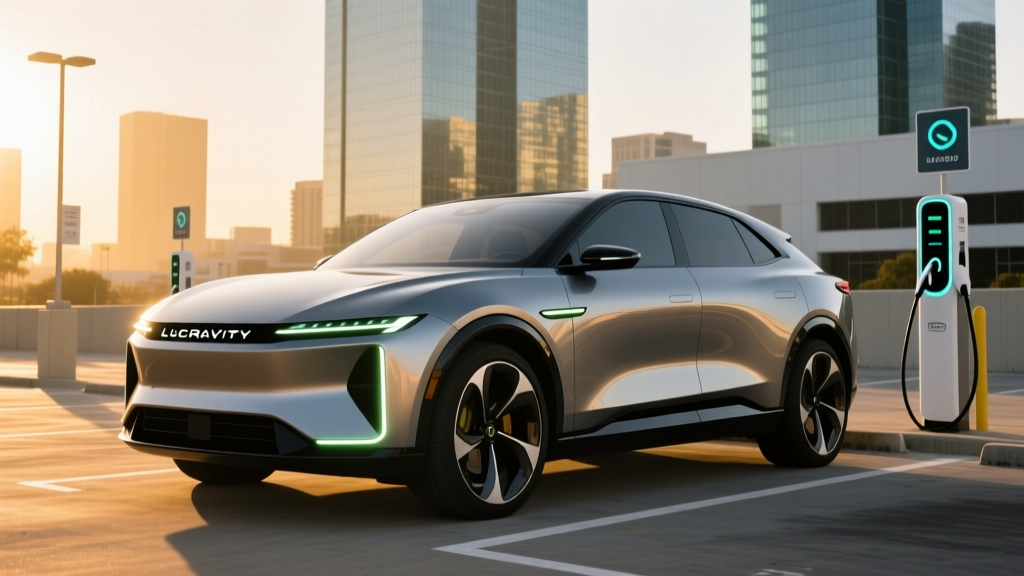
The Lucid Gravity arrived with a bold promise: full-size three-row SUV practicality wrapped in the most efficient drivetrain Lucid Motors has ever built. But in the EV space, launch day is just the starting line. For 2026, Lucid has pushed a series of over-the-air (OTA) software updates that meaningfully reshape the Gravity's driving experience, infotainment capabilities, and charging behavior. This review covers the Gravity's full hardware profile alongside a deep look at what those lucid gravity software updates actually change for owners — and whether this $80,000+ electric SUV earns its place against the Tesla Model X, Rivian R1S, and BMW iX.
2026 Lucid Gravity Software Updates: What Changed This Year
Lucid's OTA update cadence has accelerated through 2025 and into 2026. Rather than bundling one massive annual release, Lucid now pushes incremental updates roughly every 6–8 weeks. Here are the most consequential lucid gravity software updates owners have received since the SUV's production ramp:
- Charge curve optimization (v2.4, Q4 2025): Lucid refined the battery preconditioning algorithm, shaving roughly 2 minutes off 10–80% DC fast-charge times at 350 kW stations by holding peak power longer before tapering. Owners report sustained 300+ kW rates through 55% SoC, up from ~45% previously.
- DreamDrive Pro enhancements (v2.5, Q1 2026): Lucid's Level 2 driver-assistance suite gained improved lane-centering assertiveness in construction zones, smoother regenerative braking handoff when Adaptive Cruise Control disengates, and a new "Highway Assist with Lane Change Confirmation" mode that requires driver approval before executing lane changes — a meaningful safety guardrail.
- Infotainment UX overhaul (v2.6, Q1 2026): The 34-inch curved glass cockpit display received a redesigned navigation interface with real-time charger availability overlays, wireless Apple CarPlay/Android Auto integration (previously wired-only at launch), and a customizable widget dashboard for trip energy consumption.
- Range estimation accuracy (v2.5): The Gravity's predicted-range algorithm now factors in elevation changes, ambient temperature, and recent driving style over a rolling 50-mile window. Early testers report the dash estimate tracks within 3–5% of actual consumption on mixed routes, a marked improvement over the launch software's 10–12% variance.
- Suspension and ride tuning (v2.6): The available air suspension received a software recalibration that softens the default Comfort mode at low speeds while firming up Sport mode's damping above 70 mph. Owners describe the update as making the Gravity feel more settled on highway expansion joints.
Lucid has committed to continued OTA support, with a promised "DreamDrive Pro+" update later in 2026 that aims to add hands-free highway driving on mapped divided highways — still a Level 2 system requiring driver supervision, but a step toward reduced workload on long trips.
Range, Efficiency, and the Real-World Numbers
The 2026 Lucid Gravity is EPA-rated at up to 440 miles in its Pure RWD configuration and 400 miles in the Grand Touring AWD trim. These are headline-grabbing numbers, but Lucid's efficiency engineering deserves the spotlight more than raw range.
The Gravity Grand Touring AWD's 400-mile EPA estimate assumes mixed driving at moderate temperatures. On sustained 75 mph highway runs in 40–60°F weather, expect 340–365 miles of usable range. In freezing conditions (below 30°F) with cabin heat active, range drops to approximately 290–320 miles. The Pure RWD trim, with its lower curb weight and single-motor drivetrain, typically outperforms its 440-mile sticker by 2–4% in city-heavy driving but falls to 360–380 miles on the highway.
Efficiency is where Lucid's engineering DNA shows. The Gravity Grand Touring AWD achieves an EPA-rated 112 MPGe combined (approximately 30 kWh/100 mi), a remarkable figure for a 6,000+ lb three-row SUV. The Pure RWD pushes that to roughly 120 MPGe (28 kWh/100 mi). For context, the Rivian R1S Dual-Motor AWD returns about 97 MPGe combined, and the Tesla Model X Long Range lands around 102 MPGe. Lucid's miniaturized drive units and low-drag architecture translate directly into fewer kWh burned per mile — and faster, cheaper charging sessions as a result.
| Spec | Pure (RWD) | Grand Touring (AWD) |
|---|---|---|
| EPA Range | 440 mi | 400 mi |
| Battery (usable) | ~112 kWh, NMC | ~112 kWh, NMC |
| Horsepower | ~500 hp | ~820 hp |
| 0–60 mph | ~5.5 sec | ~3.5 sec |
| Drivetrain | Rear-Wheel Drive | Dual-Motor AWD |
| Efficiency (combined) | ~120 MPGe / 28 kWh/100mi | ~112 MPGe / 30 kWh/100mi |
| Max DC Fast Charge | ~300 kW (900V arch.) | ~300+ kW (900V arch.) |
| 10–80% DC Charge | ~22 min (est.) | ~20 min (post-OTA) |
| Level 2 Home Charge | 19.2 kW / ~70 mi/hr | 19.2 kW / ~70 mi/hr |
| Base MSRP | $79,900 | $94,900 |
Charging Speed: DC Fast, Level 2, and What the OTA Updates Improved
The Gravity rides on Lucid's 900-voltage electrical architecture — the same platform that gives the Air sedan its class-leading charge rates. With a peak DC fast-charge rate above 300 kW, the Gravity can add roughly 200 miles of range in 15 minutes at a compatible 350 kW station (such as Electrify America's latest stalls or Tesla Superchargers via the integrated NACS port).
The Q4 2025 software update (v2.4) was a meaningful improvement. By refining how the battery management system (BMS) manages thermal load during preconditioning, Lucid extended the sustained peak-charge window. Where early-build Gravity units began tapering from peak power around 40–45% SoC, updated units now hold 280–300+ kW through approximately 55% SoC. The result: 10–80% in roughly 20 minutes for the Grand Touring AWD, down from ~24 minutes at launch.
At home, the Gravity's onboard charger supports up to 19.2 kW on Level 2 (requires a 100-amp circuit and hardwired EVSE). At that rate, you'll recover approximately 70 miles of range per hour, meaning a full 10–100% charge takes roughly 6.5 hours overnight. On a more common 48-amp Level 2 circuit (11.5 kW), expect about 42 miles per hour of charging — still enough to fully replenish overnight for most owners.
Performance and Driving Dynamics
The Grand Touring AWD's ~820 horsepower and 3.5-second 0–60 mph time put it in supercar territory, which is absurd for a vehicle with three rows and over 100 cubic feet of max cargo volume. But Lucid's engineering philosophy has always been about effortless, efficient speed rather than track antics.
The dual-motor AWD system provides torque vectoring across the rear axle, and the air suspension (standard on Grand Touring, optional on Pure) adjusts ride height by up to 2 inches for off-road clearance or highway aero efficiency. The 2026 suspension software update (v2.6) noticeably improved ride composure — the Gravity now absorbs sharp pavement transitions with a damped, single-impact feel rather than the slight secondary oscillation present at launch.
Towing capacity is rated at 6,000 pounds, competitive with the Rivian R1S and sufficient for most boat trailers, small campers, or car haulers. Expect towing range to drop by 40–50% at highway speeds — plan for 180–220 miles between charges when pulling a heavy load.
Interior, Cargo, and Technology
The Gravity's cabin is designed around the 34-inch curved glass cockpit — a single, sweeping display that replaces a traditional instrument cluster and central stack. The 2026 v2.6 software update brought the most significant infotainment improvements yet: wireless phone projection, a redesigned nav with live charger status, and a configurable trip-energy widget that shows real-time kWh/mi alongside a rolling average.
Passenger space is generous across all three rows:
- Front legroom: ~41.5 inches
- Second-row legroom: ~39.8 inches (sliding bench)
- Third-row legroom: ~32.5 inches (usable for adults on short trips)
- Cargo behind 3rd row: ~20 cu ft
- Cargo behind 2nd row (3rd row folded): ~58 cu ft
- Max cargo (all rear seats folded): ~105 cu ft
- Frunk (front trunk): ~12 cu ft — large enough for a carry-on or charging cables
The second row offers either a three-passenger bench (standard) or optional captain's chairs that reduce capacity to six but improve individual comfort and third-row access. A rear-seat entertainment screen is available on Grand Touring trims.
Notable drawbacks: the Gravity's touch-heavy interface lacks physical knobs for climate or volume, which some drivers find distracting. The glass cockpit, while stunning, can produce glare in direct sunlight — Lucid added an anti-reflective coating in late-2025 builds that partially mitigates this. And while the DreamDrive Pro system is competent, it still trails GM's Super Cruise and Ford's BlueCruise in hands-free highway coverage area.
Pricing, Tax Credit Eligibility, and Ownership Cost
The 2026 Lucid Gravity starts at $79,900 for the Pure RWD (expected to begin deliveries mid-2026) and $94,900 for the Grand Touring AWD. A fully loaded Grand Touring with the Surreal Stealth appearance package, 23-inch wheels, and Naima premium interior can approach $110,000.
| Trim | Base MSRP | §30D Credit Eligibility | Effective Price (if eligible) |
|---|---|---|---|
| Pure RWD | $79,900 | Eligible (under $80K SUV cap) | ~$72,400 |
| Grand Touring AWD | $94,900 | Over $80K MSRP cap — NOT eligible | $94,900 |
- SUV MSRP cap: $80,000. The Grand Touring at $94,900 exceeds this and does not qualify. The Pure RWD at $79,900 falls under the cap.
- Buyer income limits: AGI must not exceed $300,000 (joint), $225,000 (head of household), or $150,000 (single).
- Battery sourcing: The credit is split into two $3,750 halves — one for critical minerals and one for battery component manufacturing. Lucid's supply chain sourcing determines which half(s) apply. Check the latest fueleconomy.gov listing for current eligibility status.
- Point-of-sale transfer: Eligible buyers can transfer the credit to the dealer at purchase, reducing the out-of-pocket price immediately rather than waiting for a tax refund. Confirm eligibility with your tax professional and reference IRS.gov §30D guidance.
On the ownership-cost side, the Gravity's exceptional efficiency translates into real savings. At the U.S. average electricity rate of ~$0.17/kWh, charging the Grand Touring's 112 kWh battery from 10–80% at home costs roughly $13. For a comparable gas SUV averaging 20 MPG at $3.40/gallon, the same ~310 miles would cost about $53. Over 15,000 annual miles, that's roughly $1,900/year in fuel savings.
Battery Warranty and Long-Term Degradation
Lucid covers the Gravity's battery pack and drive units with an 8-year / 100,000-mile warranty, with a guaranteed minimum capacity retention of 70% over that period. The battery uses NMC (nickel manganese cobalt) chemistry, chosen for its high energy density — necessary to achieve 400+ mile range in a heavy SUV.
Lucid's thermal management system is among the most sophisticated in the industry, with a liquid-cooling loop that maintains cell temperatures within a narrow optimal band. Based on data from the Air sedan (which shares the same cell format and BMS architecture), early degradation appears modest: Air owners with 60,000+ miles report approximately 5–7% capacity loss, which is in line with or better than industry averages. The Gravity's larger pack means each cell works proportionally less hard, which should support similar or better longevity.
Who Should Buy the Lucid Gravity?
- You need three-row seating with genuine adult usability in the third row and prioritize maximum range.
- You value efficiency — the Gravity's kWh/100mi figures are best-in-class for the segment, saving money at every charge.
- You want rapid DC fast-charging for road trips and have access to 350 kW stations along your routes.
- You appreciate OTA software updates that meaningfully improve the vehicle over time rather than cosmetic tweaks.
- You want hands-free Level 2 highway driving today — GM Super Cruise and Ford BlueCruise have broader coverage.
- You need serious off-road capability — the Rivian R1S with its quad-motor setup and greater ground clearance is the better trail rig.
- Budget is a primary concern — even the base Pure at $79,900 is a significant investment, and the Grand Touring does not qualify for the federal tax credit.
- Class-leading 400–440 mi EPA range
- Best-in-segment efficiency (~112–120 MPGe)
- 300+ kW DC fast-charging with 900V architecture
- Meaningful OTA software updates improving real ownership experience
- Spacious 3-row cabin with ~105 cu ft max cargo
- 3.5-sec 0–60 (Grand Touring) in a family SUV
- Grand Touring exceeds $80K MSRP cap — no federal tax credit
- Touch-heavy interface lacks physical climate/volume controls
- DreamDrive Pro trails Super Cruise/BlueCruise in hands-free coverage
- Limited service center network vs. Tesla or legacy OEMs
- Pure RWD deliveries delayed to mid-2026
- High insurance premiums typical of $80K+ EVs
Frequently Asked Questions
What is the real-world range of the 2026 Lucid Gravity?
The EPA rates the Grand Touring AWD at 400 miles and the Pure RWD at 440 miles. In real-world highway driving at 70–75 mph in moderate temperatures, expect 340–365 miles (Grand Touring) or 360–380 miles (Pure). Cold weather below 30°F reduces range to roughly 290–320 miles for the AWD model due to cabin heating demands and increased battery resistance.
How fast does the Lucid Gravity charge at home and on the road?
On DC fast-charging, the Gravity peaks above 300 kW thanks to its 900V architecture, achieving 10–80% in approximately 20 minutes (post-OTA update v2.4). At home on a 19.2 kW Level 2 charger, it recovers about 70 miles of range per hour, fully replenishing overnight in roughly 6.5 hours. On a standard 48-amp (11.5 kW) home charger, expect ~42 miles per hour.
Does the Lucid Gravity qualify for the $7,500 federal EV tax credit?
It depends on the trim. The Pure RWD at $79,900 falls under the $80,000 SUV MSRP cap and may qualify for up to $7,500 — subject to buyer income limits, battery sourcing requirements, and current IRS §30D rules. The Grand Touring AWD at $94,900 exceeds the MSRP cap and does not qualify for the federal credit. Always verify eligibility on fueleconomy.gov and consult a tax professional.
How do Lucid Gravity software updates compare to Tesla's OTA updates?
Lucid's OTA cadence has improved significantly, with updates every 6–8 weeks in 2026. The updates tend to be substantive — charge curve optimization, suspension tuning, range estimation improvements — rather than purely cosmetic. Tesla still leads in update frequency and feature breadth (gaming, theater, Sentry Mode refinements), but Lucid's updates are increasingly competitive in areas that directly affect driving and charging performance.
Is the Lucid Gravity worth buying over the Rivian R1S or Tesla Model X?
The Gravity wins on range, efficiency, and on-road refinement. The Rivian R1S is the better choice for off-road capability, adventure-oriented features (gear tunnel, camp kitchen), and a more rugged aesthetic. The Tesla Model X offers the most mature Supercharger network access and the broadest hands-free driving coverage, though its interior quality and third-row space lag behind the Gravity. If highway range and charging speed are your top priorities, the Gravity is the strongest pick in the segment.
What is the Lucid Gravity's battery warranty?
Lucid provides an 8-year / 100,000-mile warranty on the battery pack and drive units, guaranteeing at least 70% capacity retention over that period. The NMC chemistry pack benefits from Lucid's advanced liquid thermal management system, and early data from the Air sedan platform suggests real-world degradation of roughly 5–7% at 60,000 miles.