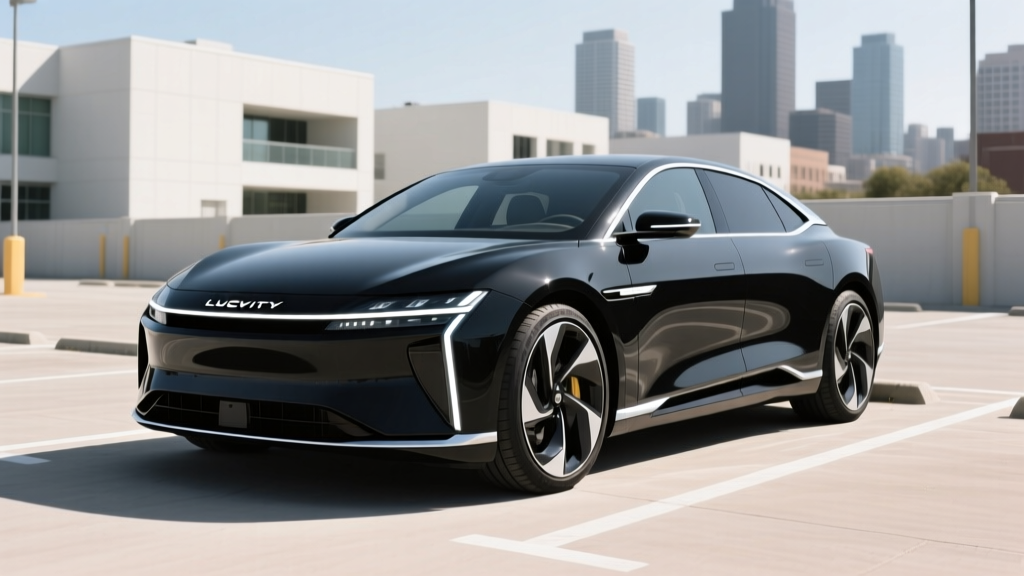
The Lucid Gravity has begun filtering into the used-car pipeline, and for patient shoppers, the Lucid Gravity second-hand market represents one of the more compelling value plays in the three-row luxury EV SUV segment. First deliveries landed in late 2024, meaning the earliest lease trade-ins, demo units, and low-mileage examples are now hitting auction listings and dealer lots in 2026. The proposition is familiar to anyone who has shopped used luxury EVs: heavy first-year depreciation meets a spec sheet that still embarrasses newer rivals on efficiency, range, and charging speed.
This guide breaks down what you actually get when you buy a pre-owned Gravity — real-world range, 900V charging behavior, warranty transferability, tax-credit eligibility under the used-vehicle rule, and the specific trim-level traps that catch second-hand buyers. If you're weighing a used Gravity against a new Tesla Model X, Rivian R1S, or BMW iX, the numbers below will make the decision easier.
Lucid Gravity: Quick Spec Reference for Used Buyers
Most second-hand Gravity examples available in 2026 are 2025 model-year Pure and Touring trims. The higher-performance Grand Touring rolled out later, so supply is thinner and prices hold firmer. Here's the baseline spec sheet to keep handy while browsing listings.
| Spec | Pure (RWD/AWD) | Touring (AWD) | Grand Touring (AWD) |
|---|---|---|---|
| EPA Range | ~440 mi (RWD est.) | ~400 mi | ~440+ mi |
| Battery (usable) | ~112 kWh NMC | ~112 kWh NMC | ~118 kWh NMC |
| Horsepower | 480 hp (RWD) / 600 hp (AWD) | ~620 hp | ~800+ hp |
| 0–60 mph | ~5.5 s (RWD) / 4.5 s (AWD) | ~4.0 s | <3.5 s |
| Max DC Fast Charge | ~300 kW peak | ~300 kW peak | ~300+ kW peak |
| 10–80% DC Time | ~22 min (ideal) | ~22 min (ideal) | ~20 min (ideal) |
| Level 2 Home Rate | 19.2 kW / ~55 mi/hr | 19.2 kW / ~55 mi/hr | 19.2 kW / ~55 mi/hr |
| Efficiency | ~130 MPGe / ~26 kWh/100mi | ~120 MPGe / ~28 kWh/100mi | ~125 MPGe est. |
| Base MSRP (new, 2025) | $79,900 | $94,900 | $109,900+ |
| Typical Used Price (2026) | $58,000–$68,000 | $70,000–$82,000 | $88,000–$98,000 |
| Warranty (basic / powertrain-battery) | 4 yr/50k mi / 8 yr/100k mi | 4 yr/50k mi / 8 yr/100k mi | 4 yr/50k mi / 8 yr/100k mi |
Real-World Range: What the EPA Sticker Doesn't Tell You
Lucid's engineering obsession with efficiency — low-drag body, high-voltage architecture, heat-pump thermal management — shows up in EPA numbers that look almost implausible for a 5,000+ lb three-row SUV. But a used buyer needs to translate those numbers into actual trip planning.
- City / suburban mixed driving (65°F): ~380–410 mi — regenerative braking recovers heavily in stop-and-go traffic, and the heat pump rarely engages.
- Highway cruising at 70–75 mph: ~310–340 mi — aerodynamic drag dominates above 65 mph, as with every EV.
- Highway at 80+ mph, mountain terrain: ~270–300 mi — elevation changes and sustained speed compound losses.
- Cold weather (20–30°F), highway: ~240–280 mi — battery preconditioning helps, but cabin heat and chemistry slow-down cost ~25–30%.
- Towing (up to 6,000 lb rated): ~160–200 mi — towing essentially halves range, consistent with every electric SUV we've tested.
Sources: EPA estimates via fueleconomy.gov; real-world reconciliation based on Lucid owner forums and independent 70-mph loop testing.
For a used Gravity with 20,000–40,000 miles on the odometer, expect State of Health (SoH) in the 94–97% range based on NMC chemistry behavior in similar 900V packs. Lucid's conservative buffer management (a larger hidden top/bottom buffer than most competitors) has historically protected long-term degradation. Still, always pull a SoH reading via the vehicle's service menu or a third-party OBD tool before purchase.
900V Charging Architecture: Speed, Curve, and Caveats
The Gravity's 900-volt electrical architecture is its most technically significant feature — and the one most likely to disappoint second-hand owners who don't understand charge-curve behavior. Peak kW is a marketing number; sustained kW is what gets you back on the road.
| Charging Method | Power / Rate | Practical Result |
|---|---|---|
| Level 1 (120V household) | ~1.4 kW | ~4 mi/hr — emergency top-up only |
| Level 2 (240V, 48A home charger) | 11.5 kW | ~33 mi/hr — overnight full charge in ~12 hr |
| Level 2 (240V, 80A hardwired) | 19.2 kW | ~55 mi/hr — full charge in ~7 hr |
| DC Fast (350 kW CCS/NACS station) | ~300 kW peak | 10–80% in ~22 min (preconditioned pack, 65–75°F) |
| DC Fast (150 kW station) | ~145 kW sustained | 10–80% in ~40 min |
| DC Fast (50 kW CHAdeMO/legacy) | ~48 kW | 10–80% in ~1 hr 50 min |
The charge-curve reality: Like the Air sedan, the Gravity holds its peak rate longer than most rivals — roughly from 10% to 45% SoC — before tapering. Expect average power of ~220–240 kW across the 10–80% window on a 350 kW Electrify America or Tesla Supercharger V4 post, which is why the 22-minute claim is achievable. However, on cold packs (below 50°F) without preconditioning, peak rates can drop to 120–150 kW, doubling your stop time. Always precondition via the navigation-routed charging feature before arriving at a DC station.
Home charging is where most Gravity owners will do 90% of their refueling. The 19.2 kW onboard charger is among the fastest in the segment, but it requires an 80A hardwired circuit and a panel that can support it — a $1,500–$3,500 installation in most homes, potentially more if your panel needs upgrading to 200A service. Budget accordingly.
Interior, Cargo, and Tech: What Daily Ownership Actually Feels Like
The Gravity's cabin is where Lucid's sedan DNA shows both strengths and compromises. The glass canopy roof, 34-inch curved OLED "Clearview" cockpit display, and minimalist center stack carry over from the Air, but scaled for family duty.
- Seating: Standard 7-passenger (2-3-2) or optional 6-passenger (2-2-2) with captain's chairs. Third-row legroom is ~32 inches — adequate for children and short-trip adults, tighter than a Rivian R1S or Tesla Model X on long hauls.
- Cargo (behind third row): ~24 cu ft. Fold the third row and you get ~62 cu ft; fold both rear rows for ~110 cu ft.
- Frunk: ~12 cu ft — deep and lined, useful for charging cables and groceries.
- Towing: Up to 6,000 lb when properly equipped (AWD/Grand Touring), with integrated trailer brake controller available.
Tech highlights: Lucid's UX runs on a custom OS (not Android Automotive), with OTA updates, native route-based battery preconditioning, a 21-speaker Surreal Sound system (Touring/Grand Touring), and the DreamDrive Pro ADAS suite. DreamDrive Pro is an SAE Level 2 system — lane-centering, adaptive cruise, and limited hands-free highway assist on mapped roads — and requires continuous driver supervision. It is not self-driving. Compared to Tesla FSD (Supervised) or GM Super Cruise, DreamDrive Pro is competent but a generation behind on hands-free availability and lane-change automation.
Used Pricing, Depreciation, and the Tax-Credit Question
Luxury EVs have absorbed punishing first-year depreciation since the Porsche Taycan, and the Gravity is following the pattern. A 2025 Pure that stickered near $82,000 out the door is now changing hands in the high $50Ks to mid-$60Ks with 15,000–30,000 miles — a 25–30% haircut. Touring trims are holding slightly better due to lower volume, while Grand Touring examples are rare enough that pricing is negotiable seller-by-seller.
| Scenario | Pure AWD | Touring | Grand Touring |
|---|---|---|---|
| New MSRP (2025 typical) | $84,900 | $97,500 | $114,000 |
| Avg. used price (2026, 20k mi) | $63,000 | $76,000 | $93,000 |
| Federal used-EV credit (§25E) | Up to $4,000 | Up to $4,000 | Up to $4,000 |
| Effective price after credit | ~$59,000 | ~$72,000 | ~$89,000 |
Critical tax-credit note: The new-vehicle §30D credit (up to $7,500) does NOT apply to used purchases. Instead, the IRS §25E used clean vehicle credit offers 30% of the sale price, capped at $4,000, subject to these rules:
- Vehicle age: Must be at least 2 model years old (a 2025 Gravity qualifies when purchased in calendar 2026+).
- Sale price cap: Vehicle must sell for $25,000 or less — this disqualifies nearly every used Gravity from the §25E credit in 2026, as most listings exceed $50,000.
- Buyer income cap: AGI ≤ $75,000 single / $150,000 head of household / $150,000 married filing jointly.
- Dealer requirement: Must be purchased from a licensed dealer, not a private party.
In practice, most Lucid Gravity second-hand buyers will not qualify for any federal tax credit in 2026 because the $25,000 sale-price cap excludes them. This is a common trap for used luxury-EV shoppers — always run the numbers before assuming a credit applies. Some states offer separate rebates; check your state energy office.
Warranty Transfer and Long-Term Ownership Risk
Lucid's warranty transfers to subsequent owners, which is a meaningful advantage in the second-hand market:
- Basic vehicle: 4 years / 50,000 miles (often expired on 2025 models by 2026).
- Battery and drive unit: 8 years / 100,000 miles, with capacity retention guaranteed above 70% of original.
- Roadside assistance: 4 years / 50,000 miles.
For a 2025 Gravity with 25,000 miles, you still have ~6 years and 75,000 miles of battery coverage remaining — significant protection against the single most expensive failure mode. Lucid's service network remains smaller than Tesla's or legacy OEMs', so verify proximity to a certified service center before buying, especially in the Mountain West and Southeast.
Gravity vs. the Used Luxury EV SUV Field
The second-hand Gravity competes directly with three other used luxury EV SUVs in this price band:
- Tesla Model X (2023–2025): More Supercharger access (though NACS adoption is closing the gap), better third-row space, but lower efficiency (~100 MPGe vs Gravity's 120+) and older interior quality.
- Rivian R1S (Dual-Motor): Superior off-road capability, better third row, stronger brand community, but ~20% lower range and slower DC charging (~200 kW peak).
- BMW iX xDrive50: Only two rows, but exceptional ride quality, more refined interior, and typically lower used pricing (~$55,000–$65,000).
Gravity: Pros
- Class-leading efficiency and EPA range for a three-row SUV
- 900V architecture delivers genuine 20-minute 10–80% stops
- 19.2 kW Level 2 charging — fastest home refuel in segment
- NACS port (2025+ models) — native Supercharger access
- Warranty transfers cleanly to second owners
Gravity: Cons
- Third row is tight for adults on long trips
- Lucid service network still thin outside major metros
- DreamDrive Pro ADAS trails Tesla FSD and GM Super Cruise
- Used §25E credit usually unavailable due to $25K price cap
- Resale values still establishing — depreciation risk remains
Who Should Buy a Used Lucid Gravity — and Who Shouldn't
Buy a used Gravity if: You prioritize range and charging speed over badge prestige, have home Level 2 charging, mostly drive 2–4 passengers, and value efficiency-per-mile above all else. A 2025 Pure AWD at ~$63K delivers 400+ miles of real-world range for less than a new mid-trim Model X.
Look elsewhere if: You regularly haul adults in the third row (choose R1S or Model X), live far from a Lucid service center, rely on the federal used-EV credit (price cap excludes you), or need best-in-class ADAS for long highway commutes (Super Cruise or FSD still lead).
Lucid Gravity Used-Buyer FAQ
What is the real-world highway range of a used Lucid Gravity?
Expect 310–340 miles at 70–75 mph in a Touring AWD with a healthy pack, versus the 400-mile EPA sticker. Cold weather and towing cut that significantly. Pure RWD models can return 350+ highway miles in mild conditions.
How fast does the Gravity actually charge on the road?
On a 350 kW DC station with a preconditioned pack, 10–80% takes roughly 22 minutes at an average of ~220–240 kW. On a 150 kW station, expect ~40 minutes. Cold packs without preconditioning can double these times.
Does a used Lucid Gravity qualify for any federal tax credit?
Almost never. The IRS §25E used-EV credit requires a sale price of $25,000 or less, and nearly every used Gravity exceeds that in 2026. The new-vehicle §30D credit does not apply to used purchases. Confirm details at irs.gov.
Is the battery warranty transferable to a second owner?
Yes. Lucid's 8-year / 100,000-mile battery and drive-unit warranty follows the vehicle, not the original owner, with guaranteed capacity retention above 70%.
How does the Gravity compare to a used Rivian R1S?
The Gravity wins on range (~400 vs ~320 mi), charging speed (300 vs 200 kW peak), and efficiency. The R1S wins on third-row comfort, off-road capability, and service-center density. Choose based on whether your priority is road-trip efficiency or family versatility.
What should I check before buying a used Gravity?
Pull a battery State of Health reading, verify remaining warranty via VIN with Lucid support, confirm proximity to a certified service center, inspect for any OTA-update-related service bulletins, and test the 19.2 kW onboard charger on a compatible Level 2 station to verify it reaches full rate.