Why Lucid Gravity Sales Registered Zero in July
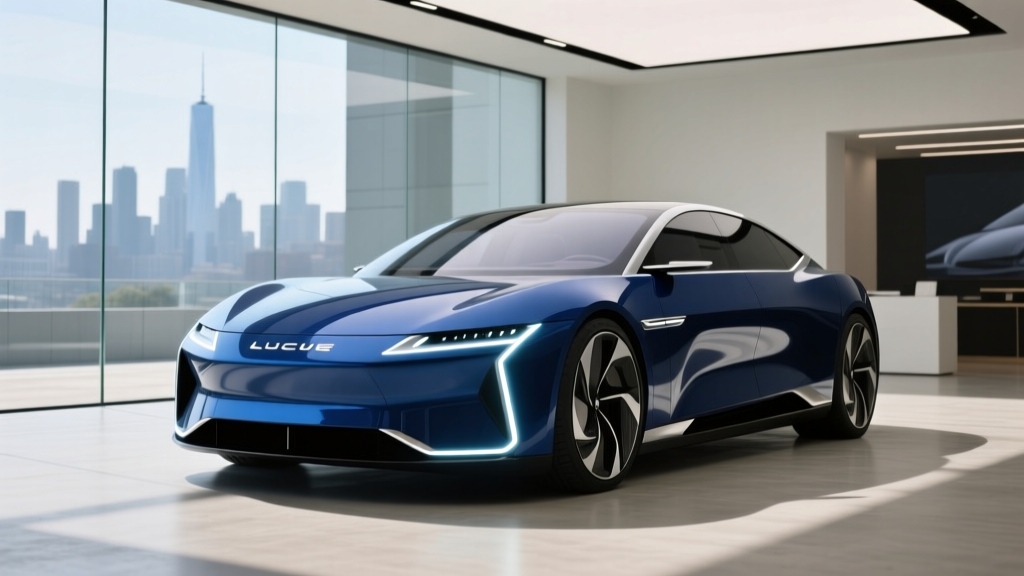
If you checked the July delivery numbers and noticed Lucid Gravity sales at zero, you're not alone — and it's not a demand problem. The Lucid Gravity, the brand's highly anticipated three-row electric SUV, has been navigating a protracted production ramp throughout 2026. While Lucid began limited deliveries of the Gravity in late 2025, meaningful retail volume has yet to materialize as the company works through supply-chain constraints and its characteristic slow-roll approach to quality validation.
For prospective buyers, the July zero-sales headline is less a red flag and more a timing issue. The Gravity remains one of the most spec-dense electric SUVs on paper, with class-leading range, blistering performance, and a starting price that undercuts several rivals. Here's everything we know about the 2026 Lucid Gravity — and whether it's worth the wait.
Lucid Gravity 2026: Quick Verdict
The Gravity is Lucid's bid to move beyond niche sedan buyer and into the high-volume three-row SUV segment. Built on a refined version of the Air's platform, it targets families who want 400+ miles of range without sacrificing third-row usability or cargo space. The trade-off: Lucid's production scaling challenges mean delivery timelines remain uncertain, and the service-center network is still thin outside major metros.
EPA Estimated Range: 440 miles (Pure RWD, estimated preliminary)
Real-World Expectation: Expect approximately 360–390 miles on mixed highway driving at 70–75 mph. In cold weather (below 30°F), plan for 280–330 miles depending on cabin heating load and terrain. The Gravity's large battery and efficient drivetrain mitigate losses, but physics still applies — high speeds and low temperatures cut range 15–30%.
Range, Battery, and Efficiency
Lucid has built its reputation on efficiency — squeezing more miles per kilowatt-hour than nearly any competitor — and the Gravity continues that tradition. The SUV uses a next-generation version of Lucid's miniaturized drive unit, paired with a large NMC (nickel manganese cobalt) lithium-ion battery pack.
| Specification | Gravity Pure (RWD) | Gravity Touring (AWD) | Gravity Grand Touring (AWD) |
|---|---|---|---|
| Battery Capacity (usable) | ~112 kWh (est.) | ~118 kWh (est.) | ~118 kWh (est.) |
| Battery Chemistry | NMC | NMC | NMC |
| EPA Range (est.) | 440 mi | 400 mi | 420 mi |
| Efficiency (MPGe est.) | 118 MPGe | 110 MPGe | 114 MPGe |
| kWh/100 mi (est.) | 28 | 31 | 29 |
| Drivetrain | RWD (single motor) | AWD (dual motor) | AWD (dual motor) |
| Horsepower | 480 hp | 620 hp | 820 hp |
| 0–60 mph | 5.5 sec (est.) | 3.8 sec | 3.2 sec |
Lucid's efficiency advantage comes from its proprietary motor design, low-drag aerodynamics (the Gravity's Cd is among the lowest for a three-row SUV), and a 900V+ electrical architecture that reduces resistive losses. On a road trip at steady highway speeds, the Gravity should outperform its EPA sticker relative to heavier, less aerodynamic competitors — though cold weather and mountain grades will compress that advantage.
Charging Speed: DC Fast and Home Level 2
Charging speed is where the Gravity's 900V architecture pays dividends. Lucid has confirmed peak DC fast-charge rates above 300 kW on compatible chargers, which translates to some of the shortest 10–80% sessions in the three-row SUV class.
| Charging Level | Power (kW) | Speed / Time | Notes |
|---|---|---|---|
| Level 1 (120V household) | ~1.4 kW | ~3–4 mi/hr | Emergency/top-up only |
| Level 2 (240V, 48A home) | 11.5 kW | ~30–34 mi/hr | Full charge in ~11–13 hours |
| Level 2 (240V, 80A) | 19.2 kW | ~50–55 mi/hr | Requires upgraded panel/circuit |
| DC Fast Charge (peak) | 300+ kW | 10–80% in ~20 min | On 350 kW CCS/NACS station |
| DC Fast Charge (sustained avg) | ~220 kW | 10–80% in ~25 min | Average over session, accounts for taper |
A critical nuance: peak kW is not sustained kW. The Gravity will hit 300+ kW briefly in the 10–30% state-of-charge window, then taper progressively. From 50–80%, expect the rate to drop to 150–180 kW as the battery management system protects cell longevity. This is normal behavior for large NMC packs, but it means your actual road-trip stop will average closer to 22–28 minutes for a 10–80% fill, not the 15-minute marketing headline.
The Gravity ships with a NACS (North American Charging Standard) port, granting native access to Tesla Supercharger V4 stalls and the growing NACS-open network from Electrify America, EVgo, and others. A CCS adapter may be available for legacy stations.
Pricing, Trims, and Federal Tax Credit Eligibility
Lucid has positioned the Gravity aggressively against the Tesla Model X, Rivian R1S, and BMW iX. The base Pure trim targets a sub-$80,000 starting price — remarkable for a 440-mile, three-row electric SUV — though availability of the Pure trim has been pushed back relative to the Touring and Grand Touring.
| Trim | Base MSRP (est.) | Federal §30D Credit | Effective Price (est.) |
|---|---|---|---|
| Gravity Pure | $79,900 | Up to $7,500* | ~$72,400 |
| Gravity Touring | $94,900 | Up to $7,500* | ~$87,400 |
| Gravity Grand Touring | $119,900 | Up to $7,500* | ~$112,400 |
*Federal tax credit caveats: The IRS §30D clean vehicle credit has strict eligibility requirements that apply to the Gravity. The SUV qualifies under the MSRP cap for vans/SUVs/pickups ($80,000 for the Pure; Touring and Grand Touring exceed this cap and may not qualify unless reclassified). Buyer income caps also apply: $300,000 for joint filers, $225,000 for heads of household, $150,000 for single filers (adjusted gross income). Additionally, battery component and critical mineral sourcing requirements must be met — Lucid has not publicly confirmed full compliance for all trims as of mid-2026. The credit can now be transferred at the point of sale, reducing your purchase price directly at the dealer. Always verify current eligibility on IRS.gov and consult a tax professional before relying on credit calculations.
Interior, Cargo, and Technology
The Gravity's cabin is designed around Lucid's "space concept" philosophy — maximizing interior volume within a relatively compact exterior footprint. Lucid claims the Gravity offers more interior passenger volume than the Tesla Model X despite being shorter overall.
- Passenger capacity: 7 (2+3+2) or available 6 (2+2+2 with captain's chairs)
- Cargo (behind 3rd row): ~20 cu ft
- Cargo (3rd row folded): ~58 cu ft
- Cargo (all rear rows folded): ~110 cu ft
- Front trunk (frunk): ~10 cu ft
- Second-row legroom: ~40 inches
- Third-row legroom: ~33 inches (best for children or short trips)
The infotainment centers on a massive 34-inch curved glass cockpit display, similar to the Air's but repositioned for SUV ergonomics. The system runs Lucid's proprietary OS with native navigation, over-the-air updates, and integrated trip planning that accounts for charging stops, elevation, and weather. Wireless Apple CarPlay and Android Auto are expected, though Lucid has historically been slow to add phone projection.
Driver Assistance: The Gravity ships with Lucid's DreamDrive Pro ADAS suite, featuring a full sensor array including LiDAR. This is an SAE Level 2 system — it provides hands-on highway assist with lane centering and adaptive cruise, but the driver must remain engaged and supervising at all times. It is not autonomous driving. Lucid has not announced a hands-off or eyes-off system.
DreamDrive Pro is an SAE Level 2 driver-assistance system. It does NOT make the Gravity self-driving. You must keep your hands on the wheel and eyes on the road. Performance degrades in heavy rain, construction zones, faded lane markings, and unmapped roads. Always remain prepared to take immediate control.
Pros, Cons, and Who Should Buy
- Class-leading EPA range (440 mi est. on Pure)
- Exceptional efficiency (MPGe) for a 3-row SUV
- 300+ kW DC fast charging with 900V architecture
- Sub-$80K base price undercuts Model X and R1S
- Spacious cabin with usable third row and frunk
- LiDAR-equipped ADAS hardware
- Production ramp delays — July sales at zero confirms limited availability
- Limited service center network outside major metros
- Higher trims exceed $80K MSRP cap for federal tax credit
- Third-row legroom tight for adults on long trips
- No hands-free driving mode (Level 2 only)
- Lucid's brand-new status means unproven long-term reliability data
- Choose the Gravity if: You want maximum range and efficiency in a three-row SUV, you have home Level 2 charging access, you live near a Lucid service center, and you're willing to wait for production to scale.
- Look elsewhere if: You need a vehicle immediately (consider Rivian R1S or Tesla Model X), you live in a rural area far from Lucid service, or you want hands-free highway driving (GM Super Cruise or Ford BlueCruise offer hands-off Level 2 on mapped roads).
Warranty and Ownership Costs
Lucid backs the Gravity with competitive warranty coverage, mirroring the Air's structure:
- Basic vehicle warranty: 4 years / 50,000 miles
- Battery and drive unit warranty: 8 years / 100,000 miles (minimum 70% capacity retention)
- Roadside assistance: 4 years / 50,000 miles
The 8-year/100,000-mile battery warranty with a 70% retention threshold is standard for the segment. Lucid's NMC cells have demonstrated strong degradation curves in the Air, with most owners reporting 92–95% state of health after 30,000 miles. The Gravity's larger pack and similar chemistry suggest comparable longevity, though real-world data will take years to accumulate.
Insurance costs are expected to run 15–25% above equivalent gas SUVs, consistent with the EV segment. According to industry data, the Gravity's repair costs, aluminum-intensive construction, and Lucid's limited body-shop network will push premiums higher than a Toyota Grand Highlander Hybrid.
Lucid Gravity vs. Key Competitors
The Gravity enters a crowded and growing three-row EV SUV segment. Here's how it stacks up against the most direct rivals on paper:
| Spec | Lucid Gravity (Touring) | Rivian R1S (Dual Max) | Tesla Model X (LR) | Kia EV9 (GT-Line AWD) |
|---|---|---|---|---|
| EPA Range (est.) | 400 mi | 410 mi | 335 mi | 280 mi |
| Battery (kWh) | ~118 | 149 | 100 | 100 |
| Peak DC Charge (kW) | 300+ | 220 | 250 | 210 |
| 10–80% Time | ~20 min | ~29 min | ~26 min | ~24 min |
| 0–60 mph | 3.8 sec | 4.5 sec | 3.8 sec | 5.0 sec |
| Starting Price | ~$94,900 | ~$99,000 | ~$81,630 | ~$73,900 |
| 3rd Row | Yes | Yes | Yes | Yes |
The Gravity's efficiency and charging speed advantages are clear on paper, but the Rivian R1S has a proven production track record and an expanding service network. The Tesla Model X benefits from Supercharger ubiquity and faster delivery timelines. The Kia EV9 is significantly cheaper but sacrifices over 100 miles of range. Your choice depends on whether you prioritize range and charging (Gravity), availability and adventure capability (R1S), or price (EV9).
Frequently Asked Questions
What is the real-world range of the Lucid Gravity?
The EPA-estimated range for the Gravity Pure (RWD) is approximately 440 miles. In real-world highway driving at 70–75 mph, expect 360–390 miles. In cold weather below 30°F, plan for 280–330 miles. Lucid's efficiency advantage means real-world results tend to be closer to EPA estimates than many competitors, but high speeds, elevation changes, and HVAC load always reduce range.
How fast does the Lucid Gravity charge?
On a 350 kW DC fast charger, the Gravity peaks above 300 kW and achieves a 10–80% charge in approximately 20 minutes. Sustained average rate is closer to 220 kW over the full session due to taper above 50% SoC. At home on a 48-amp Level 2 charger (11.5 kW), you'll add roughly 30–34 miles per hour, or a full charge in 11–13 hours.
How much does the Lucid Gravity cost after tax credits?
The Gravity Pure starts at an estimated $79,900 and could qualify for the full $7,500 federal §30D credit, bringing the effective price to ~$72,400. However, the Touring ($94,900) and Grand Touring ($119,900) trims exceed the $80,000 MSRP cap for SUVs and likely won't qualify for the federal credit. Buyer income caps and battery sourcing rules also apply — verify on IRS.gov.
Does the Lucid Gravity qualify for the federal EV tax credit?
It depends on the trim and your income. The Pure trim (under $80,000 MSRP) is positioned to qualify for up to $7,500 under IRS §30D, provided you meet income thresholds ($150K single / $300K joint) and the battery meets critical mineral and component sourcing requirements. Higher trims exceed the MSRP cap. The credit can be transferred at point of sale as of 2024 onward. Always confirm with a tax professional.
Is the Lucid Gravity worth buying vs. the Rivian R1S or Tesla Model X?
On paper, the Gravity offers superior efficiency, faster charging, and a lower base price than the R1S. But availability is the elephant in the room — Lucid Gravity sales at zero in July 2026 confirm the SUV isn't yet shipping at meaningful volume. If you need a three-row EV SUV now, the R1S and Model X are proven, deliverable options. If you can wait and prioritize range and charging speed, the Gravity is compelling — but lock in your reservation with realistic delivery expectations.
What are the biggest drawbacks of the Lucid Gravity?
The main concerns are production delays (as evidenced by the July zero-sales figure), Lucid's limited service center network, higher-trim pricing that exceeds the federal tax credit MSRP cap, and the brand's short track record for long-term reliability. The third row is best suited for children, and the DreamDrive Pro ADAS is Level 2 only — no hands-free driving mode is available.