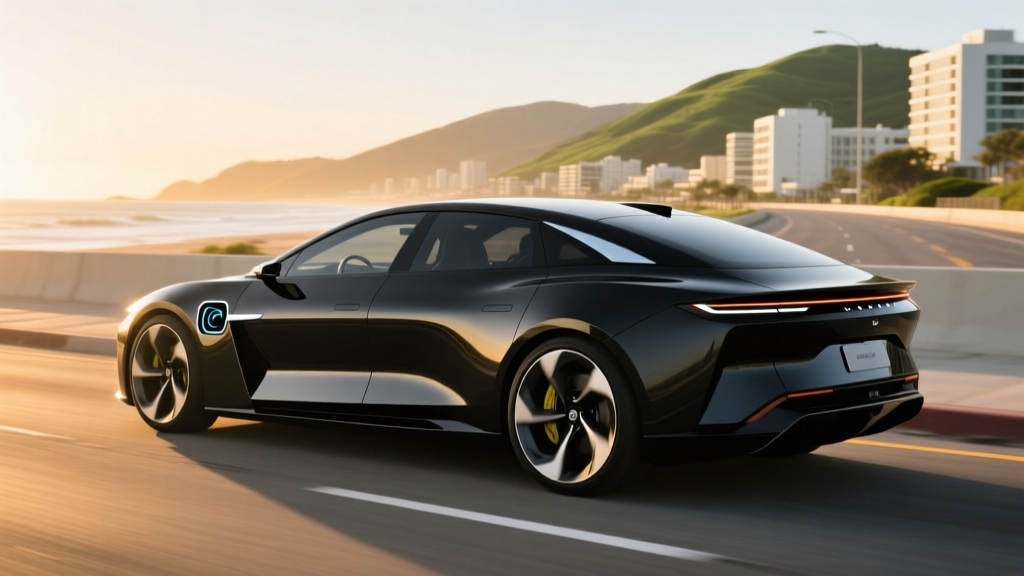
The Lucid Gravity has finally transitioned from auto-show darling to real-world driveway presence. After a prolonged and closely watched Lucid Gravity production ramp-up through late 2025 and into 2026, the three-row luxury electric SUV is reaching buyers in meaningful volume — and the wait has largely been worth it. With an EPA-estimated 440 miles of range, a 900-volt architecture enabling blistering DC fast-charging speeds, and genuine three-row practicality, the Gravity stakes a credible claim as the most capable luxury EV SUV on the market.
But production ramp-ups are rarely smooth, and Lucid's history with the Air sedan suggests patience may still be required for certain trim configurations. Here's everything current and prospective buyers need to know about the 2026 Lucid Gravity — from real-world range expectations to federal tax credit eligibility under current IRS §30D rules.
Range, Efficiency, and the Real-World Reality Check
The headline number is staggering: the Lucid Gravity Grand Touring AWD carries an EPA-estimated 440 miles of range from its roughly 120 kWh (usable) battery pack. That figure places it at the very top of the three-row EV SUV segment, outdistancing the Rivian R1S and Tesla Model X by significant margins. Lucid's proven powertrain efficiency — a hallmark of the Air sedan — carries over here, with the Gravity achieving an estimated 113 MPGe combined (roughly 30 kWh per 100 miles).
- EPA Estimate: 440 miles (combined city/highway)
- Highway-dominant driving (70-80 mph): Expect ~360–390 miles
- Cold weather (below 32°F): Expect ~320–360 miles depending on cabin heat usage and preconditioning
- City/commuter driving with regen: 420–440+ miles achievable
Lucid's heat pump and advanced thermal management help mitigate cold-weather losses, but physics still applies — any EV loses 15–25% of range in sustained freezing temperatures. Highway speeds above 75 mph also cut into the 440-mile sticker figure noticeably.
The base Gravity Pure trim (RWD) is EPA-rated at an estimated 450 miles, benefiting from lower weight and reduced drivetrain losses. For most buyers, the Grand Touring AWD's 440-mile figure is the relevant benchmark — and even with real-world deductions, 350+ usable miles is enough to eliminate range anxiety for all but the most extreme road trips.
Battery Chemistry and Long-Term Degradation
Lucid has not publicly disclosed the exact cell chemistry for the Gravity's battery pack, though industry analysis and the company's supplier relationships point to an NMC (nickel manganese cobalt) formulation optimized for energy density. This is consistent with the Air sedan's approach and makes sense for a vehicle prioritizing maximum range in a luxury package.
NMC chemistry offers superior energy density compared to LFP (lithium iron phosphate), which is why the Gravity can pack ~120 kWh of usable capacity into a package that still leaves room for three rows of passengers. The trade-off: NMC batteries benefit from daily charging limits of 80–90% SoC (state of charge) for longevity, whereas LFP packs can be routinely charged to 100% without accelerated degradation.
| Specification | Gravity Pure (RWD) | Gravity Grand Touring (AWD) |
|---|---|---|
| EPA Range (est.) | 450 miles | 440 miles |
| Battery (usable) | ~120 kWh | ~120 kWh |
| Chemistry | NMC | NMC |
| Drivetrain | Rear-Wheel Drive | Dual-Motor AWD |
| Horsepower | ~500 hp | ~800+ hp |
| 0–60 mph | ~5.5 sec | ~3.5 sec |
| Efficiency (MPGe) | ~117 MPGe | ~113 MPGe |
| Max DC Fast Charge | 300 kW (peak) | 300 kW (peak) |
| 10–80% DC Charge | ~22 min | ~22 min |
| Level 2 Home Charging | 19.2 kW (~70 mi/hr) | 19.2 kW (~70 mi/hr) |
| Base MSRP | ~$81,000 | ~$96,000 |
| Battery Warranty | 8 yr / 100,000 mi | 8 yr / 100,000 mi |
Charging Speed: The 900-Volt Advantage
Lucid's 900-volt electrical architecture is the Gravity's not-so-secret weapon. While many competitors operate on 400V systems, the higher voltage allows the Gravity to accept up to 300 kW at compatible DC fast chargers — and crucially, to sustain high charge rates longer through the charge curve before tapering above 80% SoC.
At a 350 kW Electrify America or Ionity station, the Gravity can add approximately 200 miles of range in roughly 15 minutes under ideal conditions (preconditioned battery, moderate ambient temperature, low current SoC). The 10–80% charge takes approximately 22 minutes. That taper above 80% is significant, though — charging from 80–100% can add another 25–30 minutes, so road-trip strategy should focus on the 10–80% window.
| Charge Level | Power | Miles Added per Hour | Full Charge Time |
|---|---|---|---|
| Level 1 (120V household) | ~1.4 kW | ~4–5 mi/hr | ~85+ hours |
| Level 2 (240V, 48A) | 11.5 kW | ~38 mi/hr | ~10–11 hours |
| Level 2 (240V, 80A hardwired) | 19.2 kW | ~65–70 mi/hr | ~6–7 hours |
| DC Fast (350 kW station) | 300 kW peak | ~800+ mi/hr (peak) | 10–80% in ~22 min |
For home charging, the Gravity's onboard charger supports up to 19.2 kW on Level 2 — but that requires an 80-amp hardwired circuit, which means a panel upgrade for many homes. A more common 48-amp Level 2 installation (like a ChargePoint Home Flex or Tesla Wall Connector) delivers 11.5 kW, adding roughly 38 miles per hour — more than sufficient for overnight replenishment. Budget $800–$2,200 for a professional Level 2 installation depending on your electrical panel's capacity and distance from the panel to the charger location.
Performance and Driving Dynamics
The Grand Touring AWD's dual-motor setup produces over 800 horsepower, launching the Gravity to 60 mph in approximately 3.5 seconds — remarkable for a three-row SUV weighing north of 5,800 pounds. The Pure RWD variant offers a more sedate but still brisk ~5.5-second 0–60 time with roughly 500 hp.
Lucid's compact motor design (each drive unit is roughly the size of a carry-on suitcase) frees up interior space and lowers the center of gravity. The result is an SUV that handles with more composure than its mass suggests, though it's not a sports car — the air suspension prioritizes ride comfort, absorbing highway imperfections with the isolation expected in a six-figure luxury vehicle.
Towing capacity is rated at up to 6,000 pounds when properly equipped, making the Gravity viable for boat trailers, horse trailers, and mid-size campers. Expect range to drop 30–50% while towing at highway speeds, depending on trailer aerodynamics and weight.
Interior Space, Tech, and Livability
The Gravity's three-row cabin is where the production ramp-up delay may have actually helped — Lucid used the extended development period to refine interior materials and software. The second row offers genuine adult-sized legroom (approximately 41 inches), while the third row accommodates children and shorter adults for trips under an hour (roughly 33 inches of legroom).
Cargo volume is competitive with the segment: approximately 20 cubic feet behind the third row, expanding to roughly 60 cubic feet with the third row folded and over 100 cubic feet with both rear rows down. The front trunk (frunk) adds an additional ~10 cubic feet of enclosed storage — a significant practical advantage over the Tesla Model X, which lacks a frunk.
The centerpiece of the dashboard is Lucid's 34-inch curved glass cockpit display, which floats above the dash and provides excellent visibility. The infotainment system runs on Lucid's proprietary software — responsive and visually clean, though the app ecosystem and third-party integration remain less mature than Tesla's. Wireless Apple CarPlay and Android Auto are supported.
The Gravity comes equipped with Lucid's DreamDrive Pro ADAS suite, which includes adaptive cruise control, lane-centering, automatic emergency braking, and a high-definition sensor array. This is an SAE Level 2 driver-assistance system — the driver must remain engaged and hands on or near the wheel at all times. It is not autonomous driving, and Lucid does not currently market it as such. Expect steady OTA improvements, but do not expect hands-free highway driving comparable to GM's Super Cruise or Ford's BlueCruise in the initial software releases.
Pricing, Tax Credits, and the Ownership Equation
The 2026 Lucid Gravity lineup starts at approximately $81,000 for the Pure RWD and climbs to roughly $96,000 for the Grand Touring AWD. A fully optioned Grand Touring with the Surreal Stealth package and 22-inch wheels can approach $110,000 as-tested.
| Trim | Base MSRP | §30D Credit Eligible? | Effective Price (if eligible) |
|---|---|---|---|
| Pure RWD | ~$81,000 | Check sourcing + income caps | ~$73,500 |
| Grand Touring AWD | ~$96,000 | Check sourcing + income caps | ~$88,500 |
| Grand Touring (fully loaded) | ~$110,000 | Exceeds SUV MSRP cap | ~$110,000 |
Federal tax credit eligibility under IRS §30D is nuanced for the Gravity. The SUV MSRP cap is $80,000 — meaning the Pure RWD at ~$81,000 sits right at the boundary (exact eligibility depends on trim and options as delivered). The Grand Touring AWD exceeds the cap and does not qualify for the new-vehicle credit. Buyer income caps also apply: modified AGI must not exceed $300,000 (joint), $225,000 (head of household), or $150,000 (single). Additionally, battery component and critical mineral sourcing requirements must be met — Lucid's supply chain has been evolving, and buyers should verify current-year eligibility on fueleconomy.gov before relying on the credit at point of sale.
The §30D credit can now be transferred to the dealer at point of sale as an immediate price reduction, which is a meaningful cash-flow advantage over waiting for a tax refund. Consult a tax professional to confirm your individual eligibility.
Gravity vs. the Competition: Where It Wins and Where It Doesn't
- Best-in-class EPA range (440+ miles) among three-row EV SUVs
- 300 kW DC fast charging with 900V architecture
- Genuine three-row adult usability and strong cargo volume
- Refined ride quality with air suspension
- 6,000-lb towing capacity
- Spacious frunk adds practical storage
- Pricing starts above $80K; most trims ineligible for §30D credit
- Production ramp-up still causing delivery delays for some configurations
- ADAS suite less mature than Tesla FSD or GM Super Cruise
- Service center network still limited outside major metros
- Brand-new model — long-term reliability data does not yet exist
- NMC battery requires 80–90% daily charge limit for longevity
Against the Rivian R1S (EPA ~410 miles, starting ~$80K), the Gravity offers more range, faster charging, and a more luxurious interior — but Rivian's adventure-oriented features (gear tunnel, more robust off-road capability, and a more established service network) appeal to a different buyer. Against the Tesla Model X (EPA ~348 miles, starting ~$82K), the Gravity is decisively more efficient and offers superior third-row space, though Tesla's Supercharger network and software ecosystem remain advantages. The Kia EV9 (EPA ~304 miles, starting ~$55K) undercuts the Gravity dramatically on price and may be the rational choice for buyers who don't need 440 miles of range.
Who the Lucid Gravity Is For
The Gravity is best suited for affluent families and professionals who need three-row seating, prioritize maximum range and charging speed, and value a premium cabin experience. It excels as a daily commuter with road-trip capability — the 440-mile range means most owners will charge at home and only use DC fast charging on trips exceeding 300 miles. If you regularly tow, carry six or seven passengers, and want to minimize charging stops, the Gravity is currently the most capable EV for the job.
If your budget is tighter, you don't need three rows, or you prioritize an established service network over cutting-edge efficiency, the Rivian R1S, Tesla Model X, or Kia EV9 may be more practical choices.
Frequently Asked Questions
What is the real-world range of the Lucid Gravity?
The EPA rates the Grand Touring AWD at 440 miles. In real-world highway driving at 70–80 mph, expect 360–390 miles. In freezing weather, plan for 320–360 miles. City commuting with regenerative braking can match or slightly exceed the EPA figure.
How fast does the Gravity charge at home and on the road?
On a 350 kW DC fast charger, the Gravity peaks at 300 kW and charges from 10–80% in approximately 22 minutes. At home on a 48-amp Level 2 charger (11.5 kW), it adds roughly 38 miles per hour, fully recharging overnight in 10–11 hours. An 80-amp hardwired Level 2 (19.2 kW) cuts that to 6–7 hours.
Does the Lucid Gravity qualify for the $7,500 federal EV tax credit?
It depends on trim and your income. The Pure RWD at ~$81,000 is near the $80,000 SUV MSRP cap — check the exact as-equipped price. The Grand Touring AWD at ~$96,000 exceeds the cap and is not eligible. All buyers must also meet income thresholds and battery-sourcing requirements per IRS §30D rules.
Is the Lucid Gravity worth buying over the Rivian R1S or Tesla Model X?
If maximum range, fastest charging, and luxury interior quality are your top priorities, the Gravity has a clear edge. If you need off-road capability and a more established service network, the R1S is stronger. If Supercharger access and software maturity matter most, the Model X still has advantages — though its range and efficiency trail significantly.
What is the battery warranty on the Lucid Gravity?
Lucid provides an 8-year / 100,000-mile battery and powertrain warranty, consistent with the industry standard for luxury EVs. The warranty covers defects and excessive capacity degradation (typically below 70% state of health).
How long is the wait for a Lucid Gravity order in 2026?
The Lucid Gravity production ramp-up has improved delivery timelines significantly compared to late 2025, but certain configurations — particularly the Grand Touring with popular option packages — may still carry a 2–4 month wait. Contact a Lucid studio or check the online configurator for current estimates.