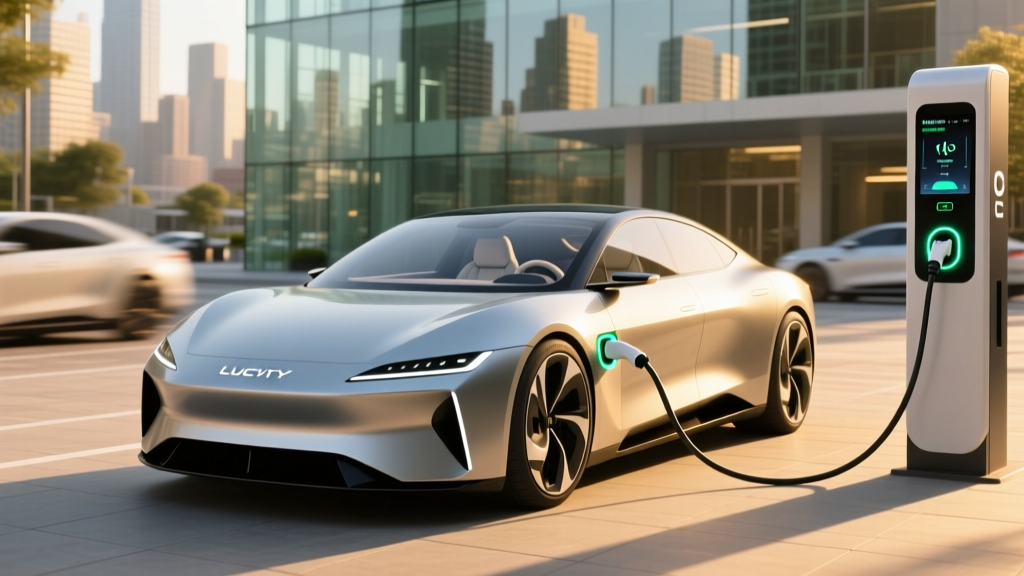
The Lucid Gravity has been the most anticipated three-row electric SUV since its reveal, and with the 2026 production ramp-up finally accelerating at Lucid's Casa Grande, Arizona factory, the vehicle is reaching more driveways across the US. But does the Gravity live up to its spec sheet when you factor in real-world highway efficiency, DC fast-charging curves, and the evolving federal tax credit landscape? We break down every number that matters for buyers evaluating this 440-mile, 800-horsepower family hauler.
Lucid Gravity Production Ramp-Up: Where Things Stand in 2026
Lucid began limited Gravity deliveries in late 2024, but the 2026 model year marks the first period of genuine volume production. The company's AMP-1 factory in Casa Grande has expanded its assembly line capacity, and reservation holders who placed deposits as far back as 2021 are finally receiving delivery windows. Lucid has stated it aims to produce roughly 5,000-8,000 Gravity units in 2026, a meaningful increase over the initial hand-build pace, though still far below the volumes Tesla or Hyundai-Kia push through their own plants.
For buyers, this ramp-up matters practically: delivery timelines have compressed from 12+ months to approximately 3-5 months for new orders placed in early 2026, and Lucid has expanded its service center network in key metro areas to support the growing fleet. If you're considering the Gravity, the production ramp-up means better availability — but also that early-build quirks may have been ironed out as the line matures.
Range, Efficiency & Real-World Expectations
EPA Estimated Range: 440 miles (Grand Touring AWD, 20" wheels)
Real-World Highway Expectation: ~350-380 miles at sustained 70-75 mph
Cold-Weather (below 32°F): Expect ~280-320 miles depending on cabin heat and terrain
City/Commuting: 400-430 miles typical with regenerative braking
The Grand Touring trim uses a roughly 118 kWh usable battery pack (124 kWh gross) with NMC (nickel-manganese-cobalt) chemistry, chosen for its high energy density — critical in a vehicle this large that still targets 440 miles. The base Pure trim, expected to follow later in the 2026 production cycle, will use a smaller pack targeting approximately 380 miles EPA, though final EPA certification for that variant is still pending.
Lucid's efficiency advantage comes from its 900V electrical architecture, low-drag aerodynamics (Cd of approximately 0.24 for an SUV is exceptional), and silicon-carbide inverters that minimize drivetrain losses. The EPA rates the Gravity Grand Touring at approximately 112 MPGe combined, translating to roughly 30 kWh per 100 miles — competitive with the BMW iX xDrive50 and significantly better than the Rivian R1S, which sits closer to 35-38 kWh/100mi due to its boxier profile and heavier curb weight.
According to fueleconomy.gov, the Gravity's efficiency figures place it among the most efficient three-row SUVs on the market, gas or electric. That said, efficiency drops noticeably above 75 mph — a physics reality for any tall vehicle — and cold weather combined with highway speeds will compress range by 25-35%, consistent with NMC chemistry behavior observed across the EV market.
Charging Speed: DC Fast & Home Level 2
| Charging Level | Max Power (kW) | Speed / Time | Connector |
|---|---|---|---|
| Level 1 (120V) | ~1.4 kW | ~3-4 mi/hr | NACS (native) |
| Level 2 (240V, 48A) | 11.5 kW | ~28-32 mi/hr; full charge in ~12 hr | NACS (native) |
| DC Fast Charge (peak) | 300 kW | 10-80% in ~22 min (preconditioned) | NACS (native); CCS via adapter |
The Gravity ships with a native NACS (North American Charging Standard) port, giving it direct access to Tesla Supercharger V4 stalls and the growing network of NACS-equipped third-party chargers from Electrify America, EVgo, and others. This is a significant practical advantage in 2026, as the NACS ecosystem has become the de facto national standard.
On a 350 kW-capable charger, the Gravity peaks near 300 kW — but as with all EVs, that peak is not sustained. The charge curve holds above 250 kW from roughly 10% to 45% SoC, then tapers progressively. Expect the 10-80% session to take approximately 22 minutes when the battery is preconditioned (the Gravity's nav system automatically begins thermal prep when you route to a charger). Without preconditioning — say, arriving at a charger after the car sat cold — add 3-5 minutes as the battery warms to optimal charging temperature.
Above 80% SoC, charging slows dramatically to protect the NMC cells, dropping below 50 kW past 90%. This is standard behavior for lithium-ion packs, but it means highway-trip strategy should target 10-80% cycles rather than filling to 100% at every stop.
For home charging, the Gravity's 11.5 kW onboard charger adds roughly 30 miles of range per hour on a 48-amp Level 2 circuit. Most owners will install a 60-amp breaker (requiring a 48-amp continuous draw circuit) to unlock this rate. A typical overnight session from 20% to 80% takes about 6-7 hours — perfectly aligned with a standard sleep schedule. Lucid includes a mobile connector with the vehicle for 120V and 240V (NEMA 14-50) use, though a hardwired wall unit from ChargePoint, Emporia, or Wallbox is recommended for daily use.
Performance & Drivetrain
| Specification | Grand Touring AWD | Pure (Expected) |
|---|---|---|
| Horsepower | 800 hp | ~480 hp (est.) |
| 0-60 mph | 3.5 seconds | ~5.5 seconds (est.) |
| Drivetrain | Dual-motor AWD | Dual-motor AWD |
| Top Speed | 145 mph (electronically limited) | ~130 mph (est.) |
| Towing Capacity | 6,000 lbs | ~6,000 lbs (est.) |
The Grand Touring's dual-motor AWD powertrain produces 800 horsepower — a figure that makes the Gravity one of the quickest three-row SUVs ever sold, gas or electric. The 3.5-second 0-60 time beats the Tesla Model X Plaid's claimed three-row configuration times and demolishes the Rivian R1S quad-motor's 4.5-second run. In practice, the acceleration is startling for a 5,800-pound vehicle, though the real value of that torque is highway merging confidence and mountain-pass overtaking rather than drag-race bragging rights.
The Gravity uses Lucid's proprietary miniaturized drive units — the same compact motor technology that gives the Air sedan its class-leading interior volume. The air suspension provides approximately 2.0 inches of adjustable ride height, with a dedicated low-drag highway mode and a higher clearance setting for rough roads or light off-pavement use. Towing capacity of 6,000 pounds covers most boat trailers and mid-size campers, though towing will cut range roughly in half — expect 200-220 highway miles when pulling near max weight.
Interior Space, Cargo & Technology
The Gravity's three-row cabin accommodates up to seven passengers (or six with optional second-row captain's chairs). Key dimensions:
- Cargo (behind 3rd row): ~22 cu ft
- Cargo (3rd row folded): ~62 cu ft
- Cargo (all rows folded): ~105 cu ft
- Frunk (front trunk): ~10 cu ft — large enough for a full grocery run or charging cables
- Third-row legroom: ~32 inches — suitable for children or adults on shorter trips
- Second-row legroom: ~40 inches
The standout technology feature is Lucid's 34-inch curved "Clearview" cockpit display that spans the driver's instrument cluster and extends into the central infotainment zone, using a glass canopy design that reduces glare. The system runs Lucid's proprietary software with native integration for Apple CarPlay, Android Auto, and over-the-air updates. A secondary lower touchscreen handles climate and secondary vehicle controls.
Driver assistance comes via Lucid's DreamDrive Pro system, which uses a suite of cameras, radar, and lidar sensors. DreamDrive Pro is a Level 2 driver-assist system per SAE classification — meaning the driver must remain engaged and supervising at all times. It offers adaptive cruise, lane centering, automatic lane changes on highways, and a hands-off (eyes-on) highway driving mode on mapped roads. It is not autonomous driving; it competes directly with Tesla Autopilot, GM Super Cruise, and Ford BlueCruise in capability and limitation.
Notable drawbacks include the absence of physical buttons for most secondary controls (the lower touchscreen handles wipers, mirrors, and glove box), which some testers find distracting. The third row, while usable, does not match the space offered by a full-size SUV like the Chevrolet Tahoe — this is a mid-size premium vehicle, and the third row reflects that.
Pricing, Trims & Federal Tax Credit Eligibility
| Trim | Base MSRP | §30D Credit Eligible? | Effective Price (if eligible) |
|---|---|---|---|
| Pure AWD | ~$79,900 | No (exceeds $80,000 SUV cap) | ~$79,900 |
| Grand Touring AWD | ~$94,900 | No (exceeds $80,000 SUV cap) | ~$94,900 |
Under current IRS §30D rules, the federal clean vehicle credit provides up to $7,500 for qualifying new EVs. However, SUVs face an $80,000 MSRP cap (sedans and trucks have different thresholds). Both the Gravity Pure and Grand Touring exceed this cap at their base MSRPs, meaning neither trim qualifies for the federal purchase credit as currently structured.
There is one potential workaround: the §30D credit can be applied as a point-of-sale price reduction (transferred to the dealer), but this still requires the vehicle itself to meet all eligibility criteria, including the MSRP cap, buyer income limits ($300,000 joint / $150,000 single), and battery critical-minerals and component sourcing requirements. Since the Gravity's MSRP exceeds the cap, the point-of-sale transfer does not apply here either.
Buyers should also check their state-level incentives — California, Colorado, New York, and several other states offer separate EV rebates or tax credits that may have different MSRP thresholds or none at all. These vary by jurisdiction and change frequently, so consult your state's energy or DMV website for current programs.
For buyers who can access a used Gravity in future years, the §25E used clean vehicle credit (up to $4,000 or 30% of sale price, whichever is less) may become relevant once examples hit the secondary market, subject to its own income and price caps ($25,000 maximum sale price).
Warranty & Ownership Considerations
Lucid backs the Gravity with the following warranty coverage:
- Basic Vehicle: 4 years / 50,000 miles
- Battery & Powertrain: 8 years / 100,000 miles (with a capacity retention threshold of approximately 70%)
- Roadside Assistance: 4 years / 50,000 miles
The 8-year/100,000-mile battery warranty is standard for the premium EV segment, matching BMW, Mercedes, and Rivian. Tesla offers 8 years / 120,000 miles on the Model X, giving it a slight edge for high-mileage drivers. Lucid's 70% capacity retention threshold means the warranty triggers if your battery degrades below 70% of original usable capacity within the coverage period — a reasonable industry standard, though some buyers wish for 75%.
Insurance costs for the Gravity are expected to run 15-25% higher than a comparably priced gas SUV, consistent with the premium EV segment. Get quotes from multiple carriers before purchase — Geico, Progressive, and State Farm all rate EVs differently, and some offer green-vehicle discounts.
Who the Lucid Gravity Is For
- You want the longest-range three-row electric SUV available (440 mi EPA)
- You prioritize charging speed and NACS network access for road trips
- You need genuine performance (3.5s 0-60) without sacrificing family utility
- You value efficiency and low kWh/100mi costs in a large vehicle
- You have access to home Level 2 charging for daily convenience
- You need the federal $7,500 tax credit to make the math work
- You regularly carry six adults — the third row is best for kids or short trips
- You want the lowest possible purchase price (Rivian R1S starts ~$10K lower)
- You live far from a Lucid service center and need widespread dealer support
- You prefer physical controls over touchscreen-based interfaces
Lucid Gravity vs. Key Competitors
The Gravity's primary rivals in the premium three-row electric SUV space are the Tesla Model X and the Rivian R1S. Here's how they compare on the metrics that matter:
- Range: Gravity (440 mi) > Model X (~335 mi) > R1S Large Pack (~352 mi)
- Charging Speed: Gravity (300 kW peak) ≈ R1S (~220 kW) > Model X (~250 kW)
- Starting Price: R1S (~$79,900) < Model X (~$84,990) < Gravity Pure (~$79,900)
- Third-Row Space: Model X > R1S ≈ Gravity
- Service Network: Tesla >> Rivian > Lucid
The Gravity wins on range and efficiency, ties or wins on charging, but trails on service network breadth and third-row space. The Model X remains the default for buyers who want maximum Supercharger density and falcon-wing door novelty; the R1S appeals to off-road-oriented families who value Rivian's adventure positioning and slightly lower entry price.
Frequently Asked Questions
What is the real-world range of the Lucid Gravity?
The EPA rates the Gravity Grand Touring at 440 miles. In real-world highway driving at 70-75 mph, expect 350-380 miles. In cold weather (below freezing), that drops to approximately 280-320 miles. City commuting with regenerative braking can approach 400+ miles.
How fast does the Gravity charge on DC fast chargers and at home?
On a 350 kW DC fast charger, the Gravity peaks at approximately 300 kW and charges from 10-80% in about 22 minutes when preconditioned. At home on a 48-amp Level 2 (240V) circuit, it charges at 11.5 kW, adding roughly 30 miles of range per hour — a full overnight session covers most daily needs.
Does the Lucid Gravity qualify for the federal EV tax credit?
No. Under current IRS §30D rules, SUVs must have an MSRP at or below $80,000 to qualify. Both Gravity trims exceed this cap. State-level incentives may still apply depending on your jurisdiction.
How long is the battery warranty?
Lucid provides an 8-year / 100,000-mile battery and powertrain warranty with a capacity retention threshold of approximately 70%. This is consistent with most premium EV manufacturers.
Is DreamDrive Pro self-driving?
No. DreamDrive Pro is an SAE Level 2 driver-assist system. It can handle steering, acceleration, and braking on highways under certain conditions, but the driver must remain fully engaged and ready to take over at any time. It is not autonomous driving.
Can the Gravity tow, and how does that affect range?
The Gravity has a maximum towing capacity of 6,000 pounds. When towing near that limit, expect range to decrease by approximately 45-55%, yielding roughly 200-220 highway miles. Plan charging stops accordingly on trailer trips.
When can I actually get a Gravity delivered?
With the 2026 production ramp-up, new orders placed in early 2026 carry estimated delivery windows of 3-5 months. Grand Touring reservations from earlier years are being fulfilled throughout 2026. The Pure trim is expected to enter production later in the year.