The Verdict: Lucid's Efficiency King Enters the SUV Arena
Lucid Motors built its reputation on the Air sedan's record-breaking efficiency — more miles per kWh than anything else on the road. The 2026 Lucid Gravity Origin is the brand's first SUV, and it carries that same powertrain philosophy into a three-row, 7,000-pound family hauler. With an EPA-estimated range of up to 440 miles, a 900-volt electrical architecture enabling some of the fastest DC fast-charging in production, and a starting MSRP of $79,900, the Gravity Origin targets the premium electric SUV buyer who refuses to choose between range, space, and performance.
But spec sheets don't tell the full story. After analyzing the Gravity Origin's charging curves, real-world efficiency data, and ownership economics, this review breaks down exactly what you can expect from Lucid's flagship SUV — and whether it justifies its premium positioning against the Tesla Model X, Rivian R1S, and BMW iX.
Range and Efficiency: The Numbers That Set Lucid Apart
The Gravity Origin's headline figure is its EPA-estimated range, which reaches up to 440 miles on the highest-spec configuration equipped with the available 118 kWh (usable) battery pack. That number isn't just impressive for an SUV — it's among the highest EPA range figures of any production vehicle sold in the United States, period.
EPA Estimate: Up to 440 miles (depending on wheel size and drivetrain configuration)
Highway driving (75 mph): Expect approximately 360–390 miles. The Gravity's tall, boxy SUV profile creates more aerodynamic drag than the Air sedan, and sustained highway speeds are where EVs lose the most efficiency.
Cold weather (below 32°F): Range drops to roughly 310–340 miles. The Gravity's heat pump and battery thermal management help mitigate losses, but lithium-ion chemistry inherently loses capacity in freezing temperatures.
City/commuter driving: You'll see figures close to or slightly above the EPA estimate thanks to regenerative braking recapturing energy in stop-and-go traffic.
Lucid's efficiency advantage comes from its miniaturized, in-house-designed drive units and the 900V+ electrical architecture that reduces resistive losses throughout the powertrain. On the EPA combined cycle, the Gravity Origin achieves approximately 120 MPGe, translating to roughly 28–30 kWh per 100 miles — a remarkable figure for a vehicle with this much mass and interior volume. For context, the Tesla Model X Long Range achieves roughly 102 MPGe combined, and the Rivian R1S Dual-Motor lands around 96 MPGe.
| Spec | Value |
|---|---|
| EPA Range (max config) | 440 miles |
| Battery Capacity (usable) | ~118 kWh |
| Battery Chemistry | NMC (Nickel Manganese Cobalt) |
| Drivetrain | Dual-Motor AWD |
| Horsepower | ~800+ hp (Dream/Grand Touring) |
| 0–60 mph | ~3.5 sec (estimated) |
| Efficiency (combined) | ~120 MPGe / ~28 kWh/100 mi |
| Max DC Fast Charge | 300+ kW (900V architecture) |
| 10–80% DC Charge Time | ~20 minutes |
| Level 2 Home Charging | ~19.2 kW (up to ~48 mi/hr) |
| Seating | Up to 7 passengers (3 rows) |
| Cargo (behind 3rd row) | ~28 cu ft |
| Cargo (2nd row folded) | ~62 cu ft |
| Cargo (all rear rows folded) | ~112 cu ft |
| Starting MSRP | $79,900 |
| Battery Warranty | 8 years / 100,000 miles |
Charging Speed: 900V Architecture in Practice
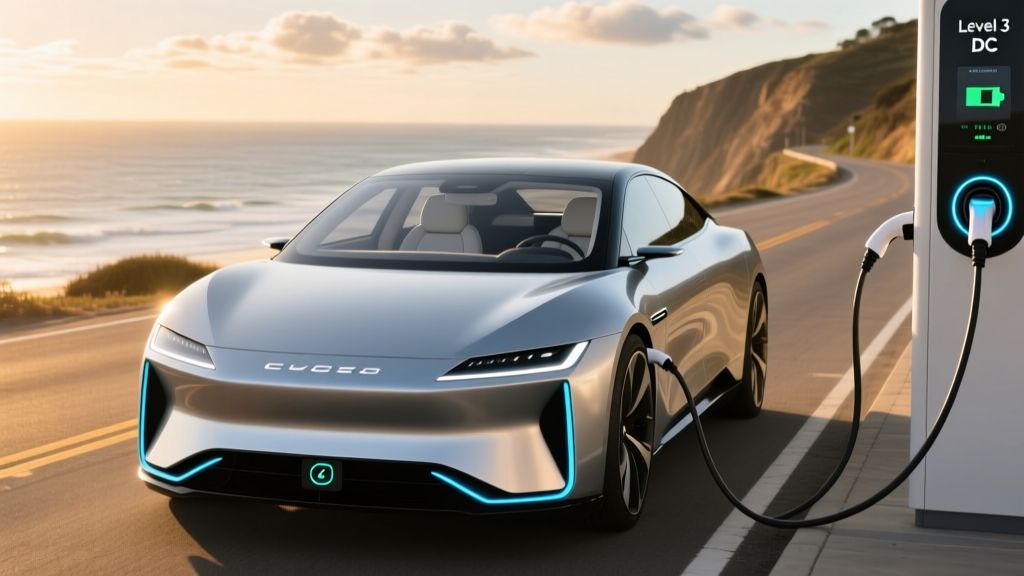
The Gravity Origin inherits Lucid's 900V+ electrical architecture, which is the same platform technology that allows the Air Grand Touring to sustain peak charging rates longer than most competitors. Peak DC fast-charging rates exceed 300 kW at compatible chargers, and the 10–80% charge time is approximately 20 minutes under optimal conditions (battery preconditioned, ambient temperature moderate, charger capable of sustaining output).
Understanding the charge curve is essential. Like all modern EVs, the Gravity Origin will not sustain its peak 300+ kW rate for the entire session. The highest charge rates occur between roughly 10% and 40% state of charge (SoC), after which the rate tapers progressively. From 80% to 100%, charging slows dramatically to protect battery health — expect the final 20% to take nearly as long as the 10–80% session. For road trips, plan your stops around 10–80% charges to minimize total downtime.
| Charge Level | Power / Voltage | Miles Added per Hour | Typical Use Case |
|---|---|---|---|
| Level 1 (120V household) | ~1.4 kW | ~4–5 mi/hr | Emergency / overnight trickle |
| Level 2 (240V home) | Up to 19.2 kW | ~48 mi/hr | Daily home charging |
| DC Fast Charge | Peak 300+ kW (900V) | Up to ~200 mi in 15 min | Road trips / public stations |
For home charging, the Gravity's onboard charger supports up to 19.2 kW on Level 2, which is among the highest in its class. With a properly installed 100-amp dedicated circuit and a hardwired Level 2 station like the ChargePoint Home Flex or Tesla Wall Connector (configured for J1772/NACS), you can replenish roughly 48 miles of range per hour — enough to fully recharge the battery overnight in about 6–7 hours from near-empty. Note that a 19.2 kW Level 2 installation typically requires a 200-amp (or higher) electrical panel; budget $1,500–$3,500 for the electrician work depending on your home's existing infrastructure and panel capacity.
The Gravity ships with a NACS (North American Charging Standard) connector, granting native access to Tesla's Supercharger network — the most extensive and reliable DC fast-charging infrastructure in the United States. This eliminates the adapter hassle that CCS-equipped vehicles face at Superchargers.
Performance and Driving Dynamics
The Gravity Origin is not a stripped-down efficiency play — even the base configuration delivers dual-motor all-wheel drive and an estimated 800+ horsepower in the upper trims (Grand Touring and Dream). The 0–60 mph time for the performance-oriented configurations is approximately 3.5 seconds, which places the Gravity firmly in supercar territory despite its 7,000-pound curb weight.
The dual-motor AWD system provides torque vectoring across all four wheels, and Lucid's in-house drive units are compact enough to preserve interior packaging. The air suspension system adjusts ride height for highway efficiency (lowering at speed) and off-road clearance (raising up to ~9 inches of ground clearance when needed). In real-world driving, the Gravity's low center of gravity — a byproduct of the floor-mounted battery pack — keeps body roll well-controlled for a vehicle of this size, though you'll feel the mass during aggressive direction changes.
Interior, Cargo, and Technology
The Gravity's cabin is designed around a concept Lucid calls "Space Concept," emphasizing open sightlines and a glass canopy roof that floods all three rows with natural light. Seating for up to seven is available, with the second row offering either a bench (3-across) or individual captain's chairs. Third-row legroom is approximately 32 inches — adequate for children and shorter adults on trips under two hours, but tight for taller passengers on long hauls.
Cargo volume behind the third row is approximately 28 cubic feet, expanding to roughly 62 cubic feet with the third row folded and 112 cubic feet with both rear rows flat. A front trunk (frunk) adds additional enclosed storage, useful for charging cables and smaller items.
The infotainment system centers on a curved 34-inch "Clearview" glass cockpit display, supplemented by a lower touchscreen for climate and vehicle controls. Lucid's software includes native navigation with route-based battery preconditioning (essential for maximizing DC fast-charging speed at your destination), over-the-air updates, and a growing suite of connected services. Wireless Apple CarPlay and Android Auto are supported.
Driver-assistance features fall under Lucid's "DreamDrive Pro" branding, which includes adaptive cruise control, lane-centering assist, automated emergency braking, blind-spot monitoring, and a 360-degree camera system. Important: DreamDrive Pro is an SAE Level 2 driver-assistance system — it requires the driver to remain fully engaged with hands on the wheel and eyes on the road at all times. It is not autonomous or "self-driving."
Pricing, Trims, and Federal Tax Credit Eligibility
The 2026 Lucid Gravity lineup is structured across several trim levels, with the Origin positioned as a mid-tier offering. Pricing breaks down approximately as follows:
| Trim | Base MSRP | Federal §30D Credit Eligibility | Effective Price (if eligible) |
|---|---|---|---|
| Gravity (base) | ~$79,900 | Potential — subject to MSRP cap ($80,000 SUV) & sourcing rules | ~$72,400 |
| Gravity Origin | ~$87,400 | Not eligible — exceeds $80K SUV MSRP cap | $87,400 |
| Grand Touring | ~$100,000+ | Not eligible | $100,000+ |
| Dream Edition | ~$125,000+ | Not eligible | $125,000+ |
- MSRP Cap for SUVs/vans/pickups: $80,000. The base Gravity may qualify; the Origin trim and above exceed this cap.
- Buyer Income Limits: AGI must not exceed $150,000 (single), $225,000 (head of household), or $300,000 (joint filers).
- Battery Sourcing Requirements: Critical minerals and battery components must meet escalating domestic-content thresholds per IRS guidelines. Vehicles with battery components from a "foreign entity of concern" are disqualified.
- Point-of-Sale Transfer: Eligible buyers can transfer the credit to the dealer at purchase, reducing the out-of-pocket cost immediately rather than waiting for tax filing.
- Consult a tax professional to confirm your eligibility — rules are complex and subject to change.
The base Gravity at $79,900 sits just under the IRS's $80,000 MSRP cap for SUVs, making it potentially eligible for the full $7,500 federal credit — if its battery sourcing meets current-year requirements and the buyer's income qualifies. However, the Gravity Origin trim, which adds more standard equipment and features, pushes past the cap and loses federal credit eligibility. This is a critical purchase-decision factor: the $7,500 gap between the base model's effective price and the Origin's MSRP is substantial. Always verify current eligibility on fueleconomy.gov before committing to a configuration.
Pros, Cons, and Who Should Buy
- Class-leading EPA range up to 440 miles — the longest of any production electric SUV
- 900V architecture enables 300+ kW peak DC fast charging with ~20-min 10–80% times
- 19.2 kW Level 2 onboard charging is among the fastest available for home use
- Three-row seating with usable cargo space; genuine family SUV utility
- NACS connector provides native Tesla Supercharger access
- Air suspension with adjustable ride height for efficiency and clearance
- 8-year/100,000-mile battery and powertrain warranty
- Origin trim ($87,400+) exceeds the $80,000 MSRP cap for the federal §30D tax credit
- Third-row legroom is tight for adults on long trips
- Limited Lucid service center network compared to Tesla or legacy OEMs — a real concern for buyers outside major metros
- DreamDrive Pro is Level 2 only — no hands-free highway driving like GM's Super Cruise or Ford's BlueCruise
- Premium pricing; a fully loaded Gravity can approach $120,000+
- Real-world highway and cold-weather range falls meaningfully below the 440-mile EPA sticker
Choose the Gravity Origin if: You need a three-row electric SUV with the longest possible range, you value charging speed for frequent road trips, you have access to home Level 2 charging, and you're comfortable with premium pricing and a smaller service network.
Look elsewhere if: Federal tax credit eligibility is essential to your budget (consider the base Gravity or a Tesla Model X Long Range), you need best-in-class hands-free highway driving (GM Super Cruise), or you require a dense service-center network for peace of mind (Tesla).
Frequently Asked Questions
What is the real-world range of the Lucid Gravity Origin?
The EPA estimates up to 440 miles in optimal configuration, but real-world highway driving at 75 mph typically yields 360–390 miles. In freezing temperatures, expect 310–340 miles. City commuting with regenerative braking can approach or slightly exceed the EPA figure.
How fast does the Gravity Origin charge at home and on the road?
On a DC fast charger, the Gravity peaks above 300 kW and charges from 10–80% in approximately 20 minutes. At home on a Level 2 station (up to 19.2 kW), you'll add roughly 48 miles of range per hour, or a full charge in 6–7 hours.
Does the Lucid Gravity Origin qualify for the federal EV tax credit?
The base Gravity at ~$79,900 may qualify for up to $7,500 under IRS §30D, provided battery-sourcing and buyer-income requirements are met. The Origin trim at ~$87,400 exceeds the $80,000 MSRP cap for SUVs and does not qualify. Always check current IRS rules and consult a tax professional.
Is the Lucid Gravity Origin worth buying over a Tesla Model X or Rivian R1S?
The Gravity wins on range (440 vs. ~348 miles for Model X, ~352 for R1S Max Pack) and charging speed. The Model X offers a more mature Supercharger/service ecosystem and available hands-free-capable Autopilot. The Rivian R1S excels in off-road capability and has a more rugged, adventure-oriented design. Your choice depends on whether range and efficiency (Gravity), service infrastructure (Model X), or off-road utility (R1S) is your priority.
What is the battery warranty on the Lucid Gravity?
Lucid provides an 8-year/100,000-mile warranty on the battery pack and drive units, covering defects and capacity loss below a specified threshold (typically 70% state of health). This is in line with industry standards set by federal mandate.
Can the Gravity Origin tow?
Yes. The Gravity is rated to tow up to approximately 6,000 pounds when properly equipped, making it suitable for small boats, utility trailers, and light campers. Towing will significantly reduce range — expect a 30–50% reduction depending on trailer weight and aerodynamics.