Quick Verdict: Acura's Electric Performance SUV Delivers—with Caveats
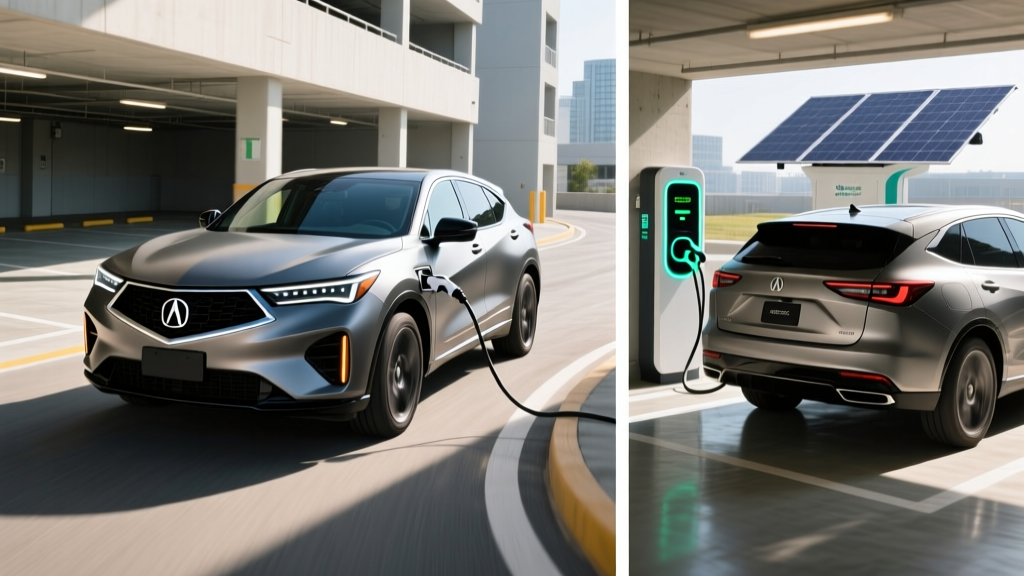
The 2025 Acura ZDX Type S is the luxury brand's first all-electric vehicle, built on GM's Ultium platform shared with the Cadillac Lyriq and GMC Hummer EV. With 490 horsepower, a 278-mile EPA range estimate, and peak DC fast-charging up to 500 kW (on capable chargers), the Type S variant targets driving enthusiasts who want a premium badge and genuine straight-line performance. But beneath the aggressive styling and Brembo brakes lies a 102 kWh (usable) NMC battery that charges more modestly in real-world conditions and delivers range numbers that require careful expectation management.
Starting at $69,850 before destination, the ZDX Type S undercuts European rivals like the BMW iX M60 and Audi e-tron GT on price while offering competitive acceleration. However, its federal tax credit eligibility depends on your income, the vehicle's MSRP classification, and evolving battery-sourcing rules under IRS §30D. Here's everything you need to know before signing a lease or purchase agreement.
Range, Battery, and Real-World Efficiency
| Specification | 2025 Acura ZDX Type S |
|---|---|
| EPA Estimated Range | 278 miles |
| Battery Capacity (Usable) | 102 kWh |
| Battery Chemistry | NMC (Nickel Manganese Cobalt) |
| Drivetrain | Dual-motor AWD |
| EPA Efficiency (Combined) | 77 MPGe (est.) |
| Energy Consumption | ~43 kWh/100 mi (est.) |
| Horsepower | 490 hp |
| Torque | 540 lb-ft |
| 0-60 mph | 4.2 seconds (mfr. est.) |
| Top Speed | 130 mph (electronically limited) |
The 102 kWh usable battery is among the largest in the luxury midsize SUV segment, but the Type S's performance tuning and heavier curb weight (~5,900 lbs) work against efficiency. By comparison, the Tesla Model X Long Range achieves 348 miles EPA from a similar-capacity pack, while the BMW iX xDrive50 delivers 324 miles with 105.2 kWh usable. The ZDX Type S prioritizes power delivery over range maximization, and the trade-off is evident in its MPGe rating.
According to fueleconomy.gov, the ZDX Type S's combined efficiency trails more aerodynamically optimized EVs. If range is your primary concern, the base ZDX A-Spec (313 miles EPA, single-motor RWD) is the more pragmatic choice—though it sacrifices the Type S's dual-motor grip and 490-hp output.
Charging Speed: DC Fast, Level 2, and the 500 kW Question
| Charging Method | Power / Rate | Time / Range Added |
|---|---|---|
| DC Fast Charging (Peak) | Up to 500 kW (on 350+ kW chargers) | ~10–80% in 18 minutes (est.) |
| DC Fast Charging (Sustained Avg.) | ~180–220 kW (real-world curve) | ~10–80% in 25–30 minutes |
| Level 2 Home Charging (240V, 48A) | 11.5 kW | ~25 miles per hour / 0–100% in ~9 hours |
| Level 1 (120V, 12A) | 1.4 kW | ~3 miles per hour / impractical for full charge |
Acura advertises the ZDX's Ultium platform as capable of accepting up to 500 kW of DC fast-charging power, but this figure requires a next-generation 350+ kW charger (such as select Electrify America or Tesla Supercharger V4 stations) and ideal battery conditions (preconditioned, low state of charge). In practice, the ZDX Type S's charge curve peaks closer to 190–210 kW between 10–40% SoC, then tapers progressively. Expect a 10–80% session to take 25–30 minutes at a typical 150–350 kW public charger, not the 18-minute headline figure.
For home charging, the ZDX Type S includes an 11.5 kW onboard charger. On a 48-amp Level 2 circuit (requiring a 60-amp breaker), you'll add roughly 25 miles of range per hour, or fully recharge overnight in about 9 hours. This is competitive with the Cadillac Lyriq (11.5 kW) but slower than the BMW iX (up to 19.2 kW on a 80-amp circuit). If your daily driving exceeds 100 miles, the 11.5 kW rate means you'll need to plug in every evening to start with a full battery.
Installation note: A 48-amp Level 2 home charger typically requires a dedicated 60-amp circuit. Depending on your electrical panel's capacity, installation costs range from $500 (simple run near the panel) to $2,500+ (panel upgrade or long conduit runs). Always consult a licensed electrician for a site-specific quote.
Performance and Driving Dynamics
The Type S badge is Acura's performance sub-brand, and the ZDX Type S backs it up with a 4.2-second 0–60 mph time—quicker than the BMW iX xDrive50 (4.4 seconds) and nearly matching the Porsche Cayenne E-Hybrid (4.1 seconds, though that's a PHEV). The dual-motor AWD system provides confident traction in wet and light snow conditions, and the 540 lb-ft of instant torque delivers the effortless passing power that defines the EV driving experience.
However, the ZDX Type S's ~5,900-pound curb weight is evident during cornering and braking. Despite standard Brembo front brakes and a sport-tuned air suspension, this is a straight-line performer more than a canyon carver. The steering lacks the communicative feel of the Porsche Taycan Cross Turismo or even the Tesla Model X, and the regenerative braking offers limited one-pedal driving adjustability compared to Hyundai/Kia's multi-mode regen systems.
Ride quality is a strength. The air suspension absorbs highway imperfections well, and cabin isolation is competitive with the Audi e-tron (now Q8 e-tron). If you prioritize comfort and straight-line punch over surgical handling, the ZDX Type S delivers.
Interior, Cargo, and Technology
The ZDX Type S features an 11.0-inch digital instrument cluster and an 11.3-inch touchscreen infotainment system running Acura's latest interface with wireless Apple CarPlay and Android Auto. The system is responsive but lacks the visual polish of BMW's iDrive 8.5 or Mercedes-Benz's MBUX. A 14-speaker Bang & Olufsen audio system is standard on the Type S.
Driver assistance includes AcuraWatch with adaptive cruise control, lane-keeping assist, blind-spot monitoring, and traffic sign recognition. This is a Level 2 system per SAE classification, meaning the driver must remain engaged with hands on the wheel and eyes on the road. Unlike GM's Super Cruise (available on the Lyriq), the ZDX does not currently offer hands-free highway driving, though Acura has indicated a hands-free system is in development for future model years.
| Dimension | 2025 Acura ZDX Type S |
|---|---|
| Front Headroom | 39.6 inches |
| Rear Headroom | 38.2 inches |
| Front Legroom | 41.5 inches |
| Rear Legroom | 37.8 inches |
| Cargo Volume (Behind 2nd Row) | 28.0 cu ft |
| Cargo Volume (2nd Row Folded) | 61.0 cu ft (est.) |
| Front Trunk (Frunk) | Not available (Ultium platform packaging) |
Cargo capacity is a weak point. The 28.0 cu ft behind the second row trails the Tesla Model X (37.1 cu ft) and BMW iX (35.5 cu ft). The lack of a frunk—due to the Ultium platform's underhood component packaging—further limits storage versatility. For families requiring maximum cargo flexibility, the Model X or Rivian R1S are more practical choices.
Pricing, Trims, and Federal Tax Credit Eligibility
| Trim | Base MSRP | Est. After §30D Credit* |
|---|---|---|
| ZDX A-Spec (RWD) | $59,950 | Varies (see eligibility below) |
| ZDX A-Spec (AWD) | $62,950 | Varies |
| ZDX Type S (AWD) | $69,850 | Varies |
*Destination charge (~$1,195) not included. Tax credit eligibility depends on multiple factors—see checklist below.
The 2025 Acura ZDX Type S starts at $69,850 before destination, positioning it below the BMW iX xDrive50 ($87,250) and Audi Q8 e-tron Prestige ($75,000+) but above the Tesla Model X Long Range ($79,990). As-tested, a loaded Type S with premium paint and accessories can approach $73,000–$75,000.
Does the ZDX Type S Qualify for the $7,500 Federal Tax Credit?
Possibly—but eligibility is not guaranteed and depends on current IRS §30D rules, which include multiple gates:
- MSRP Cap: SUVs must have an MSRP at or below $80,000. The ZDX Type S ($69,850 base) clears this threshold, but a heavily optioned unit could approach the limit.
- Buyer Income Cap: Modified adjusted gross income must not exceed $150,000 (single), $225,000 (head of household), or $300,000 (married filing jointly).
- Battery Sourcing Requirements: The vehicle must meet critical mineral and battery component sourcing thresholds that phase in annually. GM's Ultium battery supply chain has been evolving, and eligibility can vary by production batch and model year. Verify with the dealer and cross-reference the IRS's eligible vehicle list before purchasing.
- Point-of-Sale Transfer: If eligible, you can transfer the credit to the dealer at purchase, reducing the purchase price directly rather than waiting to claim it on your tax return.
Critical caveat: Tax credit rules are subject to change, and the ZDX's eligibility may differ from the Cadillac Lyriq (which shares the platform) depending on final assembly location and battery component sourcing. Always confirm with your tax professional and the IRS clean vehicle credit page before finalizing a purchase.
Warranty and Long-Term Ownership
Acura backs the ZDX with a 4-year/50,000-mile limited warranty and a 6-year/70,000-mile powertrain warranty. The high-voltage battery is covered for 8 years or 100,000 miles (whichever comes first) against defects and excessive capacity loss—typically defined as degradation below 70% of original capacity, though verify the exact threshold in your warranty documentation.
This battery warranty is competitive with the BMW iX (8 years/100,000 miles) and Tesla Model X (8 years/150,000 miles). However, Tesla's longer mileage coverage is a meaningful advantage for high-mileage drivers. NMC batteries like the ZDX's typically retain 85–90% capacity after 100,000 miles based on industry data, but individual results vary with charging habits (frequent DC fast-charging and consistent 100% SoC storage accelerate degradation).
Maintenance costs should be lower than a comparable gas-powered Acura MDX Type S—no oil changes, transmission fluid, or spark plugs—but expect higher tire wear (EVs are heavier and deliver instant torque) and potentially higher insurance premiums. Get an insurance quote before purchasing; EV premiums can run 10–20% higher than ICE equivalents.
Pros, Cons, and the Competition
Pros
- 4.2-second 0–60 mph with dual-motor AWD grip
- Premium interior with Bang & Olufsen audio
- Competitive pricing vs. German luxury EVs
- Air suspension ride quality
- Eligible for federal tax credit (if sourcing rules are met)
Cons
- 278-mile EPA range trails key rivals (Model X: 348 mi, iX: 324 mi)
- No heat pump—cold-weather range loss is significant
- Limited cargo space (28 cu ft) and no frunk
- No hands-free driving assist (unlike GM Super Cruise)
- Heavy curb weight affects handling agility
- Real-world DC charging slower than 500 kW headline suggests
Is the ZDX Type S Worth Buying vs. Competitors?
Choose the Acura ZDX Type S if: You want a premium-badge performance SUV under $75,000, prioritize straight-line acceleration and ride comfort over maximum range, and have reliable home charging to offset the modest EPA range.
Consider the Tesla Model X if: Range (348 miles EPA), Supercharger network access, and cargo versatility (frunk + 37 cu ft) are non-negotiable, and you're comfortable with Tesla's minimalist interior and panel-gap inconsistencies.
Consider the BMW iX xDrive50 if: You value superior interior materials, 324-mile range, faster 19.2 kW Level 2 charging, and a more engaging driving experience—and can absorb the $87,000+ price tag.
Consider the Cadillac Lyriq Sport if: You want the same Ultium platform with a more comfort-oriented tune, slightly better range (314 miles EPA for RWD), and a lower starting price ($63,000), accepting less aggressive styling and no Type S performance variant.
Who Should Buy the 2025 Acura ZDX Type S?
The ZDX Type S is best suited for:
- Performance-oriented commuters who want quick acceleration, AWD security, and a premium cabin for daily highway driving.
- Acura loyalists transitioning from an MDX or RDX who want to stay within the brand ecosystem and dealer network.
- Buyers with home charging access who can recharge overnight and rarely exceed 200 miles between stops.
It is not ideal for:
- Frequent road-trippers who need 300+ mile range and minimal charging stops.
- Cold-climate drivers without garage parking (no heat pump means significant winter range loss).
- Families needing maximum cargo space (28 cu ft and no frunk limit versatility).
- Buyers seeking hands-free highway driving (no Super Cruise or equivalent).
Frequently Asked Questions
What is the real-world range of the 2025 Acura ZDX Type S?
The EPA estimates 278 miles, but real-world highway driving at 70+ mph yields approximately 230–250 miles. In cold weather (below freezing), expect 210–235 miles due to battery chemistry limitations and the absence of a heat pump. For daily commuting with regenerative braking, the EPA figure is more achievable.
How fast does the ZDX Type S charge at home and on the road?
At home on a 48-amp Level 2 charger (240V), the ZDX adds about 25 miles per hour, fully charging in roughly 9 hours. On DC fast chargers, Acura claims up to 500 kW peak capability, but real-world sustained rates average 180–220 kW, resulting in a 10–80% charge in 25–30 minutes at a typical 150–350 kW station.
Does the 2025 ZDX Type S qualify for the $7,500 federal EV tax credit?
It may, but eligibility depends on your income (must be below IRS caps), the vehicle's MSRP (under $80,000 for SUVs), and whether the battery meets current-year critical mineral and component sourcing requirements. Verify on the IRS eligible vehicle list and consult a tax professional before purchasing.
Is the ZDX Type S better than the Tesla Model X?
It depends on your priorities. The ZDX Type S is quicker to 60 mph (4.2s vs. 3.8s for Model X Plaid, but 4.2s vs. ~5.0s for Model X Long Range) and offers a more traditional luxury interior. The Model X wins on range (348 vs. 278 miles), cargo space, Supercharger network access, and available hands-free Autopilot/FSD (Level 2, not self-driving). Choose based on which trade-offs matter most to you.
What is the battery warranty on the ZDX Type S?
Acura provides an 8-year/100,000-mile warranty on the high-voltage battery, covering defects and excessive capacity loss (typically defined as falling below 70% of original capacity). This matches industry norms but trails Tesla's 8-year/150,000-mile coverage.
Does the ZDX Type S have a frunk (front trunk)?
No. The Ultium platform's underhood component packaging eliminates front-trunk storage. All cargo must go in the rear 28.0 cu ft area (61.0 cu ft with the second row folded).