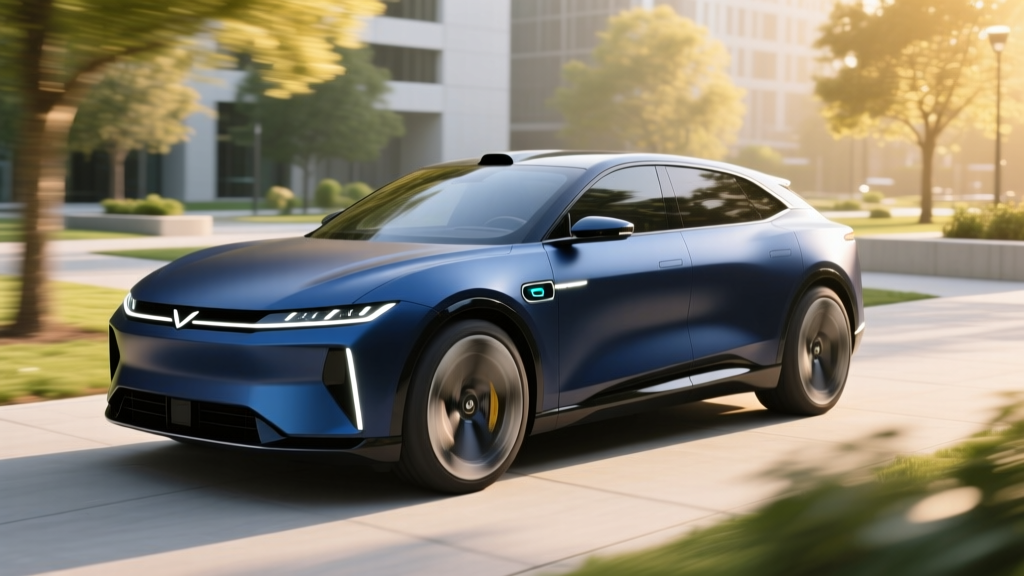
Quick Verdict: The Lucid Gravity Redefines the Electric Midsize SUV
The Lucid Gravity is the brand's long-awaited entry into the three-row electric SUV segment — and it arrives with the same obsessive efficiency engineering that made the Air sedan a range champion. Built on Lucid's miniaturized powertrain technology, the Gravity promises class-leading EPA range, blistering DC fast-charging speeds, and a genuinely usable third row. For buyers searching for a Lucid midsize SUV, the Gravity delivers a compelling package — though its premium pricing and nascent service network demand careful consideration before signing a purchase agreement.
We've analyzed Lucid's official specifications, EPA filings, and early real-world data to give you the numbers that actually matter: what range you'll see on the highway, how fast it charges when the battery is cold, and whether the $7,500 federal tax credit applies to your household.
Lucid Gravity Spec Sheet: The Numbers That Matter
| Specification | Gravity Pure (RWD) | Gravity Touring (AWD) | Gravity Grand Touring (AWD) |
|---|---|---|---|
| EPA Range | 440 miles | 400 miles | 380 miles |
| Battery (usable) | ~112 kWh (NMC) | ~112 kWh (NMC) | ~112 kWh (NMC) |
| Horsepower | 480 hp | 620 hp | 823 hp |
| 0–60 mph | 5.5 sec | 4.2 sec | 3.5 sec |
| Drivetrain | RWD (single motor) | AWD (dual motor) | AWD (dual motor) |
| Max DC Fast Charge | 300+ kW | 300+ kW | 300+ kW |
| 10–80% DCFC Time | ~20 min | ~20 min | ~20 min |
| Level 2 Home Charge | 19.2 kW (up to ~75 mi/hr) | 19.2 kW | 19.2 kW |
| Efficiency (est.) | ~120 MPGe / 28 kWh/100mi | ~110 MPGe / 30 kWh/100mi | ~105 MPGe / 32 kWh/100mi |
| Base MSRP | $79,900 | $94,900 | $109,900 |
| Battery/Powertrain Warranty | 8 yr / 100,000 mi | 8 yr / 100,000 mi | 8 yr / 100,000 mi |
Sources: fueleconomy.gov, Lucid Motors official specifications.
Range: EPA Sticker vs. Real-World Expectations
EPA Sticker: Up to 440 miles (Gravity Pure RWD)
Real-World Highway (70–80 mph): Expect ~340–370 miles on a full charge. Aerodynamic drag at sustained highway speeds reduces efficiency by 15–20% versus the mixed-cycle EPA test.
Cold Weather (below 32°F): Plan for 25–35% range reduction. A 440-mile EPA rating could yield ~285–330 miles in freezing conditions without preconditioning, due to battery heating demands and cabin HVAC load.
Mountain/Terrain: Significant elevation gain will reduce range further, though regenerative braking on descents partially recovers energy.
Lucid's efficiency advantage comes from its proprietary miniaturized drive units, which pack exceptional power density into a compact form factor. The Gravity's ~28 kWh/100mi efficiency in the Pure trim is remarkable for a 5,500+ lb three-row SUV — rivaling smaller two-row crossovers. Still, physics dictates that a large vehicle pushing through air at 75 mph will consume more energy than the EPA city-cycle test suggests.
For most owners with home charging, the real-world range is more than sufficient for daily driving and moderate road trips. The Gravity's advantage emerges on longer routes where its combination of high efficiency and fast charging minimizes total trip time.
Charging Speed: DC Fast, Level 2, and the Charging Curve
The Gravity supports DC fast-charging speeds exceeding 300 kW at compatible stations, making it one of the fastest-charging SUVs on the market. Lucid's 900V+ electrical architecture enables these speeds by reducing current and heat generation at the pack level.
| Charging Level | Power / Voltage | Speed (Approx.) | Use Case |
|---|---|---|---|
| Level 1 (120V) | ~1.4 kW | ~4–5 miles/hr | Emergency / trickle |
| Level 2 (240V, 80A) | 19.2 kW | ~75 miles/hr | Home overnight |
| DC Fast Charge | 300+ kW (peak) | ~10–80% in ~20 min | Road trips |
Understanding the Charge Curve
The 300+ kW peak rate is not sustained across the entire session. Like all lithium-ion batteries, the Gravity's charge rate tapers significantly as State of Charge (SoC) increases:
- 10–40% SoC: Peak charging speeds near 300 kW
- 40–60% SoC: Rate begins to taper, averaging ~220–250 kW
- 60–80% SoC: Further taper to ~150–180 kW
- 80–100% SoC: Dramatic taper; charging above 80% is slow and should be avoided on road trips unless necessary
The 10–80% time of approximately 20 minutes assumes a preconditioned battery and a charger capable of delivering sustained high power. At Electrify America 350 kW stalls or Tesla Supercharger V4 stations (with NACS adapter), you'll see the best results. Older 150 kW stations will cap your session regardless of the vehicle's capability.
For home charging, the Gravity's 19.2 kW onboard charger is among the most powerful in any production EV. On a hardwired 80-amp Level 2 circuit, you'll recover roughly 75 miles of range per hour — meaning a full overnight session (8–10 hours) easily replenishes the entire battery. Note: achieving 19.2 kW requires a 100-amp dedicated circuit and appropriately sized wiring. Consult a licensed electrician to confirm your panel can support this load; many homes will need a panel upgrade.
Performance and Driving Dynamics
Even the base Gravity Pure delivers 480 horsepower from its single rear motor — enough for confident highway merging and passing. The Touring trim's dual-motor AWD setup bumps output to 620 hp with a 4.2-second 0–60 time, while the Grand Touring's 823 hp and 3.5-second sprint put it in sports-car territory.
Lucid's drive units are notably compact and lightweight compared to competitors, contributing to the Gravity's relatively low curb weight for a three-row EV. This translates to better handling composure and less tire wear over time. The air suspension (standard on Touring and Grand Touring) provides adjustable ride height for improved highway efficiency or additional ground clearance on rough roads.
All trims feature Lucid's regenerative braking system with adjustable levels, though the Gravity does not offer true one-pedal driving to a complete stop in all modes — a minor omission compared to some competitors.
Interior Space, Cargo, and Technology
Passenger and Cargo Dimensions
- Seating: 7-passenger (2+3+2) or optional 6-passenger (2+2+2) with second-row captain's chairs
- Third-row legroom: ~32 inches — usable for children and shorter adults on trips under 2 hours
- Cargo (behind 3rd row): ~20 cu ft
- Cargo (3rd row folded): ~55 cu ft
- Cargo (all rear rows folded): ~100 cu ft
- Front trunk (frunk): ~12 cu ft — large enough for a carry-on or charging cables
Infotainment and Driver Assistance
The Gravity's cabin is dominated by a 34-inch curved glass "Clearview" cockpit display that spans the driver's sightline, replacing traditional gauges and center stack. A secondary lower touchscreen handles climate, media, and vehicle settings. The system runs Lucid's proprietary software with over-the-air update capability.
Lucid's DreamDrive Pro ADAS suite includes:
- Adaptive cruise control with stop-and-go
- Lane centering assist
- Automatic emergency braking (front/rear/pedestrian)
- Blind-spot monitoring with rear cross-traffic alert
- 360-degree camera system
DreamDrive Pro is a Level 2 driver-assistance system per SAE classification. The driver must remain fully engaged, with hands on or near the wheel and eyes on the road at all times. This is not autonomous or "self-driving" technology. Lucid has not announced a hands-free highway driving system comparable to GM's Super Cruise or Ford's BlueCruise as of the 2026 model year.
Pricing, Trims, and Federal Tax Credit Eligibility
| Trim | Base MSRP | Est. As-Tested (w/ options) | §30D Federal Credit Eligibility |
|---|---|---|---|
| Gravity Pure | $79,900 | $82,000–$87,000 | See eligibility checklist below |
| Gravity Touring | $94,900 | $98,000–$108,000 | MSRP exceeds SUV cap — NOT eligible |
| Gravity Grand Touring | $109,900 | $115,000–$130,000+ | MSRP exceeds SUV cap — NOT eligible |
Federal Tax Credit (§30D) Eligibility Checklist
The IRS §30D Clean Vehicle Credit offers up to $7,500 for qualifying new EVs. However, multiple rules apply, and only the Gravity Pure has a realistic path to eligibility:
- MSRP Cap: SUVs/vans must have an MSRP at or below $80,000. The Gravity Pure at $79,900 qualifies; Touring ($94,900) and Grand Touring ($109,900) exceed the cap.
- Buyer Income Cap: Modified adjusted gross income must not exceed $300,000 (joint), $225,000 (head of household), or $150,000 (single).
- Battery Sourcing: The credit is split into two halves ($3,750 each) based on critical-mineral sourcing and battery-component manufacturing requirements. These rules tighten annually. Check current IRS guidance for the latest sourcing requirements.
- Point-of-Sale Transfer: Qualifying buyers can transfer the credit to the dealer at purchase, reducing the out-of-pocket price immediately rather than waiting for tax filing.
Note: Tax credit rules are subject to change. Consult a tax professional and verify current rules at irs.gov before purchasing. State and local incentives may provide additional savings — check fueleconomy.gov for your area.
Ownership Costs, Warranty, and Long-Term Outlook
Lucid backs the Gravity with an 8-year/100,000-mile battery and powertrain warranty, covering defects and excessive capacity loss (typically defined as degradation below 70% of original capacity). The basic vehicle warranty covers 4 years / 50,000 miles.
Estimated 5-Year Cost of Ownership
| Category | Gravity Pure (est.) | Comparable ICE Midsize SUV (est.) |
|---|---|---|
| Purchase Price (after credit) | ~$72,400 | ~$55,000 |
| Fuel / Electricity (5 yr, 75k mi) | ~$4,500 | ~$9,400 |
| Maintenance (5 yr) | ~$1,200 | ~$3,800 |
| Insurance (5 yr) | ~$12,000 | ~$8,500 |
| Depreciation (est.) | ~$32,000 | ~$22,000 |
| Total 5-Year Cost | ~$122,100 | ~$98,700 |
The Gravity's higher purchase price and insurance premiums are partially offset by dramatically lower fuel and maintenance costs. Break-even versus a similarly equipped gas SUV typically occurs around year 7–8, depending on local electricity rates, driving habits, and whether you qualify for the full tax credit.
Who the Lucid Gravity Suits Best
- You need a three-row EV with genuinely usable passenger space and best-in-class range
- You have access to home Level 2 charging and want to minimize public charging dependency
- You take regular road trips and value fast DC charging (300 kW) to minimize stops
- You prioritize efficiency and technology over brand cachet
- Your household income qualifies for the §30D credit and you're targeting the Pure trim
- You need a hands-free highway driving system (no Super Cruise/BlueCruise equivalent yet)
- Proximity to a Lucid service center matters — the network is small and growing slowly
- Your budget is below $75,000 or you need the higher trims but can't absorb the $90k+ price without a tax credit
- You need proven long-term reliability data — Lucid is a young brand with limited ownership history
Lucid Gravity vs. Key Competitors
| Attribute | Lucid Gravity Pure | Tesla Model X | Rivian R1S | Kia EV9 GT-Line AWD |
|---|---|---|---|---|
| EPA Range | 440 mi | ~335 mi | ~352 mi (Max Pack) | ~270 mi |
| Base MSRP | $79,900 | ~$79,990 | ~$79,900 | ~$63,900 |
| Max DC Charge | 300+ kW | 250 kW | 220 kW | 210 kW |
| 3rd Row | Yes (usable) | Yes (tight) | Yes (usable) | Yes (usable) |
| Frunk | ~12 cu ft | ~6 cu ft | ~11 cu ft | ~2 cu ft |
| Tax Credit | Pure only (§30D rules) | Eligible (MSRP/income rules) | Eligible (MSRP/income rules) | Eligible (MSRP/income rules) |
The Gravity's range and charging speed lead the segment. The Model X offers access to the Supercharger network natively (though NACS adapters are opening this to all competitors). The Rivian R1S excels in off-road capability and adventure-oriented features. The Kia EV9 undercuts on price significantly but sacrifices ~170 miles of range.
Pros and Cons at a Glance
- Class-leading 440-mile EPA range (Pure trim)
- 300+ kW DC fast charging with 10–80% in ~20 min
- 19.2 kW Level 2 onboard charger — fastest home charging in class
- Genuinely usable third row with adult-capable seating
- 12 cu ft frunk adds practical cargo flexibility
- Outstanding efficiency (~28 kWh/100mi) for a large SUV
- 8-year/100,000-mile battery warranty
- Base price of $79,900 is steep; only Pure trim eligible for tax credit
- No hands-free highway driving system (Level 2 only, no SAE Level 3+)
- Limited service center network — many regions lack proximity
- Young brand with limited long-term reliability data
- High insurance premiums relative to mainstream competitors
- Grand Touring trim pushes well past $120,000 with options
- Real-world highway range drops to ~340–370 mi (from 440 EPA)
Frequently Asked Questions
What is the real-world range of the Lucid Gravity?
The EPA rates the Gravity Pure at 440 miles, but real-world highway driving at 70–80 mph typically yields 340–370 miles. In freezing weather, expect 285–330 miles. The AWD Touring and Grand Touring trims see slightly lower figures due to increased weight and power consumption.
How fast does the Lucid Gravity charge?
On a 350 kW-capable DC fast charger with a preconditioned battery, the Gravity peaks above 300 kW and charges from 10–80% in approximately 20 minutes. At home on a hardwired 80-amp Level 2 charger (19.2 kW), it adds roughly 75 miles of range per hour, fully recharging overnight.
How much does the Lucid Gravity cost after tax credits?
The Gravity Pure starts at $79,900. If you qualify for the full $7,500 federal §30D credit (income, sourcing, and MSRP rules apply), the effective price drops to approximately $72,400. Higher trims (Touring at $94,900 and Grand Touring at $109,900) exceed the $80,000 SUV MSRP cap and are not eligible for the federal credit.
Is the Lucid Gravity worth buying vs. a Tesla Model X or Rivian R1S?
If maximum range and charging speed are your top priorities, the Gravity leads both categories decisively. Choose the Model X if Supercharger network access matters most. Choose the Rivian R1S for off-road capability and a more adventure-focused design. The Gravity wins on efficiency and road-trip practicality.
Does the Lucid Gravity qualify for the federal EV tax credit?
Only the Gravity Pure trim ($79,900 MSRP) falls at or below the $80,000 SUV cap required by the §30D credit. Even then, buyer income limits ($150k single / $300k joint), battery critical-mineral sourcing rules, and point-of-sale transfer requirements all apply. Always verify current eligibility on irs.gov and consult a tax professional before purchasing.
What is the Lucid Gravity's battery chemistry?
Lucid uses NMC (nickel manganese cobalt) lithium-ion cells in the Gravity, optimized for high energy density to achieve its 440-mile range target. NMC chemistry offers excellent range-per-kWh but should be managed with routine charging habits — Lucid recommends daily charging to 80–90% and occasional 100% charges before long trips to maintain cell balancing.
Does the Gravity support NACS or CCS charging?
The Gravity launched with the NACS (Tesla-style) charging port as standard, providing native access to the Tesla Supercharger network as well as NACS-equipped Electrify America and other stations. This eliminates the need for a CCS-to-NACS adapter that many older EVs require.